%20.png)


Estimated reading time: 5 minutes
Even after the pandemic, lingering COVID symptoms—like fatigue, brain fog, and immune challenges—continue to affect kids and adults, often triggering or intensifying neurocognitive and emotional struggles in children with PANS or PANDAS.
What is the Difference Between Long Haulers and PANDAS/PANS?
Long haulers and PANS/PANDAS result from an infection that can leave lingering neurocognitive or neuropsychiatric issues. The question is: are they the same?
Extended post-viral symptoms aren't anything new. Research has documented post-viral symptoms after Herpes 6 and Ebola (Proal & VanElzakker, 2021).
What is PANS/PANDAS?
PANS (Pediatric Acute-Onset Neuropsychiatric Syndrome) and PANDAS (Pediatric Autoimmune Neuropsychiatric Disorder Associated with Streptococcal Infections) are often underdiagnosed but not rare pediatric autoimmune disorders that share similar neuropsychiatric and neurocognitive symptoms.
These symptoms can emerge suddenly or gradually, often starting with mild signs like anxiety that can escalate into more serious issues, like school refusal.
What are the triggers and effects of PANS/PANDAS?
PANDAS: specifically caused by Group A strep infection
- Effects: Sudden onset of OCD or tics
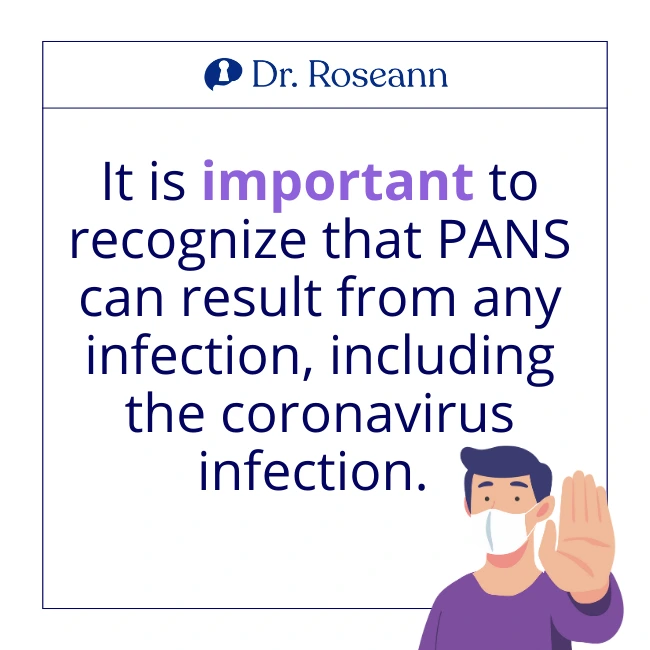
PANS: triggered by infections or toxins, even COVID-19
- Effects: Sudden onset of OCD symptoms (intrusive thoughts, compulsive actions, disordered eating)
What is Post-COVID Long Haulers Syndrome?
Post-COVID conditions, or long COVID, can affect anyone who’s had SARS-CoV-2, regardless of age or initial symptoms, and even those with mild cases may experience lingering symptoms.
According to WHO (2022), about 10-20% of COVID-infected individuals may develop long COVID. Other research found about 30% of patients report symptoms up to 9 months later (Logue et al., 2021).
Long COVID is the new or lingering symptoms that persist for at least three months after infection, lasting at least two months with no other explanation (WHO, 2022).
How Has the Pandemic Affected Children with PANS/PANDAS?
Research shows that the COVID-19 pandemic made life even harder for children with PANS and PANDAS—and their families felt it too (Guido et al., 2021; O’Dor et al., 2022). Many parents noticed that their child’s symptoms got worse during this time.
These conditions are already tough. But with added stressors like isolation, missed school, and even COVID infections, it’s no surprise that symptoms—and family stress—spiked.
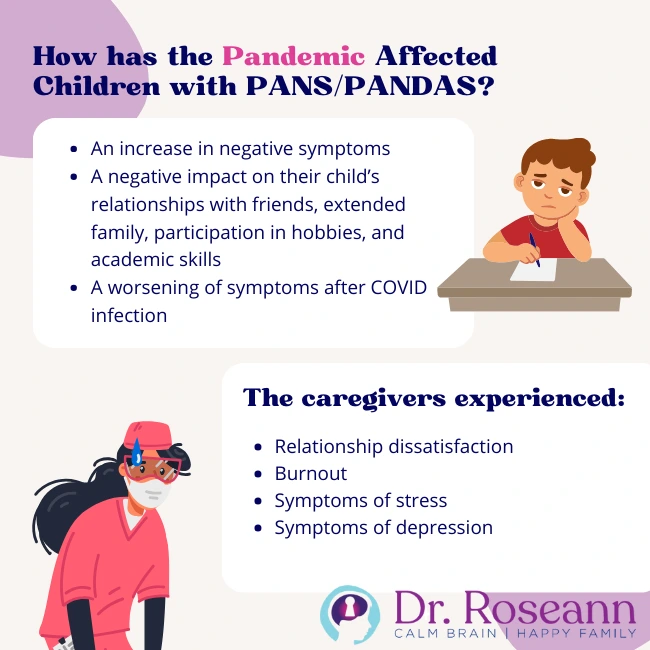
During the pandemic, studies found that children with PANS/PANDAS experienced:
- A noticeable increase in symptoms
- Struggles with friendships, family connections, hobbies, and academics
- A worsening of symptoms after COVID infection
And for caregivers, it wasn’t any easier. They reported:
- Strained relationships
- Burnout and overwhelm
- High stress levels
- Depression symptoms
Many parents said the experience brought them closer to their child (O’Dor et al., 2022)—a silver lining during such a hard time.
The truth? When caregivers are overwhelmed, kids with complex needs feel it too. That’s why we always say: you can’t pour from an empty cup.
Prioritizing your own mental health isn’t selfish—it’s part of helping your child get better. Calm the brain. Create the foundation. And healing will follow.
What Are the Symptoms Associated with Long Haulers and PANS/PANDAS?
One of the biggest challenges in understanding long COVID and PANS/PANDAS is how much their symptoms overlap. Both conditions involve inflammation that impacts the brain, leading to psychiatric and neurocognitive issues that can look very similar.
And when a child has mild or even asymptomatic COVID, it becomes even harder to recognize that the infection could have triggered something deeper—like PANS. Unfortunately, there’s still so much misinformation out there about PANS/PANDAS, and far too few trained providers.
That makes it tough for families to get proper support. In fact, research shows a significant delay between symptom onset and diagnosis—ranging anywhere from 0.8 to 4.7 years (O’Dor et al., 2022).
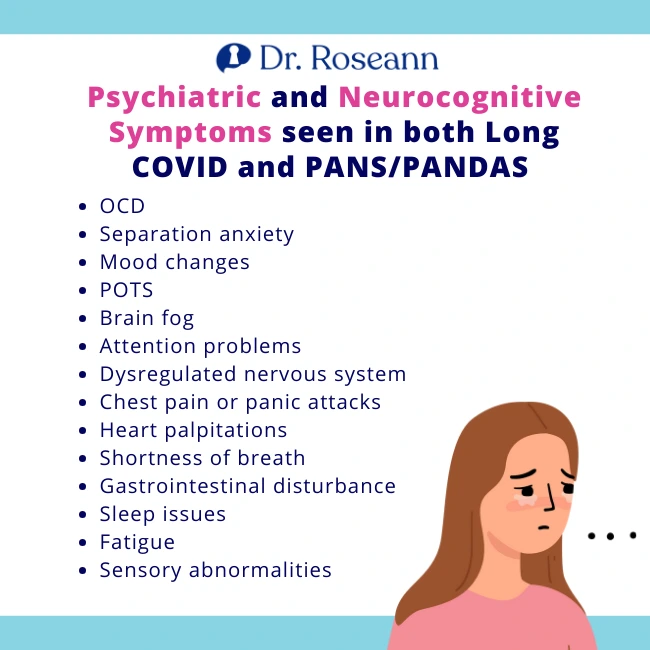
Psychiatric and Neurocognitive Symptoms Seen In Both Long COVID and PANS/PANDAS
- Obsessive-compulsive behaviors (OCD)
- Separation anxiety
- Mood changes or emotional lability
- Postural Orthostatic Tachycardia Syndrome (POTS)
- Brain fog
- Attention and focus issues
- Dysregulated nervous system
- Chest pain or panic attacks
- Heart palpitations
- Shortness of breath
- Gastrointestinal disturbances
- Sleep difficulties
- Persistent fatigue
- Sensory abnormalities
What is the Biology of Long COVID and PANS/PANDAS?
Both Long COVID and PANS/PANDAS involve brain inflammation, but with different triggers.
In PANS/PANDAS, the immune system mistakenly attacks the basal ganglia, causing:
- OCD
- Tics
- Anxiety
- Food restriction
- Rage or explosive anger
- Mood swings
- Trouble focusing
For Long COVID, researchers believe a few biological factors may be fueling symptoms. These include:
- Chronic inflammation marked by higher levels of a cytokine called interleukin-6 (Jarrott et al., 2022).
- Mitochondrial dysfunction which reduces the body and brain’s ability to make energy (Nunn et al., 2022).
How Do I Help My Child with Long COVID or PANS/PANDAS?
1. Find a Qualified Expert Provider
Seek a provider who can diagnose and create a personalized treatment plan. Though there are no specific lab tests for PANS/PANDAS or Long COVID diagnosis, some tests can be helpful in treatment.
2. Calm the Brain
Healing can't happen with a stress-activated nervous system, so calming the brain is key. In our BrainBehaviorReset™ Program, we use neurofeedback and PEMF, including our CALM PEMF™ device, to support mental wellness.
3. Eat Clean
A nutrient-dense, anti-inflammatory diet aids in healing and detoxification. This diet reduces inflammation, which is essential for managing PANS/PANDAS symptoms.
4. Prioritize Mental and Physical Wellness
Focusing on mental health care is vital, even when academic struggles arise. Parent coaching, cognitive behavioral therapy, and ERP are effective alternatives to medications with fewer side effects.
Parent Action Steps
Prioritize brain calming techniques Advocate for timely treatment and support for neurocognitive symptoms Stay informed on research developments for both conditions Discover natural and science-backed strategies through our Natural PANS/PANDAS Calm Brain Kit to help your child heal at the root cause—without relying on medication
FAQs
What is the main difference between Post-COVID Long Haulers Syndrome and PANS/PANDAS?
Post-COVID Long Haulers Syndrome is triggered by a previous COVID-19 infection, leading to lingering physical and mental symptoms, while PANS/PANDAS is an autoimmune disorder where the immune system mistakenly attacks the brain, causing neuroinflammation.
Can COVID-19 trigger PANS/PANDAS?
Yes, research shows that COVID-19 can trigger PANS/PANDAS in children, causing a flare-up of neurocognitive and psychiatric symptoms.
What are the common symptoms shared by Long COVID and PANS/PANDAS?
Both conditions can cause brain inflammation, leading to symptoms like OCD, anxiety, mood swings, attention problems, and fatigue.
What treatments are available for children with Long COVID or PANS/PANDAS?
Treatment often includes calming the brain through neurofeedback and PEMF, a clean anti-inflammatory diet, mental health support, and individualized care plans from qualified providers.
Citations:
Guido, C. A., Loffredo, L., Zicari, A. M., Pavone, P., Savasta, S., Gagliano, A., Brindisi, G., Galardini, G., Bertolini, A., & Spalice, A. (2021). The Impact of the COVID-19 Epidemic During the Lockdown on Children With the Pediatric Acute-Onset Neuropsychiatric Syndrome (PANDAS/PANS): The Importance of Environmental Factors on Clinical Conditions. Frontiers in neurology, 12, 702356. https://doi.org/10.3389/fneur.2021.702356
Jarrott, B., Head, R., Pringle, K. G., Lumbers, E. R., & Martin, J. H. (2022). "LONG COVID"-A hypothesis for understanding the biological basis and pharmacological treatment strategy. Pharmacology research & perspectives, 10(1), e00911. https://doi.org/10.1002/prp2.911
Logue, J. K., Franko, N. M., McCulloch, D. J., McConald, D., Magedson, A., Wolf, C. R., et al. (2021). Sequelae in adults at 6 months after COVID-19 Infection. JAMA Netw. Open 4:210830.
Nunn, A. V. W., Guy, G. W., Brysch, W., & Bell, J. D. (2022). Understanding Long COVID; Mitochondrial Health and Adaptation-Old Pathways, New Problems. Biomedicines, 10(12), 3113. https://doi.org/10.3390/biomedicines10123113
O'Dor, S. L., Zagaroli, J. S., Belisle, R. M., Hamel, M. A., Downer, O. M., Homayoun, S., & Williams, K. A. (2022). The COVID-19 pandemic and children with PANS/PANDAS: an evaluation of symptom severity, telehealth, and vaccination hesitancy. Child psychiatry and human development, 1–9. Advance online publication. https://doi.org/10.1007/s10578-022-01401-z
Proal, A. D., & VanElzakker, M. B. (2021). Long COVID or Post-acute Sequelae of COVID-19 (PASC): An Overview of Biological Factors That May Contribute to Persistent Symptoms. Frontiers in microbiology, 12, 698169. https://doi.org/10.3389/fmicb.2021.698169
World Health Organization (Dec. 7, 2022). Post COVID-19 condition (Long COVID). https://www.who.int/europe/news-room/fact-sheets/item/post-covid-19-condition
Always remember... “Calm Brain, Happy Family™”
Disclaimer: This article is not intended to give health advice and it is recommended to consult with a physician before beginning any new wellness regime. *The effectiveness of diagnosis and treatment vary by patient and condition. Dr. Roseann Capanna-Hodge, LLC does not guarantee certain results.
Are you looking for SOLUTIONS for your struggling child or teen?