%20.png)


Estimated reading time: 7 minutes
Understanding the difference between typical childhood "moody" behavior and signs of a real mood disorder can feel overwhelming for parents. Some kids are naturally more rigid or negative — that "glass half empty" wiring — while others go through emotional phases as they grow. But when your child's moods become persistent, intense, or interfere with daily life, it’s time to take a closer look.
Mood disorders are clinical conditions where a person struggles to regulate emotions in a typical, healthy way. These are not personality flaws or "bad behavior" — they are signs that a child's nervous system is overwhelmed and needs support.Mood disorders include persistent sadness, irritability, intense highs and lows, or a loss of interest in everyday activities. Symptoms can look very different between children, with some turning inward (withdrawal, sadness) and others acting outwardly (anger, aggression).
I’m Dr. Roseann Capanna-Hodge, and for more than 30 years I’ve helped children and teens struggling with mood, behavior, anxiety, ADHD, and complex neurological challenges. I know how exhausting it can feel for parents when emotional ups and downs begin affecting family life, school performance, confidence, and social relationships. My goal is to help families understand the root causes behind mood symptoms so children can build better regulation, resilience, and emotional stability.
What You’ll Learn
- Common causes of mood changes in children and teens.
- How nervous system dysregulation can affect emotional stability.
- Treatment approaches that support emotional regulation and behavior.
Mood Dysregulation Spectrum: Internalizing vs. Externalizing Symptoms
What Are the Types of Mood Disorders Diagnosed in Children?
Several specific types of mood disorders can affect children and teens, each presenting with its own unique pattern of symptoms and challenges.
Understanding the distinctions between these disorders is crucial because it allows parents, educators, and clinicians to tailor interventions that truly address the child’s needs.
Early recognition of the specific mood disorder type can lead to more effective support, targeted therapies, and better long-term outcomes for children struggling with emotional regulation and mental health challenges.
Key Features of Mood Disorders In Children
“Early identification and intervention are key — children do not simply ‘grow out’ of mood disorders without support.” — Dr. Joan Luby

What Are the Statistics on Depression in Children?
Depression and mood disorders are far more common among children and adolescents than most parents realize — and the rates continue to rise at an alarming pace.
Increased awareness is critical because early intervention can dramatically change the trajectory of a child’s emotional health.
Understanding these trends helps parents, educators, and clinicians recognize that mood challenges are not isolated or rare, but part of a broader mental health crisis affecting our youth today.
- 4% of U.S. children aged 3-17 were diagnosed with depression (CDC, 2022).
- 1% of adolescents reported a major depressive episode (CDC, 2022).
- 36.7% battled persistent sadness and hopelessness in 2018-2019.
The COVID-19 pandemic intensified mental health challenges:
Source: US Centers for Disease Control and Prevention, 2021
What Are the Symptoms of Mood Disorders in Children and Teens?
Recognizing mood disorder symptoms in children and teens can be tricky and often requires a keen and compassionate eye.
Unlike adults, young people typically lack the emotional vocabulary or self-awareness to verbalize feelings like sadness, hopelessness, or anxiety.
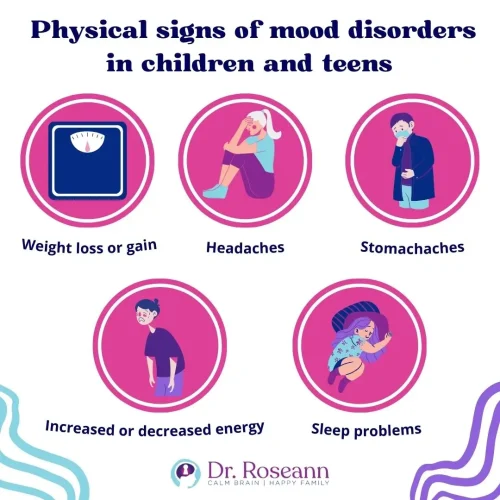
Instead, they tend to express their internal struggles through changes in behavior, declines in academic performance, withdrawal from social activities, or even unexplained physical complaints like stomachaches and headaches.
Read: Disruptive Mood Dysregulation Disorders: Symptoms, Causes and How To Help Your Child
Understanding these indirect signals is crucial for early identification and intervention, helping to prevent deeper emotional struggles from taking root.
“Children often express depression through irritability and somatic complaints rather than through sadness alone.” — Dr. Mary Fristad
Symptoms of Major Depressive Disorder in Children
Symptoms of Major Depressive Disorder in Teens
In addition to the signs above, teens may:
- Engage in risky behavior
- Have frequent angry outbursts
- Experience deep fatigue
- Struggle with decision making
- Withdraw socially
- Exhibit suicidal thoughts or self-harm
Typical Moodiness vs. Childhood Depression
Diagnosing Mood Disorders in Children
A proper diagnosis is essential — but diagnosing children requires a thoughtful, thorough process that goes beyond a single office visit.
It involves gathering information from parents, teachers, and caregivers, observing the child in different environments, and sometimes using standardized assessments to paint a complete picture of the child’s emotional and behavioral functioning.
Mood disorders can look very different from one child to another, so a multi-faceted evaluation is key to ensuring that children receive an accurate diagnosis and the right kind of help early on.
Common Diagnostic Tools to Assess Mood Disorders
A child may smile on the outside but struggle deeply on the inside — that’s why thorough evaluation is key.” — Dr. Roseann Capanna-Hodge

Causes of Mood Disorders in Children and Teens
There’s rarely a single cause behind a mood disorder. Instead, it’s often a combination of biological, psychological, environmental, and lifestyle factors that gradually overwhelm a child’s emotional regulation system.
Understanding the possible roots of your child’s struggles helps you find the most effective, targeted interventions — and it can also reduce guilt and confusion for parents.
Causes of Mood and Depression Disorders
The Gut-Brain Connection and Mood
Many parents are surprised to learn that 90–95% of the body’s serotonin — a key neurotransmitter for mood regulation — is actually produced in the gut (Moretti et al., 2025), not the brain.
A disrupted gut microbiome (gut dysbiosis) can reduce serotonin levels, increase systemic inflammation, and worsen emotional regulation.
Supporting gut health isn’t just about digestion — it’s critical for mental health too.
Ways to improve the gut-brain connection:
- Reducing sugar and processed foods
- Using targeted probiotics
- Eating anti-inflammatory diets (like Mediterranean or Paleo-style)
- Addressing food sensitivities
Mood and Autism
Children on the autism spectrum are at significantly higher risk for developing mood disorders like anxiety and depression (Kilanko et al., 2022).
Their brains are often wired for sensory sensitivity, rigid thinking, and low frustration tolerance, which — without proper support — can spiral into chronic emotional distress.
Challenges that can lead to mood issues in kids with autism:
- Sensory Overload: Triggers emotional shutdown or meltdowns
- Difficulty with Change: Increases anxiety and rigid behaviors
- Social Struggles: Loneliness and peer rejection can fuel sadness
- Communication Barriers: Makes it harder to express distress
Without explicit teaching of coping skills and problem-solving strategies, kids with autism are simply more vulnerable to developing mood dysregulation over time.
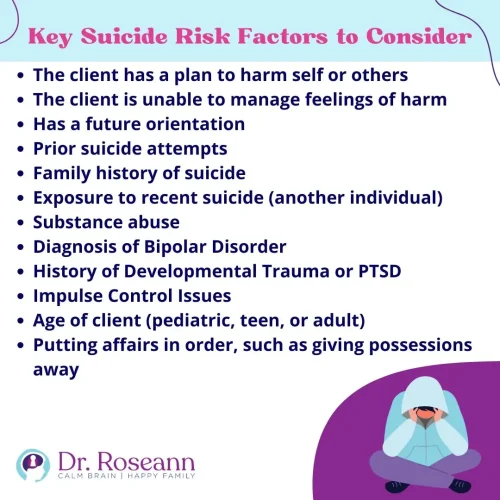
Suicide and Depression in Youth
The link between untreated depression and suicide is tragic but very real.
Suicide is now the second leading cause of death among adolescents aged 10–24, according to the CDC (2024).
Key Risk Factors for Youth Suicide:
Warning Signs of Suicide in Teens
- Talking about death or expressing hopelessness
- Giving away possessions
- Acting recklessly or withdrawing completely
- Dramatic mood swings
- Sudden calmness after severe distress (a red flag for a decision to attempt suicide)
Read: Teen Behavior Disorders: Signs, Types, and When To Seek Help

Treatment for Mood Disorders in Children
The most effective treatments for mood disorders focus on calming the brain first, then building emotional and behavioral skills over time.
Medication may be part of the plan — but it should never be the only plan.
Evidence-Based Treatments for Depression Disorder:
Key Principle: Calm the brain first → Teach coping skills second → Build resilience long-term.
“We must shift from symptom-masking to brain-healing in treating children’s mental health challenges.” — Dr. Thomas Insel, Former Director of NIMH
What Parents Should Do to Help a Moody or Depressed Child
Helping a child with mood struggles isn’t about fixing their emotions — it’s about being a steady, calming presence they can rely on.
When children are overwhelmed, they need to “borrow” a caregiver’s calm to help regulate their own nervous system.
Your role is to create emotional safety:
- Stay calm, even when they can’t.
- Validate their feelings before problem-solving.
- Model healthy coping skills over time.
Healing happens through connection, co-regulation, and small, consistent moments of support — not through pressure or punishment.
Supportive Things to Say to a Child with Mood Struggles
- “I can see you’re having a hard time. I’m here for you.”
- “It’s okay to feel what you’re feeling. We’ll work through it together.”
“You’re not alone — and there is help.”
FAQs About Mood Treatment for Children
What is mood treatment for children and teens?
Mood treatment for children and teens involves therapies and supports that help regulate emotions, reduce mood swings, and improve emotional resilience.
What symptoms may mean a child needs mood treatment?
Symptoms that may mean a child needs mood treatment include irritability, sadness, anxiety, anger, emotional outbursts, withdrawal, or severe mood swings.
Can brain inflammation affect mood in children?
Yes, brain inflammation can affect mood in children by disrupting emotional regulation, stress response, and nervous system balance.
What therapies help improve mood regulation?
Therapies that help improve mood regulation may include neurofeedback, CBT, nervous system regulation, parent coaching, and lifestyle support.
How does neurofeedback support mood treatment?
Neurofeedback supports mood treatment by helping the brain become calmer, more flexible, and better regulated emotionally.
Can diet and sleep affect mood treatment outcomes?
Yes, diet and sleep can affect mood treatment outcomes because nutrition and restorative sleep strongly impact brain and nervous system health.
What role does stress play in mood disorders?
Stress plays a major role in mood disorders because chronic stress can dysregulate the nervous system and increase emotional reactivity.
When should parents seek professional mood treatment for their child?
Parents should seek professional mood treatment when mood symptoms interfere with school, relationships, daily functioning, or emotional well-being.
Are natural treatments enough for mood issues?
Sometimes! Brain-based therapies, nutrition, sleep, and lifestyle changes can make a huge difference — especially when caught early.
Citations:
[CDC] Center for Disease Control. (2025). Data and statistics on children's mental health. Retrieved from https://www.cdc.gov/children-mental-health/data-research/index.html
[CDC] Center for Disease Control. (2024). Health disparities in suicide. Retrieved from https://www.cdc.gov/suicide/disparities/index.html#:~:text=Youth%20and%20young%20adults%20ages,52.2%25%20between%202000%2D2021.&text=There%20were%20an%20estimated%20224%2C341,(244.3%20per%20100%2C0004).
Kilanko, A., Obi-Azuike, C., Adaralegbe, N., Eze-Njoku, C., Urhi, A., Agbor, C. Ayisire, O., Eche, V., Soomro, F., Kaur, G., Babalola, F., Oyeleye-Adegbite, O., Aladum, B., Popoola, H., and Anugwom, G. (2022). The correlation between autistic childhood disorders and the development of anxiety and depression in adults: a systematic review. Cureus, 14(10):e30093. https://doi.org/10.7759/cureus.30093.
Moretti, C., Grasset, E., Zhu, J., Yang, G., Olofsson, L., Khan, M., Bergh, P-O., Oh, J-H., Lundqvist, A., van Gils, T., Kramer, M., Olsson, L., Patel, P., Mitteregger, M., Monges, D., Dwibedi, C., Krautkramer, K., Koopman, N., Henricsson, M., Macpherson, A., Schwartz, T., Grompone, G., van Pijkeren, J-P., Tremaroli, V., Roos, S., Simren, M and Backhead, F. (2025). Identification of human gut bacteria that produce bioactive serotonin and promote colonic innervation. Cell Reports, 44(10):116434. https://doi.org/10.1016/j.celrep.2025.116434
Always remember… “Calm Brain, Happy Family™”
Disclaimer: This article is not intended to give health advice and it is recommended to consult with a physician before beginning any new wellness regime. *The effectiveness of diagnosis and treatment vary by patient and condition. Dr. Roseann Capanna-Hodge, LLC does not guarantee certain results.
Are you looking for SOLUTIONS for your struggling child or teen?
Dr. Roseann and her team are all about science-backed solutions, so you are in the right place!
©Roseann Capanna-Hodge