Logo

Find Your Solution

In 3 minutes, you’ll know where to start ➤


Dysregulated Kids Podcast


LISTEN NOW:
Calm the Nervous System.
Change Behavior.

If your child melts down, won’t listen, or goes from calm to overwhelmed in seconds… you’re not alone.

Every kid gets dysregulated sometimes—but when it keeps happening, it’s a sign the nervous system needs support.

Get simple, clear ways to help your child calm down and feel in control.
dysregulated kids podcast
parent-child communication - available on apple podcasts
Spotify logo featuring a green circle with three curved black lines representing sound waves, symbolizing the popular music and podcast streaming platform.
Amazon Music logo featuring the word 'Amazon' with the signature smile arrow and 'Music' in bold text, representing the digital music streaming service by Amazon.
Castbox logo, featuring a sleek and modern design with the name 'Castbox' in bold lettering, representing the popular podcast platform known for streaming and discovering podcasts.

START HERE:

What Does Your Child Needs the Most?

Meltdowns & Big Emotions

→ How to Stop Meltdowns Before They Start

Not Listening & Defiance

→ Why Your Child Isn’t Listening (And What to Do Instead)

ADHD & Focus Struggles

→ Why Dysregulated Kids Can’t Use Executive Function

Graphic titled 'Anxiety Coping Skills for Teens,' featuring a diverse group of teenagers practicing coping techniques like deep breathing, journaling, exercising, and talking to a trusted adult, with calming colors and supportive text labels.

Anxiety & Overwhelm

→ Calm Words That Actually Work

Daily Stress & Sudden Blow-Ups

→ The Stress Cup: Why Kids Explode Over Small Things


Check Out the Dysregulated Kids Podcast Series:

Unseen causes of school avoidance anxiety in children and behavioral insights

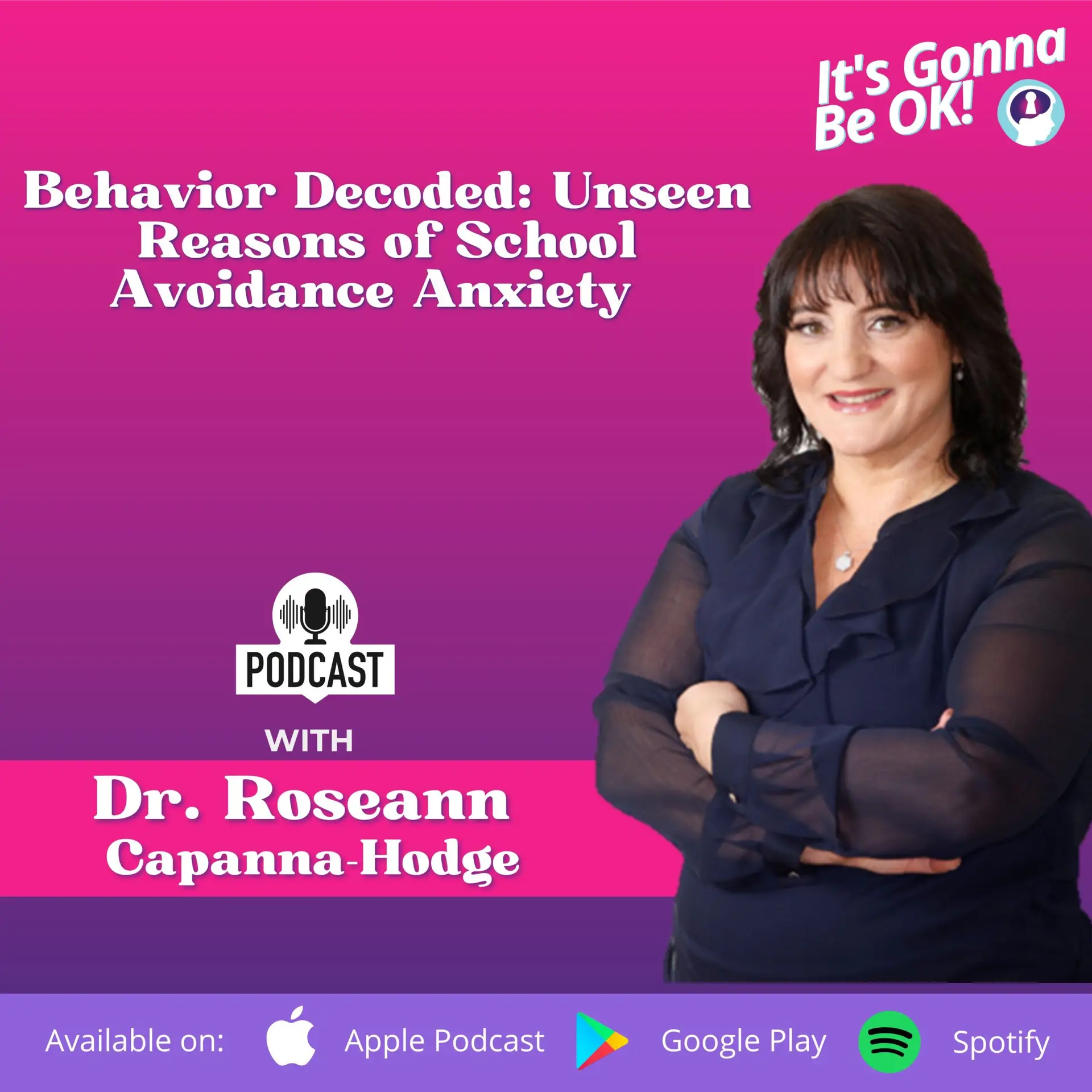
212: Behavior Decoded: Unseen Reasons of School Avoidance Anxiety

Explore unseen reasons behind school avoidance and discover strategies to help children and parents manage anxiety and improve school experience.
Read More
Anxiety’s role in school avoidance and its impact on children’s learning and behavior

214: Behavior Decoded: Unseen Reasons of School Avoidance Anxiety

School avoidance anxiety can hijack your child’s mornings—and your peace. Dr. Roseann Capanna-Hodge explains how emotional dysregulation in children fuels school refusal and how Regulation First Parenting™ supports an anxious, overloaded brain so mornings get calmer again
Read More
Behavioral reasons why children resist doing homework and how to support them

213: Behavior Decoded: Why Won’t My Kid Just Do Their Homework?

Struggling with nightly homework battles? Homework difficulties aren’t laziness—they signal an overwhelmed, dysregulated brain. Learn how calming the nervous system ends the homework war, guided by Dr. Roseann Capanna-Hodge’s Regulation First Parenting™ approach.
Read More
Understanding why some kids avoid playing sports and related behavioral factors

Why My Child Refuses to Play Sports | Emotional Dysregulation in Children | E212

This episode delves into factors influencing children's reluctance to engage in sports and provides insights to support their interests and well-being effectively.
Read More
Causes of anger in children when limiting screen time and managing device use

The Shocking Reason Behind Your Kid's Screen Time and Anger | Nervous System Strategies | E211

This episode explores why children get angry when asked to leave their devices and how to support their emotional and developmental needs effectively.
Read More
Unexpected behavioral reasons behind children’s swearing and emotional expression

How to Stop Swearing in Children | Emotional Dysregulation in Children | E207

Understand and empathize with children's swearing behavior to guide them towards appropriate language use, fostering open communication and respecting their developmental language exploration.
Read More
Exploring irritability in teens and children and effective behavior management tips

Irritable Behavior in Teens and Children | Emotional Dysregulation in Children | E210

Discover how to understand and address children's irritability, empowering effective parenting and fostering emotional growth and well-being for both parents and children.
Read More
Understanding and addressing lying behavior in teens and children

Unveiling Teen and Child Lying | Nervous System Strategies | E209

Explore how to foster honesty, self-confidence and open communication in children by creating a supportive environment that encourages truthfulness and understanding underlying issues. Let's decode your child's behavior and uncover ways to build a nurturing environment.
Read More
Parenting strategies for managing anxious teens with ADHD using calm brain tools and emotional support

Parenting Tips for Anxious Teens: Calm Brain Tools with Nancy MCDermott LCSW | Nervous System Strategies | E198

Parenting an anxious teen can feel like walking on eggshells, but you’re not alone. Get essential parenting tips for anxious teens and calm-brain strategies inspired by Dr. Roseann Capanna-Hodge’s Regulation First Parenting™ method to help your child feel safe and supported.
Read More
Understanding triggers behind angry teen behavior to improve child mental health and family dynamics

208: Behavior Decoded: The Eye-Opening Reasons Behind Your Angry Kid's Behavior

Explore the reasons behind children's anger and learn effective strategies to manage it, improving family dynamics and reducing frustration from unrealistic expectations.
Read More
Top supplements for anxiety and stress relief promoting calm and balanced mental health in children

Best Supplements for Stress Management | Nervous System Strategies | E204

Explore how supplements can aid in stress and anxiety management, offering natural solutions for achieving tranquility amidst life's challenges in this episode.
Read More
Child psychologist explains hidden messages in challenging child behavior for better parenting insights

Child Psychologist Explains Childhood's Misbehavior | Emotional Dysregulation in Children | E206

Join our 'Behavior Decoded' series to understand and manage your child's behavior, supporting their emotional and developmental needs effectively and reducing parental frustration.
Read More

Dysregulated Kids Podcast

Emotional Dysregulation, Anxiety, and
Nervous System Solutions for Kids


If you feel like nothing is working and your child has constant meltdowns, big emotional reactions, or struggles to focus and follow through—you’re not imagining it.

And you’re not alone.

The Dysregulated Kids Podcast helps you understand what’s really driving your child’s behavior—through the lens of the nervous system.

Because behavior isn’t the problem. It’s the signal.

With over 30 years of clinical experience and insights from more than 10,000 brain maps, Dr. Roseann Capanna-Hodge teaches you how to:

● Support your child’s nervous system in real time
● Use co-regulation to reduce meltdowns and power struggles
● Build self-regulation skills that actually stick
● Improve focus, attention, and emotional control
● Every child gets dysregulated sometimes.

But when it’s frequent, intense, or hard to recover from, your child needs more than behavior strategies—they need nervous system support.

Each episode gives you clear, science-backed tools you can use immediately—so your child can be more regulated, and behavior, focus, and connection can finally improve.

What You’ll Find Inside the Podcast


If you’ve ever thought…“Why does my child go from calm to overwhelmed so fast?”
“Why won’t they listen—even when they know better?”
“Why do small things turn into big reactions?”

You’re in the right place.

Inside the Dysregulated Kids Podcast, we break down what’s really going on beneath the surface—and what actually helps.

You’ll learn how to support your child when they are:

● Melting down, shutting down, or having big emotional reactions
● Struggling to focus, stay organized, or follow through
● Feeling anxious, stuck in worries, or overwhelmed
● Reacting strongly to noise, transitions, or sensory input
● Pushing back, refusing, or getting easily frustrated
● Having a hard time at school—even when they’re smart
● Needing more connection, support, and co-regulation
● Stuck in patterns that feel exhausting for both of you

And most importantly…You’ll learn how to calm the nervous system first, so behavior, focus, and emotional control can finally improve.

Dysregulated Kids Podcast FAQ

How can I help my dysregulated child calm down?
Is this podcast right for my child’s behavior?
Where should I start if I’m new to dysregulation?
Is it normal for kids to be dysregulated sometimes?
How do I know if my child is dysregulated?
Is this podcast only for kids with ADHD or anxiety?
Will I get strategies I can use right away?
What topics do you cover?
How is this different from other parenting podcasts?

About Dr. Roseann

Dr. Roseann Capanna-Hodge is a licensed therapist, certified school psychologist, and parent of neurodivergent kids who has spent over 30 years helping families understand one powerful truth:

Behavior isn’t the problem—it’s a signal from the nervous system.When kids melt down, shut down, or struggle to focus, it’s not because they won’t do better.

It’s because, in that moment, they can’t.Through her work with thousands of families — and insights from more than 10,000 brain maps—Dr. Roseann teaches parents how to calm the brain first so real change can happen.

She is the creator of Regulation First Parenting®, a science-backed approach that helps you:
Stay calm and grounded—even in the hardest moments
Support your child’s nervous system in real time
Reduce meltdowns, anxiety, and power struggles
Build lasting self-regulation, focus, and resilience

Her approach is practical, compassionate, and designed for real life—because parenting a dysregulated kid isn’t about doing more…It’s about doing what actually works.Because kids don’t need to be fixed.

They need nervous systems that feel safe enough to regulate.

Not sure where to start?

Take the Solution Matcher Quiz and discover what your child’s nervous system actually needs. Finally understand what your child needs—and what to do next.

get your child's plan