
Join the Dysregulation Insider get free calm parenting tips straight to your inbox!
YES, I'M IN!How Neuroinflammation Affects Mental Health | Emotional Dysregulation in Children | E177





Estimated reading time: 5 minutes
When your child’s behavior suddenly shifts or their anxiety spikes out of nowhere, it can feel scary and confusing. You just want answers. That’s why this episode matters, because neuroinflammation is far more common than most parents realize, and it plays a powerful role in mood, behavior, attention, and overall mental health.
In this conversation, I break down what neuroinflammation is, why it’s showing up in so many kids today, and the diet, lifestyle, gut, and stress-reduction strategies that help calm a dysregulated brain. You’re going to walk away with clarity, validation, and action steps you can use right away.
Why is neuroinflammation so common in kids today?
Neuroinflammation is surprisingly widespread—even more common in children than adults. Kids today are exposed to a perfect storm of triggers: stress, infections, toxins, genetic vulnerabilities, and processed food.
Big signs often show up long before parents realize the brain is inflamed.
Common contributors include:
- Infections (especially PANS/PANDAS)
- Mold and environmental toxins
- Chronic stress and sympathetic overdrive
- Food choices and gut imbalance
- Genetic predispositions
Real-Life Scenario
A parent might think their child’s new irritability or attention issues are “behavioral,” when really the brain is inflamed and overwhelmed.
How does neuroinflammation affect my child’s anxiety, behavior, or attention?
When inflammation hits the brain, everything becomes harder. It disrupts neurotransmitters, affects memory and focus, and can even make the blood-brain barrier more permeable.
Parents often see:
- Sudden anxiety or OCD
- Attention or memory problems
- Irritability or emotional volatility
- Food refusal or restricted eating
- Dilated pupils (a major red flag)
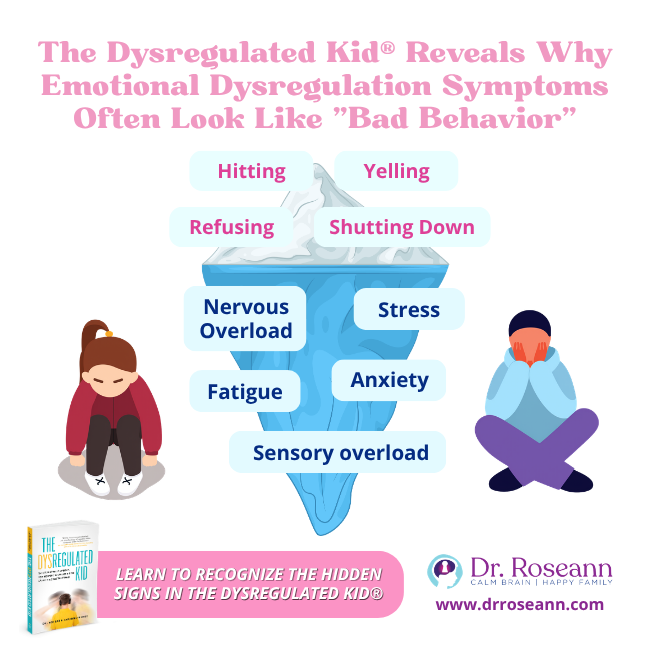
These aren’t parenting failures, this is a dysregulated, inflamed brain asking for help.
Your child goes from a calm, flexible kid to one who melts down over food textures. That can be inflammation, not defiance.
🗣️ “It’s not bad behavior, it’s neuroinflammation. When we understand what the brain is telling us, we can finally give kids the help they need.” — Dr. Roseann
Why does my child struggle more when they’re stressed or not sleeping well?
Stress flips the brain into sympathetic dominance “fight, flight, or freeze” which worsens inflammation. Sleep problems then add fuel to the fire because 90% of detoxification happens during sleep.
When kids don’t sleep well:
- Their brain can’t clear toxins
- Inflammation ramps up
- Behavior gets tougher
- Mood spirals quickly
Tips that help:
- Limit screens before bed
- Use blue-light-blocking glasses
- Create a calming pre-sleep routine
This is why I always say: “Let’s calm the brain first.”
When your child is dysregulated, it’s easy to feel helpless.
The Regulation Rescue Kit gives you the scripts and strategies you need to stay grounded and in control. Become a Dysregulation Insider VIP at www.drroseann.com/newsletter and get your free kit today.
What diet reduces neuroinflammation in kids?
Diet is one of the most powerful tools for reducing inflammation—fast.
The Mediterranean diet stands out for its anti-inflammatory benefits.
Key foods that help:
- Fresh fruits and vegetables
- High-quality proteins
- Clean wheat (Europe, New Zealand, Australia)
- Herbs like parsley and cilantro for natural detox support
Foods to limit or avoid:
- Dairy
- Inflammatory processed foods
Real-life Example
A child with chronic irritability saw huge shifts within weeks after moving to a Mediterranean-style plan.
How are gut health and neuroinflammation connected?
The gut and brain talk constantly through the vagus nerve. When the gut is inflamed, the brain often follows.
Gut-supporting essentials:
- Fermented foods
- Prebiotic-rich foods
- High-quality probiotics
A healthier gut = calmer behavior, better mood, and more regulated attention.
What Practical Tools Help Calm a Dysregulated Nervous System?
Beyond diet, parents can support nervous system regulation to reduce the impact of neuroinflammation.
Supports include:
- Daily routines that predict transitions
- Mindfulness and breathwork practices
- Sensory supports for overstimulation
- Targeted nutritional supplements
Parent insight: Children with consistent routines and magnesium supplementation showed fewer meltdowns and improved focus.
Takeaway
Neuroinflammation is real, common, and deeply connected to behavior, mood, attention, and sleep. When we support the brain through nutrition, detoxification, stress reduction, and sleep, kids feel better and parents finally get answers.

Mental health symptoms don’t exist in a vacuum. The brain and body are connected, and when a child is struggling, we have to be willing to look beyond the behavior we can see. The Dysregulated Kid® gives parents a whole-child, nervous-system-first framework for understanding anxiety, attention problems, mood changes, big reactions, and shutdown. It helps you ask a better question: not just “How do I stop this behavior?” but “What is this behavior telling me about what my child’s brain and nervous system need?” Get The Dysregulated Kid® at dysregulatedkid.com.
FAQs
What are signs of neuroinflammation in kids?
Sudden anxiety, dilated pupils, food refusal, irritability, sleep issues, or attention struggles.
Can diet reduce brain inflammation?
Yes, Mediterranean-style eating is highly effective.
Do PANS/PANDAS cause neuroinflammation?
Yes. The immune system misfires and triggers inflammation in the brain.
Does sleep affect neuroinflammation?
Absolutely. Most detox occurs during sleep, so poor sleep worsens inflammation.
Can stress increase brain inflammation?
Yes—chronic stress pushes the nervous system into overdrive and fuels inflammation.
When your child is struggling, time matters.
Don’t wait and wonder—use the Solution Matcher to get clear next steps, based on what’s actually going on with your child’s brain and behavior.
Take the quiz at www.drroseann.com/help
Dr. Roseann Capanna-Hodge is a licensed therapist, certified school psychologist, and leading expert in emotional dysregulation in children. With over 30 years of experience, she helps parents understand the root causes of meltdowns, anxiety, ADHD, and challenging behavior through the lens of nervous system regulation. Dr. Roseann teaches practical, science-backed strategies for co-regulation and how to calm a dysregulated child using her Regulation First Parenting® approach. She is the host of the Dysregulated Kids Podcast and author of The Dysregulated Kid.
Dr. Roseann Capanna-Hodge
Emotional Dysregulation in Children & Nervous System Expert
Regulation First Parenting® | CALMS Protocol™
Host of the Dysregulated Kids Podcast (Top 1% Globally)
Author of The Dysregulated Kid

Find this helpful? Leave us a review!
Your feedback helps more overwhelmed parents find calm, clarity, and the proven tools that make everyday life easier.
Dr. Roseann Capanna-Hodge: Helping Families of Dysregulated Kids Thrive Through Regulation First Parenting®
As the creator of Regulation First Parenting®, she’s helping families of dysregulated kids discover a compassionate, brain-based path forward. Through The Dysregulated Kids™ Podcast (top 2% globally), she offers practical strategies that help parents understand their child’s brain and support lasting change.
Through The Global Institute of Children’s Mental Health and Dr. Roseann, LLC, she’s created resources like the Neurotastic® Brain Formulas and the Regulation First Parenting® framework—meeting families where they are and supporting them through challenges like ADHD, anxiety, OCD, PANS/PANDAS, and behavioral struggles.
Recognized by Forbes as “a thought leader in children’s mental health,” Dr. Roseann is changing how we understand emotional dysregulation in children—one family at a time.