
Join the Dysregulation Insider get free calm parenting tips straight to your inbox!
YES, I'M IN!Is Your Child Addicted to Video Games? 4 Warning Signs | Emotional Dysregulation in Children | E401





Is your child addicted to video games or is it something deeper? Learn how to tell the difference, spot the 4 warning signs, and support a dysregulated brain with real, science-backed solutions that actually work.
When screen time turns into meltdowns, shutdowns, or constant conflict, it can feel like gaming is taking over your child’s brain.
But here’s the shift that changes everything: this often isn’t about addiction—it’s about a dysregulated nervous system. And when you understand that, you can finally stop the power struggles and start helping your child in a way that actually works.
Why This Matters More Than You Think
Modern parenting comes with a new challenge—devices designed to hook attention and flood the brain with dopamine. For a dysregulated child, that stimulation can quickly become something their nervous system depends on.
Maybe you’re seeing meltdowns when screens turn off, constant bargaining, or no interest in anything else. It’s exhausting and confusing.
But what if your child isn’t choosing screens… What if their brain doesn’t know how to feel okay without them? Let’s break down what’s really going on.
Is your child addicted to video games—or is it emotional dysregulation in children?
True addiction involves loss of control, withdrawal, and continued use despite consequences. But many kids who look addicted are actually using gaming to cope with overwhelm.
This is where emotional dysregulation in children comes in.
Gaming gives the brain fast relief—dopamine, excitement, focus. For a child who feels anxious, under-stimulated, or overwhelmed, it works… temporarily.
What this means:
- Screens don’t create the problem—they amplify it
- Gaming becomes a coping tool, not just entertainment
- Your child isn’t being defiant—they’re dysregulated
Real-life example:
Your child comes home from school, grabs a device immediately, and refuses everything else. It looks like defiance—but it’s actually their nervous system trying to recover.
Why does my child have explosive meltdowns when gaming stops?
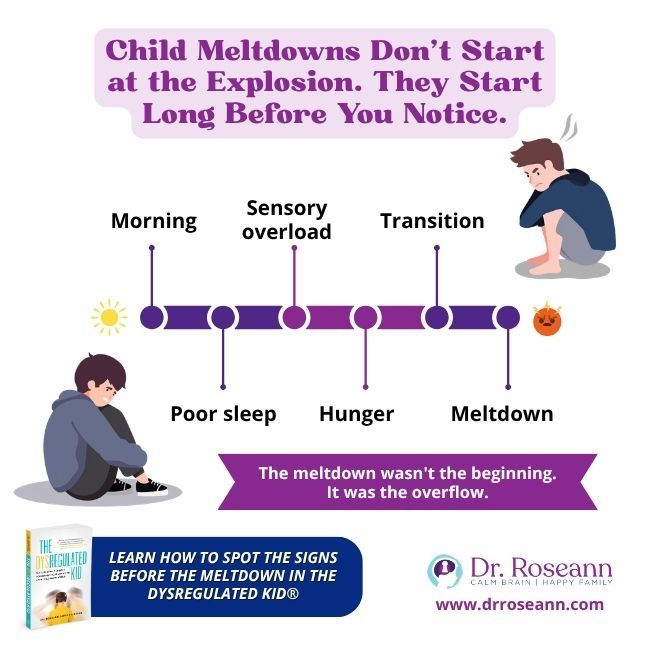
If your child goes from calm to furious the moment you say “time’s up,” it can feel shocking.
But this isn’t attitude—it’s a nervous system crash.
Gaming floods the brain with dopamine and adrenaline. When it stops abruptly, the brain experiences a drop that feels like a threat.
Key takeaways:
- Big reactions = withdrawal from overstimulation
- Abrupt transitions trigger fight-or-flight
- Your child isn’t giving you a hard time—they’re having a hard time
Real-life example:
You turn off the console, and your child screams, cries, or lashes out. That’s not manipulation—it’s a stress response.
VISUAL: “What a dysregulated brain needs first → calm, connection, gradual transitions”
Want to stay calm when your child pushes every button?
Become a Dysregulation Insider VIP and get the FREE Regulation Rescue Kit—your step-by-step guide to stop oppositional behaviors without yelling or giving in.
Go to www.drroseann.com/newsletter and grab your kit today.
What are the 4 warning signs of video game overdependence?
Not every child who loves gaming is addicted. But there are clear signs when it’s becoming a problem.
Watch for these 4 red flags:
- Explosive reactions when gaming ends
- Loss of interest in hobbies, friends, or activities
- Gaming as the only way to calm down
- Sleep, mood, or school decline
Over time, the brain starts preferring high-reward digital stimulation over real-life effort. Flexibility shrinks. Tolerance for boredom disappears.
Real-life example:
Your child used to enjoy sports or playdates, but now everything feels “boring” except gaming—and they’re constantly asking for it.
Why does my dysregulated child rely on gaming to feel okay?
This is the heart of it. For a dysregulated child, gaming isn’t just fun—it’s regulation.
If your child struggles with anxiety, ADHD, or sensory needs, gaming provides:
- Predictable stimulation
- Immediate reward
- Escape from overwhelm
But here’s the catch: the brain starts to depend on that level of stimulation.
What’s happening:
- Dopamine spikes create dependency
- The stress response stays activated
- Real life starts to feel underwhelming or frustrating
Real-life example:
After a hard day, your child melts down—until you let them game. It works in the moment, but it reinforces the pattern.
How do I calm a dysregulated child without making it worse?
This is where most parents go into battle mode—and it backfires.
You can’t remove the coping tool before you build regulation.
How to calm a dysregulated child (that actually works):
- Regulate first, then set limits
- Use co-regulation techniques (your calm is the catalyst)
- Give transition warnings instead of abrupt cutoffs
- Add healthy dopamine sources (movement, connection, sunlight)
- Protect sleep like it’s sacred
Real-life example:
Instead of saying “Turn it off now,” you sit nearby, give a heads-up, and stay calm as they transition. That’s co-regulation in action.
What role does parent emotional regulation play in screen battles?
This is the part most people skip—but it’s everything. Parent emotional regulation is the foundation of change.
Two dysregulated brains arguing about screens? It never ends well.
Your child is borrowing your nervous system. When you stay calm, their brain has a chance to settle.
What to focus on:
- Connection before correction
- Calm tone, even when it’s hard
- Consistency over control
Real-life example:
You feel triggered when your child yells—but instead of reacting, you pause, lower your voice, and stay steady. That’s how regulation begins.
“Video games aren’t the problem—the problem is when your child’s nervous system depends on them to function.” — Dr. Roseann
It’s not about screens—it’s about regulation
If you take one thing away, let it be this: It’s not bad parenting—it’s a dysregulated brain.
When gaming becomes the only way your child can feel calm, it’s a sign they need more support—not more punishment.
And the goal isn’t zero screens. The goal is a brain that doesn’t need screens to feel okay.
When you calm the brain first, everything else starts to shift—behavior, flexibility, and your relationship.
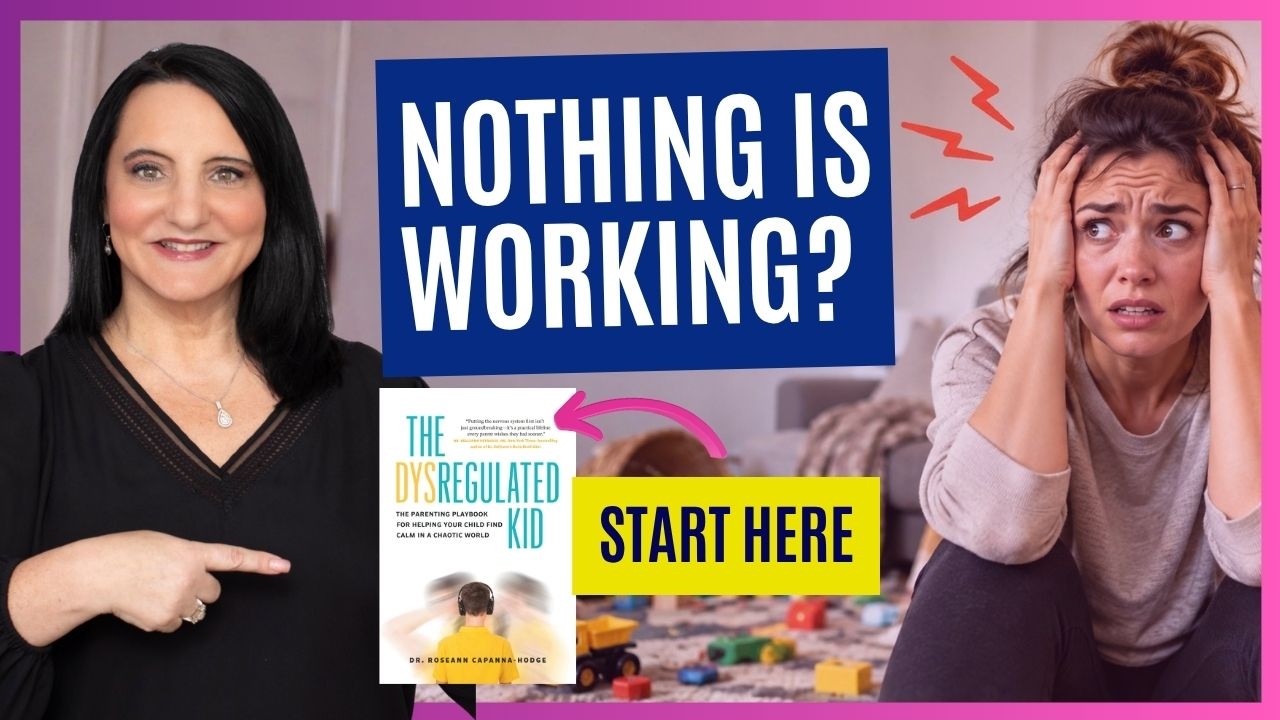
Learn how Regulation First Parenting® can finally help your child feel calmer through the Regulated Child Summit and go deeper with Dr. Roseann’s guidance in The Dysregulated Kid.
When gaming starts affecting sleep, mood, behavior, or family life, looking only at the screen misses part of the picture. The Dysregulated Kid® helps you understand the nervous system underneath those patterns and gives you practical strategies for limits, connection, and regulation. Get the book at dysregulatedkid.com.
FAQs
How do I help my child stop overusing video games?
Focus on building regulation skills first. Add alternatives before removing screens.
Is my child addicted to video games or just dysregulated?
Many kids appear addicted but are actually using gaming to cope with stress or overwhelm.
How do I reduce meltdowns when screens turn off?
Use gradual transitions, co-regulation, and stay calm. Avoid abrupt cutoffs.
Why does my child only calm down with screens?
Because their brain has learned it’s the fastest way to regulate—but it’s not the only way.
Not sure where to start?
Take the guesswork out of helping your child.
Use our free Solution Matcher to get a personalized plan based on your child’s unique needs—whether it’s ADHD, anxiety, mood issues, or emotional dysregulation.
In just a few minutes, you'll know exactly what support is right for your family.
Start here: www.drroseann.com/help
Dr. Roseann Capanna-Hodge is a licensed therapist, certified school psychologist, and leading expert in emotional dysregulation in children. With over 30 years of experience, she helps parents understand the root causes of meltdowns, anxiety, ADHD, and challenging behavior through the lens of nervous system regulation. Dr. Roseann teaches practical, science-backed strategies for co-regulation and how to calm a dysregulated child using her Regulation First Parenting® approach. She is the host of the Dysregulated Kids Podcast and author of The Dysregulated Kid.
Dr. Roseann Capanna-Hodge
Emotional Dysregulation in Children & Nervous System Expert
Regulation First Parenting® | CALMS Protocol™
Host of the Dysregulated Kids Podcast (Top 1% Globally)
Author of The Dysregulated Kid

Find this helpful? Leave us a review!
Your feedback helps more overwhelmed parents find calm, clarity, and the proven tools that make everyday life easier.
Dr. Roseann Capanna-Hodge: Helping Families of Dysregulated Kids Thrive Through Regulation First Parenting®
As the creator of Regulation First Parenting®, she’s helping families of dysregulated kids discover a compassionate, brain-based path forward. Through The Dysregulated Kids™ Podcast (top 2% globally), she offers practical strategies that help parents understand their child’s brain and support lasting change.
Through The Global Institute of Children’s Mental Health and Dr. Roseann, LLC, she’s created resources like the Neurotastic® Brain Formulas and the Regulation First Parenting® framework—meeting families where they are and supporting them through challenges like ADHD, anxiety, OCD, PANS/PANDAS, and behavioral struggles.
Recognized by Forbes as “a thought leader in children’s mental health,” Dr. Roseann is changing how we understand emotional dysregulation in children—one family at a time.