Join the Dysregulation Insider get free calm parenting tips straight to your inbox!
YES, I'M IN!Emotional Dysregulation in Kids: Nervous System Signs You Might Be Misreading | Nervous System Regulation | E396





Emotional dysregulation in kids isn’t just about meltdowns—it starts with subtle nervous system signals most parents miss. Learn how to spot early signs, decode behavior, and help your child regulate before things escalate.
If you’re dealing with emotional dysregulation in kids, you’re probably exhausted trying to manage behaviors that don’t make sense. One minute your child is fine, the next they’re melting down, shutting down, or spiraling—and nothing you try seems to work.
Here’s the truth: this isn’t bad behavior—it’s a dysregulated nervous system. And when you learn to read those signals, everything starts to change. In this article, you’ll learn how to spot early signs, understand what’s really happening in your child’s brain, and how to respond in a way that actually helps.
Why Parents Miss the Early Signs of Dysregulation
Most parents are watching behavior. Almost no one is watching the nervous system.
That’s why emotional dysregulation in children often seems to “come out of nowhere.” But it doesn’t. It builds quietly—through subtle signs that are easy to dismiss or misinterpret.
And when those signals get missed, kids don’t suddenly become “difficult.” Their nervous system simply becomes overwhelmed.
Once you see this through a nervous system lens, everything changes.
Why does emotional dysregulation in kids seem to come out of nowhere?
It feels sudden—but it’s not.
Dysregulation builds under the surface long before a meltdown. Your child’s brain has been sending signals that it’s overwhelmed—you just didn’t know what to look for.
Common early signs include:
- Constant irritability (more than what feels typical for your child)
- Overreactions to small problems
- Perfectionism or rigid thinking
- Clinginess during transitions or stress
Real-life example:
Your child holds it together all day at school. Then the second they get home, they explode over something small—like a snack or homework. That’s not defiance. That’s a nervous system that’s been in overdrive all day.
VISUAL: “After-school meltdown checklist”
What are the subtle signs of a dysregulated child most parents miss?
A dysregulated child doesn’t always look explosive. Sometimes, they look quiet… withdrawn… even “lazy.”
These are just different nervous system states.
Over-Activated Nervous System (Fight/Flight)
- Big reactions to small triggers
- Impulsivity and hyperactivity
- Racing thoughts, especially at bedtime
Under-Activated Nervous System (Shutdown)
- Zoning out or “not listening”
- Low motivation or avoidance
- Flat affect or emotional withdrawal
Real-life example:
Your child stares off when you call their name and avoids starting homework. It looks like they don’t care—but their brain is actually overwhelmed and conserving energy.
👉 This isn’t laziness. It’s nervous system shutdown.
Is my child defiant—or is this emotional dysregulation in children?
This is one of the biggest questions parents ask.
And here’s the reframe: behavior is communication.
What looks like defiance may actually be:
- A stress response, not misbehavior
- An overwhelmed brain scanning for threat
- A nervous system stuck in survival mode
Kids don’t say, “My nervous system is dysregulated.”
They say:
- “I don’t care.”
- “Leave me alone.”
- “I can’t do it.”
Real-life example:
You ask your child to start homework. They snap back, refuse, or shut down. It feels intentional—but their brain is overloaded, and their prefrontal cortex (thinking brain) is offline.
👉 This isn’t defiance—it’s dysregulation.
Want to stay calm when your child pushes every button?
Become a Dysregulation Insider VIP and get the FREE Regulation Rescue Kit—your step-by-step guide to stop oppositional behaviors without yelling or giving in.
Go to www.drroseann.com/newsletter and grab your kit today.
What causes emotional dysregulation in kids at the brain level?
At the core, nervous system regulation in children is about safety.
When the brain doesn’t feel safe, it shifts into survival mode:
- The amygdala (emotional brain) takes over
- The prefrontal cortex (thinking brain) goes offline
- The body floods with stress hormones like cortisol
That’s why logic, consequences, and reasoning don’t work in the moment.
Key takeaways:
- You can’t teach a dysregulated brain
- Calm the brain first, everything else follows
- Regulation must come before expectation
Real-life example:
Trying to reason with your child mid-meltdown is like talking to someone during a fire alarm—they physically can’t process it. You have to regulate first.
How do I calm a dysregulated child without making it worse?
This is where everything shifts.
When you’re parenting a dysregulated child, your response matters more than the behavior.
Start with these simple steps:
- Pause and identify: Is this over-activation or shutdown?
- Co-regulate: Use your calm to help their nervous system settle
- Delay correction: Teach after they’re regulated
Practical tools:
- Sit nearby and stay calm (your presence matters)
- Use fewer words, softer tone
- Offer grounding (hug, blanket, quiet space)
Real-life example:
Instead of saying, “Stop yelling right now,” try sitting next to your child and saying, “I’m here. Let’s calm your body first.”
What happens if emotional dysregulation in kids goes unaddressed?
When dysregulation isn’t addressed at the nervous system level, patterns harden.
You may start to see:
- Increased anxiety, OCD, or depression
- School struggles—even in bright kids
- Eroding confidence and self-esteem
- Family conflict and constant tension
But here’s the hopeful part:
When you regulate the nervous system:
- Focus improves
- Flexibility increases
- Transitions get easier
- Emotional recovery speeds up
👉 Behavior follows biology.
“Emotional dysregulation isn’t a personality flaw—it’s a nervous system signal. When you learn to read the signals, you stop fighting your child and start guiding their brain.” — Dr. Roseann
The Bottom Line: Shift from Behavior to Nervous System
You’re not alone—and you’re not failing.
If your child is struggling, it doesn’t mean they’re broken. It means their nervous system needs support.
When you stop asking, “What’s wrong with my child?” and start asking, “What state is their nervous system in?”—you unlock a completely different way of helping them.
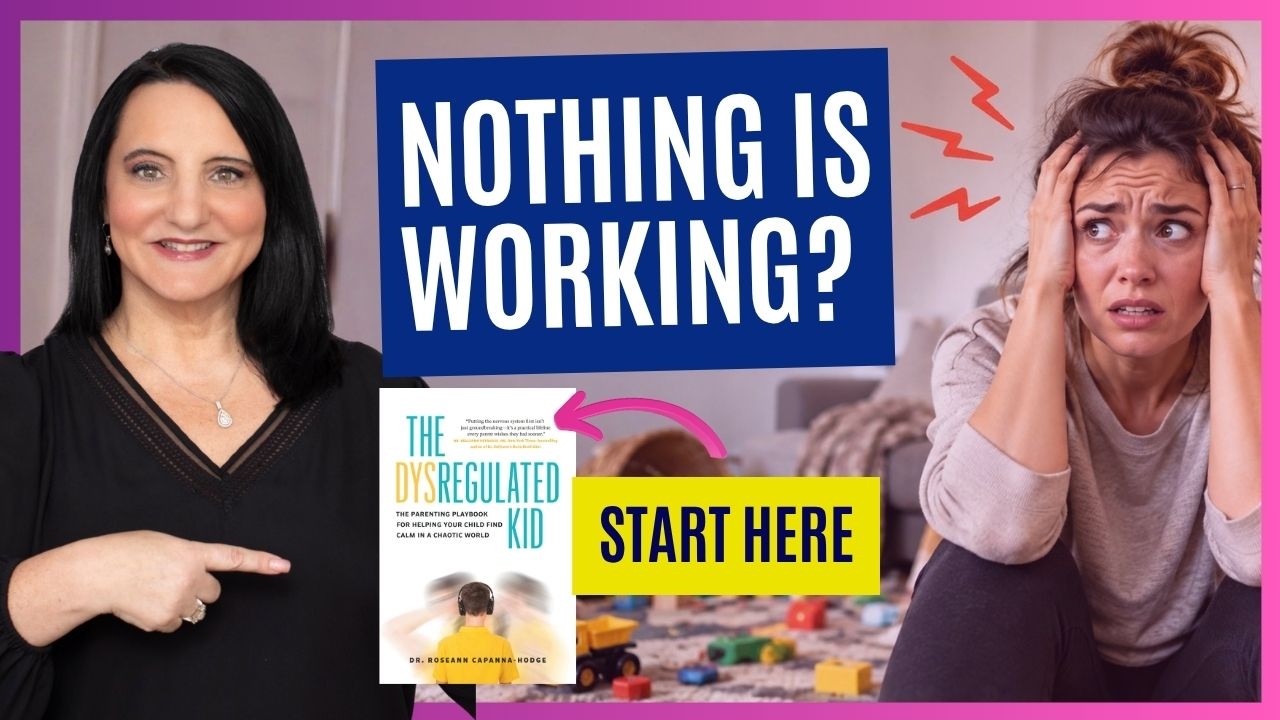
And this is exactly what I teach inside The Dysregulated Kid—how to move from chaos to calm by focusing on regulation first.
Take one step this week: Pause. Observe. Regulate first.
Because when the brain feels safe, everything else starts to work.
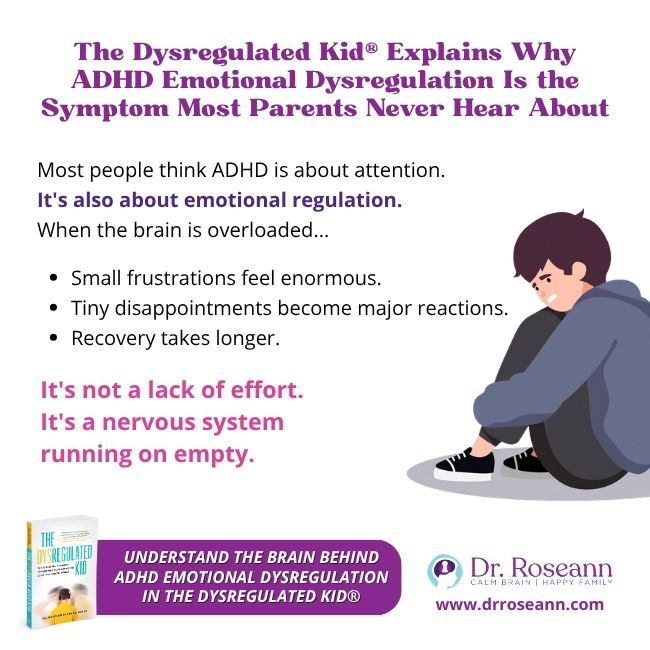
Shutdown, irritability, avoidance, silliness, and explosive reactions can all be signs of dysregulation—not simply bad behavior. The Dysregulated Kid® helps you decode those signals so you can understand what your child’s nervous system is communicating and respond differently. Get the book at dysregulatedkid.com.
FAQs
What is emotional dysregulation in children?
Emotional dysregulation in children is when a child has difficulty managing emotional responses due to a stressed or overwhelmed nervous system—not willful misbehavior.
How do I help my child regulate emotions?
Start with co-regulation—stay calm, reduce demands, and support their nervous system before teaching or correcting behavior.
Can emotional dysregulation improve?
Yes. With consistent nervous system support and co-regulation, kids build self-regulation skills and emotional flexibility over time.
Not sure where to start?
Take the guesswork out of helping your child.
Use our free Solution Matcher to get a personalized plan based on your child’s unique needs—whether it’s ADHD, anxiety, mood issues, or emotional dysregulation.
In just a few minutes, you'll know exactly what support is right for your family.
Start here: www.drroseann.com/help
Dr. Roseann Capanna-Hodge is a licensed therapist, certified school psychologist, and leading expert in emotional dysregulation in children. With over 30 years of experience, she helps parents understand the root causes of meltdowns, anxiety, ADHD, and challenging behavior through the lens of nervous system regulation. Dr. Roseann teaches practical, science-backed strategies for co-regulation and how to calm a dysregulated child using her Regulation First Parenting® approach. She is the host of the Dysregulated Kids Podcast and author of The Dysregulated Kid.
Dr. Roseann Capanna-Hodge
Emotional Dysregulation in Children & Nervous System Expert
Regulation First Parenting® | CALMS Protocol™
Host of the Dysregulated Kids Podcast (Top 1% Globally)
Author of The Dysregulated Kid

Find this helpful? Leave us a review!
Your feedback helps more overwhelmed parents find calm, clarity, and the proven tools that make everyday life easier.
Dr. Roseann Capanna-Hodge: Helping Families of Dysregulated Kids Thrive Through Regulation First Parenting®
As the creator of Regulation First Parenting®, she’s helping families of dysregulated kids discover a compassionate, brain-based path forward. Through The Dysregulated Kids™ Podcast (top 2% globally), she offers practical strategies that help parents understand their child’s brain and support lasting change.
Through The Global Institute of Children’s Mental Health and Dr. Roseann, LLC, she’s created resources like the Neurotastic® Brain Formulas and the Regulation First Parenting® framework—meeting families where they are and supporting them through challenges like ADHD, anxiety, OCD, PANS/PANDAS, and behavioral struggles.
Recognized by Forbes as “a thought leader in children’s mental health,” Dr. Roseann is changing how we understand emotional dysregulation in children—one family at a time.