
%20.png)


.png)
Estimated reading time: 10 minutes
When Parenting Feels Harder Than It Should
Many parents quietly carry a question they rarely say out loud:
Why do I feel so overwhelmed by parenting sometimes?
You love your child deeply.
You want to stay patient.
You try to respond calmly.
And yet there are moments when your reactions feel bigger than you expected.
A simple request turns into frustration.
A small conflict escalates faster than you'd like.
By the end of the day, you may feel emotionally drained.
If this sounds familiar, you’re not alone.
In many cases, these experiences aren’t signs of bad parenting. They are signals that your nervous system may be overloaded.
When stress accumulates throughout the day, the brain can shift into a more reactive state. Patience becomes harder to access, emotions rise faster, and small disruptions can feel much bigger than they normally would.
This doesn’t mean something is wrong with you.
It means your nervous system may be asking for support.
Understanding how parent regulation works is one of the most important shifts I teach families. When parents begin recognizing their own stress signals, it becomes much easier to interrupt escalation and guide difficult moments toward calm.
I explore this idea much more deeply in The Dysregulated Kid: The Parenting Playbook for Helping Your Child Find Calm in a Chaotic World, where parents learn how their own nervous system plays a powerful role in shaping the emotional climate of the home.
Because when parents regulate first, the entire family benefits.

What Is a Dysregulated Parent?
A dysregulated parent isn’t a failing parent.
It’s a parent whose nervous system is carrying more stress than it can comfortably process.
When stress accumulates throughout the day, the brain becomes more reactive. Patience shortens, emotions rise faster, and situations that would normally feel manageable suddenly feel overwhelming.
Many parents notice this showing up as:
- quicker frustration
- difficulty staying calm
- reacting before thinking
- feeling emotionally drained after parenting challenges
This shift happens because the nervous system is designed to respond quickly to stress.
When the brain senses pressure, fatigue, or emotional overload, it may move into fight, flight, or overwhelm mode. In that state, the thinking part of the brain becomes less active, and reactions become more automatic.
The result?
Parents often feel like they’re responding in ways that don’t match the parent they want to be.
Understanding this nervous system pattern is an important step toward changing it.
How Nervous System Stress Affects Parenting
When stress rises high enough, parenting reactions become faster and less intentional.
This doesn’t mean a parent lacks love or commitment.
It simply means the nervous system needs support.
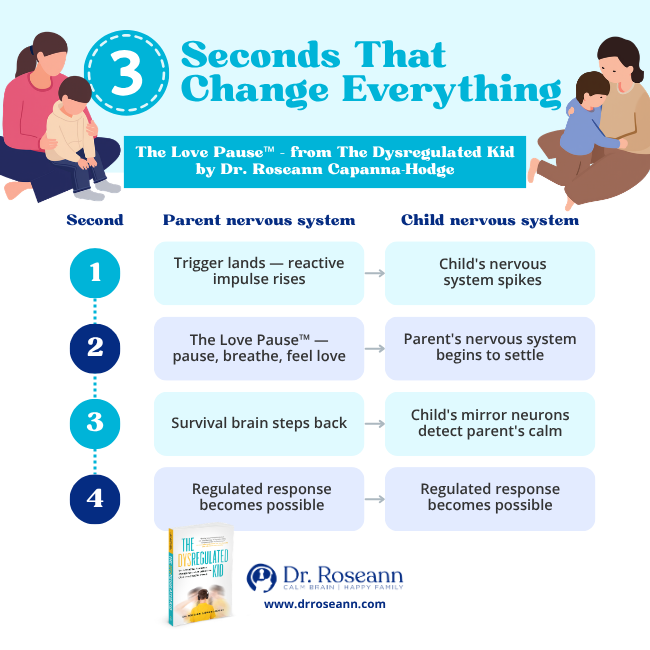
Why Parental Dysregulation Is So Common Today
Many parents assume that if they feel overwhelmed, they must be doing something wrong.
But the truth is that modern parenting places enormous demands on the nervous system.
Parents today are often managing far more responsibilities than previous generations while also trying to be emotionally present, patient, and supportive for their children.
That combination can stretch the nervous system to its limits.
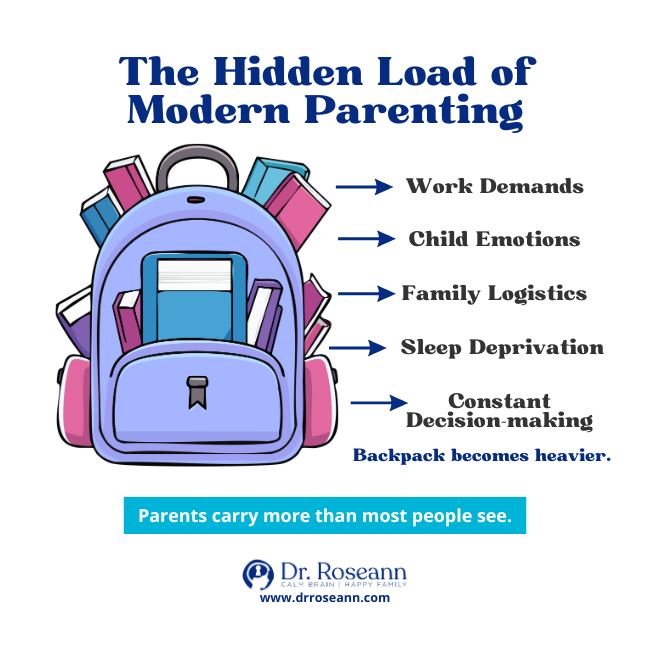
Many parents are juggling:
- demanding work schedules
- constant digital communication
- family logistics and activities
- emotional caregiving for their children
- limited time for recovery or rest
Over time, this constant pressure can leave parents feeling like they are always “on.”
When the nervous system rarely has time to settle, stress can accumulate in the body. Patience becomes harder to access, and emotional reactions may happen faster than expected.
It’s not that parents care less.
In many cases, they are simply carrying too much stress for too long without enough recovery.
And when a child is also struggling with emotional regulation, the stress between parent and child can begin to amplify.
Two overwhelmed nervous systems interacting at the same time can quickly escalate a situation that might otherwise have been manageable.
Recognizing this dynamic can be incredibly relieving for parents.
Because it reframes the question from:
"What’s wrong with me?"
to
"What does my nervous system need right now?"

Common Sources of Parent Nervous System Stress
When these pressures accumulate, even the most patient parent may start noticing signs of dysregulation.
7 Signs You're a Dysregulated Parent
Many parents don’t realize that their reactions during stressful moments are often signals from their nervous system, not personality flaws.
When stress accumulates, the brain becomes more reactive and less flexible. Patience shortens, emotions rise faster, and everyday parenting challenges can feel much harder to manage.
Here are some of the most common dysregulated parent signs.
Quick Checklist: Signs of Parental Dysregulation
If several of these feel familiar, it doesn’t mean you’re failing as a parent.
It may simply mean your nervous system is under more pressure than it can comfortably manage right now.
Sign #1: Small Situations Trigger Big Reactions
A request gets ignored.
Your child talks back.
A simple task becomes a struggle.
Suddenly your reaction feels much bigger than the moment itself.
This happens because stress can shorten the gap between trigger and reaction. When the nervous system is overloaded, the brain moves quickly into protective responses like frustration or anger.
Sign #2: You Feel Irritable More Often Than You'd Like
Many overwhelmed parents describe feeling constantly on edge.
Small interruptions can feel disproportionately frustrating, especially when the nervous system has already been managing stress all day.
Irritability is often one of the earliest signals that the brain needs recovery time.
Sign #3: You Go From Calm to Overwhelmed Quickly
You might start the day feeling patient and grounded.
But one challenging interaction can quickly shift your emotional state.
This fast escalation happens because the brain has less buffer between stress and reaction when the nervous system is already taxed.
Sign #4: Parenting Feels Mentally Exhausting
Even when nothing dramatic happens, the day can feel draining.
This kind of exhaustion often comes from the constant emotional regulation required in parenting.
Your brain is continuously making decisions, monitoring behavior, and managing emotions.
Sign #5: You Replay Parenting Moments With Guilt
Many parents find themselves lying in bed thinking:
"I wish I handled that differently."
This reflection often happens when the nervous system has finally calmed and the thinking brain comes back online.
The important thing to remember is that these moments are opportunities for learning, not proof of failure.
Sign #6: Your Child's Emotions Instantly Activate Yours
When a child becomes upset, their nervous system sends powerful signals.
Parents often absorb that emotional intensity.
Without realizing it, a child’s frustration can quickly trigger the parent’s own stress response.
This is why emotional escalation can feel so fast.
Sign #7: You Feel Drained by the End of the Day
Many parents reach the evening feeling like their emotional energy is completely depleted.
This doesn’t mean you lack resilience.
It often means your nervous system has been working hard all day managing stress and emotions.

What Changes When Parents Begin Regulating Themselves
One of the most powerful shifts in parenting happens when parents begin paying attention to their own nervous system signals.
Instead of trying to force better behavior in the middle of a stressful moment, parents start focusing on stabilizing the emotional environment first.
When parents become calmer and more regulated, several important things begin to change.
Conversations slow down.
Reactions soften.
Escalations happen less frequently.
Children are also very sensitive to emotional cues. When a parent’s tone, posture, and energy become calmer, it often helps a child’s nervous system settle as well.
This doesn't mean parenting suddenly becomes easy.
But many families notice that difficult moments become shorter, less explosive, and easier to repair afterward.
Over time, this creates a very different emotional climate at home — one where stress doesn't automatically spiral into conflict.
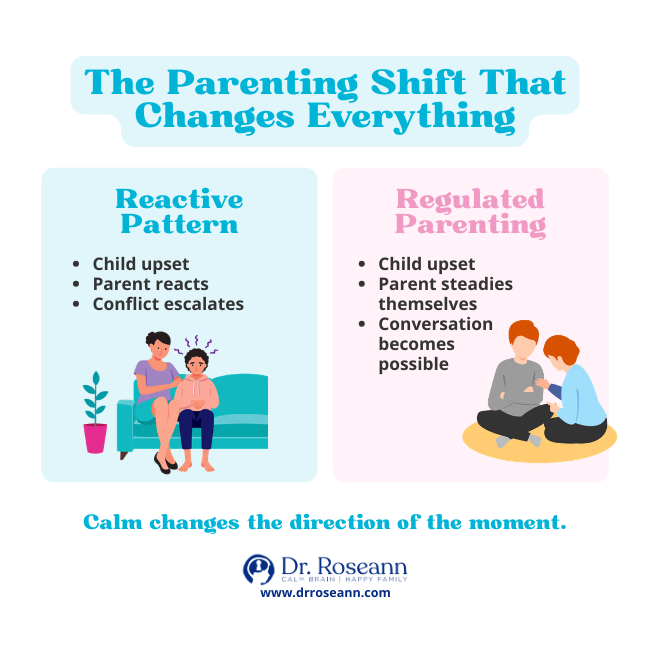
The Shift From Reactive Parenting to Regulated Parenting
Even small shifts in parent regulation can have a powerful ripple effect in the family.
Read about: The Love Pause™: The 3-Second Technique That Stops Reactive Parenting Before It Starts
Learn the Full Regulation Approach in The Dysregulated Kid
Many parents believe that difficult parenting moments are simply about discipline or behavior.
But what many families discover is that those moments are often driven by nervous system stress — in both the child and the parent.
When the nervous system becomes overwhelmed, reactions happen faster, emotions escalate more quickly, and communication becomes harder.
Understanding how stress affects both parent and child can completely change how those moments unfold.
Instead of reacting automatically, parents can learn how to stabilize the emotional environment, reduce escalation, and guide their child back toward calm.
This shift is at the heart of the approach I teach in The Dysregulated Kid: The Parenting Playbook for Helping Your Child Find Calm in a Chaotic World.
Inside the book, parents learn:
• why children become emotionally overwhelmed
• how nervous system stress influences behavior
• how parent regulation changes family dynamics
• practical ways to create calmer parenting moments
When parents understand the brain and nervous system, parenting begins to feel clearer and more manageable.
Because when regulation comes first (Regulation First Parenting™), connection and cooperation become much easier to build.
Read also about: Generational Emotional Wealth™
%2520(2).png)
Parenting Stress FAQs
What are the signs of parental burnout?
Parental burnout often shows up as chronic exhaustion, irritability, and emotional detachment from everyday parenting tasks.
Parents may feel like they are constantly running on empty or reacting more strongly than they normally would.
Common signs include:
- feeling emotionally drained by the end of the day
- losing patience more quickly than usual
- feeling overwhelmed by normal parenting demands
- struggling to recover from stressful moments
Burnout doesn’t mean a parent lacks love or commitment. It often means the nervous system has been carrying too much stress for too long without enough recovery.
Why do I feel so angry or resentful as a parent?
Many parents are surprised by how strong their emotions can feel during stressful parenting moments.
Anger and resentment are often signals of accumulated stress, not character flaws.
When the nervous system is overloaded, the brain becomes more reactive. That means emotions like frustration or anger may surface faster than they normally would.
Recognizing these feelings as stress signals can help parents respond with more awareness instead of guilt.
How do I know if my nervous system is dysregulated?
A dysregulated nervous system often shows up through patterns of emotional and physical stress.
Parents may notice:
- feeling constantly on edge
- difficulty calming down after stressful interactions
- reacting quickly before thinking
- feeling mentally or emotionally exhausted
These signals are the nervous system’s way of communicating that it needs rest, support, and regulation.
Understanding these signals is the first step toward changing how stressful parenting moments unfold.
Citations:
Karreman, A., van Tuijl, C., van Aken, M. A. G., & Deković, M. (2006). Parenting and self-regulation in preschoolers: A meta-analysis. Infant and Child Development, 15(6), 561-579. https://doi.org/10.1002/icd.478
Lavi, I., Ozer, E. J., Katz, L. F., & Gross, J. J. (2021). The role of parental emotion reactivity and regulation in child maltreatment and maltreatment risk: A meta-analytic review. Clinical psychology review, 90, 102099. https://doi.org/10.1016/j.cpr.2021.102099
Lin, S. C., Kehoe, C., Pozzi, E., Liontos, D., & Whittle, S. (2024). Research Review: Child emotion regulation mediates the association between family factors and internalizing symptoms in children and adolescents - a meta-analysis. Journal of child psychology and psychiatry, and allied disciplines, 65(3), 260–274. https://doi.org/10.1111/jcpp.13894
Zimmer-Gembeck, M. J., Rudolph, J., Kerin, J., & Bohadana-Brown, G. (2022). Parent emotional regulation: A meta-analytic review of its association with parenting and child adjustment. International Journal of Behavioral Development, 46(1), 63-82. https://doi.org/10.1177/01650254211051086
Dr. Roseann Capanna-Hodge is a leading expert in emotional and behavioral dysregulation in children.
- Emotional Dysregulation & Nervous System Repair Podcast Everyday Wellness with Cynthia Thurlow ™
- NRBS Emotional Dysregulation with Roseann Capanna-Hodge
- The Experience Miracles (Podcast) Why Traditional Discipline Fails Dysregulated Kids (And What Actually Works)
Always remember... “Calm Brain, Happy Family™”
Disclaimer: This article is not intended to give health advice and it is recommended to consult with a physician before beginning any new wellness regime. *The effectiveness of diagnosis and treatment vary by patient and condition. Dr. Roseann Capanna-Hodge, LLC does not guarantee certain results.
Are you looking for SOLUTIONS for your struggling child or teen?
Dr. Roseann and her team are all about science-backed solutions, so you are in the right place!
© Roseann-Capanna-Hodge, LLC 2026