
Join the Dysregulation Insider get free calm parenting tips straight to your inbox!
YES, I'M IN!How to Respond to Your Kid’s Meltdowns, Tantrums, and Big Reactions | Co-Regulation Parenting | E389





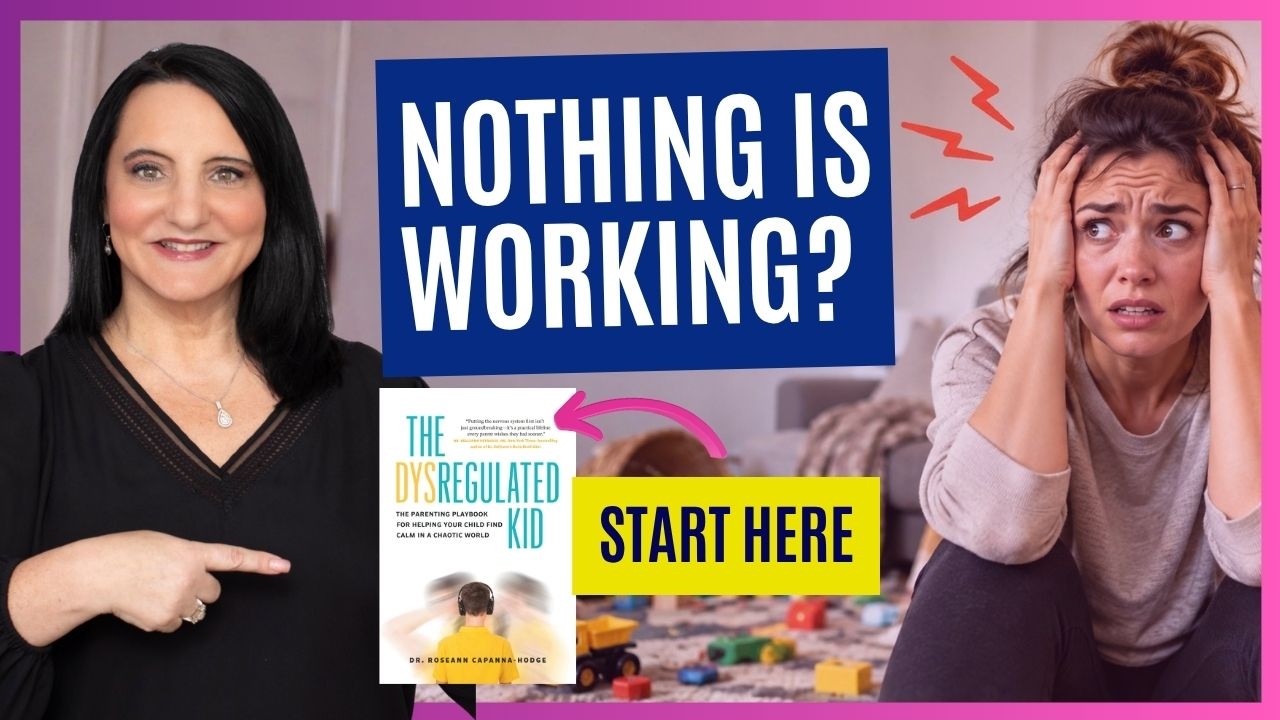
Overwhelmed by your kid's meltdowns, tantrums and big reactions? When outbursts keep repeating, it’s not bad parenting—it’s a stressed nervous system. In this episode, Dr. Roseann Capanna-Hodge, expert in Regulation First Parenting™ and childhood emotional dysregulation, shows you how to calm the brain first and create lasting change.
So many parents come to me feeling overwhelmed, walking on eggshells, bracing for the next explosion. When your child’s meltdowns happen over and over, it creates
fear, frustration, and emotional exhaustion.
When meltdowns keep happening despite your best efforts, it’s not bad parenting. It’s nervous system overload. In this episode, I’ll show you why tantrums repeat—and how to calm the brain first.
Why do my child’s meltdowns keep happening no matter what I try?
Most parents think if they just find the right consequence, reward, or script, they can stop tantrums. But meltdowns aren’t logic problems—they’re biology.
When stress spikes:
- The amygdala hijacks the brain
- Stress hormones surge
- The thinking brain goes offline
No reasoning. No listening. No learning.
From the outside, it looks like defiance or a power struggle. Inside, your child’s nervous system feels threat, loss of control, or sensory overload.
It’s not about effort—it’s about order.
Why do I feel so overwhelmed by my kid’s meltdowns?
Repeated tantrums and meltdowns create hypervigilance. You start anticipating the next explosion before it happens. That dread? It’s real.
Two dysregulated nervous systems in one home feels like chaos—because it is.
You may notice:
- Emotional exhaustion
- Bracing before transitions
- Feeling overwhelmed even during calm moments
This isn’t weakness. It’s biology.
Here’s the truth: You can’t calm a child if your own nervous system is in fight-or-flight. Your regulation is the intervention.
Why doesn’t punishing or lecturing stop tantrums?
You can’t consequence your way out of a nervous system meltdown.
Time outs. Threats. Removing screen time. Lectures. Most families try these. But during child’s tantrums, executive functioning isn’t accessible.
No regulation = no access to problem-solving skills.
That’s why managing tantrums mid-explosion rarely works.
Instead:
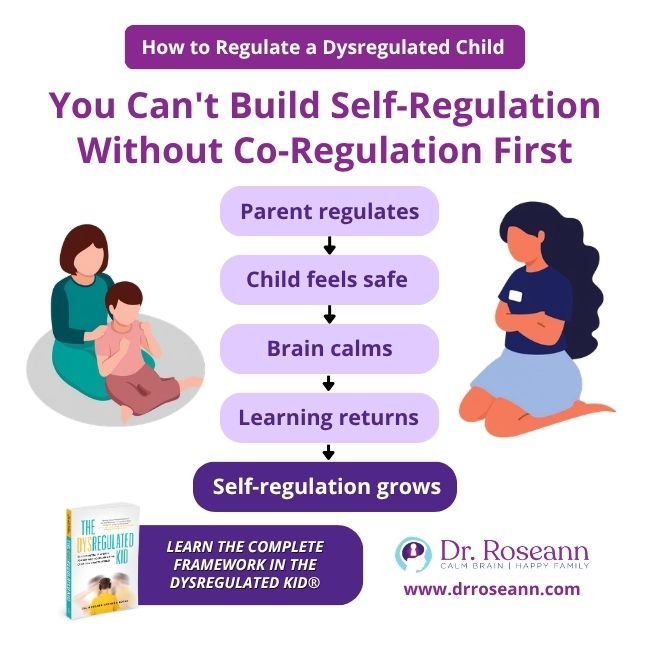
- Regulate first—you, not them
- Drop your shoulders
- Take deep breaths
- Soften your tone
Kids borrow your calm before they build their own.
How can I stop tantrums before they explode?
Here’s where change happens: the yellow light, not the red.
Meltdowns don’t start with screaming. They start with:
- Irritability
- Rigidity
- Whining
- Avoidance
- Zoning out
These are clues about your child’s triggers.
Ask:
- Is there sensory overload?
- Are transitions abrupt?
- Is sleep solid?
- Is their stress cup already full?
It’s all about the total stress load. You shrink tantrums and meltdowns by lowering baseline stress, not by controlling behavior.
🗣️ “If you feel overwhelmed by your child's meltdowns, it doesn't mean you're failing. It means your nervous system is overwhelmed.” — Dr. Roseann
Yelling less and staying calm isn’t about being perfect—it’s about having the right tools.
Join the Dysregulation Insider VIP list and get your FREE Regulation Rescue Kit, designed to help you handle oppositional behaviors without losing it.
Download it now at www.drroseann.com/newsletter
Should I teach coping skills during a meltdown?
No. Coping skills don’t stick in the red zone. Teaching skills during chaos leads to more frustration.
Instead:
- Practice deep breathing in calm moments
- Build self soothing techniques when regulated
- Role-play problem solve scenarios in the green
Repetition during safety rewires the brain.
A little girl who learns to take deep breaths when calm can access that skill during strong emotions later. But she has to practice when her nervous system is steady.
What changes when I regulate first?
Meltdowns may not disappear completely—and that’s normal. All the children have intense feelings. Temper tantrums are a normal part of childhood development.
But you’ll see:
- Shorter recovery time
- Less escalation
- Reduced shame
- More emotional awareness
Your child learns to talk about big emotions instead of acting them out.
Connection increases. Flexibility grows. You start living in the moment instead of reacting to it.
Takeaway & What’s Next
When you change the nervous system, behavior softens. That’s sustainable change—not suppression.
If you’re feeling overwhelmed, Quick CALM guides you through managing meltdowns while regulating your own nervous system first. It’s practical, doable, and designed
for real-life parenting chaos.
And if you’re ready for deeper change, my book The Dysregulated Kid shows you exactly how to reduce meltdown frequency in just a few weeks by shifting from behavior control to nervous system regulation.
If you’re exhausted from walking on eggshells and wondering when the next explosion is coming, you need more than another parenting script. The Dysregulated Kid® gives you a Regulation First Parenting® playbook for understanding what drives those big reactions and knowing what to do before, during, and after them. Get the book at dysregulatedkid.com.
FAQs
Why are my child’s tantrums getting worse?
Stress load may be increasing—sleep, sensory things, unexpected changes, or emotional overwhelm can stack up.
Are daily meltdowns normal?
Occasional tantrums are normal. Frequent, long, or intense meltdowns signal nervous system dysregulation.
What triggers meltdowns in older children?
Sensory overload, transitions, anxiety, loss of control, and unmet needs often trigger situations.
Tired of not knowing what’s really going on with your child?
The Solution Matcher gives you a personalized recommendation based on your child’s behavior, not just a label.
It’s free, takes just a few minutes, and shows you the best next step.
Go to www.drroseann.com/help
Dr. Roseann Capanna-Hodge is a licensed therapist, certified school psychologist, and leading expert in emotional dysregulation in children. With over 30 years of experience, she helps parents understand the root causes of meltdowns, anxiety, ADHD, and challenging behavior through the lens of nervous system regulation. Dr. Roseann teaches practical, science-backed strategies for co-regulation and how to calm a dysregulated child using her Regulation First Parenting® approach. She is the host of the Dysregulated Kids Podcast and author of The Dysregulated Kid.
Dr. Roseann Capanna-Hodge
Emotional Dysregulation in Children & Nervous System Expert
Regulation First Parenting® | CALMS Protocol™
Host of the Dysregulated Kids Podcast (Top 1% Globally)
Author of The Dysregulated Kid

Find this helpful? Leave us a review!
Your feedback helps more overwhelmed parents find calm, clarity, and the proven tools that make everyday life easier.
Dr. Roseann Capanna-Hodge: Helping Families of Dysregulated Kids Thrive Through Regulation First Parenting®
As the creator of Regulation First Parenting®, she’s helping families of dysregulated kids discover a compassionate, brain-based path forward. Through The Dysregulated Kids™ Podcast (top 2% globally), she offers practical strategies that help parents understand their child’s brain and support lasting change.
Through The Global Institute of Children’s Mental Health and Dr. Roseann, LLC, she’s created resources like the Neurotastic® Brain Formulas and the Regulation First Parenting® framework—meeting families where they are and supporting them through challenges like ADHD, anxiety, OCD, PANS/PANDAS, and behavioral struggles.
Recognized by Forbes as “a thought leader in children’s mental health,” Dr. Roseann is changing how we understand emotional dysregulation in children—one family at a time.