



Estimated reading time: 17 minutes
OCD treatment for kids works best when you calm the brain first—not just try to stop the behaviors. The most effective approach combines ERP therapy with nervous system regulation and supportive daily strategies so your child can break free from intrusive thoughts and compulsions.
If your child is stuck in rituals, constant worries, or reassurance-seeking, it may be more than anxiety—and getting the right support can make all the difference.
I’m Dr. Roseann Capanna-Hodge, and for over 30 years I’ve helped families find effective OCD treatment for kids by addressing both symptoms and root causes, using science-backed, practical strategies that truly help.
In this guide, you’ll learn:
- The most effective OCD treatment for kids and how to choose it
- Why your child’s brain gets stuck in OCD loops
- Simple ways to support regulation and reduce compulsions at home
Key Takeaways
- OCD treatment for kids works best when you address the brain first, not just the behaviors.
- ERP (Exposure and Response Prevention) is the gold-standard therapy for reducing compulsions and anxiety.
- OCD is not a behavior problem—it’s a nervous system issue, driven by intrusive thoughts and fear loops.
- Medication like SSRIs can help some kids, but it’s just one part of a broader treatment plan.
- Natural supports—like nutrition, sleep, and supplements—can improve regulation and support recovery.
With the right OCD treatment for kids, change is possible, and your child can regain confidence and control.
What is OCD?
OCD, or Obsessive-Compulsive Disorder, is a mental health condition where the brain gets stuck in a loop of fear and repetitive behaviors. It’s not about “being neat” or “liking things a certain way” — it’s about intrusive thoughts and compulsive actions that hijack daily life. Kids and teens with OCD often struggle in silence, appearing functional on the outside while battling relentless inner chaos. Recognizing OCD early is key to calming the brain and helping your child thrive.
Read: How Does OCD Affects Relationships?
OCD vs Anxiety: What’s the Difference?
It’s one of the most common questions I hear from parents: “Is this OCD, or is it just anxiety?”
While OCD and anxiety are closely related, they are not the same thing—and understanding the difference is key to getting your child the right support.
Anxiety in Kids
Anxiety is a general feeling of worry, fear, or nervousness—usually tied to real-life situations.
- Worrying about school, friendships, or performance
- Feeling nervous before tests or new experiences
- Avoiding situations that feel overwhelming
- Physical symptoms like stomachaches or headaches
With anxiety, the fear is usually connected to something real and situational.
OCD in Kids
OCD involves intrusive thoughts (obsessions) and repetitive behaviors or mental rituals (compulsions) that feel impossible to ignore.
- Disturbing thoughts that pop in suddenly:
“What if I hurt someone?”
“What if something bad happens to Mom?”
- Repetitive behaviors to reduce fear:
checking, counting, washing, repeating - Feeling temporary relief after a ritual—then the fear comes back
- Saying, “I know it doesn’t make sense, but I have to do it”
With OCD, the fear feels urgent and irrational, and the child feels driven to “fix” it through compulsions.
Key Differences: OCD vs. General Anxiety
| OCD | General Anxiety |
|---|---|
| Intrusive, repetitive thoughts | Worry about real-life issues |
| Compulsive rituals to relieve fear | Avoidance or seeking reassurance |
| Fear feels illogical but urgent | Fear often tied to real-world concerns |
What are the Types of OCD?
OCD isn’t one-size-fits-all — it comes in many forms, and understanding the different types of OCD can help you spot the signs sooner. Children and teens might experience fears related to contamination, a need for symmetry, relentless checking, or intrusive thoughts they find distressing. Each form triggers specific compulsive behaviors aimed at relieving the unbearable anxiety OCD creates. Knowing what type your child struggles with can help guide the right treatment plan.
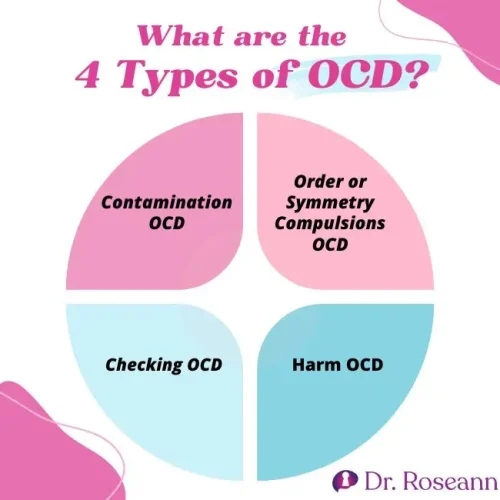
Common Types of OCD:
- Checking: Fear of harm or mistakes leading to compulsive checking (doors, locks, homework).
- Contamination: Intense fear of germs, sticky substances, or illness.
- Symmetry and Orderliness: Need for things to feel “just right” or perfectly aligned.
- Ruminations: Endless mental analysis of philosophical or “big” life questions.
- Intrusive Thoughts: Disturbing thoughts that cause shame or fear.
- Hoarding: Difficulty discarding possessions for fear of loss or harm.
- Responsibility OCD: Feeling of having to follow every rule perfectly
- Somatic: Hyperawareness of what’s going on inside the body like breathing, blinking, other things that happen automatically.
Julia, a caring mother of a 10-year-old girl, became increasingly concerned when she noticed her daughter spending hours rewriting her homework assignments. What initially seemed like perfectionism quickly revealed itself to be something deeper and more troubling. Her daughter explained that if she didn’t rewrite her work over and over, she was terrified a loved one might get hurt. Julia’s story highlights how OCD often masquerades as diligence but is truly driven by overwhelming fear and anxiety.

What are the Symptoms of OCD in Children and Teens?
Recognizing the symptoms of OCD early is essential to getting your child the right help. Obsessions are unwanted thoughts that cause anxiety, while compulsions are behaviors done to ease that anxiety. Symptoms can vary widely and often go unnoticed, especially in high-achieving kids who hide their struggles.
Symptoms of OCD
| Obsessions (Internal Thoughts) | Compulsions (External Actions) |
|---|---|
| Fear of contamination or harm | Excessive handwashing |
| Intrusive religious or violent thoughts | Checking locks or homework repeatedly |
| Need for symmetry | Arranging items until "just right" |
| Fear of upsetting loved ones | Seeking constant reassurance |

Read: How to Help Your Child Manage Scrupulosity OCD and Moral Doubts
Early Signs of OCD in Kids (Toddlers to Teens)
The early signs of OCD in kids don’t always look obvious at first. In fact, many parents tell me, “I thought it was just a phase.” But when behaviors are repetitive, distressing, and hard for your child to stop—even when they want to—that’s when we start to think about OCD.
Here’s how OCD can show up at different ages:
Young Kids (Toddlers to Early Elementary)
In younger children, OCD often looks like rigid routines, rituals, or “just right” behaviors.
- Insisting you say things a certain way—like repeating “goodnight” multiple times until it feels right
- Lining up toys exactly or melting down if something is moved
- Touching objects over and over (e.g., tapping the door 5 times before leaving)
- Saying things like, “If I don’t do this, something bad will happen to you”
- Refusing to wear certain clothes because they don’t feel “right”
- Big emotional reactions when a routine is interrupted
These early signs of OCD in kids can look like strong preferences—but they’re actually driven by anxiety and a need to feel safe.
School-Age Kids
As kids grow, OCD often becomes more verbal and starts to interfere with daily life.
- Asking the same question over and over:
“Are you sure I didn’t make a mistake?”
“Are you sure you’re not sick?”
- Checking behaviors—like repeatedly making sure the door is locked or homework is “perfect”
- Taking an hour to finish a 10-minute assignment because they keep erasing or redoing things
- Avoiding things like public bathrooms, schoolwork, or certain numbers/colors
- Seeking constant reassurance before bed or leaving the house
- Getting stuck in “what if” worries that won’t let go
At this stage, OCD in kids often starts to affect school performance, routines, and family life.
Teens and Adolescents
In teens, OCD often becomes more internal—and easier to miss.
- Having intrusive thoughts like:
“What if I hurt someone?”
“What if I said something inappropriate?” - Performing mental rituals (like silently repeating phrases or counting to cancel out thoughts)
- Avoiding situations that trigger thoughts—like being around certain people or objects
- Feeling ashamed or scared to tell anyone what they’re thinking
- Spending a lot of time in their head but not being able to explain why
- Withdrawing socially or seeming “on edge” all the time
These signs of OCD in teens can be especially confusing because they’re often hidden—and kids may worry something is “wrong” with them.
Parent Tip: If your child says, “I know it doesn’t make sense, but I have to do it,” that’s a big clue. OCD in kids isn’t about behavior—it’s about a brain that’s stuck in a fear loop. And the earlier we recognize it, the easier it is to treat.
What Causes OCD?
Parents often ask: Why is this happening to my child? OCD is a brain-based condition rooted in both genetics and neurobiology. It is not your fault and not your child’s fault. Certain areas of the brain get stuck in a hyperactive loop, especially the parts that regulate stress and switching thoughts. Genetics, environmental stressors, and even infections like strep can trigger or worsen OCD symptoms.
Key Factors:
- Genetic predisposition (OCD tends to run in families)
- Brain chemistry imbalance (especially serotonin)
- Environmental stress and trauma
- Infections triggering immune responses (PANS/PANDAS)

How is OCD Diagnosed?
Diagnosis of OCD is based on a careful clinical evaluation — there’s no single blood test or brain scan that gives a definitive answer. A skilled mental health professional looks for patterns of obsessions, compulsions, distress, and disruption to daily life. OCD is diagnosed when these symptoms are time-consuming (more than an hour a day) and cause significant problems with school, home life, or friendships.
Read: Test for OCD: Worried About Your Child’s Intrusive Thoughts, Worried Questions and Rituals?
Diagnosis Criteria:
- Presence of obsessions and/or compulsions
- Time-consuming or life-disruptive behaviors
- Not better explained by another disorder
Make sure to bring a notebook with specific examples to your first appointment. Clear observations help make the diagnostic process smoother and faster.
Read: Debunking 8 Common Myths About OCD
OCD and PANS/PANDAS
Sometimes, OCD symptoms can appear overnight in children, along with rage, separation anxiety, handwriting changes, and academic struggles. When this happens, it could be a sign of PANS or PANDAS, autoimmune conditions where the body’s immune response attacks the brain after an infection.
PANS/PANDAS vs. Traditional OCD
| Feature | PANS/PANDAS | Traditional OCD |
|---|---|---|
| Onset | Sudden and dramatic | Gradual and progressive |
| Associated with Infection | Often yes (strep, Lyme, etc.) | No |
| Co-occurring Symptoms | Tics, rage, cognitive decline, sensory issues | Anxiety-driven rituals |
Signs of PANS/PANDAS:
- Sudden, severe OCD symptoms
- Food restriction or eating challenges
- Tics or involuntary movements
- Emotional outbursts or personality changes
Read: Strep Throat OCD: Understanding the Connection and Treatment Options
OCD and Autism
Children with autism often experience repetitive behaviors—but how do you tell the difference between autism traits and OCD? While both involve repetition, OCD behaviors are driven by fear and anxiety, whereas autistic stimming is typically calming and sensory-based. Studies show a genetic overlap between OCD and autism, and kids with one condition are at higher risk of the other.
Key Differences:
- OCD rituals are anxiety-driven and distressing.
- Autism stimming is calming and self-soothing.
- OCD often involves intrusive, unwanted thoughts.
Noah, an imaginative 11-year-old with autism, had always been sensitive to textures. But when he began washing his hands obsessively out of fear of contamination, his parents realized this was more than sensory discomfort—it was OCD. His need for constant handwashing grew into an exhausting cycle of fear and ritual. With the right diagnosis and a plan that combined ERP therapy and nervous system calming strategies, Noah gradually learned to face his fears, trust his body, and break free from the rituals that once controlled him.
What Makes OCD Symptoms Worse in Kids
OCD symptoms don’t just appear out of nowhere—they’re often reinforced by patterns that unintentionally keep the cycle going. When you understand what makes OCD worse, you can start to interrupt it.
Here are the most common factors that worsen OCD symptoms in kids:
- Reassurance loops - Constantly answering your child’s “Are you sure?” questions may calm them briefly, but it strengthens OCD over time.
- Avoidance behaviors - Avoiding triggers (like certain places, objects, or situations) teaches the brain that the fear is valid and must be avoided.
- High stress or overwhelm - A dysregulated nervous system makes intrusive thoughts louder and harder to manage.
- Poor sleep - Overtired brains struggle with emotional regulation, which can intensify OCD symptoms.
- Inconsistent boundaries - Giving in to compulsions sometimes—but not always—can confuse the brain and reinforce the cycle.
- Excessive screen time - Too much stimulation can dysregulate the brain and reduce your child’s ability to cope with intrusive thoughts.
OCD grows stronger when the brain feels unsafe. That’s why calming the nervous system is a critical part of OCD treatment for kids.
What Are the Best OCD Treatments for Kids?
The best approach to OCD treatment calms the brain first and uses evidence-based therapy. Cognitive Behavioral Therapy (CBT) paired with Exposure and Response Prevention (ERP) is the gold standard. Some kids also benefit from neurofeedback, EFT tapping, and targeted supplements like magnesium to support brain regulation.

Not all OCD treatments work the same way—and understanding your options helps you make confident, informed decisions.
Here’s a simple breakdown of the most common OCD treatment approaches for kids:
| Treatment Option | How It Works | When It’s Most Helpful |
|---|---|---|
| ERP Therapy | Gradually exposes kids to fears while preventing compulsions. | First-line treatment for most children with OCD. |
| Cognitive Behavioral Therapy (CBT) | Teaches thought-challenging and coping skills. | Helpful alongside ERP, but not as effective alone for OCD. |
| Medication (SSRIs) | Regulates serotonin to reduce anxiety and obsessive thoughts. | Moderate to severe OCD or when therapy alone isn’t enough. |
| Natural Supports | Includes nutrition, supplements, sleep, and regulation strategies. | Supports overall brain function and enhances other treatments. |
| Parent Coaching | Teaches parents how to respond without reinforcing OCD. | Essential for reducing reassurance and supporting progress at home. |
Real-life example:
Sarah used ERP combined with magnesium and neurofeedback to help her son reduce nighttime rituals. Within three months, he was falling asleep faster and feeling calmer overall.

OCD Treatment Roadmap for Kids: What to Do First
If you’re wondering where to start with OCD treatment for kids, you’re not alone. The good news? There is a clear, effective path forward.
Here’s a simple step-by-step roadmap:
- Recognize the signs early
Look for patterns like intrusive thoughts, rituals, avoidance, or repeated reassurance-seeking.
- Get a proper evaluation
Work with a trained mental health professional who understands OCD—not just general anxiety.
- Start ERP therapy
Exposure and Response Prevention (ERP) is the gold standard for OCD treatment for kids and helps retrain the brain’s fear response.
- Support nervous system regulation
Calming the brain through sleep, nutrition, and regulation strategies makes therapy more effective.
- Consider medication if needed
For moderate to severe OCD, SSRIs may be helpful—but they should be part of a broader plan, not the only solution.
- Stay consistent and track progress
OCD treatment takes time, but with consistency, most kids show meaningful improvement.
In my experience, when you combine brain-based support with the right therapy, kids don’t just cope—they truly get better.
Why Regulation Comes Before Behavior Change in OCD
When it comes to OCD treatment for kids, one of the biggest mistakes I see is trying to stop the behaviors before calming the brain.
OCD isn’t a willpower issue—it’s a dysregulated brain stuck in a fear loop. When your child is flooded with anxiety, their brain shifts into survival mode, making it incredibly hard to think flexibly or resist compulsions.
That’s why regulation has to come first.
- A calm brain is a teachable brain
- A regulated nervous system allows for flexible thinking
- And flexible thinking is what helps kids resist compulsions and tolerate discomfort
When we focus on regulation first—through sleep, nutrition, connection, and nervous system support—everything else becomes more effective.
This is where approaches like ERP therapy work best. When the brain is calmer, kids can engage in exposures, build tolerance, and break the OCD cycle more successfully.
In my 30+ years of working with families, I’ve seen this again and again:
When you calm the brain first, behavior change follows.
How Can Parents Help Their Child with OCD?
As a parent, you are your child’s greatest ally. Early diagnosis, education, and the right support can make all the difference. Remember: Behavior is communication — your child’s rituals are their brain’s way of coping with overwhelming anxiety.
Ways to Help:
- Get an early diagnosis: Symptoms rarely go away on their own.
- Educate yourself: Learn about ERP and OCD treatment strategies.
- Be supportive but firm: Avoid accommodating rituals, which feeds the OCD cycle.
- Stay consistent: Celebrate small wins and gently encourage progress.

When Sarah realized that accommodating her son’s bedtime rituals was only strengthening his fears, she made a courageous decision to change course. With the support of his therapist, she began encouraging small, manageable exposures—like turning off the light without rechecking the door five times. At first, the new approach was hard for both of them. But night after night, with patience, encouragement, and a lot of deep breaths, Sarah watched her son’s anxiety shrink and his confidence grow. Over time, those once-consuming rituals faded away, and bedtime became a calm, predictable routine again. By staying steady and trusting the process, Sarah helped her son break free from the grip of OCD—and reclaim peace for their whole family.
If your child is struggling with OCD, remember: healing starts w1ith calming the brain first.
With early intervention, the right support, and consistent brain-calming strategies, kids can retrain their nervous system, quiet intrusive thoughts, and reclaim their joy. Progress might feel slow at times, but every small step forward matters—and you don’t have to walk this path alone.
You are doing more for your child than you realize—and real, lasting change is possible.
FAQs
Can OCD in children go away without treatment?
OCD in children rarely goes away without treatment, and symptoms often persist or worsen without proper support.
Is medication always necessary for OCD?
Medication is not always necessary for OCD, as many children improve with ERP therapy alone, though SSRIs can help in more severe cases.
How long does OCD treatment take?
OCD treatment for kids often leads to noticeable improvement within 12–16 weeks, especially with consistent, structured therapy.
Can magnesium really help OCD symptoms?
Magnesium can help OCD symptoms by calming the nervous system and reducing brain excitability, making intrusive thoughts easier to manage.
Is it common for kids with OCD to have other conditions?
It is common for kids with OCD to have other conditions, including anxiety, ADHD, autism, and PANS/PANDAS.
What is the best OCD treatment for kids?
The best OCD treatment for kids is Exposure and Response Prevention (ERP) therapy, often combined with nervous system regulation strategies and, in some cases, medication.
Can therapy alone work as OCD treatment for kids?
Yes, therapy—especially ERP—is often effective as OCD treatment for kids, particularly when started early and supported at home.
How can parents support OCD treatment for kids at home?
Parents can support OCD treatment for kids by reducing reassurance, staying consistent with boundaries, and helping their child build regulation skills.
When should I seek professional OCD treatment for kids?
You should seek OCD treatment for kids when symptoms interfere with daily life, cause distress, or start taking up significant time in your child’s day.
Citations
American Academy of Child and Adolescent Psychiatry [AACAP]. aacap.org/AACAP/families_and_youth/facts_for_families/FFF-Guide/obsessive-compulsive-disorder-in-children
International OCD Foundation. About OCD. Retrieved from iocdf.org/about-ocd/how-is-ocd-diagnosed/
Brown University. (2021, December 9). Researchers identify brain signals associated with OCD symptoms, paving the way for adaptive treatment. Science Daily. Retrieved November 4, 2022, from www.sciencedaily.com/releases/2021/12/211209124247.htm
©Roseann Capanna-Hodge
Understanding your child's emotional triggers is the first step toward helping them self-regulate. For a comprehensive guide, see The Dysregulated Kid by Dr. Roseann Capanna-Hodge.
Always remember… “Calm Brain, Happy Family™”
Disclaimer: This article is not intended to give health advice and it is recommended to consult with a physician before beginning any new wellness regime. The effectiveness of diagnosis and treatment vary by patient and condition. Dr. Roseann Capanna-Hodge, LLC does not guarantee certain results.
Are you looking for SOLUTIONS for your struggling child or teen?
Dr. Roseann and her team are all about science-backed solutions, so you are in the right place!

Meet the Expert
Licensed Therapist | Certified School Psychologist
Board Certified in Neurofeedback (BCN) | 30+ Years Clinical Experience
Expert in Emotional Dysregulation in Children and Nervous System Regulation
Host, Dysregulated Kids Podcast | Author, The Dysregulated Kid
Dr. Roseann Capanna-Hodge is a licensed therapist, certified school psychologist, and leading expert in emotional dysregulation in children and nervous system regulation. With over 30 years of clinical experience and having analyzed more than 10,000 brain maps, she helps families understand what behavior is really signaling—and how to calm the nervous system first so real change can happen.
She is the creator of Regulation First Parenting® and the CALMS Protocol™, host of the top 1% podcast Dysregulated Kids, and author of The Dysregulated Kid.