
%20.png)


Contents

Estimated reading time: 8 minutesEver wonder why your child’s OCD suddenly got worse after a stressful week?While stress doesn’t directly cause OCD, it can absolutely make symptoms explode—especially in kids who are already wired for it.Even little things like math homework or holiday excitement can send their nervous system into overdrive. When that happens, calming the brain—not just managing behavior—is your real superpower.
How Are OCD and Stress Connected?
Stress doesn’t cause OCD, but it can definitely pour gasoline on the fire — especially if your child’s brain is already vulnerable.When your child is overwhelmed by big emotions, trauma, or even just the daily pressures of school and life, their dysregulated brain may turn to obsessive thoughts or compulsive behaviors as a way to feel safe and in control.When stress shows up, the brain tries to cope—but not all coping is healthy. Sometimes, those repetitive behaviors or intrusive thoughts give temporary relief, which tricks the brain into thinking it needs them.And that’s how OCD patterns start to stick. Here’s what we know:
- Traumatic life events can contribute to the onset of OCD.
- Chronic stress or distress can make existing OCD symptoms worse.
- Genetic predisposition plays a role—those with a family history of OCD may be more likely to develop symptoms after stress or trauma.
- Stressful transitions, like moving, starting a new school, or family conflict, can trigger symptoms in vulnerable individuals.
In one documented case, a 77-year-old woman with no prior OCD history developed symptoms after the stressful experience of moving into a nursing home, suggesting that even in later life, significant stress can act as a trigger (Velayudhan & Katz, 2006).Stress doesn’t always show up the same way, but it can absolutely reshape how the brain copes—and sometimes, that opens the door to OCD, anxiety, or even PTSD.
What Stressful Life Events Can Trigger OCD?
Not all stress is created equal—and for kids with underlying vulnerabilities, certain life events can flip the switch on OCD. These overwhelm a sensitive nervous system and push the brain into survival mode.Common stress-related triggers include:
- Emotional abuse or neglect
- Family violence or instability
- Constant criticism or feelings of rejection
- High academic expectations or perfectionism
Major life changes: divorce, moving, or changing schools

Though trauma from disasters or violence isn’t usually linked to OCD, it can disrupt the nervous system and cause other issues. When stress is high, intrusive thoughts and compulsions can feel overwhelming—especially for anxious kids.
Dylan’s Story
I worked with Dylan at my Ridgefield, CT clinic after his mom reached out because his grades were slipping, even though he was studying nonstop. During exam week, the pressure overwhelmed him, and his OCD kicked into overdrive.He felt compelled to re-read every textbook page three times to make sure he was prepared, but this ritual only left him stuck. Trapped in a loop, he couldn’t move forward, and the cycle drained his energy and confidence.That’s the tricky thing about OCD—it doesn’t always announce itself loudly. Sometimes it creeps in during quiet moments when a child is simply trying their best, and calming the brain is the crucial first step to breaking free.
What Are 8 Simple Ways to Manage Stress When You Have OCD?
Stress can worsen OCD symptoms and even open the door to other mental health challenges, which makes treatment and coping skills absolutely essential (Ferreira et al., 2021). Learning to spot the difference between your child’s own thoughts and their OCD brain is key—plus, managing stress well can help make those symptoms feel less overwhelming.
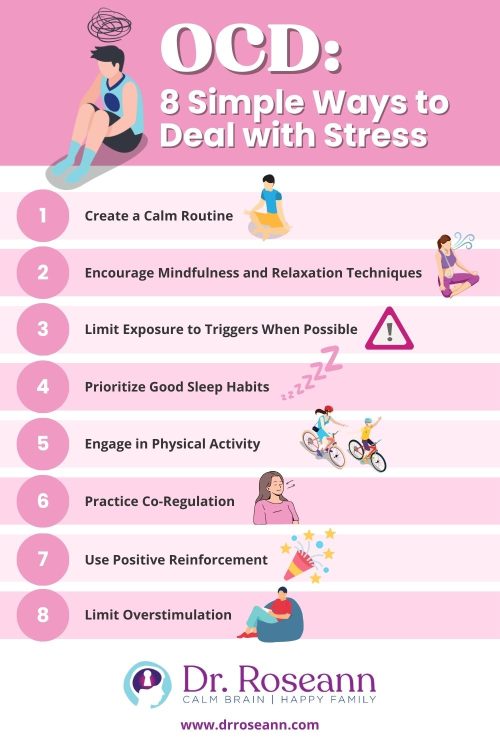
Here are 8 practical ways to support your child with OCD and ease stress:
1. Create a Calm Routine
Having a steady daily routine offers predictability and comfort, reducing stress triggers that may fuel OCD.
2. Encourage Mindfulness and Relaxation
Deep breathing, progressive muscle relaxation, and mindfulness exercises calm the nervous system and reduce anxiety. Practicing together can make these techniques more accessible and engaging.
3. Limit Exposure to Triggers When Possible
Put on your “parent detective” hat to spot what sparks your child’s OCD. While avoidance isn’t always the goal, cutting down on unnecessary triggers during tough times can bring relief.
4. Prioritize Good Sleep Habits
Poor sleep and stress often go hand-in-hand. A relaxing bedtime routine, limited screen time, and consistent sleep schedules support better rest and reduce symptom severity.
5. Engage in Physical Activity
Movement offers a healthy break from intrusive thoughts. Encourage activities your child enjoys, whether it’s dancing, walking, sports, or simple stretches.
6. Practice Co-Regulation
Calmly support your child or loved one when they feel overwhelmed. Slow breathing and staying present help soothe their nervous system through co-regulation.
7. Use Positive Reinforcement
Celebrate small wins—resisting compulsions or handling urges. A little praise boosts confidence and eases anxiety around OCD.
8. Limit Overstimulation
Busy, noisy places can trigger symptoms. Creating quiet, calm zones at home or picking peaceful spots out in public helps reduce sensory overload.These aren’t magic fixes but steady strategies to create a supportive space where managing OCD feels a bit easier. Getting the whole family on board? That’s the secret sauce for lasting support on this journey.Remember, calming the brain first unlocks your child’s potential — and you’re right there making that happen.
How Does Obsessive Compulsive Disorder (OCD) Look Like in Children and Teens?
When most people think of OCD, they picture endless hand washing—but this condition can show up in many different ways. Fueled by obsessive thoughts and compulsive behaviors, OCD often hides in plain sight and may come alongside anxiety, ADHD, or brain-based conditions like PANS or PANDAS—making it all the more important for parents to know help and healing are possible.
What are Common OCD Symptoms?

OCD often looks like:
- Time-consuming rituals
- Compulsive behaviors driven by fears that don’t always make sense
These push kids and teens to repeat certain rituals, hoping it’ll help them feel better. But unfortunately, the more they do it, the more anxious they get—and the cycle just keeps going.Lots of kids with OCD also deal with anxiety, since those two often go hand in hand. Intrusive thoughts, strong compulsions, and intense emotions can make everyday life feel pretty overwhelming.Even though kids with OCD might seem “normal” or highly capable on the outside, those intrusive thoughts can take over, flipping from mild to intense. Because OCD lives mostly inside the mind, its impact isn’t always easy to see—sometimes leading to misdiagnosis or missed signs.Physical symptoms can show up too, like:
- Stomach problems
- Trouble sleeping
- Repetitive behaviors
In early adulthood, OCD might look like someone’s got it all together—until the constant mental chatter and stress quietly hijack their day.Getting the right diagnosis often brings relief and clarity, helping families understand that obsessive thoughts and compulsions come from a real, treatable condition.The first step? Finding that diagnosis. The American Psychiatric Association recommends treatments like:
- Cognitive Behavioral Therapy (CBT)
- Exposure and Response Prevention (ERP)
These tools are proven to help manage OCD and bring back a sense of calm.
What are Natural OCD Treatment and Therapies?

OCD treatments may not completely cure the condition, but they can significantly reduce symptoms and make daily life easier to manage. Depending on severity, OCD therapy might need to be ongoing or more intensive.A healthy lifestyle can ease OCD symptoms by lowering stress and boosting mood.
- Getting enough sleep
- Eating well
- Moving your body (exercising)
- Facing stress without fear
- Safely confronting triggers (instead of avoiding or seeking reassurance)
1. PsychotherapyMany benefit from Cognitive Behavioral Therapy (CBT), especially Exposure and Response Prevention (ERP), which gradually exposes people to feared situations and helps resist compulsions. It’s the gold standard for OCD treatment, while general anxiety therapy can worsen symptoms—so working with specialists like our team or IOCDF experts is key.Parents play a vital role during ERP by supporting their child without encouraging avoidance or reassurance. Instead of soothing compulsions, ERP teaches healthy coping, helping parents confidently respond to OCD triggers and support their child’s anxiety management. 2. CALM PEMF™PEMF (Pulsed Electromagnetic Field) therapy is another helpful tool that calms the brain and reduces mental and physical stress.Benefits of CALM PEMF™ Therapy:
- Boosts nerve cell function and communication by gently influencing the body’s bio-electromagnetic fields
- Improves cellular energy and overall well-being
- Its portable, targeted protocols support nervous system regulation
- Brings calm anytime, anywhere
3. NeurofeedbackNeurofeedback helps children with OCD enter a relaxed state, allowing clearer thinking and positive actions. It calms the brain subconsciously, breaking the repetitive OCD loops that block focus and make therapy difficult.As a result, kids reduce obsessions and compulsions, become less irritable, and gain confidence to face fears calmly and actively. ™
Parent Actions Steps
Learn and practice healthy coping strategies with your child.Foster a healthy lifestyle with good sleep, nutrition, and exercise.Promote stress management techniques.Learn more about the BrainBehaviorReset™ ProgramTake our Solution Matcher to get science-backed solutions to help your child today.FAQ
Why do OCD symptoms flare up during stressful times?
Stress disrupts the brain’s regulation of anxiety and control, making OCD loops harder to break. This can lead to more intense compulsions and obsessive thoughts.
Can stress alone trigger OCD in someone with no history?
Stress might reveal OCD symptoms in someone already vulnerable but doesn’t typically create OCD from scratch. Genetics and brain chemistry play bigger roles in developing OCD.
Can lifestyle changes impact OCD symptoms?
Yes, healthy habits like enough sleep, balanced diet, and regular exercise lower stress and improve mood, which helps ease OCD symptoms. Lifestyle changes complement therapy for better results.
How can parents avoid making OCD worse?
Avoid giving reassurance or allowing avoidance behaviors. Instead, encourage facing fears and practicing coping skills learned in therapy.
Citations
Ferreira, S., Couto, B., Sousa, M., Vieira, R., Sousa, N., Picó-Pérez, M., & Morgado, P. (2021). Stress Influences the Effect of Obsessive-Compulsive Symptoms on Emotion Regulation. Frontiers in psychiatry, 11, 594541. https://doi.org/10.3389/fpsyt.2020.594541Velayudhan, L., & Katz, A. W. (2006). Late-onset obsessive–compulsive disorder: the role of stressful life events. International Psychogeriatrics, 18(2), 341–344. https://doi.org/10.1017/s1041610205002735Dr. Roseann is a mental health expert in Neurodivergence who is frequently in the media:
- What if it's Not Depression (Video) Anxiety, OCD and Trichotillomania.
- Holistic Counseling Podcast: Effective Treatments for OCD
- Neurofeedback for ADHD, anxiety, OCD and mood
Always remember... “Calm Brain, Happy Family™”
Disclaimer: This article is not intended to give health advice and it is recommended to consult with a physician before beginning any new wellness regime. *The effectiveness of diagnosis and treatment vary by patient and condition. Dr. Roseann Capanna-Hodge, LLC does not guarantee certain results.
Are you looking for SOLUTIONS for your struggling child or teen?
Dr. Roseann and her team are all about science-backed solutions, so you are in the right place!
Get Dr. Roseann’s complimentary gift