




Estimated reading time: 5 minutes
Figuring out how to help your dyslexic child often starts with a confusing reality—your child is bright, capable, and trying hard, yet reading still feels like an uphill battle.
Dyslexia affects about one in five kids, but it doesn’t limit what your child can achieve. It simply means their brain processes language differently—and with the right support, they can thrive.
I’m Dr. Roseann Capanna-Hodge, and for over 30 years I’ve helped families support dyslexic children using brain-based, science-backed strategies that build both skills and confidence.
In this guide, you’ll learn simple, effective ways to help your dyslexic child succeed at home and in school.
What Causes Dyslexia in Children?
Dyslexia doesn’t have a single cause. Genetics often play a role, and neurological or environmental factors can shape how language is processed (Snowling & Melby-Lervåg, 2016).
Think of it not as a defect but as a wiring variation. The brain regions that handle language don’t always fire as smoothly, so reading takes extra effort and energy.
Contributing factors may include:
- Family history
- Differences in brain activity during reading
- Early phonemic awareness challenges
And here’s the truth: your child isn’t broken—their brain just learns differently. Calm the brain first, and everything follows.
Can Dyslexia Be Diagnosed Early?
You don’t have to wait until reading turns into a daily battle. Screening as early as preschool or kindergarten gives children a real shot at smoother learning and stronger confidence before frustration snowballs.
Imagine a loose bike wheel—you wouldn’t send your child flying downhill and hope for the best. You’d tighten it right away so the ride feels steady and safe. Dyslexia works the same way: early attention prevents bigger crashes later.
Red flags to notice early:
- Struggles with rhyming games or songs
- Slow progress connecting letters with sounds
- Family history of reading difficulties
Your child isn’t broken—they simply learn in a different rhythm. Calm the brain first, and everything follows.
What Are the Best Ways Parents Can Support a Child With Dyslexia?
When your child struggles with reading, it can feel like the ground drops out beneath you. You want to help, yet sometimes it feels like you’re fumbling in the dark.
Here’s the hopeful truth—your support at home can shift everything. A calm space, steady encouragement, and the right tools give your child not only skills but belief in themselves again.
So, How To Help Your Dyslexic Child?
1. Get a proper evaluation
- An assessment shines a light on exactly where your child trips up—whether sounds, fluency, or comprehension.
- Ozernov-Palchik and Gaab (2016) found that spotting dyslexia early allows children to benefit from intervention before challenges snowball.
2. Bring in an advocate when needed
- Ever felt lost in school meetings? An advocate helps cut through the fog.
- They translate jargon into steps you can act on and make sure your child’s rights stay protected.
3. Partner with teachers
- Teachers witness your child’s daily highs and lows.
- When you stay in sync, school strategies and home routines mesh together.
- Share what calms your child and watch confidence slowly bloom.
4. Access extra school help
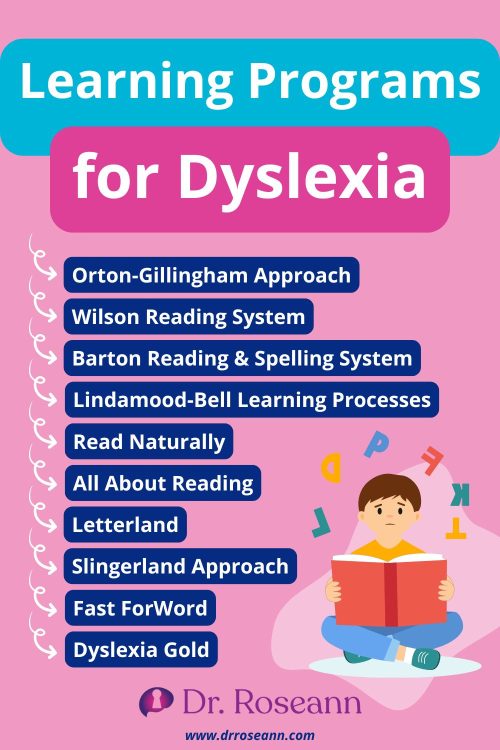
- Ask for research-backed programs like Orton-Gillingham or Wilson.
- Accommodations—whether audiobooks, more time, or smaller groups—don’t give unfair advantage. They open locked doors.
5. Track progress
- A notebook or even your phone can become your best ally.
- Tracking growth shows what’s helping, and it arms you with proof if you need fresh supports.
6. Choose the right reading program
- Multisensory programs pull in eyes, ears, and hands all at once.
- When instruction targets decoding and fluency, long-term gains stack up like bricks building a strong foundation (Galuschka et al., 2014).
7. Find skilled instructors
- A good tutor doesn’t just teach—they notice subtle struggles and pivot.
- Ask about training in dyslexia-specific methods because expertise matters more than generic support.
8. Talk openly with your child
- Silence breeds shame. Explain dyslexia as a unique learning style, not a flaw.
- Share stories of entrepreneurs, artists, or leaders with dyslexia—real-life proof that different wiring can create brilliance.
9. Boost brain health
- Brains thrive with proper sleep, steady movement, and nourishing food.
- Simple habits—like short walks or breathing games—help a nervous system settle so learning feels less like a battle.
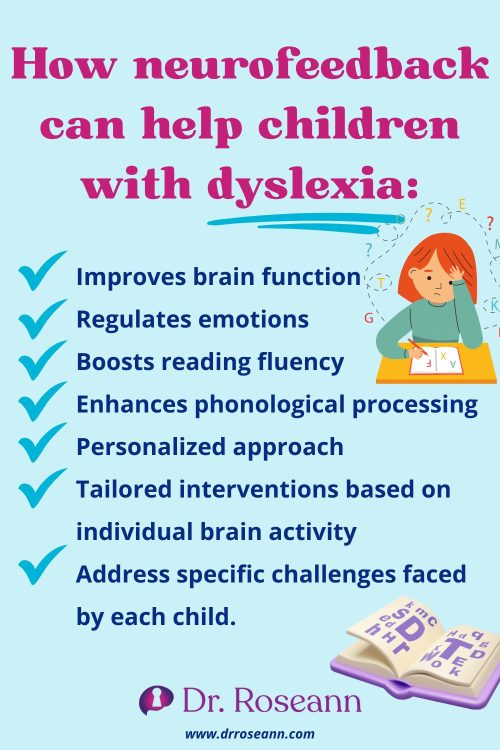
10. Explore neurofeedback
- Neurofeedback acts like a mirror for the brain, showing it where patterns need adjusting.
- Many parents notice better focus, calmer moods, and smoother learning once brainwaves fall into balance.
Every step counts. Even the smallest actions stack into a tower of confidence. And remember—what looks like misbehavior or resistance often reflects a dysregulated brain.
Regulate. Connect. Correct. Calm the brain first, and everything follows.
Read more about: The Neurodivergent Umbrella: A Guide to Understanding and Supporting Neurodiverse Kids
When Should Parents Seek Professional Help?
If you’ve been trying to figure out how to help your dyslexic child and reading is still a daily struggle, it may be time to look a little deeper with professional support.
Make sure to seek help if:
- Reading challenges persist past Grade 1–2
- Your child avoids school or books
- Anxiety or low self-esteem begin to show up
A neuropsychologist or dyslexia specialist can provide clarity and open doors to effective support.
At my center, we use QEEG Brain Maps to understand how the brain is working and offer drug-free therapies like Neurofeedback and CALM PEMF™—both in-office and at home. These approaches help calm the brain so learning feels less like a battle.
Parent Action Steps
- Use multisensory learning (tracing letters in sand, air writing, or using manipulatives).
- Read aloud daily and talk about stories together.
- Break tasks into steps with visual aids.
- Celebrate progress instead of perfection.
- Schedule an evaluation with a dyslexia specialist or neuropsychologist.
- Communicate regularly with teachers about your child’s progress.
- Explore brain-based therapies like Neurofeedback and PEMF
- Learn more about our program
FAQs
What is the best age to test for dyslexia?
The best age to test for dyslexia is as early as possible—screening can begin in preschool, with formal testing in early elementary, though evaluation at any age can still provide helpful answers.
Does dyslexia mean my child isn’t smart?
Dyslexia is simply a different way of learning, and many dyslexic children are smart in a different way—often showing strong creativity, big-picture thinking, and problem-solving skills.
Do kids outgrow dyslexia?
Kids do not outgrow dyslexia, but with the right strategies and support, dyslexia becomes much more manageable and children can thrive academically and emotionally.
Can tutoring help with dyslexia?
Yes, tutoring can help with dyslexia—especially structured literacy tutoring like Orton-Gillingham or Wilson, which uses step-by-step, multisensory methods to improve reading and build confidence.
How to help a dyslexic child with spelling?
To help a dyslexic child with spelling, use multisensory strategies like tracing, tapping sounds, and breaking words into smaller parts, while practicing high-frequency words consistently.
How to help a dyslexic child read?
To help a dyslexic child read, focus on structured, phonics-based instruction and short, consistent practice sessions that build decoding skills while keeping the experience calm and supportive.
How to help a dyslexic child with writing?
To help a dyslexic child with writing, break tasks into small steps, use graphic organizers, and allow tools like speech-to-text or typing to reduce frustration while building skills gradually.
Citations
Galuschka, K., Ise, E., Krick, K., & Schulte-Körne, G. (2014). Effectiveness of treatment approaches for children and adolescents with reading disabilities: a meta-analysis of randomized controlled trials. Plo S one, 9(2), e89900. https://doi.org/10.1371/journal.pone.0089900
Ozernov-Palchik, O., & Gaab, N. (2016). Tackling the 'dyslexia paradox': reading brain and behavior for early markers of developmental dyslexia. Wiley interdisciplinary reviews. Cognitive science, 7(2), 156–176. https://doi.org/10.1002/wcs.1383
Snowling, M. J., & Melby-Lervåg, M. (2016). Oral language deficits in familial dyslexia: A meta-analysis and review. Psychological bulletin, 142(5), 498–545. https://doi.org/10.1037/bul0000037
Dr. Roseann is a mental health expert in Neurodivergence who is frequently in the media:
- The Creative Clinician’s Corner (Article) Helping Parents Get Unstuck
- WTNH News 8, (Article) How to keep your child focused in the classroom
- Best Life 13 Things to Do With Your Kids at Least Once, According to Therapists

If you're raising a child with frequent meltdowns or intense emotional reactions, The Dysregulated Kid offers practical, neuroscience-backed strategies to help you better understand your child's nervous system and create lasting regulation at home.
Always remember… “Calm Brain, Happy Family™”
Disclaimer: This article is not intended to give health advice and it is recommended to consult with a physician before beginning any new wellness regime. The effectiveness of diagnosis and treatment vary by patient and condition. Dr. Roseann Capanna-Hodge, LLC does not guarantee certain results.
Are you looking for SOLUTIONS for your struggling child or teen?
Dr. Roseann and her team are all about science-backed solutions, so you are in the right place!
Meet the Expert
Licensed Therapist | Certified School Psychologist
Board Certified in Neurofeedback (BCN) | 30+ Years Clinical Experience
Expert in Emotional Dysregulation in Children and Nervous System Regulation
Host, Dysregulated Kids Podcast | Author, The Dysregulated Kid
Dr. Roseann Capanna-Hodge is a licensed therapist, certified school psychologist, and leading expert in emotional dysregulation in children and nervous system regulation. With over 30 years of clinical experience and having analyzed more than 10,000 brain maps, she helps families understand what behavior is really signaling—and how to calm the nervous system first so real change can happen.
She is the creator of Regulation First Parenting® and the CALMS Protocol™, host of the top 1% podcast Dysregulated Kids, and author of The Dysregulated Kid.