


Neurofeedback Treatment: How It Works
You finally sit down, but your mind won’t stop replaying the day. A small frustration becomes a big reaction. Someone you love shuts down, and you’re trying to understand why.
If you’re researching neurofeedback treatment, you want to know how it works and what options make sense for you or your family.
Here, you’ll learn what neurofeedback involves, how it relates to dysregulation, and what to ask before choosing a provider.
Looking for something you can explore at home?
Meet CALM PEMF®, Dr. Roseann’s portable pulsed electromagnetic field device.
What Is Neurofeedback Treatment?
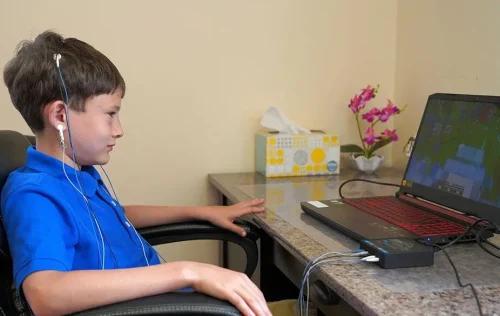
Neurofeedback treatment is a form of biofeedback that uses real-time information about brain activity as part of a training process.
In EEG-based neurofeedback, sensors placed on the scalp record electrical brain activity. That information is translated into visual, auditory, or other feedback.
For example, a video, game, or sound may respond when the brain activity being measured meets parameters established by the practitioner.
You may also see neurofeedback called:
- EEG biofeedback
- Brainwave biofeedback
- Neurofeedback training
- Neurotherapy
Because approaches vary, it is important to understand how a provider assesses you, chooses a protocol, and measures progress.
How Does Neurofeedback Work?
With EEG-based neurofeedback, sensors measure electrical activity from the scalp. They do not send electrical stimulation into the brain.
A typical process may include:
1. Assessment
A practitioner reviews your concerns, history, and goals. Some providers also use a quantitative EEG, or QEEG brain map.
2. Training Plan
The provider chooses what brain activity will be monitored and how feedback will be delivered.
3. Training Sessions
Sensors monitor brain activity while you receive visual, auditory, or game-based feedback.
4. Progress Reviews
The provider reviews changes over time and adjusts the plan if needed.
One of the most useful questions to ask is:
How will we know whether this is helping?
Listen to Dr. Roseann explain how neurofeedback changes the brain.
What Does Neurofeedback Have to Do With Dysregulation?
Dysregulation can involve difficulty managing or recovering from emotional, behavioral, cognitive, or physiological responses to stress.
It is not a diagnosis, and signs such as irritability, meltdowns, shutdowns, avoidance, or difficulty focusing can have many different causes.
Dysregulation can also look different by age.
In children, it may show up as big reactions, difficulty with transitions, or trouble settling after becoming upset.
In teens, it may look like irritability, overwhelm, avoidance, or shutting down under pressure.
In adults, it may feel like constantly being “on,” difficulty switching off, emotional reactivity, or taking a long time to recover after stress.
Dr. Roseann’s Regulation First® perspective encourages us to look beneath the visible reaction and ask:
What is making it hard for this nervous system to respond differently right now?
That question can help guide decisions about neurofeedback, therapy, behavioral support, lifestyle changes, or other professional care.
Explore the podcast discussion of neurofeedback, executive functioning, and attention.
Looking for Nervous System Support at Home?
Perhaps you came to this page researching neurofeedback because you're looking for a way to support a calmer, more regulated nervous system.
You may also be wondering:
Is there something I can use at home?
That's where CALM PEMF® comes in.
Meet CALM PEMF®
CALM PEMF® is Dr. Roseann's portable pulsed electromagnetic field (PEMF) device.
It offers families and adults a simple way to incorporate PEMF into their nervous system regulation routine from home.
Unlike neurofeedback, CALM PEMF® does not measure brainwaves or provide EEG-based feedback.
They are different technologies.
What connects them is Dr. Roseann's larger focus on helping people understand that regulation matters.
Explore CALM PEMF®Neurofeedback vs. CALM PEMF®
| Neurofeedback | CALM PEMF® |
|---|---|
| Uses EEG-based monitoring of brain activity | Uses pulsed electromagnetic fields |
| Provides real-time feedback based on measured brain activity | Does not measure EEG brainwaves |
| Typically involves practitioner-guided training | Designed for convenient at-home use |
| Often involves repeated scheduled sessions | Can be incorporated into a home routine |
| Protocols vary by provider and equipment | Uses CALM PEMF® technology and protocols |
CALM PEMF® is not neurofeedback, and the two are not interchangeable.
If your primary goal is finding a portable nervous system regulation tool that can fit into daily life, CALM PEMF® may be worth exploring.
Learn More About CALM PEMF®Why Learn About Neurofeedback From Dr. Roseann?
Dr. Roseann Capanna-Hodge has extensive professional experience with neurofeedback, brain-based approaches, emotional regulation, and children’s mental health.
Her work focuses on helping families understand the connection between the brain, nervous system, behavior, and regulation.
Her Regulation First® approach emphasizes understanding what is happening beneath behavior before expecting a child or adult to simply respond differently.

More Neurofeedback Resources
Frequently Asked Questions About Neurofeedback Treatment
Does neurofeedback put electricity into the brain?
No. Traditional EEG-based neurofeedback uses sensors to record electrical brain activity from the scalp. Those sensors do not deliver electrical stimulation into the brain.
What is a QEEG brain map?
A QEEG, or quantitative electroencephalogram, records EEG activity and uses quantitative analysis to examine patterns in that data.
Some neurofeedback practitioners use QEEG information when developing or evaluating a treatment plan.
How many neurofeedback sessions do you need?
There is no single number that applies to everyone.
The number of sessions may depend on the type of neurofeedback, your goals, the provider’s protocol, and how progress is measured.
Ask how the provider will establish a baseline and determine whether treatment should continue or change.
How much does neurofeedback treatment cost?
Costs vary by provider, location, assessment requirements, and session schedule.
Ask for an itemized estimate that includes:
- Initial assessment
- QEEG or brain mapping, if recommended
- Training sessions
- Follow-up reviews
Confirm insurance coverage directly with your insurer before beginning.
What does the research say about neurofeedback?
Research findings vary depending on the condition being studied, the neurofeedback method, and the quality of the research.
A finding for one condition should not automatically be applied to every concern.
For example, NCCIH describes the evidence for neurofeedback in ADHD as mixed.
If you are considering neurofeedback for a specific concern, ask a qualified provider to explain the research most relevant to your goals.
Is neurofeedback the same as PEMF?
No.
EEG-based neurofeedback records brain activity and provides feedback based on that activity.
PEMF stands for pulsed electromagnetic field technology.
CALM PEMF® is Dr. Roseann’s portable PEMF device. It does not function as an EEG neurofeedback system.
Does Dr. Roseann still provide neurofeedback treatment?
No.
Dr. Roseann no longer offers neurofeedback treatment services. This page remains available as an educational resource for people researching neurofeedback treatment.
If you want to learn about her current CALM PEMF® offering:
Learn About CALM PEMF®



