
Join the Dysregulation Insider get free calm parenting tips straight to your inbox!
YES, I'M IN!PANS/PANDAS: Is it a PANS Flare or Behavior? | Emotional Dysregulation in Children | E150





Estimated Reading Time: 6 minutes
When your child suddenly shifts into rage, anxiety, or meltdowns, it can feel terrifying. You may wonder, “Is this a PANS flare? Is it behavior? Or something else?” You’re not alone. Understanding PANS and PANDAS begins with distinguishing typical dysregulation from a true flare.
In this episode, I explain what parents need to look for, how flares start, and what actually helps calm a struggling child.
Why Does My Child’s Behavior Suddenly Explode?
PANS/PANDAS flares are unpredictable. Kids can shift from calm to furious in minutes. A flare is a temporary worsening of symptoms triggered by infection, inflammation, toxins, or stress. It is not bad behavior—it’s a dysregulated, inflamed brain.
Signs of a flare:
- Sudden rage or aggression
- OCD spikes
- School refusal
- Regression in skills or emotional maturity
- Heightened anxiety or sensory overwhelm
Parent story: A mom described her daughter going from giggling at breakfast to screaming on the floor 10 minutes later—a classic PANS flare.
Takeaway: Behavior is communication. Sudden and severe changes should be treated like a flare.
What Triggers a PANS or PANDAS Flare?
Parents often become “detectives,” piecing together changes in their child’s environment.
Common triggers:
- Recent illness or exposure
- Stress at school (bullying, tests, schedule changes)
- Lack of sleep
- Diet changes or inflammation
- Environmental toxins
Patterns to observe:
- Did symptoms appear after a cold or strep exposure?
- Has school been unpredictable or stressful?
- Has diet or routine changed recently?
How Do I Stay Calm During a Flare?
During a flare, kids are often in a sympathetic dominant state—fight, flight, or freeze. They cannot think clearly.
Calming strategies:
- Provide physical space or grounding touch
- Lower your voice
- Avoid reasoning, lecturing, or fact-fighting
- Offer co-regulation through presence and softness
Parent tip: Sit nearby and say softly, “I’m here. You’re safe.” This alone can prevent escalation.
What Actually Helps Manage a PANS Flare?
When you suspect a flare, lean into what has historically worked. A five-pronged approach helps stabilize the nervous system:
Core flare supports:
- Antimicrobials or antivirals
- Immune support
- Neurofeedback
- PEMF therapy
- High-quality magnesium (Multi-Mag Brain Formula)
Lifestyle anchors:
- Consistent sleep
- Anti-inflammatory nutrition
- Calm daily routines
- Detox support
- Stress reduction practices
These approaches shorten flare duration and reduce symptom severity.
How Do I Handle Behavior That Isn’t Part of a Flare?
Not all challenging behavior is a flare. Some issues stem from skill deficits like low frustration tolerance or cognitive rigidity.
Parent strategies:
- Identify the nexus behavior driving the challenge
- Teach coping skills outside of meltdown moments
- Reinforce micro-successes consistently
- Use predictable routines to shape behavior
🗣️ “No matter what the behavior looks like, it’s not bad parenting—it’s a dysregulated brain.” — Dr. Roseann
Practical Parent Strategies During a Flare
Supporting a child during a PANS or PANDAS flare requires intentional, calm, and structured responses. Parents are the first line of regulation.
Effective strategies:
- Pre-plan calming routines: Have predictable sequences like snack → movement → quiet activity
- Short verbal cues: Keep instructions simple; avoid multiple-step directions
- Co-regulate before correcting: Your calm body signals safety to the child’s nervous system
- Praise effort over outcome: Recognize small attempts at self-regulation, even if incomplete
Parent story: A child who raged during homework settled quickly when parents implemented a movement break and used co-regulation language instead of lecturing.
Using Sensory Regulation to Reduce Flare Intensity
Sensory supports help modulate the nervous system during high-stress moments, reducing the intensity of meltdowns and calming the brain.
Try these sensory tools:
- Weighted blankets or lap pads for deep pressure
- Movement breaks like jumping, wall push-ups, or swinging
- Fidget tools or chewables to channel energy
- Quiet corners with low lighting or calming music
Parent insight: One child with PANS would escalate during bedtime routines. Using a weighted lap pad and a 5-minute swing break helped reduce nightly OCD behaviors and improve sleep.
Takeaway
You don’t have to guess your way through PANS and PANDAS. Recognizing flares, identifying triggers, and calming the brain first makes everything more manageable. Your child isn’t choosing this—their brain is overwhelmed, and support is possible.
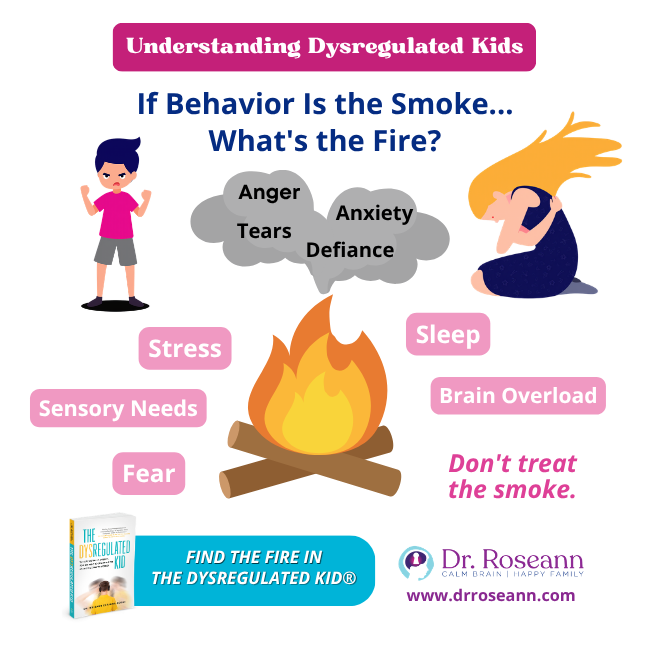
When your child is raging, refusing, melting down, or acting completely unlike themselves, it can be incredibly hard to know what you’re looking at. The Dysregulated Kid® teaches parents to stop making behavior the starting point and instead ask what is happening in the nervous system. That shift is especially important with complex conditions like PANS/PANDAS, where what looks like defiance may be a child whose brain is struggling. Regulate first, connect, and then decide what correction or support is actually appropriate. Get The Dysregulated Kid® at dysregulatedkid.com.
FAQs
How do I tell if it’s a PANS flare or typical behavior?
Look for sudden, extreme changes, regression, and intensified OCD or anxiety.
What’s the first thing to do during a flare?
Calm the nervous system first using co-regulation, then follow tried-and-true support strategies.
Should I try to reason with my child during a meltdown?
No. Focusing on logic during a flare increases stress; use calm presence instead.
Can lifestyle changes really help PANS?
Yes. Sleep, anti-inflammatory nutrition, magnesium, and structured routines support regulation and shorten flares.
Do flares always require medication?
Not always. Many children improve with a combination of brain, immune, and lifestyle supports.
When your child is struggling, time matters.
Don’t wait and wonder—use the Solution Matcher to get clear next steps, based on what’s actually going on with your child’s brain and behavior.
Take the quiz at www.drroseann.com/help
Dr. Roseann Capanna-Hodge is a licensed therapist, certified school psychologist, and leading expert in emotional dysregulation in children. With over 30 years of experience, she helps parents understand the root causes of meltdowns, anxiety, ADHD, and challenging behavior through the lens of nervous system regulation. Dr. Roseann teaches practical, science-backed strategies for co-regulation and how to calm a dysregulated child using her Regulation First Parenting® approach. She is the host of the Dysregulated Kids Podcast and author of The Dysregulated Kid.
Dr. Roseann Capanna-Hodge
Emotional Dysregulation in Children & Nervous System Expert
Regulation First Parenting® | CALMS Protocol™
Host of the Dysregulated Kids Podcast (Top 1% Globally)
Author of The Dysregulated Kid

Find this helpful? Leave us a review!
Your feedback helps more overwhelmed parents find calm, clarity, and the proven tools that make everyday life easier.
Dr. Roseann Capanna-Hodge: Helping Families of Dysregulated Kids Thrive Through Regulation First Parenting®
As the creator of Regulation First Parenting®, she’s helping families of dysregulated kids discover a compassionate, brain-based path forward. Through The Dysregulated Kids™ Podcast (top 2% globally), she offers practical strategies that help parents understand their child’s brain and support lasting change.
Through The Global Institute of Children’s Mental Health and Dr. Roseann, LLC, she’s created resources like the Neurotastic® Brain Formulas and the Regulation First Parenting® framework—meeting families where they are and supporting them through challenges like ADHD, anxiety, OCD, PANS/PANDAS, and behavioral struggles.
Recognized by Forbes as “a thought leader in children’s mental health,” Dr. Roseann is changing how we understand emotional dysregulation in children—one family at a time.