
Join the Dysregulation Insider get free calm parenting tips straight to your inbox!
YES, I'M IN!Role of Magnesium: FAQs and All About Magnesium | Nervous System Strategies | E144





Estimated Reading Time: 6 minutes
If your child seems wired but tired, anxious, or struggles to focus, you’re not alone. Magnesium plays a critical role in supporting the brain, emotional regulation, and sleep. In this episode, I explain how magnesium supports the nervous system, why deficiencies impact behavior, and how Regulation First Parenting® can help children calm, focus, and thrive.
Why Is Magnesium Important for My Child’s Brain and Emotions?
Magnesium is involved in hundreds of biochemical reactions, but its effects on the brain are especially powerful. It supports neurotransmitters like serotonin and GABA, which regulate mood, stress response, attention, and sleep.
When magnesium is low:
- The brain becomes overstimulated
- Children appear anxious, reactive, or unfocused
- Emotional regulation is compromised
Parent story: One child struggled to settle at bedtime and had frequent meltdowns. Magnesium supplementation helped calm the nervous system, making evenings smoother.
How Magnesium Supports Focus, Mood, and Emotional Regulation
Magnesium supports neuroplasticity—helping the brain form and strengthen connections critical for attention and self-regulation.
Benefits for children with ADHD, anxiety, or learning challenges:
- Improved attention and working memory
- Reduced hyperactivity and impulsive behavior
- Calmer mood and emotional stability
- Better sleep and more predictable routines
Tip: Your child’s nervous system must be calm first; magnesium helps create that foundation.
Signs of Magnesium Deficiency in Kids
Magnesium deficiencies often show up through behavior rather than labs.
Look for:
- Anxiety, worry, or emotional outbursts
- Poor focus or distractibility
- Trouble falling or staying asleep
- Physical tension, headaches, or growing pains
Takeaway: Behavior is communication. Low magnesium can signal that the nervous system needs support, not correction.
Which Forms of Magnesium Work Best?
Not all magnesium supplements are created equal. The right form supports the nervous system, cognitive function, and sleep.
Effective forms:
- Magnesium bisglycinate – calming and stress support
- Magnesium L-threonate – supports attention and cognitive processing
Helpful pairings: Vitamin D and zinc can enhance brain health and immune function.
Timing and Dosage Tips
Proper timing improves magnesium’s effectiveness:
- Nighttime dosing helps support sleep and relaxation
- Small daytime doses may aid attention and stress regulation
- Start low and adjust gradually under provider guidance
Parent note: A half scoop at night can calm a young child and reduce emotional reactivity before bed.
How Magnesium Fits Into a Nervous System-First Approach
Magnesium works best as part of a holistic strategy:
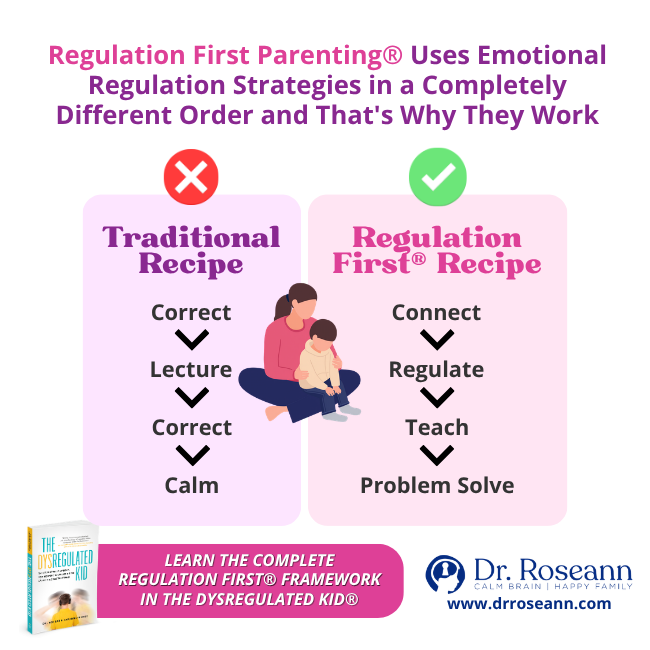
- Combine with Regulation First Parenting® techniques
- Pair with movement, structured routines, and sensory supports
- Use alongside tools like neurofeedback, PEMF, or breathwork
🗣️ “If we don’t calm the brain first, nothing else sticks. Magnesium helps smooth out those brain processes so regulation can happen.” — Dr. Roseann
Takeaway & Next Steps
Magnesium is not a magic fix, but it’s a powerful foundation for supporting emotional regulation, focus, and sleep. Addressing deficiencies helps the brain calm, so your child can learn, cope, and thrive.
Check out the Neurotastic® Multi-Mag Brain Formula, formulated to support focus, mood, and emotional regulation for the whole family.

Magnesium plays many roles in the body, which is why parents have so many questions about how it may fit into their child’s wellness plan.
But supporting a struggling child is never about one nutrient alone. In The Dysregulated Kid®, I help parents understand how the brain, body, stress, and nervous system work together and translate that science into practical parenting strategies. You’ll learn how to regulate first and create the everyday conditions that support calmer behavior, better coping, and greater resilience. Get The Dysregulated Kid® at dysregulatedkid.com
FAQs
What type of magnesium is best for brain health?
Magnesium bisglycinate and L-threonate support calming, attention, and cognitive function.
Can magnesium help kids with ADHD or anxiety?
Yes. It helps regulate the nervous system, improving focus, mood, and emotional control.
How fast will magnesium work?
Parents often notice improvements within 1–2 weeks with consistent use.
Can magnesium replace medication?
Magnesium supports regulation but does not replace prescribed medications. Always consult your provider.
What foods are high in magnesium?
Leafy greens, nuts, seeds, avocados, and whole grains provide natural magnesium sources.
Tired of not knowing what’s really going on with your child?
The Solution Matcher gives you a personalized recommendation based on your child’s behavior, not just a label. It’s free, takes just a few minutes, and shows you the best next step.
Go to www.drroseann.com/help
Dr. Roseann Capanna-Hodge is a licensed therapist, certified school psychologist, and leading expert in emotional dysregulation in children. With over 30 years of experience, she helps parents understand the root causes of meltdowns, anxiety, ADHD, and challenging behavior through the lens of nervous system regulation. Dr. Roseann teaches practical, science-backed strategies for co-regulation and how to calm a dysregulated child using her Regulation First Parenting® approach. She is the host of the Dysregulated Kids Podcast and author of The Dysregulated Kid.
Dr. Roseann Capanna-Hodge
Emotional Dysregulation in Children & Nervous System Expert
Regulation First Parenting® | CALMS Protocol™
Host of the Dysregulated Kids Podcast (Top 1% Globally)
Author of The Dysregulated Kid

Find this helpful? Leave us a review!
Your feedback helps more overwhelmed parents find calm, clarity, and the proven tools that make everyday life easier.
Dr. Roseann Capanna-Hodge: Helping Families of Dysregulated Kids Thrive Through Regulation First Parenting®
As the creator of Regulation First Parenting®, she’s helping families of dysregulated kids discover a compassionate, brain-based path forward. Through The Dysregulated Kids™ Podcast (top 2% globally), she offers practical strategies that help parents understand their child’s brain and support lasting change.
Through The Global Institute of Children’s Mental Health and Dr. Roseann, LLC, she’s created resources like the Neurotastic® Brain Formulas and the Regulation First Parenting® framework—meeting families where they are and supporting them through challenges like ADHD, anxiety, OCD, PANS/PANDAS, and behavioral struggles.
Recognized by Forbes as “a thought leader in children’s mental health,” Dr. Roseann is changing how we understand emotional dysregulation in children—one family at a time.