


Estimated Reading Time: 8 minutes
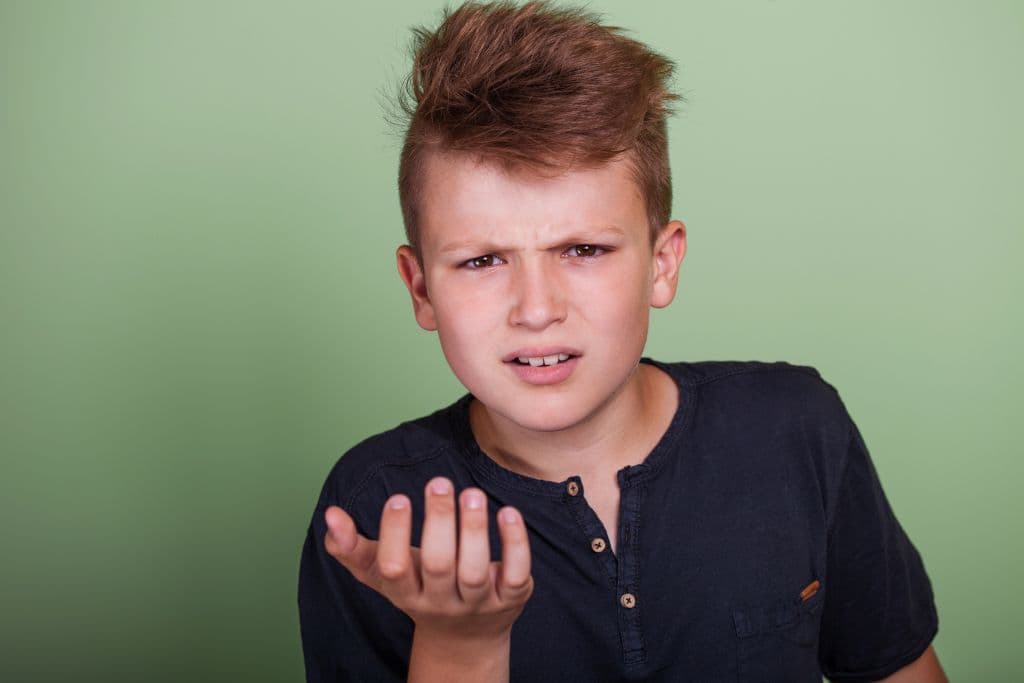
The earliest signs of your child’s distress aren’t in their words—they’re written in their body. Research shows that 75% of communication is non-verbal, yet many parents miss the subtle body language cues that signal a child’s nervous system is moving toward dysregulation.
You might notice:
- tight shoulders
- clenched fists
- jaw clenching
- shallow breathing.
- your child starts pacing
- Fidgeting
- picking at their skin
- avoiding eye contact
- suddenly going very still and quiet.
Other times, it looks like a forced smile, a sharp tone, or a quick shift from engaged to withdrawn. These are all early signs of a dysregulated nervous system.
Your child’s posture, facial expressions, and movements reveal what’s happening internally long before words—or meltdowns—arrive.
Learning to spot these body language signals gives you a chance to step in early, connect, and help your child regulate before things escalate.
This guide will help you decode your child’s body language, understand the science behind stress responses, and apply practical co-regulation strategies that truly work.
How Dysregulation Shows Up in a Child's Body
Emotional dysregulation shows up in your child’s body before they’re even aware of it. The nervous system reacts to perceived threats or overwhelm by changing posture, breathing, and movement patterns.
When dysregulated, the autonomic nervous system shifts into survival mode. This isn’t defiance—it’s neurobiology. The body prepares for danger, even if that “danger” is a schedule change or sensory overload.

Sarah, mother of 8-year-old Jake with ADHD, noticed his shoulders creeping toward his ears every morning before school. “I used to think he was just being difficult,” she says. “Now I know it’s his body showing he’s already overwhelmed before the day starts.”
Common Body Language Signals in Dysregulated Kids
Dysregulated children often show their internal state through consistent physical patterns. Recognizing early signals such as clenched fists and rigid posture in fight mode, or pacing and fidgeting when seeking regulation, can help you step in before a meltdown. Many parents miss these cues and focus only on big outbursts.
Upper Body Signals:
- Clenched jaw or grinding teeth - often during sleep or concentration
- Tight shoulders - pulled up toward ears or hunched forward
- Crossed arms - protective barrier during overwhelming situations
- Hand stimming - finger picking, nail biting, or repetitive touching
Lower Body Indicators:
- Restless legs - bouncing, swinging, or constant movement
- Toe walking - especially in autism or sensory processing differences
- Frozen stance - sudden stillness when typically active
- Pacing patterns - back-and-forth movement to self-regulate
Breathing and Voice Changes:
- Shallow breathing - chest breathing instead of belly breathing
- Voice pitch changes - higher or lower than usual
- Speech patterns - faster talking or sudden quietness
- Sighing or yawning - attempts to regulate nervous system

Maria describes her 6-year-old daughter with anxiety: "Emma starts picking at her fingernails about 30 minutes before we need to leave for anywhere new. It's become my early warning system to start our calming routine."

Fight, Flight, Freeze: The Body's Telltale Stress Responses
Fight, flight, and freeze responses are automatic nervous system reactions that create distinct physical manifestations in children. These physiological reactions occur in response to perceived harmful events or threats, and each state has its own body language signature.
Understanding these stress response patterns helps you recognize when your child's nervous system has shifted into survival mode, allowing for more effective co-regulation strategies.
Behavioral Indicators of Fight, Flight, and Freeze Responses in Children
| Response Type | Description | Common Indicators |
|---|---|---|
| Fight Response | Activated when the child perceives they can address or overcome a threat through direct confrontation or opposition. |
• Clenched fists and tight jaw muscles • Forward-leaning posture or squared shoulders • Intense eye contact or glaring • Raised voice or aggressive tone • Invading personal space of others |
| Flight Response | Initiated when escape from the threat is perceived as both possible and preferable to confrontation. |
• Restless movement (pacing, bouncing, fidgeting) • Looking toward exits or escape routes • Rapid speech or breathless talking • Difficulty staying seated or in one place • Scattered attention and inability to focus |
| Freeze Response | Triggered when the nervous system determines that neither confrontation nor escape will be effective. |
• Blank facial expression or “deer in headlights” look • Sudden stillness or inability to move • Shallow breathing or holding breath • Glazed or unfocused eyes • Delayed responses to questions or directions |

Brain Science Spotlight
Research from Harvard University’s Center on the Developing Child shows that children’s stress response systems are more sensitive and reactive than adults’ because their brains are still developing.
Dr. Jack Shonkoff, the Center’s director, explains: "When children face chronic stress, their developing brains may stay on high alert, making it harder to control impulses and manage emotions."
This helps explain why traditional discipline often fails with dysregulated children. When the amygdala—the brain’s fear and threat center—is activated, the brain shifts into survival mode. The prefrontal cortex, which handles reasoning and self-control, becomes harder to access. This is not defiance—it’s a normal brain reaction.
What this means for your family: Watch for early signs such as changes in voice, facial expressions, or posture. Responding early with calm, supportive co-regulation can help your child return to balance faster and prevent escalation.
Facial Expressions and Repetitive Behaviors: What They Really Mean
Facial expressions and repetitive behaviors are your child's unconscious attempts to communicate their internal state and self-regulate their nervous system. These behaviors serve important neurological functions that parents often misinterpret as "bad behavior."
Stimming behaviors (self-stimulatory behaviors) like hand flapping, rocking, or repetitive sounds are actually sophisticated nervous system regulation tools. They help children manage sensory input and emotional overwhelm.
Understanding Expression and Behavior Patterns in Emotional Regulation
| Category | Common Indicators |
|---|---|
| The “Mask” Face |
• Blank expression despite internal turmoil • Forced smile that does not reach the eyes • Tight facial muscles around eyes and mouth • Common in high-masking autism and anxiety disorders |
| Stress Micro-Expressions |
• Rapid blinking or eye rubbing • Jaw clenching or teeth grinding • Nose scrunching or mouth twitching • Furrowed brow during non-challenging tasks |
| Self-Regulation Stimming |
• Hand flapping (releases energy and excitement) • Rocking (calming vestibular input) • Vocal sounds (regulates auditory processing) • Object manipulation (organizes sensory input) |
| Anxiety-Based Repetitions |
• Hair twirling or pulling (self-soothing) • Nail biting (anxiety release) • Skin picking (nervous system regulation attempt) • Repetitive questions (seeking predictability and control) |

Tom, father of 10-year-old Alex with autism, shares: "I used to try to stop Alex's hand flapping because I thought it was inappropriate. Now I understand it's his nervous system's way of staying regulated. When I see the flapping increase, I know he needs a sensory break."
Dr. Roseann's Therapist Tip
Decades of clinical experience have taught me that repetitive behaviors are rarely random. They are a child’s nonverbal way of communicating and regulating their internal state.
Try this today:
Instead of stopping stimming behaviors, observe when they increase or decrease. This gives you valuable information about your child's regulation state.
Why it works:
When we honor the nervous system's need for self-regulation rather than suppressing it, children learn to trust their bodies and develop better internal awareness.
Remember:
Your child isn't giving you a hard time—they're having a hard time. Let's calm the brain first.
Understanding Body Language Across ADHD, Anxiety, and Autism
Different neurotypes show dysregulation through unique body language. Recognizing these cues helps you respond and support more effectively, as each condition impacts the nervous system in its own way.
Body Language Patterns Across ADHD, Anxiety, and Autism
| Condition & Presentation | Common Body Language Indicators |
|---|---|
| ADHD – Hyperactive Presentation |
• Constant movement (fidgeting, bouncing, pacing) • Rapid gestures and animated expressions • Difficulty with personal space (standing too close, touching others) • Intense, quickly changing facial expressions • Whole-body involvement in communication |
| ADHD – Inattentive Presentation |
• Blank staring or “spacing out” • Slumped posture, appearing to have low energy • Slow response to verbal or social cues • Minimal or flat facial expressions • Withdrawn body positioning |
| Anxiety |
• Tight, controlled, or inhibited movements • Scanning behaviors (frequent glancing for threats) • Protective postures (arms crossed, hunched shoulders) • Rigid “perfectionist” posture during school tasks • Avoidant eye contact and shallow chest breathing |
| Autism |
• Stimming for regulation (hand flapping, rocking, spinning) • Avoiding eye contact to reduce sensory or social overwhelm • Repetitive movements serving nervous system needs • Sudden posture changes when sensory input is overwhelming • Specific sensory-seeking or sensory-avoidance behaviors |
Jennifer, mother of twins—one with ADHD and one with autism—explains: "Learning their different body language patterns was game-changing. When Maya (ADHD) starts bouncing, she needs movement. When Sam (autism) starts flapping, he needs sensory regulation. Same category, totally different needs."
What Parents Can Do When the Body Speaks Before Words
Co-regulation begins with recognizing your child's body language cues and responding in ways that support their nervous system rather than escalating the situation. Your calm, regulated presence is the most powerful tool for helping your child return to baseline.
Responsive parenting means meeting your child where they are neurologically, not where you think they should be cognitively.
Immediate Response Strategies:
For Fight Response Body Language:
- Stay physically calm - keep your own posture relaxed
- Lower your voice instead of raising it
- Increase physical space to reduce perceived threat
- Validate the emotion: "I can see your body is feeling angry"
- Offer choices to restore sense of control
For Flight Response Indicators:
- Provide movement options - walking, bouncing, fidget toys
- Reduce demands temporarily to decrease pressure
- Use calming voice tones and slower speech
- Create physical safety in the environment
- Offer regulatory activities like deep breathing or music
For Freeze Response Signs:
- Gentle, non-demanding presence - sit nearby without pressure
- Warm, soft voice with simple language
- Avoid overwhelming questions or complex instructions
- Provide sensory comfort - weighted blanket, soft music
- Give extra processing time for responses
Long-Term Body Language Awareness Strategies:
Teaching Body Awareness:
- Name body sensations during calm moments
- Practice body scans together as family activity
- Use feeling charts with body-based emotions
- Model your own body awareness: "I notice my shoulders are tight"
Environmental Modifications:
- Create regulation stations in different rooms
- Adjust lighting and sound to support nervous system
- Provide sensory tools accessible throughout the day
- Establish predictable routines that support regulation
Building Communication Skills:
- Teach body language vocabulary: "tight muscles," "restless energy"
- Practice identifying emotions in books, movies, and real life
- Create regulation signals your child can use nonverbally
Validate all communication attempts, including body language

Lisa, mother of 7-year-old Emma with anxiety, shares her breakthrough moment: "When I started responding to Emma's tight shoulders instead of waiting for her to tell me she was anxious, everything changed. I could help her before the anxiety spiral took over."
How to Read a Dysregulated Child’s Body Language Before Behavior Escalates
Reading body language is not about trying to interpret every movement or assume what a child is feeling. It is about noticing patterns—such as tension, pacing, changes in breathing, or shutting down—and responding with curiosity, connection, and support before overwhelm grows.
In The Dysregulated Kid®, Dr. Roseann expands on this Regulation First perspective, helping parents use early nervous-system cues to choose a calmer, more connected response instead of reacting only to the behavior they see.

Summary & Next Steps
Your child’s body language—be it pacing feet, stimming hands, or frozen stillness—is not misbehavior, it’s communication from their nervous system. Behavior is communication. You’re a brave, caring parent, and it’s gonna be OK when you respond with calm presence, validation, and tools that co-regulate.

Next Step:
Sign up for The Dysregulation Insider—my free weekly newsletter filled with science-backed, real-world strategies to help your child (and you) find calm—and get my Regulation Rescue Kit FREE. This proven toolkit gives you everything you need to stay calm in the heat of the moment, shift your child from meltdown to calm fast, and create a more peaceful home without constant battles.
FAQs
How do I know if my child is freezing or just zoning out?
Freeze often shows up as stillness, an empty gaze, and slower breathing. Zoning out can look similar—but if your child is unresponsive, it’s likely a freeze response, so gently help them come back.
Can my child’s body language predict a meltdown?
Yes—your child’s body language can predict a meltdown. Signs like clenched hands, pacing, or forced smiles are early dysregulation cues and a chance to step in and connect.
What if my child doesn’t respond to sensory tools?
If your child doesn’t respond to sensory tools, it usually means you haven’t found the right fit yet. Offer choices like deep pressure, movement, or quiet time and let your child guide what helps them regulate.
Is stimming always a sign of dysregulation?
No—stimming is not always a sign of dysregulation. Stimming can be calming or even joyful, so only step in if it signals distress or interferes with daily life.
How can I help my child notice their own body language cues?
You can help your child notice their own body language cues by using simple, playful check-ins like “How tight does your body feel?” Over time, this builds awareness and supports self-regulation.
Can my child’s body language show they’re dysregulated even if they say they’re fine?
Yes—your child’s body language can show dysregulation even if they say they’re fine. A tense body, avoiding eye contact, or a forced smile are signs their nervous system isn’t actually calm.
What are early signs in my child’s body language that they’re getting dysregulated?
Early signs of dysregulation in your child’s body language include fidgeting, tight muscles, pacing, or a sudden shift in tone. These small changes are your cue to step in early and help regulate.
What should I do when my child’s body language shows they’re dysregulated?
When your child’s body language shows dysregulation, start with connection. Stay calm, get close, and offer simple support like “I’m here” or a quick calming activity to help their nervous system settle.
Citations
Arnsten, A. F. T. (2015). Stress weakens prefrontal networks: molecular insults to higher cognition. Nature Neuroscience, 18(10), 1376–1385. https://doi.org/10.1038/nn.4087
Eisenberg, N., & Spinrad, T. L. (2010). Emotion-related self‑regulation and its relation to children’s maladjustment. Annual Review of Clinical Psychology, 6, 235–263. https://doi.org/10.1146/annurev.clinpsy.121208.131208
Paley, B., et al. (2022). Conceptualizing emotion regulation and co‑regulation as foundational for development. Clinical Child and Family Psychology Review, 25(3), 506–522. https://doi.org/10.1007/s10567-022-00378-4
If you're raising a child with frequent meltdowns or intense emotional reactions, The Dysregulated Kid offers practical strategies to help you understand your child's nervous system and create lasting regulation.
Always remember… “Calm Brain, Happy Family™”
Disclaimer: This article is not intended to give health advice and it is recommended to consult with a physician before beginning any new wellness regime. The effectiveness of diagnosis and treatment vary by patient and condition. Dr. Roseann Capanna-Hodge, LLC does not guarantee certain results.
Are you looking for SOLUTIONS for your struggling child or teen?
Dr. Roseann and her team are all about science-backed solutions, so you are in the right place!

Meet the Expert
Licensed Therapist | Certified School Psychologist
Board Certified in Neurofeedback (BCN) | 30+ Years Clinical Experience
Expert in Emotional Dysregulation in Children and Nervous System Regulation
Host, Dysregulated Kids Podcast | Author, The Dysregulated Kid
Dr. Roseann Capanna-Hodge is a licensed therapist, certified school psychologist, and leading expert in emotional dysregulation in children and nervous system regulation. With over 30 years of clinical experience and having analyzed more than 10,000 brain maps, she helps families understand what behavior is really signaling—and how to calm the nervous system first so real change can happen.
She is the creator of Regulation First Parenting® and the CALMS Protocol™, host of the top 1% podcast Dysregulated Kids, and author of The Dysregulated Kid.