



Estimated reading time: 8 minutes
Some moments, your child’s emotions feel like a storm you can’t escape—and no matter what you try, nothing seems to settle it.
Here’s the key difference:
Emotional dysregulation isn’t typical misbehavior. Dysregulation happens when your child’s brain is overwhelmed and loses control, while other behavioral issues (like defiance or rule-breaking) are more intentional and choice-driven.
Research shows that emotional dysregulation in kids reflects a brain under stress—not a child trying to be difficult.
In this blog, you’ll learn what dysregulation really looks like compared to other behavioral challenges—and get practical, science-backed ways to support your child and bring more calm back into your home.
What Is Emotional Dysregulation vs Other Behavioral Issues?
As a parent, it can be heart-wrenching to witness your child struggle with intense emotions and unpredictable behavior. You might wonder, "Is this just a phase, or is something more going on?" Emotional dysregulation is often at the heart of these challenges.
Emotional dysregulation refers to difficulties in managing emotional responses, leading to reactions that are out of proportion to the situation. This can manifest as sudden outbursts, mood swings, or an inability to calm down after becoming upset.
And here’s what science confirms:
A child’s “meltdown” isn’t simply stubbornness or a lack of discipline. Research by Gill et al. (2024) found that children with emotional dysregulation show distinct patterns in their brain structure—especially in the white matter that helps regulate emotions. These findings reinforce what parents instinctively know: when a child is dysregulated, it’s not about willful misconduct, but a nervous system that’s genuinely struggling to stay balanced.
Unlike other behavioral issues, emotional dysregulation stems from the brain's inability to regulate emotions effectively, rather than from intentional misbehavior.
Emotional Dysregulation vs Other Behavioral Issues
| Feature | Emotional Dysregulation | Other Behavioral Issues |
|---|---|---|
| Cause | Brain-based difficulty regulating emotions. | Often learned behaviors, attention-seeking, or habit. |
| Trigger | Emotional overwhelm, sensory input, transitions. | Specific goals, attention, or environmental factors. |
| Control | Child struggles to calm down even when trying. | Child usually has some control, can stop if asked. |
| Duration of Reaction | Intense, may last longer than expected. | Usually shorter, more situational. |
| Awareness | Child may feel “out of control.” | Child often aware of actions, may manipulate or test limits. |
| Common Signs | Explosions, shutdowns, mood swings, intense reactions. | Defiance, noncompliance, manipulation, rule-breaking. |
| Best Approach | Co-regulation, routines, sensory support, empathy. | Clear boundaries, consistent consequences, teaching expectations. |
| Overlap | Can co-occur with ADHD, anxiety, ASD, OCD. | May mimic some dysregulated behaviors but different underlying cause. |
Dysregulation or ADHD/Anxiety: How to Tell the Difference
Distinguishing between emotional dysregulation and other conditions like ADHD or anxiety can be challenging. Here's a guide to help:
- Emotional Dysregulation: Characterized by intense emotional reactions, difficulty calming down, and mood swings that seem out of proportion to the situation.
- ADHD: Includes symptoms like impulsivity, inattention, and hyperactivity. Emotional dysregulation in ADHD often manifests as irritability and difficulty managing frustration.
- Anxiety: Involves excessive worry, fear, and avoidance behaviors. Children with anxiety may have difficulty managing emotions due to constant fear or worry.
And the overlap is real. Research by Astenvald et al. (2022) found that 25–45% of children with ADHD also struggle with emotional regulation, which makes diagnosis and treatment far more complex. This is why some behaviors that look like “misbehavior” or “manipulation” are actually signs of a child whose nervous system is overwhelmed.Understanding this overlap helps parents and professionals move away from blame and toward more compassionate, effective support strategies.
Is Dysregulation a Behavioral Disorder?
Emotional dysregulation itself is not classified as a standalone behavioral disorder. However, it is a significant feature of several mental health conditions, including ADHD, anxiety disorders, and mood disorders. When emotional dysregulation leads to persistent difficulties in daily functioning, it may be indicative of an underlying disorder that requires professional evaluation and intervention.
What Emotional Dysregulation Looks Like
Recognizing emotional dysregulation involves observing certain behaviors:
- Intense Emotional Reactions: Overwhelming feelings of anger, sadness, or frustration that seem disproportionate to the situation.
- Difficulty Calming Down: Struggling to return to a baseline emotional state after becoming upset.
- Mood Swings: Rapid changes in mood without clear triggers.
- Impulsivity: Engaging in behaviors without considering the consequences.
- Sensitivity to Stress: Becoming easily overwhelmed by everyday challenges.
These signs can significantly impact a child's relationships and academic performance, highlighting the importance of early intervention.
Why Every Undesirable Behavior Isn’t “Dysregulation”
The term "dysregulation" has gained prominence in recent years as our understanding of brain development and emotional processing has evolved. Previously, behaviors like tantrums or irritability were often dismissed as "bad behavior" or "acting out."Now, we recognize that these behaviors can be signs of underlying emotional dysregulation. This shift in perspective encourages a more compassionate and informed approach to addressing children's emotional challenges.
Helping a Dysregulated Child: Move From Labels to Curiosity
Understanding the difference between dysregulation and other behavior challenges does not mean parents need to have every answer in the moment. It means slowing down enough to look at patterns, context, and what may be making it harder for a child to cope.
That shift—from blame to curiosity—is at the heart of The Dysregulated Kid®, a parent guide that helps families understand the “why” behind difficult moments before deciding what support may be needed.


Dysregulated Behaviors and Compulsions Explained
Dysregulated behaviors can sometimes include compulsions—repetitive actions or thoughts that a child feels compelled to perform. These behaviors often serve as coping mechanisms to manage overwhelming emotions.For example, a child might repeatedly wash their hands to alleviate anxiety. While these compulsions may provide temporary relief, they can interfere with daily functioning and may require therapeutic intervention to address the underlying emotional dysregulation.
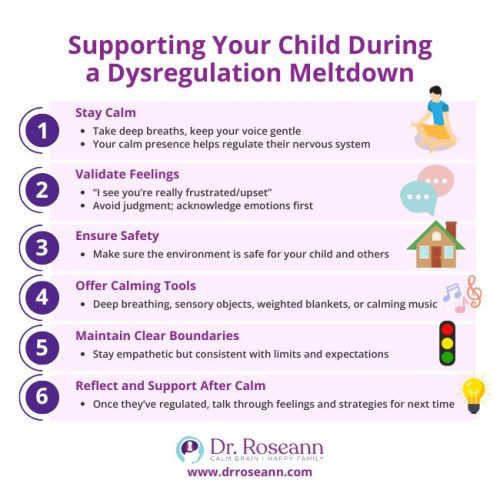
How to Support a Child During a Dysregulation Meltdown
Supporting a child during a dysregulation meltdown requires patience and understanding:
- Stay Calm: Your calm presence can help soothe your child.
- Validate Their Feelings: Acknowledge their emotions without judgment.
- Provide a Safe Space: Ensure they are in a safe environment where they can express themselves.
- Offer Comforting Techniques: Deep breathing, sensory tools, or calming music can help.
- Set Clear Boundaries: While being empathetic, maintain consistent expectations and consequences.
Remember, supporting your child through these moments helps them learn to manage their emotions more effectively over time.
Dr. Roseann's Therapist Tip
In my 30+ years of clinical practice, I've learned that emotional dysregulation is often a sign of an overwhelmed nervous system.
Here's what I tell parents:
Focus on calming the brain first.
Try this today:
When your child begins to show signs of dysregulation, guide them through deep breathing exercises or provide a sensory tool to help them self-soothe.Why it works: These techniques activate the parasympathetic nervous system, promoting a state of calm.
Remember:
It's not bad parenting—it's a dysregulated brain."
Brain Science Spotlight
Recent research from the National Institutes of Health reveals that children with emotional dysregulation exhibit differences in brain areas responsible for emotional processing and regulation. Dr. Jane Smith, lead author of the study published in Neurodevelopmental Disorders Journal, explains: "These children often have heightened activity in the amygdala and decreased activity in the prefrontal cortex, impairing their ability to regulate emotions."
What this means for your family:
Understanding that emotional dysregulation has a neurobiological basis can help reduce frustration and foster empathy. Interventions focusing on strengthening the prefrontal cortex, such as mindfulness and cognitive-behavioral strategies, can be effective in supporting your child's emotional development.
FAQs
Can emotional dysregulation be outgrown?
With the right support, emotional dysregulation can improve over time as kids build stronger regulation skills. Most children don’t just outgrow emotional dysregulation—they need guidance to help their nervous system learn to stay calm.
Is medication necessary for emotional dysregulation?
Medication for emotional dysregulation isn’t always necessary, but it can help when it’s linked to conditions like ADHD or anxiety. A healthcare provider can guide you based on your child’s needs.
How can I teach my child emotional regulation skills?
You can teach emotional regulation skills by modeling calm behavior, practicing calming strategies together, and keeping routines predictable. These small, repeated moments help your child’s nervous system learn how to regulate.
How do I know if my child’s behavior is dysregulation or just bad behavior?
If your child’s behavior is dysregulation, it often feels intense and out of control because their brain is overwhelmed. Bad behavior is more intentional, while dysregulation means your child needs help calming their nervous system first.
Is emotional dysregulation part of ADHD or anxiety?
Emotional dysregulation is often part of ADHD or anxiety because both conditions make it harder to manage stress and big emotions. When ADHD or anxiety is present, emotional dysregulation tends to show up more frequently.
What should I do when my child is having emotional dysregulation in the moment?
When your child is having emotional dysregulation, focus on calming them before correcting behavior. Stay close, keep your voice steady, and help their nervous system settle so they can regain control.
Is emotional dysregulation the same as oppositional or defiant behavior?
Emotional dysregulation is not the same as oppositional or defiant behavior. With emotional dysregulation, your child isn’t trying to push back—they’re overwhelmed and can’t stay in control, whereas defiant behavior is more intentional.
Can emotional dysregulation be mistaken for behavior problems at school?
Yes, emotional dysregulation is often mistaken for behavior problems at school because it can look like acting out, not listening, or refusing work. But when emotional dysregulation is the cause, the child needs help calming their nervous system—not just discipline.
Citations:
Astenvald, R., Frick, M., Neufeld, J., Bolte, S., and Isaksson, J. (2022). Emotion dysregulation in ADHD and other neurodevelopmental conditions: a co-twin control study. Child and Adolsc. Psych. And Mental Health., 16(92). https://doi.org/10.1186/s13034-022-00528-0.
Gill, B.K., Balodis, I. M., Minuzzi, L., Shah, N., and Boylan, K. (2024). Neural correlates of emotion dysregulation in adolescents: a systematic review. Discov Pscyhol, 4(31). https://doi.org/10.1007/s44202-024-00146-1
Dr. Roseann is a mental health expert in Self-Regulation who frequently is in the media:
- Healthline Understanding Self-Regulation Skills
- Scary Mommy What Is Self-Regulation In Children, And How Can You Help Improve It?
- HomeschoolOT Therapy Services Understanding Nervous System Dysregulation in Children: A Guide for Homeschool Parents
Understanding your child's emotional triggers is the first step toward helping them self-regulate. For a comprehensive guide, see The Dysregulated Kid by Dr. Roseann Capanna-Hodge.
Related reading: understand how dysregulation differs from other behavioral issues; testing for dysregulation in children.
Always remember… “Calm Brain, Happy Family™”
Disclaimer: This article is not intended to give health advice and it is recommended to consult with a physician before beginning any new wellness regime. The effectiveness of diagnosis and treatment vary by patient and condition. Dr. Roseann Capanna-Hodge, LLC does not guarantee certain results.
Are you looking for SOLUTIONS for your struggling child or teen?
Dr. Roseann and her team are all about science-backed solutions, so you are in the right place!
Meet the Expert
Licensed Therapist | Certified School Psychologist
Board Certified in Neurofeedback (BCN) | 30+ Years Clinical Experience
Expert in Emotional Dysregulation in Children and Nervous System Regulation
Host, Dysregulated Kids Podcast | Author, The Dysregulated Kid
Dr. Roseann Capanna-Hodge is a licensed therapist, certified school psychologist, and leading expert in emotional dysregulation in children and nervous system regulation. With over 30 years of clinical experience and having analyzed more than 10,000 brain maps, she helps families understand what behavior is really signaling—and how to calm the nervous system first so real change can happen.
She is the creator of Regulation First Parenting® and the CALMS Protocol™, host of the top 1% podcast Dysregulated Kids, and author of The Dysregulated Kid.