%20.png)



Estimated reading time: 7 minutes
Coregulation parenting means using your own calm, regulated state to help your child feel safe and emotionally balanced during stressful moments.
When kids struggle with anxiety, impulsivity, or emotional outbursts, it often leaves parents feeling like they’re constantly putting out fires or questioning their approach. These behaviors are rooted in nervous system dysregulation—not poor choices—which is why co-regulation is such a powerful shift in how you parent.
Instead of focusing on control, coregulation parenting focuses on connection, helping your child gradually develop the ability to self-regulate with your support.
If you’ve found yourself thinking, “I don’t know how to help them anymore,” you are absolutely not alone. The truth is, many kids today—especially those with ADHD, anxiety, sensory processing issues, or just sensitive nervous systems—aren’t able to regulate their emotions on their own yet. That’s where you come in.
“Children learn to regulate their emotions not through instruction, but through connection.” — Dr. Susan Johnson, child psychologist
What You'll Learn:
- What coregulation parenting really means in daily life
- How your emotional state influences your child’s behavior
- Ways to respond that build trust and reduce stress
What Is Coregulation Parenting?
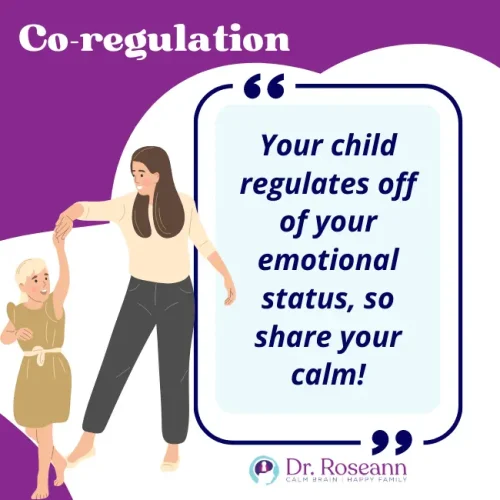
Coregulation parenting is the process of sharing your calm with your child—especially when they can’t access it on their own.
It’s the emotional safety net you offer your child when they’re overwhelmed. You become their external regulator until their brain develops the capacity to do it for themselves.
Coregulation = connection + calm + consistency
Why Do Dysregulated Kids Struggle With Self-Regulation?
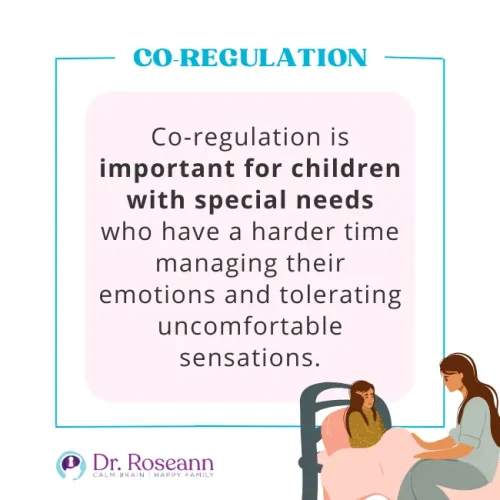
Kids with neurodevelopmental differences like ADHD, anxiety, autism, or PANS/PANDAS often have a harder time staying calm and flexible.
Their nervous systems are more reactive. Their brains process cues as threats more quickly. Their bodies go into fight, flight, or freeze faster than they can explain.
It’s not bad behavior—it’s a brain stuck in survival mode.
According to a 2024 review published in Children (MDPI), physiological synchrony between parent and child—including breathing, heart rate, and hormonal regulation—helps kids return to a calm state. That’s why a co-regulating parent can make such a big difference for a child who’s emotionally overwhelmed.
How Does Coregulation Support Brain Development?
“Emotional synchrony is the foundation for safety—and safety is the foundation for learning.” — Dr. Tina Payne Bryson
When you offer a calm, grounded presence, your child’s nervous system learns what safety feels like. Over time, this helps their brain:
- Strengthen neural pathways for emotional regulation
- Build prefrontal cortex skills (like pausing, planning, problem-solving)
- Reduce over-activation in the amygdala (fear center)
A 2022 paper in the Journal of Child and Family Studies emphasized that coregulation happens on multiple levels—not just behaviorally, but physiologically and emotionally. That’s why showing up with calm, even if you’re not saying anything, helps your child’s nervous system downshift into safety.

What Does Coregulation Look Like in Real Life?
Coregulation isn’t always soft whispers and yoga breaths. Sometimes it’s gritting your teeth and not reacting when your child throws a shoe.
In the moment, coregulation might look like:
- Getting down to their level and saying, “I see you’re upset. I’m right here.”
- Taking slow, deep breaths they can mirror
- Staying quiet, present, and calm while they cry
It’s not about fixing the behavior right away—it’s about being a safe landing pad.
How Can I Coregulate When I'm Dysregulated Too?
Let’s be honest: sometimes we’re the ones hanging by a thread.
Parenting a dysregulated child is draining. You’re human too.
But you don’t have to be perfect—just present.
Try:
- Resetting your own nervous system first (splash cold water, box breathing)
- Using calming self-talk: “I can stay calm. This isn’t personal.”
- Taking a pause if you need it before re-engaging
It’s not about never losing it—it’s about repairing quickly when you do.
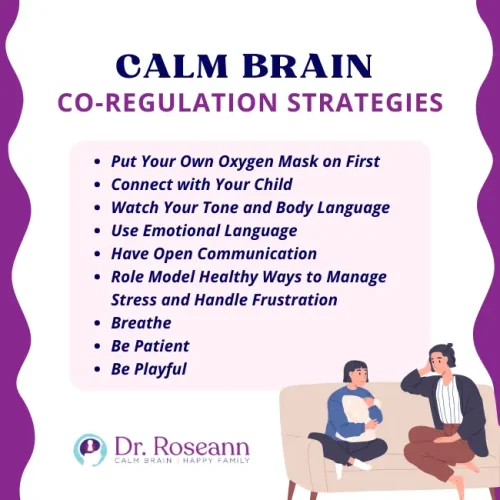
What Are Practical Coregulation Strategies for Parents?
Here are some brain-based, easy-to-implement ways to practice coregulation every day:
Daily Rituals:
- Morning snuggle time
- Family breathing break after school
- Wind-down routine with calming music
In-the-Moment Tools:
- Whisper instead of raise your voice
- Use co-regulating touch (a hand on the back)
- Mirror their breathing to help them slow down
Long-Term Supports:
- Neurofeedback therapy
- Somatic therapies (like TRE or body-based work)
- Parent coaching focused on coregulation
A 2024 systematic review published on PubMed found that behavioral coregulation techniques significantly support emotion regulation across elementary school-aged children. But here’s what was fascinating: when the relationship was too synchronized under high-stress conditions (like trauma or poverty), kids didn’t always benefit. The key is balanced, responsive, and flexible co-regulation—not mirroring every reaction, but anchoring in calm.
When Should I Worry That My Child Needs More Support?
Coregulation is powerful, but it’s not always enough—especially if your child:
- Has daily meltdowns that don’t resolve
- Struggles with sleep, eating, or relationships
- Is constantly anxious, angry, or shut down
If your child is stuck in chronic dysregulation, it’s a sign they need additional brain-based help.
Parenting a dysregulated child is no small feat—but you don’t have to do it alone. Coregulation isn’t about having all the answers—it’s about showing up with your calm, again and again.
You’re planting seeds. Even on the hard days, those seeds are taking root.
Parent Action Steps
☐
☐ Try One Daily Coregulation Ritual This Week Download the Free Self-Regulation Toolkit. Invite a Co-Regulation Partner – teamwork helps
Frequently Asked Questions
What age is coregulation most important?
Coregulation is most important from infancy through adolescence, when the brain is still developing emotional regulation skills—but even older kids and teens benefit from coregulation that models calm and connection.
Can coregulation help a child with ADHD or autism?
Yes, coregulation can help a child with ADHD or autism regulate emotions because these children often struggle more with self-regulation, making consistent coregulation essential for building calm and stability.
What should I do if I mess up and lose my cool during coregulation?
If you lose your cool during coregulation, repair is part of the process—coming back and reconnecting shows your child that coregulation includes emotional honesty and resilience.
How long does it take to see results from coregulation in parenting?
Results from coregulation in parenting can vary, but many families notice small shifts quickly, while deeper changes from consistent coregulation may take weeks or months to fully develop.
Does coregulation in parenting mean there are no consequences for behavior?
Coregulation in parenting does not mean there are no consequences—instead, it means delivering consequences with connection, using calm and consistent coregulation rather than shame or punishment.
What is coregulation in parenting and how does it work?
Coregulation in parenting is the process of helping a child regulate emotions through calm, connected interactions, where a parent’s regulated nervous system supports the child’s ability to learn self-regulation.
How does coregulation support a child’s brain development and emotional regulation?
Coregulation supports a child’s brain development and emotional regulation by strengthening the connection between emotional and thinking centers, helping repeated coregulation experiences build lasting self-regulation skills.
What are simple coregulation techniques parents can use every day?
Simple coregulation techniques parents can use every day include staying physically close, using a calm tone of voice, modeling slow breathing, and offering predictable, supportive responses that reinforce coregulation.
Coregulation: The process by which a regulated adult helps a child return to a calm state using presence, voice, and modeling.
Dysregulation: A state in which the nervous system becomes overwhelmed, leading to emotional or behavioral outbursts or shutdowns.
Prefrontal Cortex: The brain’s “thinking” area—helps with planning, attention, and emotional control.
Amygdala: The brain’s “alarm system”—responsible for detecting threats and triggering fight, flight, or freeze.
Citations:
Bornstein, M., and Esposito, G. (2023). Coregulation: a multilevel approach via biology and behavior. Children 10(8):1323. https://doi.org/10.3390/children10081323
Paley, B., and Hajal, N. (2022). Conceptualizing emotion regulation and coregulation as family-level phenomena. Clin Child Fam Psychol. Rev. 25(1):19-43. https://doi.org/10.1007/s10567-022-00378-4.
Verghagen, C., Boekhorst, M., Kupper, N., van Bakel, H., and Duijndam, S. (2024). Coregulation between parents and elementary school-aged children in response to challenge and in association with child outcomes: a systematic review. Dev Psychol. https://doi.org/10.1037/dev0001864.
Always remember... “Calm Brain, Happy Family™”
Disclaimer: This article is not intended to give health advice and it is recommended to consult with a physician before beginning any new wellness regime. The effectiveness of diagnosis and treatment varies by patient and condition. Dr. Roseann Capanna-Hodge, LLC does not guarantee certain results.
Are you looking for SOLUTIONS for your struggling child or teen?
Dr. Roseann and her team are all about science-backed solutions, so you are in the right place!
©Roseann Capanna-Hodge