Join the Dysregulation Insider get free calm parenting tips straight to your inbox!
YES, I'M IN!How to Handle a Child with Anger Issues in 3 Simple Steps (Without Yelling or Losing Your Stuff!) | Co-Regulation Parenting | E290





Estimated Reading Time: 7 Minutes
The most important thing parents need to understand is this:
Anger is not usually a sign of bad behavior.
It's often a sign of nervous system dysregulation.
When children become overwhelmed, their brains shift into survival mode, making it difficult to think clearly, solve problems, or regulate emotions. That's why traditional discipline often makes anger worse instead of better.
In this episode, I share three simple steps that help parents move from reacting to regulating, so children can build healthier ways of managing anger and frustration.
Why does my child have so much anger?
Many parents assume anger is intentional.
It's usually not.
Anger is often a stress response.
When a child's nervous system feels overwhelmed, it activates survival mode.
The brain shifts into:
- Fight
- Flight
- Freeze
In that state:
- Logical thinking decreases
- Emotional reactions intensify
- Impulse control weakens
- Problem-solving becomes difficult
What looks like defiance is often dysregulation.
Common Causes of Anger
Many factors contribute to emotional dysregulation, including:
- Anxiety
- ADHD
- OCD
- Sensory sensitivities
- Sleep deprivation
- Hunger
- Nervous system overload
- Difficulty coping with disappointment
Real-Life Example
A child becomes furious when asked to stop playing and come to dinner.
The issue isn't the dinner.
The issue is that their nervous system became overwhelmed during the transition.
Behavior is communication.
And anger often communicates overwhelm.
How can I co-regulate before I correct?
One of the biggest mistakes parents make is trying to discipline a dysregulated child.
When children are angry, they cannot effectively learn from lectures, consequences, or reasoning.
Start With Your Own Nervous System
Before responding, ask yourself:
"Am I regulated right now?"
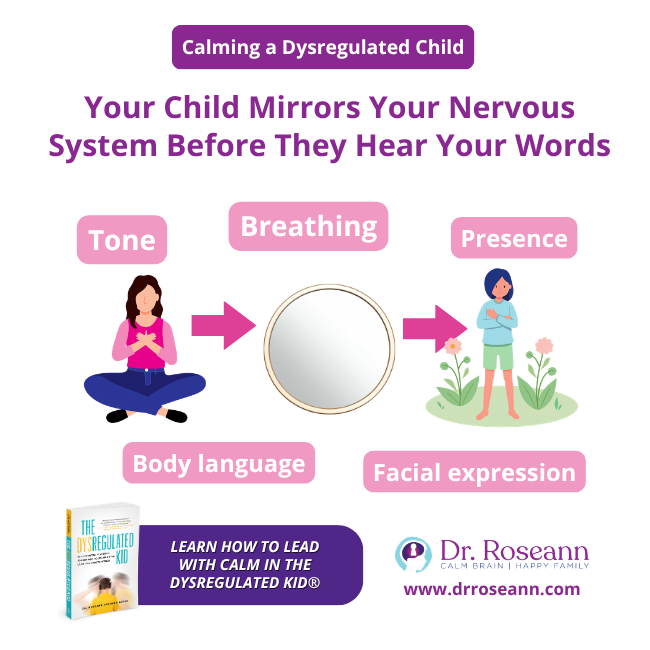
Your child responds to your nervous system before they respond to your words.
Practical Co-Regulation Strategies
- Lower your voice
- Slow your movements
- Relax your body
- Take a deep breath
- Stay physically present
Helpful Phrases
Try:
- "I'm here."
- "We'll get through this together."
- "You're safe."
- "Let's take a breath."
Children borrow our calm until they learn to create their own.
Real-Life Example
A child begins yelling.
Instead of raising her voice, a parent takes a breath and calmly says:
"I'm here when you're ready."
The nervous system begins settling rather than escalating.
That's co-regulation.
🗣️ "Anger is often misunderstood as intentional defiance or disrespect, when in reality, it is a sign of nervous system dysregulation." — Dr. Roseann
Need more support helping your child manage anger?
The Regulation Rescue Kit provides practical Regulation First Parenting® tools that help reduce meltdowns, improve emotional regulation, and create more peace at home. Become a Dysregulation Insider VIP and get your FREE kit today: www.drroseann.com/newsletter
How can I redirect anger into healthy responses?
Anger isn't the problem.
Getting stuck in anger is.
Children need safe ways to move through big emotions.
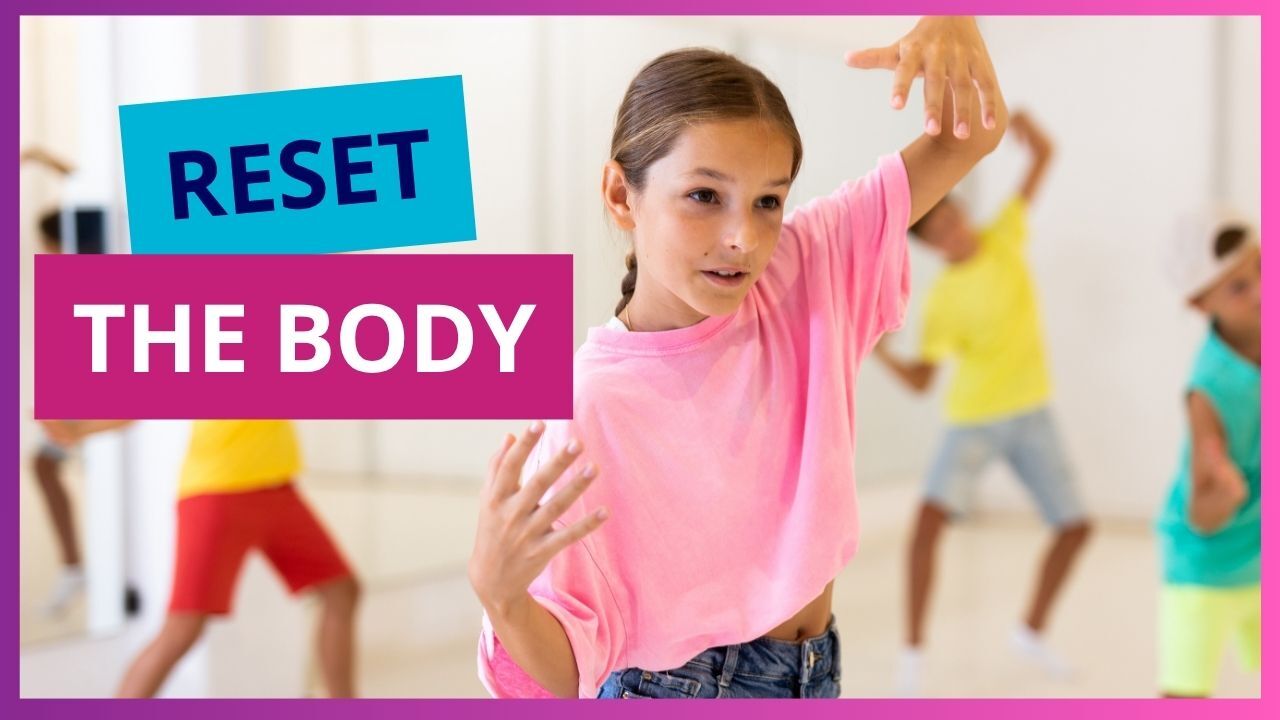
Use Movement
Movement helps discharge stress energy.
Try:
- Jumping jacks
- Wall push-ups
- Dancing
- Walking
- Stretching
Use Nonverbal Regulation Tools
When children are dysregulated, words often become overwhelming.
Helpful alternatives include:
- Deep pressure hugs
- Weighted blankets
- Butterfly tapping
- EFT tapping
- Humming
Give Limited Choices
Offering choices reduces power struggles.
Examples:
- "Would you like a hug or space?"
- "Would you rather walk or stretch?"
This helps children regain a sense of control.
Important Reminder
The goal isn't stopping anger.
The goal is teaching children how to move through it safely.
How can I reflect and reset after the storm?
Once calm returns, that's when learning happens.
Many parents rush to consequences.
Instead, focus on reflection.
Help Your Child Process
Ask questions like:
- "What happened?"
- "What were you feeling?"
- "What helped you calm down?"
- "What could we try next time?"
Focus on Growth
Instead of:
"You shouldn't have gotten angry."
Try:
"You worked hard to calm your body."
Children need encouragement, not shame.
Real-Life Example
A child who previously screamed for an hour recovers in twenty minutes.
That's progress.
Celebrate it.
Emotional regulation develops through repeated practice.
Why does co-regulation work so well?
Children learn regulation through experience.
They don't learn it through punishment.
What Children Need
- Emotional safety
- Predictable support
- Calm adults
- Opportunities to practice coping skills
Every regulated interaction strengthens neural pathways for self-regulation.
That's why Regulation First Parenting® works.
What Happens Over Time?
Children begin developing:
- Better frustration tolerance
- Improved emotional awareness
- Faster recovery after stress
- Stronger coping skills
The goal isn't eliminating anger.
The goal is teaching children how to manage it.
Takeaway & What’s Next
If your child struggles with anger, remember:
Anger isn't the enemy.
It's information.
Your child isn't giving you a hard time.
They're having a hard time.
The more we understand what's happening underneath the behavior, the better equipped we are to help children develop healthier responses.
Remember:
- Co-regulate first.
- Redirect anger safely.
- Reflect after calm returns.
- Focus on progress, not perfection.
Small changes create lasting results.
It's gonna be OK.
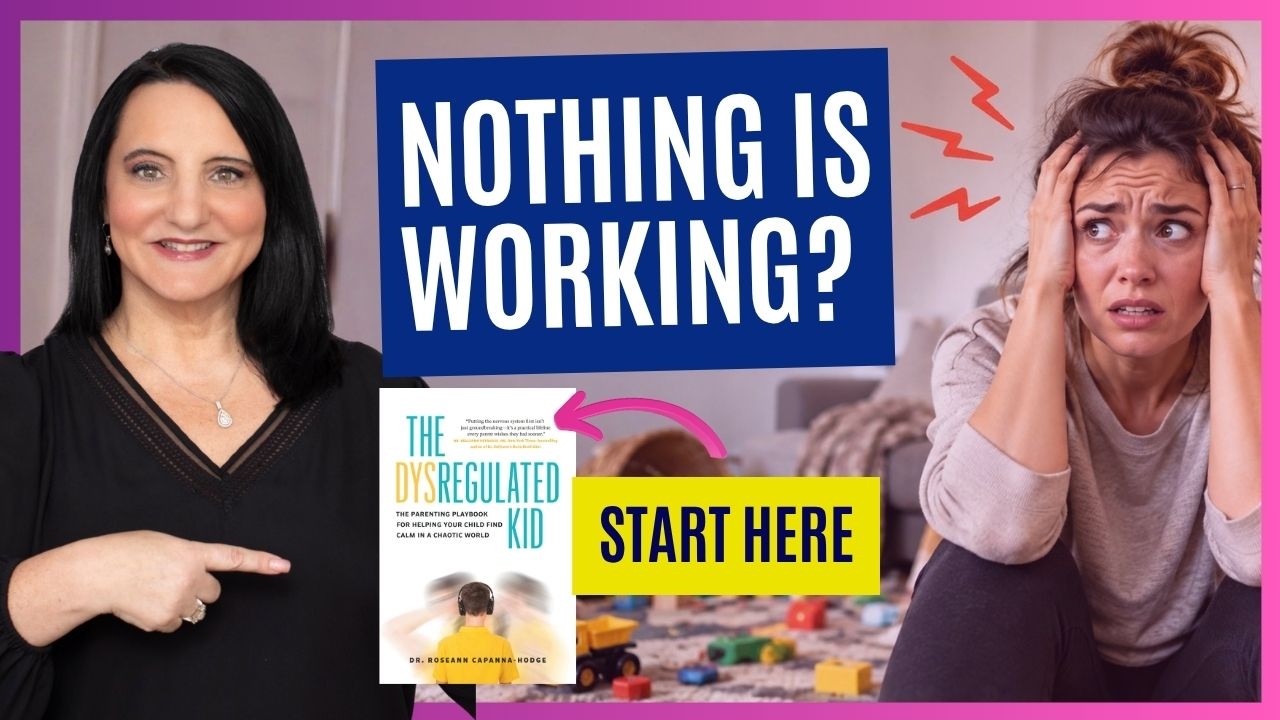
You can know exactly how you want to parent and still lose access to those skills when your own nervous system gets triggered. The Dysregulated Kid® helps you regulate yourself first, interrupt the escalation cycle, and respond with more calm and intention when parenting gets hard. Get The Dysregulated Kid® at dysregulatedkid.com.
FAQs
Why does my child get angry so easily?
Frequent anger often reflects nervous system dysregulation rather than intentional misbehavior. Anxiety, ADHD, sensory overload, sleep issues, and stress are common contributors.
Should I punish my child for anger outbursts?
Focus on regulation first. Consequences are rarely effective when a child is dysregulated because the thinking brain is not fully accessible.
What is the best way to calm an angry child?
Stay calm, reduce verbal input, use co-regulation strategies, and provide opportunities for movement or sensory regulation.
Can anger be a sign of anxiety?
Absolutely. Anxiety often appears as irritability, frustration, and anger because the nervous system remains activated and overwhelmed.
How long does it take to improve emotional regulation?
Emotional regulation develops gradually through consistent practice, co-regulation, and nervous system support. Progress happens one small step at a time.
Not sure where to start?
Use the Solution Matcher to get personalized recommendations based on your child's emotional and behavioral needs.
Start here:
Dr. Roseann Capanna-Hodge is a licensed therapist, certified school psychologist, and leading expert in emotional dysregulation in children. With over 30 years of experience, she helps parents understand the root causes of meltdowns, anxiety, ADHD, and challenging behavior through the lens of nervous system regulation. Dr. Roseann teaches practical, science-backed strategies for co-regulation and how to calm a dysregulated child using her Regulation First Parenting® approach. She is the host of the Dysregulated Kids Podcast and author of The Dysregulated Kid.
Dr. Roseann Capanna-Hodge
Emotional Dysregulation in Children & Nervous System Expert
Regulation First Parenting® | CALMS Protocol™
Host of the Dysregulated Kids Podcast (Top 1% Globally)
Author of The Dysregulated Kid

Find this helpful? Leave us a review!
Your feedback helps more overwhelmed parents find calm, clarity, and the proven tools that make everyday life easier.
Dr. Roseann Capanna-Hodge: Helping Families of Dysregulated Kids Thrive Through Regulation First Parenting®
As the creator of Regulation First Parenting®, she’s helping families of dysregulated kids discover a compassionate, brain-based path forward. Through The Dysregulated Kids™ Podcast (top 2% globally), she offers practical strategies that help parents understand their child’s brain and support lasting change.
Through The Global Institute of Children’s Mental Health and Dr. Roseann, LLC, she’s created resources like the Neurotastic® Brain Formulas and the Regulation First Parenting® framework—meeting families where they are and supporting them through challenges like ADHD, anxiety, OCD, PANS/PANDAS, and behavioral struggles.
Recognized by Forbes as “a thought leader in children’s mental health,” Dr. Roseann is changing how we understand emotional dysregulation in children—one family at a time.