
Join the Dysregulation Insider get free calm parenting tips straight to your inbox!
YES, I'M IN!What is Self Regulation? | Emotional Dysregulation in Children | E151





Self regulation is vital as it impacts our ability to control emotions, thoughts, and behaviors in response to various external stimuli. It's not limited to what we conventionally perceive as stressors; rather, it's based on how our body and brain interpret stimuli.
It is thus important that we delve into the fundamental aspects of self-regulation particularly in relation to its application in various contexts, providing insights to empower individuals, parents, and even employees. Moreover, we will also tackle various ways to support a regulated nervous system and address pressing concerns of calming a dysregulated child.
Brain development and coping skills.
The development of self-regulation in the brain is intricately linked to our experiences. And so, the key to calm the nervous system lies in cultivating coping skills, essential for becoming adept "stress slayers."
Environments marked by chaos or dysregulation pose challenges for our nervous systems. Additionally, some individuals, particularly those with neurodivergence, may experience overstimulation or understimulation. That is why it is important to have a holistic understanding when considering regulation, extending to the understanding of the balance between overstimulation and understimulation in the brain.
This is crucial as understimulation in the brain can manifest as learning and processing difficulties, procrastination, or unresponsiveness in various aspects of life. Recognizing and addressing these nuances is integral to fostering effective self-regulation.
Dysregulated nervous systems in children and adults.
Dysregulation can result from various factors, including situational stressors, compounded stress, and genetic predispositions. It then becomes crucial to identify signs of dysregulation as early as possible for effective intervention and support.
Common indicators include frequent tantrums or meltdowns, often observed in toddlers facing disappointment. Intolerance for emotional expression and impulsiveness can manifest in young adults, teens, and even adults. The pandemic has exacerbated dysregulation, trapping individuals in heightened emotional states. Impulsivity, whether physical or verbal, may stem from both overstimulated and understimulated nervous systems.
Social interaction difficulties are prevalent in dysregulated individuals, affecting both school and work settings. In line with this, challenges in engaging, verbal impulsivity, and a lack of perspective-taking can make social interactions problematic. Recognizing the importance of social skills in children, the series will shed light on these often overlooked aspects.Inconsistent attention and concentration issues are also signs of a dysregulated nervous system, further impacting learning capabilities.
ADHD diagnosis and dysregulated nervous system.
Many children and individuals facing dysregulation often receive an ADHD diagnosis. In fact there was an increase in adults seeking such diagnoses during the pandemic. However, many of these cases, without prior history, were actually stress-related focus problems rather than ADHD.
Understanding why dysregulation manifests as attention issues is crucial. Overreactions to small problems, common in those with a sympathetic dominant nervous system, can be misinterpreted as ADHD symptoms.
Some signs of dysregulation include difficulty transitioning, often stemming from impulse control challenges or overall struggle. Extreme mood swings and difficulty following instructions are prevalent, along with sleep problems. Whether it's trouble falling asleep, staying asleep, or waking up, these issues manifest across various ages and developmental stages. Dysregulation, regardless of its source, often disrupts sleep patterns, a phenomenon observed frequently in both children and adults experiencing dysregulation. Recognizing these symptoms is key to understanding and addressing the underlying dysregulation.
Dysregulation signs and solutions.
It's crucial to recognize that dysregulation can stem from various reasons, and often, there are compounded factors at play. Academic challenges are a common outcome for dysregulated individuals, affecting both learning and work performance due to a lack of regulated responses.
Individualized approaches, such as brain maps and checks, can uncover the specific reasons behind dysregulation. These advanced diagnostic tools offer a detailed analysis of brain function, highlighting specific areas that may be impacted. By delving into the intricacies of brain activity, we gain valuable insights into the root causes of dysregulation. This personalized exploration allows for a more targeted and effective intervention to address the unique needs of each individual.
Moreover, adopting a detective mindset is a crucial aspect of navigating the complexities of dysregulation. Keeping a journal to document observed behaviors is akin to creating a roadmap that guides us toward understanding the underlying sources of these behaviors. This systematic and comprehensive approach enables us to identify patterns, triggers, and recurring themes, empowering us to connect the dots between behavior and its root causes.
Related Blogs and Podcast
Podcast 76: Calming the Dysregulated ADHD Brain
Podcast 70: Sharing Your Calm: How Co-regulation Helps Dysregulated Kids
Podcast 73: Fostering Emotional Regulation
ADHD and Self Regulation: Ways to Achieve Emotional Balance
Links and Resources:
➡️ Join our FREE Natural Parenting Community to receive science-backed resources for your child and family. Join here.
➡️ Get help from Dr. Roseann and her team. Apply here.
➡️ “Is it ADHD or something else?” Take the quiz.
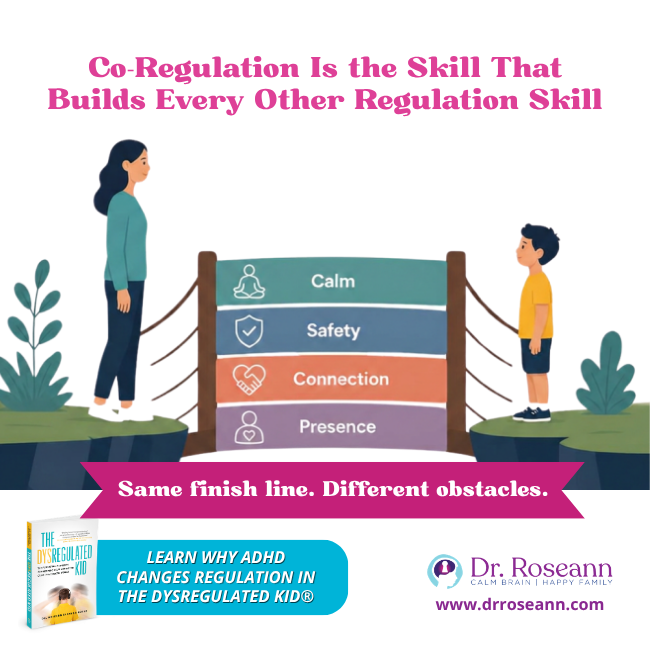
Self-regulation is the ability to notice stress, manage emotions and behavior, and find your way back toward balance—but children aren’t born knowing how to do that independently.
In The Dysregulated Kid®, I show parents how regulation develops through the nervous system and why co-regulation comes before self-regulation. You’ll learn practical ways to become the calm, connected guide your child needs while they build the capacity to manage increasingly difficult emotions and demands on their own. Get The Dysregulated Kid® at dysregulatedkid.com (https://dysregulatedkid.com/).
Dr. Roseann Capanna-Hodge is a licensed therapist, certified school psychologist, and leading expert in emotional dysregulation in children. With over 30 years of experience, she helps parents understand the root causes of meltdowns, anxiety, ADHD, and challenging behavior through the lens of nervous system regulation. Dr. Roseann teaches practical, science-backed strategies for co-regulation and how to calm a dysregulated child using her Regulation First Parenting® approach. She is the host of the Dysregulated Kids Podcast and author of The Dysregulated Kid.
Dr. Roseann Capanna-Hodge
Emotional Dysregulation in Children & Nervous System Expert
Regulation First Parenting® | CALMS Protocol™
Host of the Dysregulated Kids Podcast (Top 1% Globally)
Author of The Dysregulated Kid

Find this helpful? Leave us a review!
Your feedback helps more overwhelmed parents find calm, clarity, and the proven tools that make everyday life easier.
Dr. Roseann Capanna-Hodge: Helping Families of Dysregulated Kids Thrive Through Regulation First Parenting®
As the creator of Regulation First Parenting®, she’s helping families of dysregulated kids discover a compassionate, brain-based path forward. Through The Dysregulated Kids™ Podcast (top 2% globally), she offers practical strategies that help parents understand their child’s brain and support lasting change.
Through The Global Institute of Children’s Mental Health and Dr. Roseann, LLC, she’s created resources like the Neurotastic® Brain Formulas and the Regulation First Parenting® framework—meeting families where they are and supporting them through challenges like ADHD, anxiety, OCD, PANS/PANDAS, and behavioral struggles.
Recognized by Forbes as “a thought leader in children’s mental health,” Dr. Roseann is changing how we understand emotional dysregulation in children—one family at a time.