



Estimated reading time: 8 minutes
If it feels like your child’s emotions are getting bigger, happening faster, or lasting longer as they grow—you’re not imagining it.
Maybe your toddler used to have quick meltdowns…
and now your school-aged child is having full-blown outbursts, shutting down, or refusing school.
That shift is what we call the progression of dysregulation.
The progression of dysregulation is how emotional struggles change—and often intensify—over time when a child doesn’t yet have the skills to cope with stress. Instead of simply “growing out of it,” the nervous system can stay stuck in survival mode.
So the behaviors evolve:
crying turns into yelling…
tantrums turn into shutdowns…
and big feelings start showing up as anxiety, avoidance, or defiance.
And this is where it gets really hard.
You might be wondering, “Why is this getting worse?” Or thinking, “We’ve tried everything—why isn’t it working anymore?”
It’s exhausting. And confusing. And honestly, it can make you question yourself.
But here’s what I want you to know—this isn’t a parenting failure.
When you understand the progression of dysregulation, you can finally see what your child’s brain actually needs—and start helping them calm, cope, and grow in a way that truly works.
In this post, we’ll explore:
- how dysregulation episodes progress with age
- why they change
- how you can help your child regain control.
What Is Nervous System Dysregulation?
Nervous system dysregulation is when your child’s brain can’t return to a state of calm after stress. Instead of bouncing back, their system stays stuck in survival mode—fight, flight, or freeze.
This isn’t misbehavior. It’s not about being spoiled or dramatic. It’s a biological brain response to overwhelm. And until the nervous system feels safe, your child won’t be able to access self-control, problem-solving, or reasoning skills.
Dysregulation in children varies in presentation and prevalence across different age groups. Younger children may show more temper tantrums, while older children may have a hard time with irritability or managing frustrations. Factors like your (the parent’s) regulation, early childhood experiences, and underlying conditions like ADHD can also influence how dysregulation shows.
Why Dysregulation Shifts with Age
As children grow, their brains develop more advanced coping tools. But if those tools aren’t modeled, supported, or taught, the expression of dysregulation just changes shape.
Think of it like this:
💬 A tantrum at age 3 might turn into verbal outbursts at age 9…
💬 …then into social withdrawal or perfectionism at 14.
But why does dysregulation show up differently over time?..
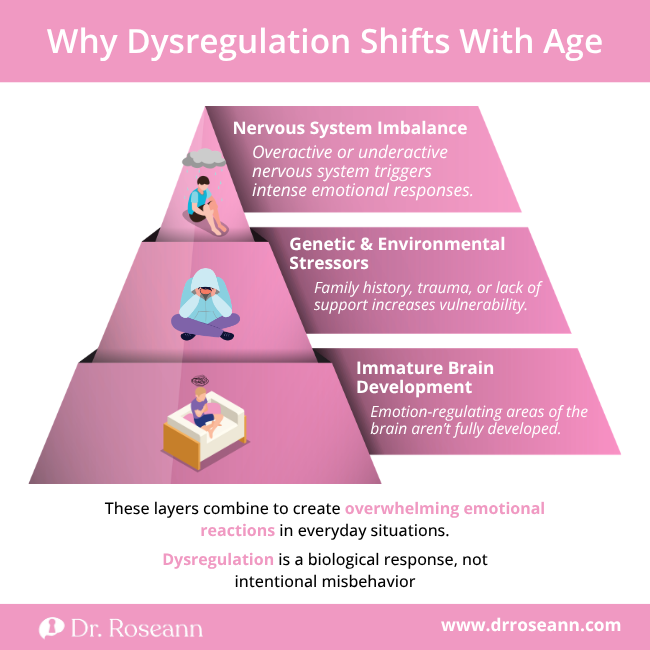
Well, it’s due to a variety of contributing factors that also change as time goes by:
- Overactive or underactive nervous system: When the nervous system is overstimulated or under stimulated, it can trigger intense emotional reactions.
- Genetic and environmental factors: Family history, stress, trauma, or lack of emotional support can contribute to the development of dysregulation.
"When trauma occurs early in life, it can alter the brain’s stress-response systems, creating pathways that contribute to chronic emotional and behavioral dysregulation." - Dr. Stephen Crowell and Dr. Theodore Beauchaine (Crowell & Beauchaine, 2017)
- Brain development: Areas of the brain that control emotions and behavior may not be fully developed, especially in younger children.
"Emotion regulation relies on the development of brain regions like the prefrontal cortex and amygdala, and early life stress can disrupt these pathways, leading to persistent dysregulation." - Dr. Christina Deveney and Dr. Madeline Dreyfuss (Deveney & Dreyfuss, 2021)
That’s why it’s so important to recognize what dysregulation looks like at each age—and how to support the brain beneath the behavior.
What Dysregulation Looks Like at Different Ages
Here’s a breakdown of common dysregulation symptoms by age group:
| Age Group | How Dysregulation May Show Up |
|---|---|
| Toddlers | Screaming, throwing toys, lying on the floor, biting. |
| Preschoolers | Defiance, hitting, refusal to follow directions. |
| School-age | Meltdowns after school ("after-school restraint collapse"), talking back, aggression. |
| Tweens/Teens | Isolation, angry outbursts, avoidance, perfectionism. |
Each behavior is your child’s nervous system saying, “I don’t feel safe or in control right now.” When we respond with regulation instead of punishment, we teach their brain how to return to calm.
What Happens During a Dysregulation Episode?
Most dysregulation episodes follow a predictable cycle. Once you learn to recognize these stages, you’ll know when to intervene—and when to just ride the wave with support.
🌀 The 5 Phases of Dysregulation:
- Trigger
A stressor sets things off—this could be loud noise, a denied request, or even hunger. - Escalation
Your child’s body tenses. They might raise their voice, cry, lash out, or run. - Peak
This is the meltdown or shutdown phase. Full-blown yelling, hiding, or aggressive behavior may appear. - De-escalation
The storm begins to pass. Energy lowers, but they’re not back to baseline yet. - Recovery
Fatigue, withdrawal, or remorse may show up. This is a critical time for co-regulation and repair.
💡 Real-life example:
Sarah, a mom of a 9-year-old with ADHD, noticed her son’s worst episodes came after too much screen time or noisy environments. Once she started limiting stimulation and building in sensory breaks, his outbursts became shorter and less intense.
How Can I Help My Child Calm Down When They’re Dysregulated?
When your child is in a dysregulated state, it’s important to address the emotional overwhelm before addressing the behavior.
Common Signs of Emotional Dysregulation in Children
| Sign | What It Might Look Like |
|---|---|
| Mood Swings | Sudden shifts from calm to angry, tearful, or irritable without a clear or proportional cause. |
| Aggressive Behavior | Hitting, yelling, name-calling, or destructive actions toward objects or others. |
| Shutdowns or Withdrawal | Refusing to talk, hiding, going silent, or actively avoiding interaction and eye contact. |
| Difficulty Focusing | Trouble following multi-step instructions, completing simple tasks, or staying on track. |
| Physical Complaints | Frequent headaches, stomachaches, or fatigue with no underlying medical explanation. |
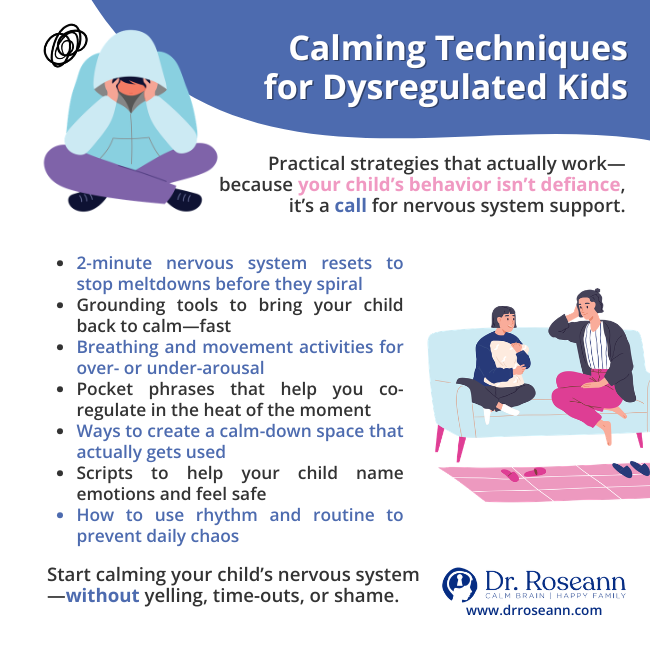
While deep breathing exercises, gentle hugs, weighted blankets, fidget toys, and safe areas are techniques that you can apply, different ages need different strategies.
Here’s how to help support your child’s nervous system across development:
👶 Toddlers & Preschoolers
- Offer deep-pressure hugs or rocking
- Narrate feelings with simple words (“You’re mad. I’m here.”)
- Use visuals for transitions (e.g., timers or pictures)
🧒 School-Age Children
- Introduce simple breathwork (box breathing, finger tracing)
- Create a calm-down corner with sensory tools
- Use co-regulation phrases: “Let’s reset together.”
🧑🎓 Tweens & Teens
- Give space without emotional disconnection
- Encourage journaling, movement, or cold exposure to reset the nervous system
- Teach self-awareness tools like body scanning or mood tracking apps
Tip: Don’t assume older kids should “know better.” Teens may still have dysregulated brains, just with more internalized symptoms like self-blame, withdrawal, or perfectionism.
What Role Does Co-Regulation Play in Managing Dysregulation?
Co-regulation is a powerful tool for helping both you and your child stay calm. It’s about providing support and guidance while you stay grounded in the moment.
We had Mark once, a dad of a 7-year-old with PANS/PANDAS, and a dad who was feeling drained by his daughter’s intense emotional outbursts. But once we worked together, he realized that when he regulated his own emotions, she was able to mirror his calmness and regain control.
By staying grounded, he created a ripple effect, helping her find her own balance. Regulate first—it really works. When parents take that first step toward emotional regulation, it’s amazing what they can help their children achieve.
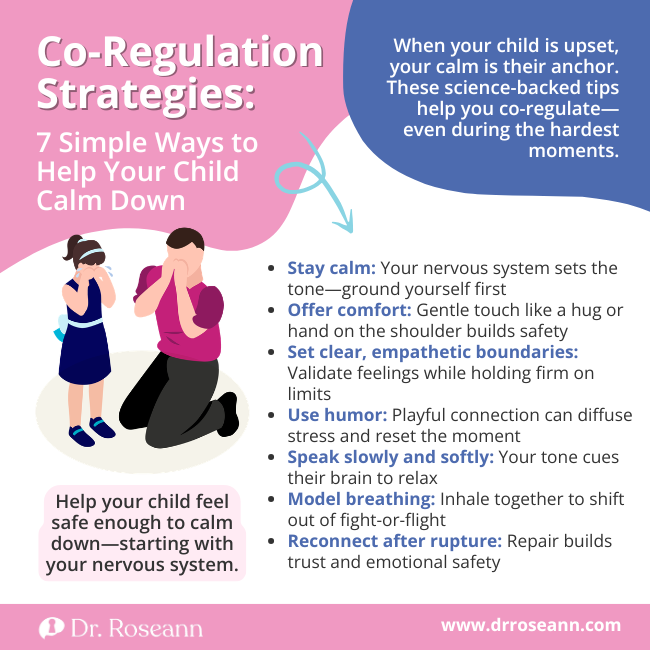
Dr. Eva Moehler, a child psychiatrist, once said, "Co-regulation—calming and connecting with a child—helps shape how the brain learns to manage stress. It’s one of the most effective tools caregivers have." (Moehler et al., 2022)
Watch: How Emotional Dysregulation Can Affect Children Over Time
Prefer to listen? Listen to the podcast episode.
When Should I Seek Professional Help for Dysregulation?
If you've tried self-regulation strategies and your child's emotional struggles persist or worsen, it may be time to seek professional help. A pediatrician, therapist, or psychiatrist specializing in children’s mental health can help assess the situation and provide additional support.
| Red Flag Behavior | What It Could Mean |
|---|---|
| Excessive anger, violence, or aggression | Possible underlying emotional dysregulation or trauma; indicates a "fight" response is easily triggered. |
| Persistent anxiety, depression, or social withdrawal | May indicate deeper emotional struggles or mental health concerns requiring therapeutic support. |
| School refusal or major academic struggles | Often points to difficulties with emotional regulation or acute performance anxiety. |
| Severe sleep issues | Commonly linked to a dysregulated nervous system that cannot transition into a "rest and digest" state. |
| Difficulty in relationships with family or peers | Can signal trouble with emotional processing, empathy, or social-emotional regulation. |
Key Takeaways:
- Seek professional help if your child’s dysregulation is persistent or significantly impacting their daily life.
Early intervention can make a big difference in helping children manage their emotions more effectively.
Final Thoughts: You’ve Got This!
Watching your child’s behavior change as they grow can feel confusing—even scary at times. But when you understand how dysregulation evolves with age, you gain the power to respond with empathy instead of frustration.
With tools like co-regulation, calming techniques, and resources my Regulation Rescue Kit, you can help your child regain control, even in the most challenging moments.
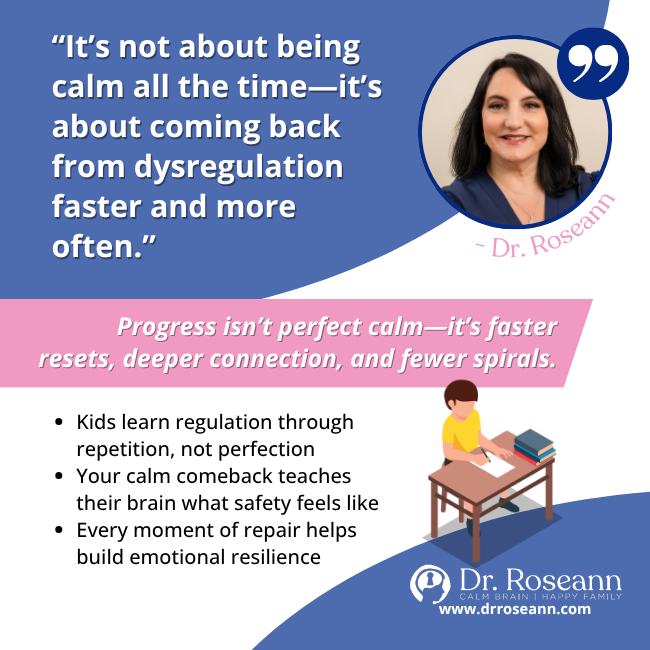
You don’t have to do it perfectly—just consistently. Your steady presence teaches their brain that it’s safe to come back to calm!
FAQs
How long does a dysregulation episode usually last?
It varies. Some dysregulation episodes last just minutes, while others can go on for hours. It depends on your child’s age, stress level, and the support they get to recover.
Can anxiety and ADHD make dysregulation worse over time?
Yes—anxiety and ADHD can make dysregulation worse by speeding up reactions and making them happen more often. With the right support, though, you can help your child slow things down and feel more in control.
Should I punish my child after a meltdown?
No—after a dysregulation meltdown, your child’s brain is still recovering. Focus on calming and connecting first, then teach skills later when they’re ready.
Does dysregulation change as kids get older?
Yes, dysregulation changes as kids get older, but it doesn’t just go away. Younger kids may melt down, while older kids might shut down or act out instead.
Will my child outgrow dysregulation, or do they need help?
Some kids outgrow mild dysregulation, but many need help. Without support, dysregulation can stick around or get worse, so early support really matters.
How do I know if my child’s dysregulation is getting worse?
You may notice dysregulation getting worse if meltdowns happen more often, last longer, or feel more intense. Some kids also start shutting down, avoiding things, or becoming more reactive.
Why does my child seem more dysregulated as they get older?
Kids can seem more dysregulated as they get older because life gets harder, but their coping skills may not keep up yet. School, friendships, and expectations can all add more stress.
What can I do to help my child at different ages with dysregulation?
Helping your child with dysregulation at different ages means meeting them where they are—more hands-on calming when they’re little, and more coaching and skill-building as they grow.
Citations:
Shaw, P., Stringaris, A., Nigg, J., & Leibenluft, E. (2014). Emotion dysregulation in attention deficit hyperactivity disorder. American Journal of Psychiatry, 171(3), 276–293. https://doi.org/10.1176/appi.ajp.2013.13070966
Brown, E. D., Ackerman, B. P., & Smith, J. M. (2012). The role of emotional regulation in school adjustment among preschool-aged children from low-income families. Early Childhood Research Quarterly, 27(3), 460–471. https://doi.org/10.1016/j.ecresq.2011.05.007
Chew, X. H. K. (2023). Defining emotional dysregulation in early childhood (Professional Doctorate Thesis). James Cook University. https://researchonline.jcu.edu.au/80988/
Dr. Roseann is a mental health expert in Self-Regulation who frequently is in the media:
- Healthline Understanding Self-Regulation Skills
- Scary Mommy What Is Self-Regulation In Children, And How Can You Help Improve It?
- HomeschoolOT Therapy Services Understanding Nervous System Dysregulation in Children: A Guide for Homeschool Parents
These strategies form the foundation of the Regulation First approach, which Dr. Roseann details extensively in The Dysregulated Kid.
Always remember… “Calm Brain, Happy Family™”
Disclaimer: This article is not intended to give health advice and it is recommended to consult with a physician before beginning any new wellness regime. The effectiveness of diagnosis and treatment vary by patient and condition. Dr. Roseann Capanna-Hodge, LLC does not guarantee certain results.
Are you looking for SOLUTIONS for your struggling child or teen?
Dr. Roseann and her team are all about science-backed solutions, so you are in the right place!
Meet the Expert
Licensed Therapist | Certified School Psychologist
Board Certified in Neurofeedback (BCN) | 30+ Years Clinical Experience
Expert in Emotional Dysregulation in Children and Nervous System Regulation
Host, Dysregulated Kids Podcast | Author, The Dysregulated Kid
Dr. Roseann Capanna-Hodge is a licensed therapist, certified school psychologist, and leading expert in emotional dysregulation in children and nervous system regulation. With over 30 years of clinical experience and having analyzed more than 10,000 brain maps, she helps families understand what behavior is really signaling—and how to calm the nervous system first so real change can happen.
She is the creator of Regulation First Parenting® and the CALMS Protocol™, host of the top 1% podcast Dysregulated Kids, and author of The Dysregulated Kid.

Want more Regulation First Parenting® guidance from Dr. Roseann? Add us as a preferred source on Google.