%20.png)



Estimated reading time: 5 minutesPANS syndrome cases are on the rise. But before you panic, let’s unpack what’s going on.It’s normal for kids to get sick. That’s how their immune system builds strength and resilience over time. But when the immune system doesn’t work as it should, even a simple sore throat, strep infection or cold can lead to something more serious.In some kids, that immune response becomes misfired, leading to brain inflammation and PANS.
What is PANDAS or PANS Syndrome?
PANS (Pediatric Acute-onset Neuropsychiatric Syndrome) is a condition where a child suddenly develops severe psychiatric symptoms—like OCD, anxiety, or rage usually after an infection or immune event. These symptoms can show up almost overnight.Key signs of PANS include:
- Sudden onset of OCD, anxiety, or eating restriction
- Emotional outbursts or rage attacks
- Regression in behavior or school performance
- Sensory sensitivities and separation anxiety
Parents often say it feels like a switch flipped. One day their child is fine—and the next, everything changes.“When kids show these sudden shifts, it’s a clue the brain is inflamed. We always calm the brain first.” – Dr. Roseann
Are PANDAS/PANS Cases Really Increasing?
Roughly 1 in every 200 children in the United States are affected by PANS/PANDAS (PANDAS Network). While it’s been hard to track all cases due to reasons such as misdiagnosis, more families and providers are recognizing the signs.Some of the reasons include:
- More immune system triggers – including post-viral inflammation
- Increased awareness from parents and practitioners
- More environmental stressors, like mold and toxin exposure
Even if it’s not always diagnosed, many children are struggling with the symptoms of immune-triggered neuropsychiatric disorders.
“Parents are asking better questions. They know this isn’t just ‘anxiety’ or ‘tantrums.’ They see the sudden shift, and they want real answers.” – Dr. Roseann
Why Do PANS/PANDAS Symptoms Often Get Misdiagnosed?
Because the behaviors look like more familiar conditions—OCD, ADHD, or anxiety, it’s easy for clinicians to miss the real root cause. But PANS symptoms don’t show up gradually. They’re intense and sudden.Here’s how PANS often gets misread:
- Rages are seen as behavioral problems, not immune-related
- OCD is diagnosed, but the suddenness isn’t explored
- Academic decline is chalked up to stress, not brain inflammation
And let’s not forget—when kids act out, it’s often parents who are blamed. But...It’s not bad parenting—it’s a dysregulated brain.
What Should Parents Look Out For in Their Child?
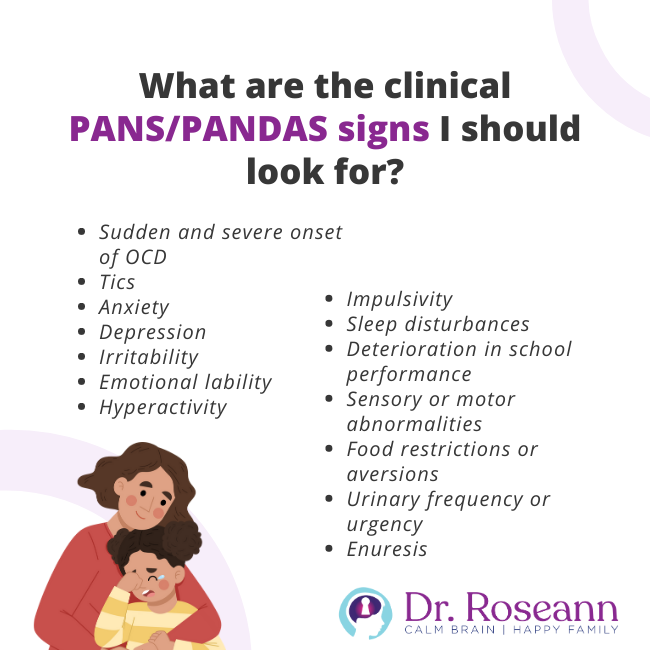
PANS can affect every area of a child’s life: emotions, behavior, academics, and even physical health. Parents should trust their instincts and look for these patterns:Watch for sudden:
- Rages or emotional meltdowns
- OCD-like behaviors or rituals
- Tics or motor changes
- Anxiety or fears that weren’t there before
- School refusal or regression
- Food restrictions or refusal to eat
“We often see an infection like strep, and then shortly after—boom—the child starts having rage episodes or obsessive thoughts. It’s not random.” – Dr. RoseannIf these symptoms come on suddenly and don’t follow the typical developmental course of something like ADHD or generalized anxiety, it’s time to consider a deeper cause.https://youtu.be/Gn37IUiwVW0
What Can You Do if You Suspect PANDAS/PANS?
This part is so important, because early action matters.
- Support gut health. A healthy gut supports a healthy immune system—remove inflammatory foods and add probiotics if tolerated.
- Prioritize a clean, anti-inflammatory diet. Reduce gluten, dairy, sugar, and processed foods.
- Minimize toxin exposure. Reduce environmental stressors like mold, chemicals, and heavy metals.
- Use targeted supplements. Nutrients like magnesium, omega-3s, and NAC can help regulate inflammation and support the brain.
- Regulate stress and sleep. Keep routines calm and predictable. Less stress = more healing.
- Explore natural supports. PEMF, magnesium, and brain-based therapies can help regulate the nervous system.
- Keep a detailed timeline. Track sudden changes in mood, behavior, or physical symptoms, along with any recent illnesses.
- Find a PANS/PANDAS-literate provider. Not every doctor understands the immune-brain connection, so it’s important to work with someone who does.
- Request a QEEG brain map. This brain scan can help identify dysregulation patterns and support targeted care.
- Calm the brain first. Reducing inflammation is key to improving behavior and mood.
- Download our PANS/PANDAS Kit. Get expert tools, checklists, and strategies to start helping your child right away.

Parent Action Steps
Practice one brain-calming activity daily to help regulate your child’s nervous system and lowers inflammationFind personalized tools that match your child’s needs so you can stop guessing and start helpingJoin a trusted parent community to find answers, connection, and a place where other families get what you’re going throughDownload the PANS/PANDAS Kit to learn strategies to support your child’s brain and body at homeFrequently asked questions
What age do PANS/PANDAS symptoms usually start?
Most cases appear between ages 3 and 13, but symptoms can start at any age in childhood after a triggering event like strep or another infection.
Are PANS and PANDAS contagious?
No. While the infections that can trigger these conditions (like strep) are contagious, the syndrome itself is not.
Can PANS/PANDAS go away on its own?
Some children may experience temporary relief, but without addressing the underlying inflammation and infection, symptoms often return. Early intervention is key.
What kind of testing can help confirm PANS?
There’s no single test, but bloodwork for infections, immune markers, and a QEEG brain map can all offer valuable clues.
What’s the difference between PANS and PANDAS?
PANDAS is a subtype of PANS specifically triggered by a strep infection. PANS can be triggered by other infections, toxins, or immune responses.CitationsSwedo, S. E., Leonard, H. L., Garvey, M., Mittleman, B., Allen, A. J., Perlmutter, S. J., ... & Rapoport, J. L. (1998). Pediatric autoimmune neuropsychiatric disorders associated with streptococcal infections: Clinical description of the first 50 cases. American Journal of Psychiatry, 155(2), 264–271. https://doi.org/10.1176/ajp.155.2.264 Song, E. (2021). Understanding neuroinflammation in kids: How PANS and PANDAS affect the body and brain. Healthy Kids Happy Kids Blog. https://healthykidshappykids.com/2021/06/16/pans-and-pandas/ Capanna-Hodge, R. (2023). The BrainBehaviorReset™ approach: Rethinking behavior through the lens of nervous system regulation. It’s Gonna Be OK! Podcast, Episode 141. https://drroseann.com/podcast/ Dr. Roseann Capanna-Hodge is a licensed mental health expert that is frequently cited in the media:
- The Mac Talks: Fighting the Stigma on Mental Health & Lyme Disease
- Learning to Slay the Beasts Podcast: Treating PANDAS, PANS and Lyme
- Clearly Clinical Podcast: What you need to know about PANS/PANDAS
Always remember... “Calm Brain, Happy Family™”
Disclaimer: This article is not intended to give health advice and it is recommended to consult with a physician before beginning any new wellness regime. *The effectiveness of diagnosis and treatment vary by patient and condition. Dr. Roseann Capanna-Hodge, LLC does not guarantee certain results.
Are you looking for SOLUTIONS for your struggling child or teen?
Dr. Roseann and her team are all about science-backed solutions, so you are in the right place!
©Roseann Capanna-Hodge