%20.png)


Contents
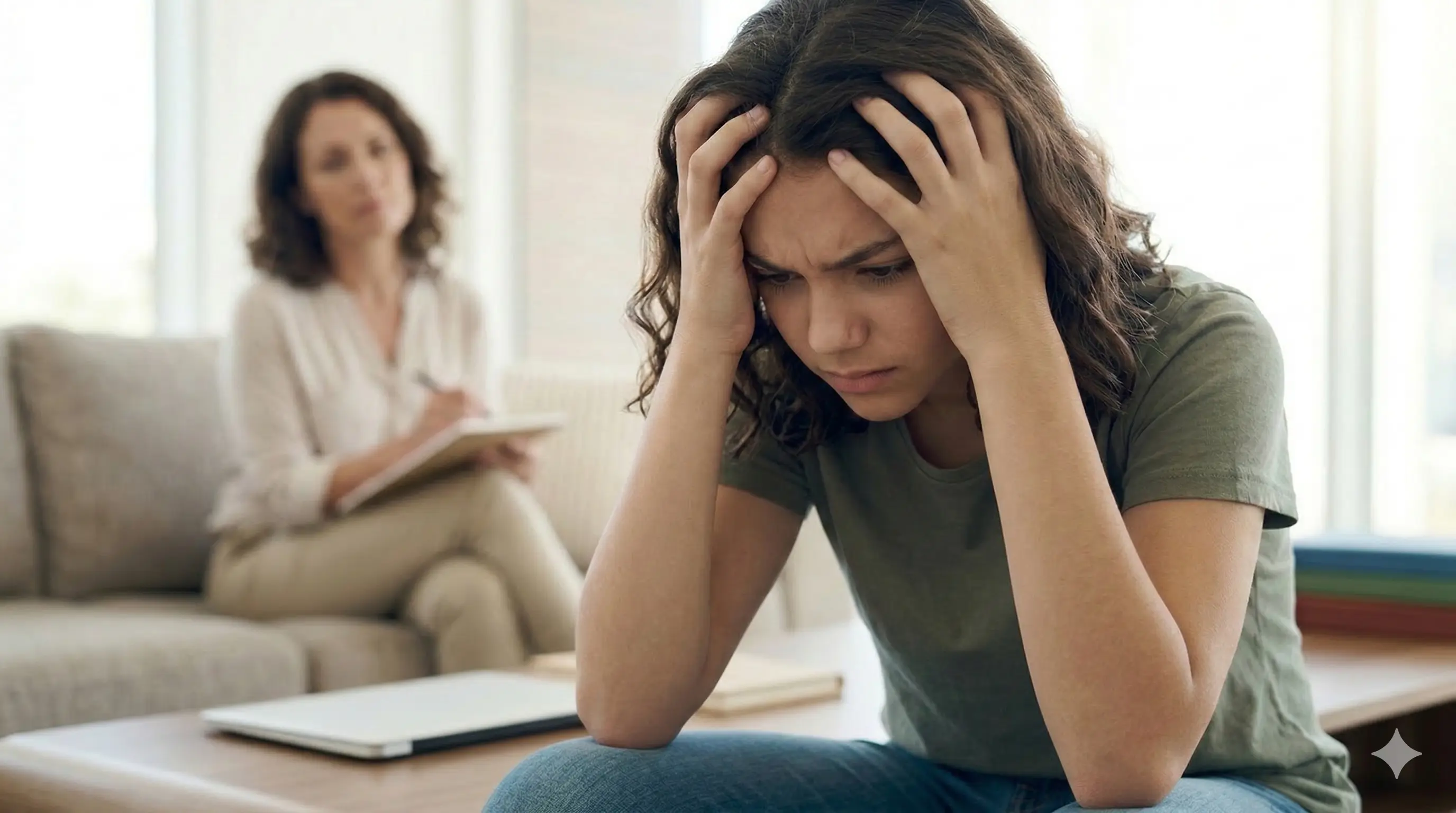
Estimated reading time: 8 minutesIf your teen is constantly overwhelmed, panicked, or struggling to cope,It’s okay to need support—many do—and it’s not your fault.Anxiety in teens is at an all-time high, and it can leave even the most dedicated parents feeling helpless.You may have tried therapy, deep breathing, or cutting out sugar. Maybe your doctor brought up medication, but you’re not quite ready for that.The good news? There are science-backed, natural supplements that can support your teen’s mental health—without harmful side effects.In this guide, we’ll walk you through the best options, when to use them, and how to know what’s right for your child.
Signs of Anxiety in Teens
Teen anxiety doesn’t always show up as classic nervousness. It pops up in ways that can catch parents off guard.Look out for these clues:
- snapping
- ignoring rules
- going totally silent
- frequent tummy aches
- frequent Headaches
- dodging school, pals, or everyday chores
- restless nights
- all-day tiredness
- needing everything to be perfect

Do Natural Supplements Really Help Teenage Anxiety?
Yes, when used as part of a larger regulation plan. Supplements don’t “cure” anxiety, but they can support brain function and calm the nervous system.How they help:
- Reduce overactive brainwave activity
- Regulate cortisol (stress hormone)
- Support neurotransmitter balance (like serotonin and GABA)Help the body relax and sleep more deeply
“When we support the nervous system, we support the whole child.” — Dr. Mona Delahooke
Best Supplements for Teenage Anxiety
Here are the top science-backed natural supplements I recommend in my clinical practice:
1. Magnesium
Magnesium helps regulate the nervous system by activating GABA receptors, reducing muscle tension, and promoting better sleep. Teens with anxiety often burn through magnesium quickly, especially if they’re in a chronic stress state.
Found in:
- Spinach
- pumpkin seeds
- Almonds
- black beans
- dark chocolate
One of the most widely trusted forms of magnesium is Magnesium L-Threonate – a unique form that crosses the blood-brain barrier and supports brain function more directly.
- Helps ease nervousness, restlessness, and chronic worry
- Supports memory, cognition, and focus
- Can be taken in powder or capsule form
Tip: Look for chelated forms like glycinate or threonate for better absorption
2. L-Theanine
This amino acid helps take the edge off without causing drowsiness—perfect for anxious teens who still need to focus.
L-Theanine, naturally found in green tea, promotes alpha brainwaves (linked to calm focus) and increases dopamine and serotonin levels. It’s one of the gentlest, most effective supplements for easing racing thoughts and test anxiety.
- Helps with social anxiety and overthinking
- Pairs well with magnesium or GABA
- Great as-needed before stressful events (e.g., school presentations)
3. Omega-3 Fatty Acids (EPA & DHA)
If your teen is moody, overwhelmed, or emotionally reactive, omega-3s can help stabilize and soothe their brain.
These essential fats support healthy brain development, improve communication between neurons, and lower inflammation—a factor increasingly linked to anxiety and depression. Studies show that low levels of Omega-3s are associated with greater emotional dysregulation.
- Look for high EPA formulas (at least 1000 mg/day) for anxiety (Reily et al., 2023)
- Can improve mood, attention, and cognitive function
- Found in fish oil or algae-based supplements for vegans
Tip: Start low to avoid digestive upset and take with meals
Found in:
- Fatty fish like salmon
- Sardines
- Mackerel
- Trout
4. GABA
If your child goes from 0 to 100 emotionally, GABA can help the brain slow down and feel safer.
GABA is the brain’s natural calming chemical. While there’s debate about whether oral GABA crosses the blood-brain barrier, many parents report it helps with quick relief during anxious moments—especially when combined with L-Theanine.
- Use for situational anxiety (e.g., travel, sleepovers, public speaking)
- Can be taken as a capsule, chewable, or lozenge
- Often works within 30–60 minutes
Found in:
- Kimchi
- Miso
- Yogurt (though not in high enough amounts to replace supplementation)
- Other fermented foods
5. Rhodiola Rosea
This adaptogen helps the brain and body bounce back from stress—especially for teens who feel emotionally drained or mentally foggy.
Rhodiola supports the HPA axis, which controls our stress response, and is known to reduce fatigue and increase mental resilience. It can be especially helpful for teens who struggle with low energy, motivation, or burnout-related anxiety.
- Best taken earlier in the day to avoid sleep disruption
- Works well for performance anxiety and executive dysfunction
- Start with a low dose and build gradually
6. B-Complex Vitamins
B vitamins fuel the brain—especially when it’s under stress. If your teen is mentally exhausted or emotionally “flat,” they may need more of these.
Vitamins B6, B9 (folate), and B12 are critical for neurotransmitter production (like serotonin and dopamine). Teens with methylation issues or high stress may burn through these faster than they can replace them.
- Helps with mood, focus, and nervous system function
- Choose methylated forms (like methylfolate or methylcobalamin)
- Avoid sugary gummies with low-dose blends—opt for quality brands
Found in:
- B6: Tuna, chicken, bananas, chickpeas
- B9 (Folate): Leafy greens, lentils, asparagus
- B12: Meat, dairy, eggs, and fortified cereals

Herbal Supplements That Help with Teen Anxiety
Yes, certain herbal remedies have been shown to support emotional regulation and reduce anxiety symptoms—especially when stress is high or sleep is off track. These can be great add-ons when you're looking for gentle, plant-based support.Just remember: herbs are powerful and should be chosen with care. Always talk to your provider before starting an herbal remedy—especially if your child is taking medications or has other health conditions.
1. Passionflower
Known for its gentle calming effects, especially around bedtime.
Passionflower is a natural herb that can help with restlessness, racing thoughts, and sleep trouble. It works by increasing levels of GABA in the brain, which supports a more relaxed state.
It’s particularly helpful for teens who feel "on edge" all day and can’t settle down at night.
- Great for sleep-related anxiety
- Can be taken as a tea, capsule, or liquid extractOften paired with other calming herbs like Lemon Balm or Chamomile
2. Valerian Root
One of the stronger herbal remedies for sleep and stress.
Valerian is often called “nature’s Valium” because it has a sedative-like effect on the nervous system. For teens who are highly anxious, wired at bedtime, or can’t fall asleep, Valerian can be a helpful short-term option.
- Best used before bed to improve deep sleep and mental clarity
- Not recommended for kids under 7
- May take 2–3 weeks for full effect
A study combining Valerian and Lemon Balm recorded significant improvements in anxiety-related behaviors, sleep quality, and focus (Müller and Klement, 2006)
3. Ashwagandha (Withania somnifera)
An adaptogenic herb that helps regulate the body’s response to chronic stress.
Ashwagandha is a powerful nervous system stabilizer often used to reduce cortisol levels (the body’s main stress hormone). It’s particularly helpful for teens experiencing burnout, panic, or emotional exhaustion.
- Shown to reduce anxiety, improve sleep, and enhance resilience (NIH, n.d.)
- Works well for teens under academic pressure or emotional strain
- Typically taken in capsule or powder form
- May take 2–4 weeks for full benefits
Caution: Ashwagandha is not recommended for teens with hyperthyroidism or certain autoimmune conditions—always consult a provider.
Are These Supplements Safe for Teens?
Most are safe when used appropriately and under guidance. But natural doesn’t always mean harmless—especially for teens with other health issues.Keep in mind:
- Quality matters: Choose third-party tested brands
- Start low and go slow
- Check for interactions if your teen is on medications
- Monitor for changes in sleep, mood, or digestion
When Should I Give My Teen Supplements For Anxiety?
You don’t have to wait for a crisis. Supplements can be part of your early intervention plan.Best times to start:
- When symptoms are mild to moderate
- As part of a holistic treatment plan
- Before starting medication—or in tandem (with professional oversight)
How Do I Choose The Right Supplement For My Teen?
Every brain is different. What works for one child might not work for another.Tips for choosing:
- Consider your teen’s symptom pattern (e.g., sleep vs focus vs irritability)
- Work with a professional who understands brain-based interventions
- Combine with tools like QEEG brain mapping to see what areas are dysregulated
What Mistakes Should I Avoid When Using These Supplements?
Supplements can be powerful tools—but they’re not a magic fix.Avoid these common mistakes:
- Relying on supplements alone
- Skipping proper dosage or consistency
- Choosing cheap, untested brands
- Ignoring root causes like trauma, sensory issues, or executive dysfunction
Are Supplements Enough for Anxiety?
Supplements are just one piece of the puzzle.If your teen is still struggling hard and your only wish is for them to heal long-term, consider:
- Neurofeedback therapy to calm brain activity
- Parent coaching to reduce family stress patterns
- Therapies like CBT or somatic experiencing
- QEEG brain mapping to guide treatment
What’s the best supplement for teen anxiety?
There’s no one-size-fits-all, but Magnesium L-Threonate, L-Theanine, and Omega-3s are a great place to start. Always match the supplement to your child’s symptoms.
Can I give my teen multiple supplements at once?
Yes, but start one at a time and monitor how they respond. Combining calming (e.g., Magnesium) with mood support (e.g., Omega-3s) can be helpful.
How long until supplements start working?
Some supplements (like GABA) work quickly, while others (like Omega-3s) may take 4–6 weeks. Consistency is key.
Are there any side effects?
Mild digestive issues or drowsiness can happen, but side effects are generally rare with high-quality, well-dosed supplements.Citations:Müller, S.F. and Klement, S. (2006). A combination of valerian and lemon balm is effective in the treatment of restlesness and dsyssomnia in children. Phytomedicine 13(6)383-387. https://doi.org/10.1016/j.phymed.2006.01.013[NIH] National Institutes of Health - Office of Dietary Supplements. (undated). Ashwagandha: is it helpful for stress, anxiety, or sleep? Retrieved from https://ods.od.nih.gov/factsheets/Ashwagandha-HealthProfessional/Reily, N., Tang, S., Negrone, A., Gan, D., Sheanoda, V., and Christensen, H. (2023). Omega-3 supplements in the prevention and treatment of youth depression and anxiety symptoms: a scoping review. PLoS One 18(4):e0284057. https://doi.org/10.1371/journal.pone.0284057Dr. Roseann Capanna-Hodge is a licensed mental health expert on Anxiety who is frequently featured in the media:
- Yahoo!Life Anxious and On-Edge? MDs Share the Best Supplements to Tame Stress Naturally
- CityCurrent Solutions for Your Kid’s Focus, Anxiety and Behavioral Issues with Dr. Roseann Capanna-Hodge
- Reconditioned w/ Lauren Vaknine Managing Anxiety and Mental Health in Children
Always remember... “Calm Brain, Happy Family™”
Disclaimer: This article is not intended to give health advice and it is recommended to consult with a physician before beginning any new wellness regime. *The effectiveness of diagnosis and treatment vary by patient and condition. Dr. Roseann Capanna-Hodge, LLC does not guarantee certain results.
Are you looking for SOLUTIONS for your struggling child or teen?
Dr. Roseann and her team are all about science-backed solutions, so you are in the right place!