
Join the Dysregulation Insider get free calm parenting tips straight to your inbox!
YES, I'M IN!Calming the Dysregulated ADHD Brain with Kate Coffey, LCSW | Emotional Dysregulation in Children | E76





Estimated Reading Time: 7 minutes
If you’re trying to figure out how to calm ADHD brain meltdowns, emotional explosions, or constant overwhelm, you’re not alone. Parents of dysregulated kids often feel exhausted from walking on eggshells around big reactions, impulsivity, and emotional shutdowns. In this episode, I sit down with Kate Coffey, LCSW, a specialist in Somatic Experiencing® (SE)—to talk about gentle, body-based regulation tools that actually help kids calm, connect, and recover.
When your child goes from calm to explosive in seconds, it’s easy to assume they’re choosing the behavior.
But behavior is communication.
And many kids with ADHD, anxiety, sensory challenges, and emotional dysregulation are living with nervous systems that feel constantly overwhelmed.
That’s why we always start with one thing:
“Let’s calm the brain first.”
Because no coping skill, executive functioning strategy, or behavior plan works consistently when the nervous system is stuck in survival mode.
How do I know if this is ADHD dysregulation or typical kid behavior?
Every child gets emotional sometimes.
But dysregulated kids show bigger reactions, more intense overwhelm, and greater difficulty recovering once upset.
Kids with ADHD dysregulation often struggle with:
- Emotional impulsivity
- Task initiation
- Transitions
- Sensory overload
- Frequent redirection
- Emotional recovery
- Executive functioning challenges
Signs of emotional dysregulation in children
- Going from calm to explosive quickly
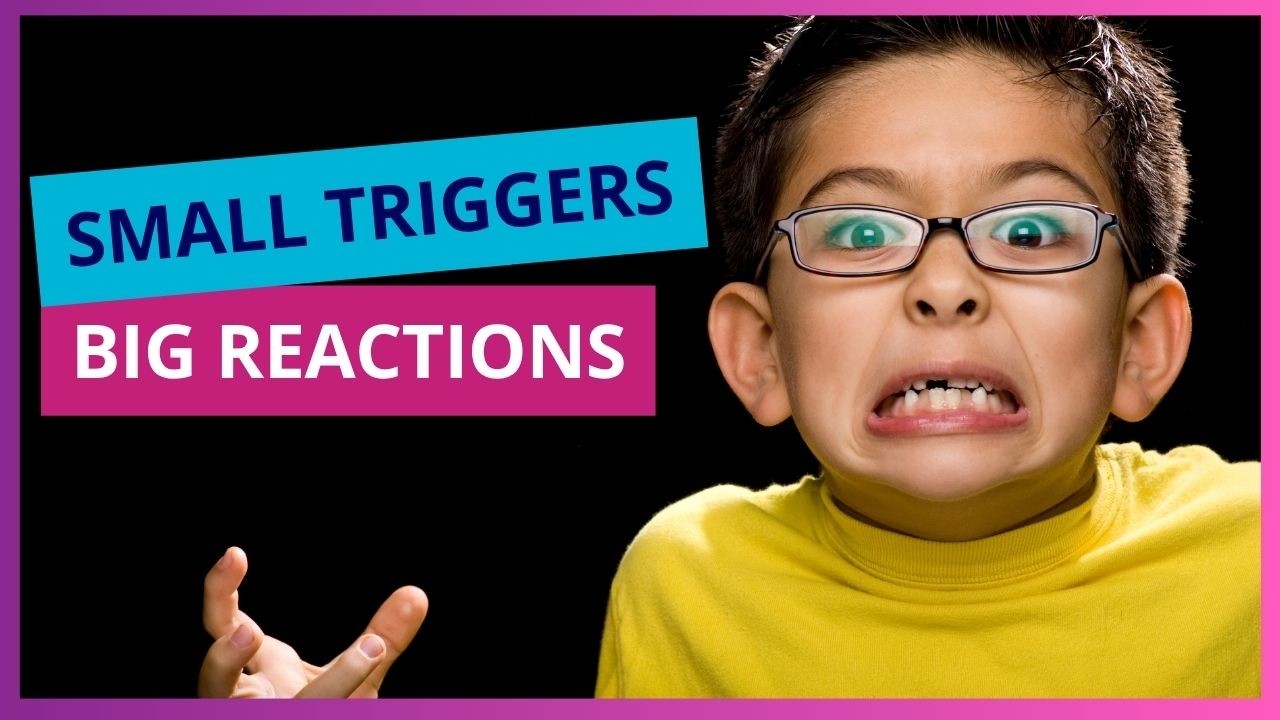
- Meltdowns over small frustrations
- Difficulty slowing down
- Trouble shifting tasks
- Constant emotional intensity
- Strong reactions to noise, hunger, transitions, or demands
Real-life example
One parent noticed mornings became chaotic every single day.
The trigger?
Noise, rushing, and overstimulation.
Once the family added a quieter morning routine and a sensory regulation break before school, mornings became dramatically calmer.
That’s the power of nervous system regulation.
What helps first
- Track triggers for one week
- Notice sensory overload patterns
- Reduce environmental stressors
- Use co-regulation before correction
It’s not bad parenting—it’s a dysregulated brain.
What’s the fastest way to calm ADHD brain during a meltdown?
Go body before words.
A dysregulated nervous system cannot process long explanations, lectures, or logic during stress activation.
That’s why somatic regulation tools are so effective.
Brain calming techniques for kids
- Slow exhaling
- Grounding through the feet
- Pressure input
- Orienting exercises
- Rhythmic movement
- Sensory calming tools
Somatic regulation techniques that work
- Feet flat on the floor
- Pressing palms together
- Weighted blankets or lap pillows
- Slow rocking
- Wall push-ups
- Naming calm objects in the room
Real-life example
Your child is crying, yelling, and spiraling because homework feels impossible.
Instead of talking more, you guide them to:
- Push their feet into the floor
- Take one long exhale
- Find five calm things in the room
The nervous system begins calming through the body first.
That’s how we create enough safety for connection and thinking to return.
How do I support a gifted but explosive 2e child?
Twice-exceptional (2e) kids are often deeply sensitive, highly intelligent, and emotionally intense.
And high intelligence does not automatically equal strong emotional regulation.
Many gifted kids process more information, emotions, and sensory input than their nervous systems can comfortably handle.
Common struggles in 2e kids
- Emotional overwhelm
- Perfectionism
- Anxiety
- Task avoidance
- Executive functioning difficulties
- Emotional intensity
- Sensory sensitivity
Regulation techniques for 2e kids
- Predictable routines
- Reduced overwhelm
- Choice-based structure
- Sensory regulation
- Somatic awareness tools
- Calm transitions
Real-life example
A 2e teen practiced “slow body” exercises before homework every afternoon.
Instead of immediately pushing through tasks, they:
- Slowed their breathing
- Relaxed their shoulders
- Used a visual checklist
- Took a movement reset first
Explosive reactions decreased because the nervous system no longer felt threatened by the task.
Behavior is communication.
What is Somatic Experiencing® and why does it help dysregulated kids?
Somatic Experiencing® (SE) is a body-based therapeutic approach that helps kids recognize and release nervous system stress.
Many dysregulated children cannot explain their emotions verbally yet.
But they can notice body sensations.
That’s where healing begins.
Somatic awareness examples
- “My chest feels tight.”
- “My stomach feels nervous.”
- “My legs feel jumpy.”
- “My shoulders feel tense.”
When kids learn to recognize stress signals in the body, they gain the ability to regulate earlier—before full emotional escalation happens.
Why somatic work helps emotional dysregulation in children
- Builds nervous system awareness
- Improves emotional regulation
- Reduces stress activation
- Increases self-awareness
- Helps kids recognize overwhelm sooner
- Supports executive functioning
Small moments of body awareness build long-term nervous system resilience.
When your child is dysregulated, it’s easy to feel helpless. The Regulation Rescue Kit gives you the scripts and strategies you need to stay grounded and in control. Become a Dysregulation Insider VIP at www.drroseann.com/newsletter and get your free kit today.
How do I stay calm when my child pushes every button?
This is one of the hardest parts of parenting dysregulated kids.
Because your child’s nervous system impacts yours.
And when both nervous systems escalate together, chaos grows fast.
That’s why co-regulation is foundational inside Regulation First Parenting®.
Regulate → Connect → Correct™
Brain calming techniques for parents
- Slow exhaling before responding
- Grounding through the feet
- Lowering your voice
- Relaxing your shoulders
- Pausing before correcting
- Using calming anchor phrases
Helpful parent anchor phrases
- “I can be the calm.”
- “This is dysregulation, not disrespect.”
- “Behavior is communication.”
- “My calm helps their calm.”
Real-life example
Instead of matching your child’s yelling with yelling, you slow your breathing and say:
“You’re overwhelmed right now. I’m here.”
That moment of co-regulation teaches safety.
And safety calms the brain.
“You can’t build when somebody is disconnected and dysregulated—that’s why we calm the brain first.” — Dr. Roseann
Calm Comes Before Coping
Helping a dysregulated child is not about forcing compliance.
It’s about creating nervous system safety first.
When we calm ADHD brain overload through somatic tools, sensory supports, co-regulation, and predictable structure, kids finally gain access to the emotional regulation and executive functioning skills they’ve been missing.
And remember:
You are not failing.
Your child’s nervous system simply needs support.
It’s gonna be OK.
For more brain-based tools, listen next to our episode on Neurofeedback for ADHD and explore additional resources on emotional dysregulation in children and calming a dysregulated child.
FAQs
How do I calm my child without giving in?
Co-regulate first using grounding, breathing, sensory support, and calm voice tones. Calm is not “giving in”—it’s helping the nervous system feel safe enough to learn.
What helps ADHD emotional dysregulation the fastest?
Body-based regulation tools like movement, grounding, pressure input, and breathing often calm the nervous system faster than verbal correction.
What is Somatic Experiencing®?
Somatic Experiencing® is a body-based therapy that helps kids notice and release stress stored in the nervous system through physical awareness and regulation.
Why do gifted kids have emotional meltdowns?
Many 2e kids experience heightened emotional intensity, perfectionism, anxiety, and nervous system sensitivity that contribute to emotional dysregulation.
Can natural approaches really help dysregulated kids?
Yes. Nervous system regulation tools, neurofeedback, sensory support, movement, sleep, nutrition, and co-regulation can create significant improvements over time.
Not sure where to start?
Take the guesswork out of helping your child. Use my free Solution Matcher to get a personalized plan for your child’s needs.
Start here: www.drroseann.com/help
Dr. Roseann Capanna-Hodge is a licensed therapist, certified school psychologist, and leading expert in emotional dysregulation in children. With over 30 years of experience, she helps parents understand the root causes of meltdowns, anxiety, ADHD, and challenging behavior through the lens of nervous system regulation. Dr. Roseann teaches practical, science-backed strategies for co-regulation and how to calm a dysregulated child using her Regulation First Parenting® approach. She is the host of the Dysregulated Kids Podcast and author of The Dysregulated Kid.
Dr. Roseann Capanna-Hodge
Emotional Dysregulation in Children & Nervous System Expert
Regulation First Parenting® | CALMS Protocol™
Host of the Dysregulated Kids Podcast (Top 1% Globally)
Author of The Dysregulated Kid

Find this helpful? Leave us a review!
Your feedback helps more overwhelmed parents find calm, clarity, and the proven tools that make everyday life easier.
Dr. Roseann Capanna-Hodge: Helping Families of Dysregulated Kids Thrive Through Regulation First Parenting®
As the creator of Regulation First Parenting®, she’s helping families of dysregulated kids discover a compassionate, brain-based path forward. Through The Dysregulated Kids™ Podcast (top 2% globally), she offers practical strategies that help parents understand their child’s brain and support lasting change.
Through The Global Institute of Children’s Mental Health and Dr. Roseann, LLC, she’s created resources like the Neurotastic™ Brain Formulas and the Regulation First Parenting® framework—meeting families where they are and supporting them through challenges like ADHD, anxiety, OCD, PANS/PANDAS, and behavioral struggles.
Recognized by Forbes as “a thought leader in children’s mental health,” Dr. Roseann is changing how we understand emotional dysregulation in children—one family at a time.