%20.png)



Estimate reading time: 7 minutes
Dysregulated behavior examples range from intense emotional outbursts and aggression to complete withdrawal and refusal to speak. If you're watching your child struggle with big emotions and wondering if it's more than a phase, you're not alone.
Common dysregulated behavior examples by type:
Type of DysregulationExamplesEmotional DysregulationInconsolable crying or screaming, extreme frustration over minor issuesBehavioral DysregulationHitting, throwing objects, destroying property, impulsive actionsInternalized DysregulationWithdrawing from others, school refusal, emotional numbness, persistent sadnessAutonomic DysregulationRacing heart, difficulty sleeping, sensory overload, feeling physically "revved up"
Why Recognizing Dysregulated Behavior Matters for Your Child's Well-Being
Dysregulated behavior is a brain-based issue, not a character flaw or a sign of bad parenting. When a child is dysregulated, their nervous system is stuck in a fight-or-flight state. Their behavior is communication, signaling that their brain needs help getting back to calm. And here's the hopeful part: with the right support, children can learn to regulate their emotions and responses.
I'm Dr. Roseann Capanna-Hodge and I've spent over 30 years helping families with brain-based solutions that work. I've seen how the right interventions can transform a child's behavior and an entire family's quality of life.

What is Dysregulated Behavior?
If you've watched your child spiral into a meltdown that seems to come out of nowhere, you're not alone. What you're seeing has a name, an explanation, and most importantly, solutions that work.
Dysregulated behavior is when big feelings take the driver's seat and a child struggles to match their reaction to the moment. It can look like yelling, hitting, crying, or shutting down. This is a brain-under-stress response, not "bad behavior." With calm support and coaching, kids can learn steadier, safer ways to cope.
Typical Tantrums vs. Clinical Dysregulation
All children have meltdowns, but how do you know when it crosses into something that needs more support? The FIDI principle helps us tell the difference:
- Frequency: Are outbursts happening multiple times a day or every day?
- Intensity: Are reactions severe, with aggression, property destruction, or self-injury?
- Duration: Do episodes last for 30 minutes or more, with your child unable to calm down?
- Impairment: Is the behavior affecting your child's school life, friendships, or your family's well-being?
If you're answering yes to these questions, it's a sign your child is struggling with regulation.
Co-Regulation: The Path Forward
Here's the hopeful part: kids can learn to regulate their emotions. The fastest way in is co-regulation - you lend your calm to your child. When a meltdown hits, the thinking brain steps aside. Your steady breath, soft voice, and relaxed body help their brain follow you back to calm. Let's calm the brain first. Then we teach and practice skills in tiny steps.
Try: pause, breathe together, name the feeling, offer a simple next step. Your child's behavior isn't a verdict - it's communication and a starting point for healing.

Common Dysregulated Behavior Examples and Their Causes
Understanding how dysregulated behavior shows up—and what might be driving it—is the first step toward finding solutions.
Emotional Outbursts: More Than Just a Tantrum
We're not talking about a typical tantrum. These are reactions that are completely out of proportion, like 30 minutes of inconsolable screaming over a minor schedule change. This is a nervous system in overload.
This frustration intolerance can be triggered by small things, and the meltdown can feel impossible to stop. Sometimes, it's a sign of sensory overload, where the brain can't process all the incoming sights and sounds. For some, it's part of a pattern called Disruptive Mood Dysregulation Disorder (Benarous et al., 2020), characterized by chronic irritability and severe, frequent temper outbursts. Behavior is communication. These outbursts are your child's way of telling you their internal world is chaotic.

Behavioral Dysregulation Examples: Impulsive and Aggressive Actions
When emotions take over, they can translate into physical actions. These dysregulated behavior examples happen before the thinking brain can intervene.
- Poor impulse control: Acting without thinking of consequences.
- Physical aggression: Hitting, kicking, or biting when overwhelmed.
- Throwing objects or property destruction: Breaking things when frustration peaks.
- Self-injury: Head-banging or scratching.
- Running away: Fleeing from overwhelming situations.
These behaviors are often linked to conditions like ADHD, where executive functioning challenges make self-control difficult, and Oppositional Defiant Disorder (Brænden et al., 2023), which involves a persistent pattern of defiance. Common triggers include transitions, unexpected changes, demands, and sensory overload. These behaviors don't mean your child is "bad"—they mean their brain needs help developing regulation skills.
Internalized Dysregulation: The Quiet Struggle

Not all dysregulation is explosive. Sometimes the struggle is quiet and internal. These quieter dysregulated behavior examples include:
- Persistent anxiety and depression: Constant worry, deep sadness, or irritability.
- Social withdrawal: Pulling away from friends and family.
- School refusal: Overwhelming anxiety about attending school.
- Emotional numbness or refusal to speak: Shutting down emotionally or going non-verbal.
- Excessive perfectionism: Intense distress over minor mistakes.
These struggles can be linked to psychological trauma, PTSD, or neurodevelopmental conditions like Autism Spectrum Disorder (ASD), where sensory and social challenges create an overwhelming internal experience (Tsuji et al., 2022). These quiet signs deserve just as much attention as the loud ones. The path forward is to calm the brain first, no matter how the dysregulation shows up.
How to Support Your Child and Restore Calm
When your child is struggling, it can feel overwhelming. But there are powerful, brain-based strategies to help them find calm. The key is to remember that during a meltdown, their logical brain is offline. Our first priority is always to "Let's calm the brain first."
At-Home Strategies: Creating a Regulated Environment

Creating a supportive home environment is about building a foundation of calm. Here are some strategies you can start using today:
- Practice Co-regulation: Your calm presence is an anchor. Sit quietly with them, speak in a soothing voice, and breathe slowly. Your regulated nervous system can help regulate theirs.
- Validate Their Feelings: Instead of dismissing their reaction, acknowledge the emotion. "I can see you're really upset." This recognizes the feeling behind the behavior, as behavior is communication.
- Model Calm Responses: Children learn by watching you. When you handle your own stress with a deep breath instead of anger, you're teaching them emotional regulation.
- Use Predictable Routines: Consistent schedules for meals, bedtime, and transitions reduce anxiety and provide a sense of safety.
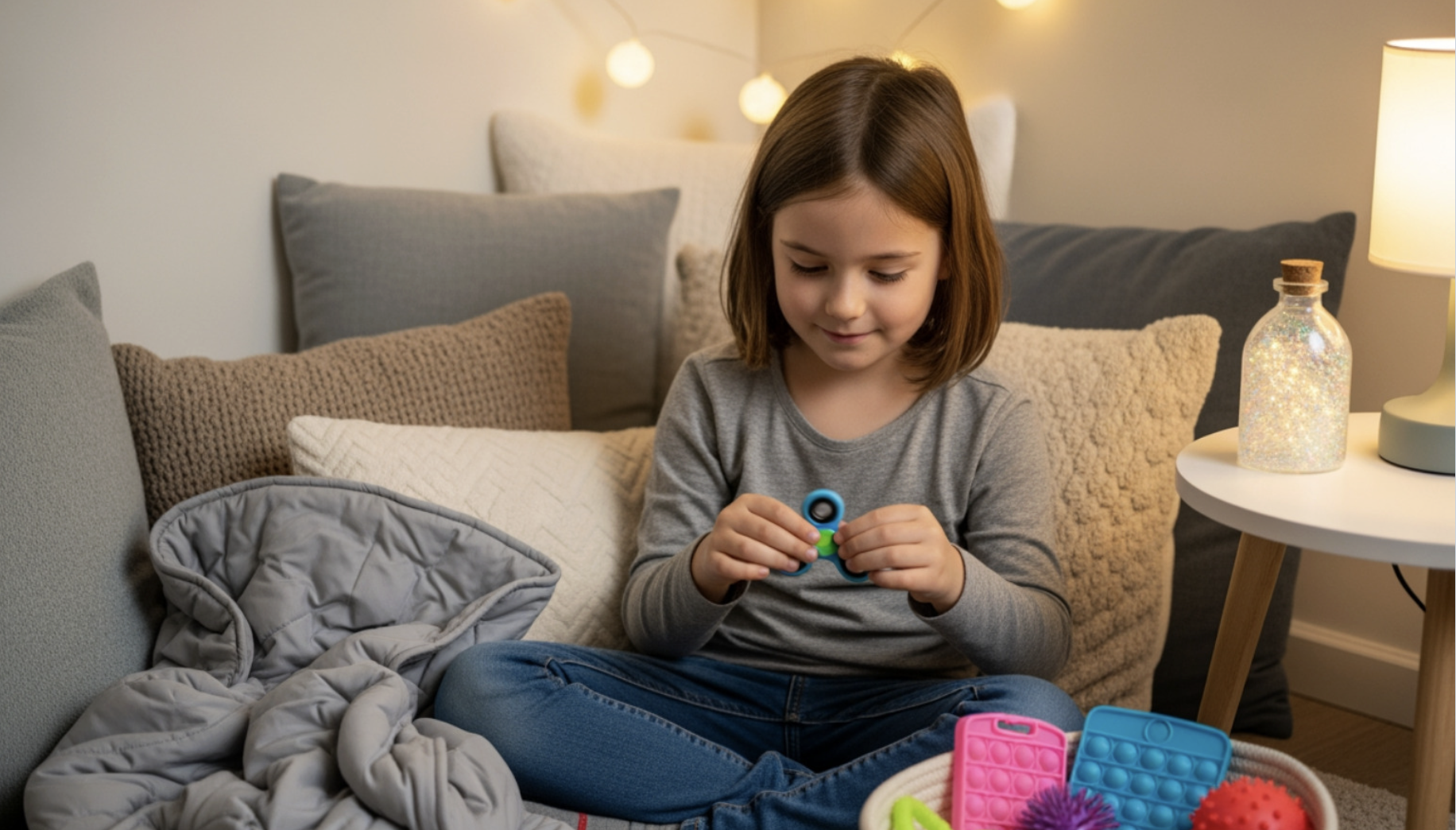
- Create a Calm-Down Corner: Designate a cozy spot with sensory tools like a weighted blanket, fidgets, or headphones. It's a safe space to reset, not a punishment.
- Teach Deep Breathing: Practice simple exercises like "belly breathing" or "smell the flower, blow out the candle" during calm moments so they become an automatic tool.
When to Seek Help for Dysregulated Behavior
It can be hard to know when to call in a professional. Here are some clear indicators that it's time to seek support for the dysregulated behavior examples you're seeing:
- Impact on Happiness: Your child is frequently unhappy, anxious, or withdrawn.
- Safety Concerns: The behavior involves self-harm, aggression toward others, or property destruction.
- Disruption to Daily Life: The struggles are impacting home, school, and social activities.
- The FIDI Principle: The behaviors are frequent, intense, long in duration, and impairing daily function.
- You Feel Overwhelmed: If you've tried everything and feel exhausted or hopeless, expert support can make all the difference.
At our practice, we specialize in brain-based therapies that get to the root cause of dysregulation. We offer parent coaching and holistic, evidence-based interventions that create real, lasting change. We've helped thousands of families move from chaos to calm. You're not alone. If you're ready to find solutions that work, we invite you to learn more about our services and schedule a consultation.
Frequently Asked Questions
Is emotional dysregulation the same as ADHD?
No, but they are closely connected. Emotional dysregulation is a core symptom of ADHD, but it’s not the same thing. ADHD is a broader condition affecting attention and impulsivity, while emotional dysregulation is specifically about the difficulty managing emotional responses. A child can have emotional dysregulation without having ADHD.
Can my child outgrow dysregulated behavior?
With the right support, children don’t just “outgrow” it—they learn the skills to manage it effectively. While some children naturally develop better regulation with age, those with significant struggles need targeted help to build these lifelong skills. With consistency and the right brain-based support, there is so much hope for lasting change.
How do I know if it’s a phase or a real problem?
This is a common question. Use the FIDI principle as your guide: Frequency, Intensity, Duration, and Impairment. If outbursts are frequent, severe, long-lasting, and significantly impair your child’s ability to function at school, home, or with friends, it’s more than a phase. Trust your instincts; if you’re worried, it’s worth seeking guidance.
What is the difference between punishment and discipline for a dysregulated child?
This is a crucial distinction. Punishment focuses on a penalty for behavior, which can increase fear and escalate a dysregulated child’s fight-or-flight response. Discipline, on the other hand, means “to teach.” It involves connecting first, helping your child calm down (“Let’s calm the brain first”), and then teaching them better ways to handle big feelings. Discipline builds skills; punishment builds resentment.
Citations
Benarous, X., Bury, V., Lahaye, H., Desrosiers, L., Cohen, D. and Guilé, JM. (2020) Sensory Processing Difficulties in youths with Disruptive Mood Dysregulation Disorder. Front. Psychiatry, 11:164. https://doi.org/0.3389/fpsyt.2020.00164
Brænden, A., Coldevin, M., Zeiner, P., Stubberud, J., Melinder, A. (2024). Executive function in children with disruptive mood dysregulation disorder compared to attention-deficit/hyperactivity disorder and oppositional defiant disorder, and in children with different irritability levels. Eur Child Adolesc Psychiatry, 33(1):115-125. https://doi.org/10.1007/s00787-023-02143-6.
Tsuji, Y., Imaizumi, S., Sugawara, M., Oiji, A. (2022). Internalizing problems and suffering due to sensory symptoms in children and adolescents with and without autism spectrum disorder. Front Psychol, 5:13:872185. https://doi.org/10.3389/fpsyg.2022.872185.
Always remember… “Calm Brain, Happy Family™”
Disclaimer: This article is not intended to give health advice, and it is recommended to consult with a physician before beginning any new wellness regimen. The effectiveness of diagnosis and treatment varies by patient and condition. Dr. Roseann Capanna-Hodge, LLC, does not guarantee specific results.
Are you looking for SOLUTIONS for your struggling child or teen?
Dr. Roseann and her team are all about science-backed solutions, so you are in the right place!