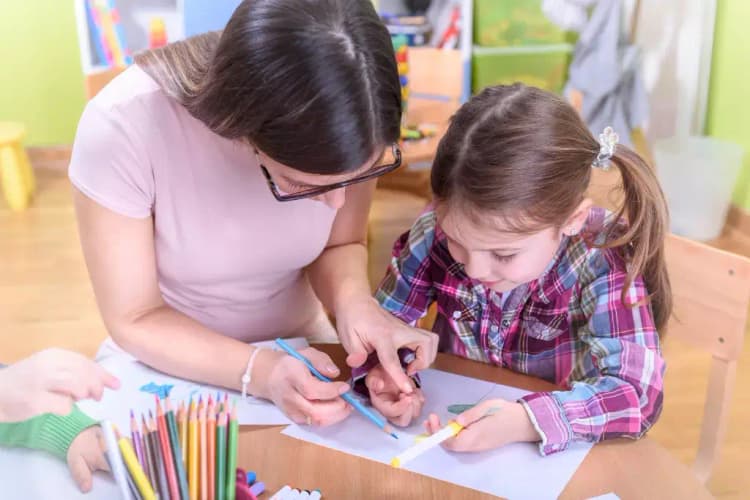




If you have five minutes before the first lesson, choose one activity students can start as soon as they walk in. For a class coming in from a crowded hallway, try a slow stretch. For students arriving at different times, put a drawing prompt on the board. Nobody has to catch up, and you can still greet the student at the door who needs an extra minute with you.
I’m Dr. Roseann Capanna-Hodge, author of The Dysregulated Kid. In more than 30 years of working with children and families, I’ve learned to pay as much attention to the student who goes quiet as the one who calls out. A good opener gives both students a way to join you.
Estimated reading time: 6 minutes
What you’ll learn
- Eight calming activities for the classroom, grouped by breathing, movement, sensory input and connection.
- What to say privately when a student arrives too upset to join the group.
- How to teach one routine that students can use across classrooms.
Why the First 5 Minutes Set the Day
A familiar first task gives students an answer to “What am I supposed to do?” while you take attendance and greet the class. Think of a student walking in late. If everyone is sharing weekend news, she has to work out whose turn it is and whether she missed hers. If the board says “Draw three things you can see,” she can sit down and join in.
At school, you may see a student who gets upset over a missing pencil. Sometimes you see a child who sits at a desk without taking anything out. An opener gives you a few minutes to notice both.
The five minutes are yours to organize. Students can join the lesson while they’re still wiggly, worried or having a rough morning. Look for whether they can take the next small step, such as choosing a pencil or turning to the first page.
Emotional Regulation Skills for Kids Start With Calm
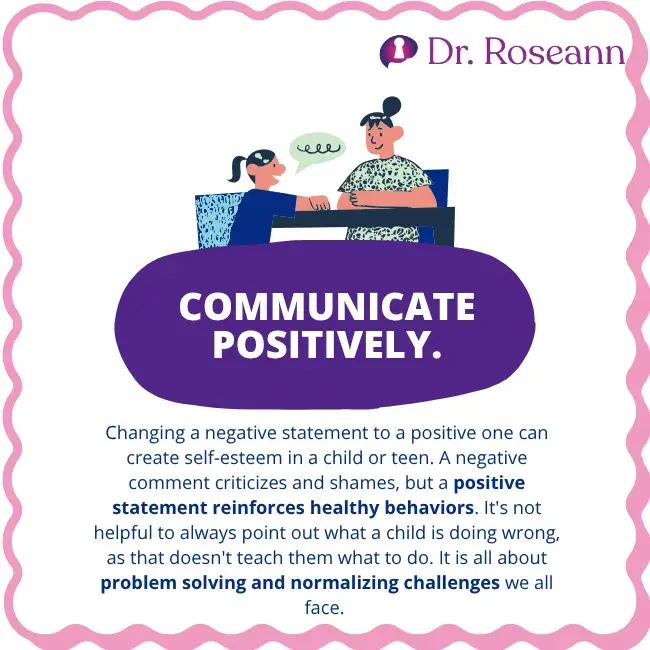
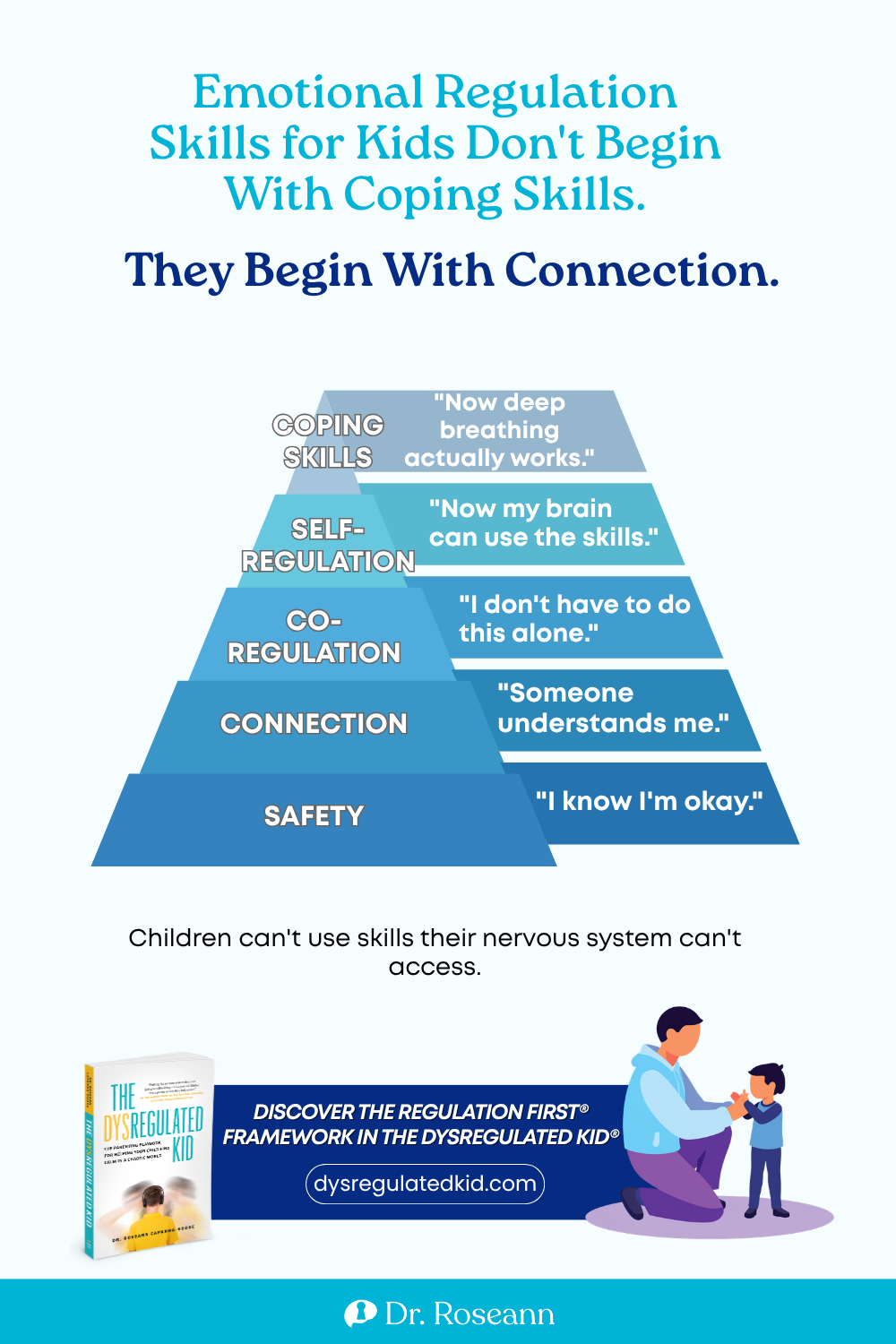
Children learn emotional regulation by practicing small skills: noticing a feeling, asking for help and choosing what to do next. You can teach those skills when the room is settled, then use the same cues when a child is upset. In the moment, start with co-regulation: slow your voice, stand nearby if that helps and offer one direction the student can follow.
A feelings chart helped seven-year-old Lucas practice that first skill at home. His mom, Tina, checked in with him using faces and colors. Over time, she heard him say he felt angry. You can give a student the same opportunity without asking them to tell the whole class why. A child can point to a face, hand you a note or simply say, “Can we talk later?”
Calming Activities for the Classroom
Pick one opener per morning. Take about 30 seconds to show it, give students two or three minutes to try it, then use the remaining time to move into the lesson. Students can watch first. Quiet participation counts.
Breathing
- Trace a finger.
- Hold up one hand
- With the other index finger, slowly trace up one side of your thumb and down the other.
- Invite students to breathe in as they trace up and out as they trace down, at a comfortable pace.
“You can trace on your desk if you’d like.” Try it before a test because students can use it again privately once the papers are out.
- Draw a breathing line.
- On the board, draw a line that rises gently as you breathe in and falls as you breathe out.
- Students draw a few lines on scrap paper. They can follow the pencil with their eyes and breathe normally if focusing on breathing feels uncomfortable.
- End by putting your pencil down and showing the class where to put theirs.
Movement
- Reach, release, sit.
- After a long bus ride, invite students to reach their arms forward, lower them and relax their hands.
- Repeat slowly a few times.
- Offer a seated version from the start, and let students choose a comfortable range.
- Finish with the action you need next: “Bring your hands back to your desk and open your notebook.”
- Slow mirror.
- Face the class and make three slow movements: roll your shoulders, open your hands, then rest them.
- Students can copy one or all three.
- For older students, invite a volunteer to lead. Keep the speed easy to follow.
- If students start racing to keep up, slow down and repeat a familiar move.
Sensory
- Find three quiet details.
- Ask students to find something round, something blue and something with straight edges, all from their seats.
- They can point, sketch or keep their answers private.
- For a student who can’t use the visual prompts, offer a familiar object and invite them to notice three details by touch.
This works after a noisy assembly because students can participate without adding more sound.
- Draw a familiar place.
- Put one prompt on the board: “Sketch somewhere you like to spend time.”
- A stick figure on a couch is plenty. Give students two minutes with a pencil and scrap paper.
- Skip the show-and-tell unless students ask to share.
Drawing has been studied as a way children can manage emotion (Brechet et al., 2020), and this version gives late arrivals an easy place to start.
Connection
- Choose your greeting.
- Offer a wave, a spoken hello or a nod as each student enters. Use their name and follow their lead.
- Post a familiar desk task so the rest of the class can get started.
- Private check-in.
- Offer three choices on a slip of paper: “Ready to start,” “I’d like a minute,” or “Please check in with me.”
- Students can circle one and turn it facedown.
- Tell them when you’ll follow up, then do it.
A second grader might use pictures. A middle schooler might prefer a discreet mark on their usual warm-up page.
What to Do When a Student Arrives Dysregulated
Give the class its usual opener, then lower the demands on the student who needs you. If a child is crying by the door, you can say quietly, “I’ll stay here a minute. Would you like to sit by me or at your desk?” Pause. They may be able to point before they can talk. If they’re hitting or throwing things, make space, give a clear safety direction and follow your school’s support plan.
A family’s observations can help you understand what you see in class. Henry, a ten-year-old with anxiety and ADHD, often came home overwhelmed. Even a request to put away his shoes could lead to yelling or tears. His mom, Julia, found it helped to give him a quieter after-school routine. A useful question for school is, “When he’s had a lot of noise or directions, what helps him take the next step?” That gives you something specific to try and report back on.
When outbursts or shutdowns repeatedly interrupt learning, involve the family and your school support team. Share what came before, how the student responded and what helped them recover.
Building a Regulated Start Into Your Routine
Repeat one activity for several mornings before adding another. Use the same prompt and closing cue. On Friday, ask: “Which part helped you get started? What should we change?” A student who says “I liked drawing until we had to share” has given you a useful adjustment.
Watch for a change you can describe. Did more students begin the first task with one reminder? Did someone ask for a quiet minute before walking out? Write down what you saw. One silent classroom tells you very little about how children feel.
In this Dysregulated Kids Podcast episode on self-regulation strategies for students, I discuss ways adults can help students practice skills they can use during the school day.
Bringing Regulation to Your Whole School
Start by agreeing on one cue students will recognize in more than one room. Ask a colleague to try the same greeting or private check-in for a week. Compare what worked in homeroom, after lunch and when a substitute taught. Keep the parts students found useful and let each teacher adapt the activity to the class.
If you want to understand why a student can follow directions one morning and struggle with the same request the next, I wrote The Dysregulated Kid to help adults recognize overwhelm and decide what to do first. As you read, pick one student’s difficult transition and one response you’d like to try differently.
For a grade-level team, staff book study or school-wide rollout, explore bulk orders of The Dysregulated Kid for schools. A useful first discussion is simple: “When a student is too upset to start, what will they hear from any adult in our building?”
FAQs
Which classroom opener should I try first?
If arrival times vary, try the drawing prompt. Students can join as they come in, and you can greet each one at the door.
What if I only have one minute?
Model one slow stretch, let students try it seated or standing, then give the first lesson direction. Use the same cue tomorrow.
Do students have to close their eyes?
No. Let them look at their hands, their paper or a fixed spot in the room.
What if a student opts out?
Give them a quiet way to wait and a clear invitation to join the next task. Ask privately later whether another activity would suit them better.
Can I use these openers with middle schoolers?
Yes. Explain the purpose briefly and offer privacy. A silent sketch or a seated stretch usually needs less introduction than a whole-group feelings check-in.
How do I adapt an activity for a student with sensory or mobility needs?
Offer seated, standing and observation options. Ask the student which sounds, movements or materials feel comfortable, and follow their individual support plan.
Can I use the same opener after lunch?
Yes. Choose one students already know. If they come in hot and tired from recess, a seated drawing activity may fit better than another movement break.
What should I share with families?
Describe one activity and the child’s response: “He pointed to ‘I’d like a minute,’ then joined his group.” Ask what words the family already uses at home.
Read more related articles
- Emotional regulation activities for children and teens
- How to support a child experiencing dysregulation
- Emotional regulation skills children can practice
Sources and further reading
Brechet, C., D’Audigier, L., & Audras-Torrent, L. (2020). The use of drawing as an emotion regulation technique with children.
Willner, C. J., et al. (2022). The development of cognitive reappraisal from early childhood through adolescence. Frontiers in Psychology, 13.
Always remember… “Calm Brain, Happy Family™”
Disclaimer: This article is not intended to give health advice and it is recommended to consult with a physician before beginning any new wellness regime. The effectiveness of diagnosis and treatment vary by patient and condition. Dr. Roseann Capanna-Hodge, LLC does not guarantee certain results.
Are you looking for SOLUTIONS for your struggling child or teen?
Dr. Roseann and her team are all about science-backed solutions, so you are in the right place!
Meet the Expert
Licensed Therapist | Certified School Psychologist
Board Certified in Neurofeedback (BCN) | 30+ Years Clinical Experience
Expert in Emotional Dysregulation in Children and Nervous System Regulation
Host, Dysregulated Kids Podcast | Author, The Dysregulated Kid
Dr. Roseann Capanna-Hodge is a licensed therapist, certified school psychologist, and leading expert in emotional dysregulation in children and nervous system regulation. With over 30 years of clinical experience and having analyzed more than 10,000 brain maps, she helps families understand what behavior is really signaling—and how to calm the nervous system first so real change can happen.
She is the creator of Regulation First Parenting® and the CALMS Protocol™, host of the top 1% podcast Dysregulated Kids, and author of The Dysregulated Kid.

Want more Regulation First Parenting® guidance from Dr. Roseann? Add us as a preferred source on Google.