%20.png)



Estimated reading time: 7 minutes
SPD vs Autism: SPD primarily affects how the brain processes sensory information, while autism includes broader differences in social communication, behavior patterns, and sensory experiences.
While Sensory Processing Disorder (SPD) and Autism Spectrum Disorder (ASD) share overlapping symptoms, they are not the same condition. They are, however, commonly comorbid — meaning they often occur together.
I'm Dr. Roseann Capanna-Hodge, and over my 30+ years supporting children with sensory, developmental, and emotional challenges, I’ve helped families untangle symptoms that frequently overlap. Understanding those distinctions can create a clearer path forward.
What You'll Learn:
- How SPD and autism can appear similar
- Important differences families should recognize
- How these differences affect support choices
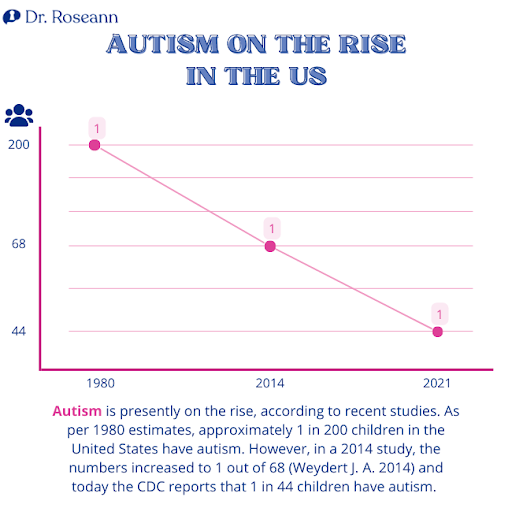
In the United States, sensory processing difficulties affect an estimated 5–16% of children, but they are far more common in Autism Spectrum Disorder (ASD). Research shows that approximately 75–90% of children with autism have significant sensory processing challenges, which explains the strong overlap between SPD vs autism. However, most children with sensory processing disorder do not meet criteria for autism, confirming that SPD and ASD are distinct but frequently comorbid conditions.
Here’s what parents need to know:
- All children with autism have sensory processing challenges
- Not all children with sensory issues have autism
- Early identification and intervention can significantly improve outcomes
Let’s break this down clearly.
What Is Sensory Processing Disorder (SPD)?
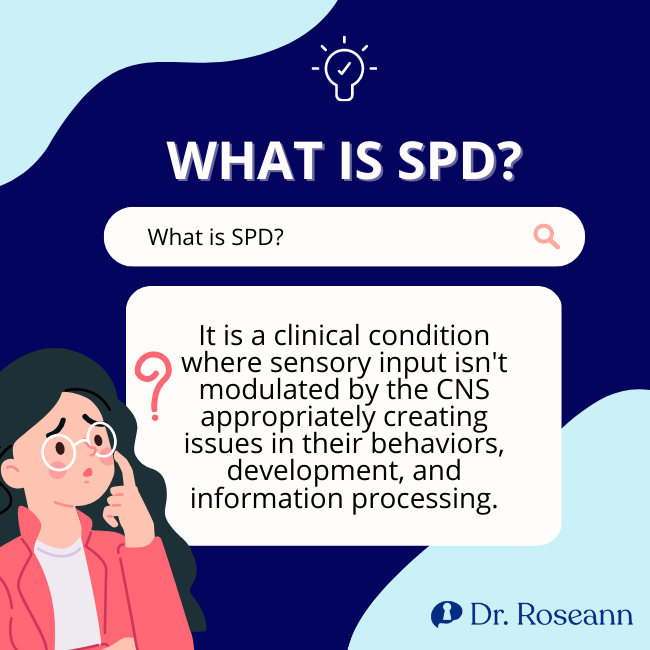
Sensory Processing Disorder (SPD) is a neurological condition where the brain has difficulty receiving, organizing, and responding to sensory input.
For example, the hum of a classroom projector that most kids barely notice might feel painfully loud to a child with SPD — leading to covering their ears, shutting down, or melting down.
Children with SPD struggle to properly modulate information from the:
- Visual system (sight)
- Auditory system (sound)
- Tactile system (touch)
- Olfactory system (smell)
- Gustatory system (taste)
- Vestibular system (movement & balance)
- Proprioceptive system (body awareness)
When the nervous system misinterprets sensory input, children may become:
- Over-responsive (hypersensitive)
- Under-responsive (hyposensitive)
- Or sensory-seeking
This dysregulation can lead to meltdowns, avoidance behaviors, or constant sensory seeking.
What Are the Symptoms of Sensory Processing Disorder?
Parents often Google: “How do I know if my child has sensory processing disorder?”
Signs of Over-Responsive (Hypersensitive) SPD
- Covers ears at normal sounds
- Avoids certain clothing textures
- Refuses specific food textures
- Fearful of swings or heights
- Avoids hugs or light touch
- Meltdowns in crowded or noisy environments
Signs of Under-Responsive (Hyposensitive) SPD
- Seeks spinning, crashing, or intense movement
- Doesn’t notice pain
- Bumps into people or objects
- Uses too much or too little force
- Constantly touches everything
- Craves loud sounds
A key difference: A sensory meltdown is not a tantrum.
It is a neurological overload response — not willful behavior.
.png)
What Is Autism Spectrum Disorder (ASD)?
Autism Spectrum Disorder (ASD) is a neurodevelopmental condition that affects:
- Social communication
- Emotional regulation
- Behavioral flexibility
- Learning and executive functioning
According to the Centers for Disease Control and Prevention, approximately 1 in 36 children are diagnosed with autism in the United States.
Autism exists on a spectrum, meaning symptoms and severity vary widely.
.png)
What Are the Early Signs of Autism in Children?
Parents frequently search: “What are early signs of autism?”
Common autism symptoms in children include:
- Limited eye contact
- Delayed speech or pragmatic language challenges
- Difficulty with back-and-forth conversation
- Restricted or highly focused interests
- Repetitive movements (hand flapping, rocking)
- Strong resistance to change
- Rigid routines
- Sleep disturbances
- Gastrointestinal issues
- Sensory sensitivities
Notably, the American Academy of Pediatrics updated autism guidelines to include sensory issues, sleep problems, and GI symptoms as important markers.
Is Sensory Processing Disorder a Form of Autism?
No — but they are closely linked.
Here’s the relationship:
Most children with autism have SPD symptoms, but a child can absolutely have SPD without meeting criteria for autism.
Can a Child With SPD Later Be Diagnosed With Autism?
Yes — in some cases.
Some children initially present with sensory challenges and later show broader developmental differences consistent with autism (Khawer et al., 2025).
This is why early evaluation is so important.
However, having SPD does not automatically mean a child will develop autism.
Why Do Sensory Issues Cause Behavioral Problems?
This is where nervous system science matters.
When a child’s brain misinterprets sensory input:
- Their stress response activates
- The nervous system shifts into fight, flight, or freeze
- Regulation becomes difficult
What looks like defiance is often dysregulation.
In autism, brain imaging and QEEG studies show patterns of hyperconnectivity, meaning the brain may over-communicate and become “stuck,” leading to rigidity and sensory overwhelm.
How Is SPD Diagnosed?
SPD is typically identified through:
- Clinical observation
- Occupational therapy evaluations
- Sensory integration assessments
Unlike autism, SPD does not currently have a standalone DSM-5 diagnosis.
How Is Autism Diagnosed?
Autism is diagnosed according to criteria outlined in the Diagnostic and Statistical Manual of Mental Disorders (DSM-5-TR), published by the American Psychiatric Association. But a full diagnosis involves:
- Developmental history
- Behavioral assessments
- Standardized tools
- Clinical observation
In some functional practices, a QEEG brain map is used to examine brainwave patterns and identify over- or under-activation patterns that may support clinical findings.
What Is the Best Treatment for Sensory Processing Disorder?
A 2025 meta-analysis found that structured sensory integration interventions significantly improved sensory processing, behavior, and functional skills in children with sensory challenges (Lyu et al., 2025).
In therapy, children engage in guided sensory activities that help the brain better interpret and organize input from touch, movement, sound, and other senses. Over time, this improves regulation, flexibility, and participation in daily life.
In addition to OT, effective treatment often includes:
- Sensory diets (personalized sensory activities built into the day)
- Environmental modifications (noise reduction, visual supports, movement breaks)
- Parent coaching, which research shows improves outcomes when caregivers consistently apply strategies at home
The goal isn’t to “fix” sensory sensitivity — it’s to help the nervous system respond more adaptively, reducing meltdowns and increasing daily functioning.
Read more about: Sensory Processing Disorder Therapy That Calms The Brain
What Are Natural or Integrative Treatments for Autism and SPD?
Depending on the child, integrative approaches for Autism and SPD may include:
- Neurofeedback
- Nutritional support
- Addressing gut health
- Sleep optimization
- Behavioral therapy
- Speech therapy
- Physical therapy
A regulation-first approach focuses on calming the nervous system before working on behavior.

When Should You Seek Help for SPD or Autism?
You should seek evaluation if:
- Meltdowns are frequent and intense
- Sensory issues interfere with school or social life
- Your child struggles with communication
- Daily routines are highly rigid
- Sleep or GI issues are persistent
Early support improves outcomes significantly.
Dr. Roseann’s Therapist Quick Tip
In my 30+ years of clinical practice, I’ve seen how easy it is to get overwhelmed by labels — especially when sensory meltdowns look intense and autism is on your mind.
What I tell parents:
Diagnosis isn’t about who has the loudest symptoms — it’s about identifying the core drivers. With SPD, the nervous system misfires around sensory input. With autism, we also see persistent differences in social communication, shared attention, and behavioral flexibility that show up even when sensory triggers aren’t present.
Try this today:
During a calm, regulated moment, notice how your child connects. Do they naturally share interests, read social cues, and shift topics — or does connection feel one-sided or effortful?
Why it works:
Autism traits are present across emotional states, not just during overload. Sensory-driven behaviors often improve when the environment is adjusted and regulation is supported.
Remember:
The right diagnosis isn’t about putting your child in a box — it’s about opening the right doors for support.
The Bottom Line for Parents
If your child struggles with sensory overload, rigidity, or social communication, trust your instincts.
Sensory Processing Disorder and Autism Spectrum Disorder overlap — but they are not the same.
Understanding the difference allows you to:
- Seek the right evaluations
- Choose the right therapies
- Support your child’s nervous system
- Reduce family stress
And most importantly, it helps you see behavior as communication — not misbehavior.
Frequently Asked Questions
Is SPD the same as autism?
No. SPD and autism are separate conditions, but they often overlap. All children with autism have sensory challenges, but not all children with SPD have autism.
Can a child have sensory processing disorder without autism?
Yes. A child can struggle with sensory regulation and not meet criteria for autism — which is why proper evaluation is so important.
What are the main differences between SPD vs autism?
SPD primarily affects how the brain processes sensory input, while autism affects social communication, behavior, and flexibility — along with sensory differences.
Can SPD turn into autism?
SPD does not “turn into” autism, but sometimes early sensory symptoms are the first signs of a broader developmental difference that becomes clearer over time.
How do I know if my child has SPD or autism?
If sensory issues are paired with social communication challenges, rigid routines, or restricted interests, a comprehensive evaluation is recommended.
What is the best treatment for SPD vs autism?
Both benefit from nervous system regulation, occupational therapy, and individualized support — but treatment should always match your child’s specific brain pattern and needs.
Can sensory processing disorder exist without autism?
Yes, sensory processing disorder can occur independently of autism.
Do all autistic children have sensory challenges?
Many autistic children experience sensory differences, but experiences vary from child to child.
Why do SPD and autism seem similar?
SPD and autism can seem similar because both may involve sensitivity to sounds, textures, or movement.
Can a child have both SPD and autism?
Yes, sensory processing challenges can occur alongside autism.
Citations
Li, Q., Sun, J., Zhao, M., & Chen, Y. (2025). Associations between sensory processing patterns and autism spectrum disorder features: A cross-sectional study. Molecular Autism, 16, Article 533. https://doi.org/10.1186/s43045-025-00533-x
Zhang, Y., Liu, H., Chen, X., & Wang, L. (2025). Effectiveness of sensory integration–based intervention on sensory processing and behavioral outcomes in children with autism spectrum disorder: A systematic review and meta-analysis. Frontiers in Psychiatry, 16, Article 1623149. https://doi.org/10.3389/fpsyt.2025.1623149
Always remember… “Calm Brain, Happy Family™”
Disclaimer: This article is not intended to give health advice and it is recommended to consult with a physician before beginning any new wellness regime. *The effectiveness of diagnosis and treatment vary by patient and condition. Dr. Roseann Capanna-Hodge, LLC does not guarantee certain results.
Are you looking for SOLUTIONS for your struggling child or teen?
Dr. Roseann and her team are all about science-backed solutions, so you are in the right place!