
%20.png)


Estimated reading time: 7 minutes
If your child’s meltdowns, refusals, or shutdowns feel bigger than anything you’ve ever seen, you’re not alone. Parenting a child with Pathological Demand Avoidance (PDA) can feel exhausting.
PDA childen often avoid everyday demands through:
- distraction
- negotiation
- controlling behaviors
- emotional outbursts
- shutdowns because demands trigger intense anxiety and nervous system stress.
- Parents may notice their child resisting routines, schoolwork, transitions, or even activities they usually enjoy
But here’s the truth: behavior is communication, not defiance. When we understand the root of PDA behaviors—anxiety and nervous system dysregulation—we can support our kids in ways that truly help.
I’m Dr. Roseann Capanna-Hodge, and for over 30 years I’ve supported children with autism, anxiety, emotional regulation challenges, and complex behavioral needs. I know how isolating it can feel when your child’s reactions seem misunderstood by teachers, family members, or even professionals. My goal is to help you better understand the unique nervous system profile behind PDA behaviors so they can support their child with more compassion and confidence.
What You’ll Learn:
- Common traits and behaviors seen in PDA children.
- Why demands and expectations can trigger intense anxiety responses.
- How PDA affects school, friendships, and family life.
1. Focus on Calming the Brain First
PDA children live in a state of chronic anxiety. So, their brains interpret demands as threats. That’s why calming comes before learning, cooperation, or problem-solving.
- Build daily rituals: deep breathing, guided meditation, quiet reading
- Use sensory tools: weighted blankets, noise-canceling headphones, fidget toys
- Model calm—your nervous system sets the tone
Parent story:
Marian, mom of a 7-year-old with PDA, found mornings chaotic until she introduced five minutes of belly breathing together. Her son left for school calmer and more willing to cooperate.

2. Use Indirect Language to Lower Resistance
Direct demands (“Do this now”) can feel like threats. Try gentle, indirect phrasing.
- “I wonder if we could…”
- “Let’s see if we can…”
- Turn tasks into invitations or experiments
Shifting language softens the emotional load of everyday requests.
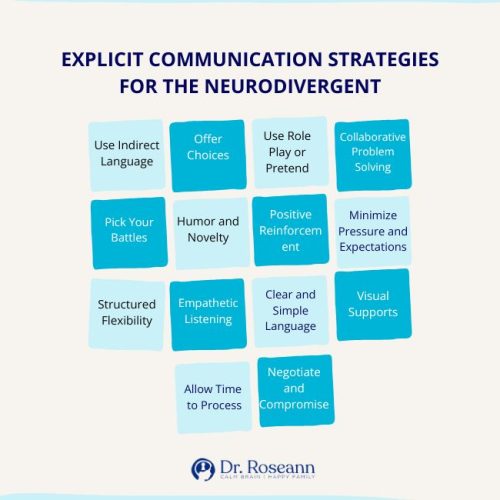
3. Give Choices to Foster Autonomy
Control lowers anxiety. Providing structured choices helps your child feel safe.
- “Do you want to brush your teeth before or after pajamas?”
- “Homework at the table or on the couch?”
Example: One mom noticed bedtime battles dropped by half when she limited choices to two options only.
4. Preview Transitions to Reduce Anxiety
Transitions can feel overwhelming. Give advance notice with support.
- Use timers: “Five minutes until we leave.”
- Provide visual countdowns or sand timers.
Narrate transitions gently (“After snack, we’ll head to the car”).

5. Build Flexible Routines
Routines are helpful, but rigidity can backfire. Instead, think of “guidelines,” not “rules.”
- Create predictable rhythms without strict times
- Use visual checklists instead of constant reminders
- Build in recovery time after stressful activities
6. Turn Demands Into Play
Play lowers defenses and makes cooperation fun.
- Race to see who puts on shoes first
- Use role play (superheroes doing chores)
- Talk in silly voices to invite laughter
Parent story: A dad reframed toothbrushing as “dragon breath training.” Suddenly, resistance vanished.
7. Break Tasks Into Micro-Steps
Big tasks overwhelm PDA children. Break them into manageable chunks.
- “First socks, then shoes.”
- “Let’s start with just one math problem.”
Micro-steps create a sense of achievement and lower stress.
Parent example: Tessa, mom of a 12-year-old with PDA, noticed her son shut down over long chores. Breaking “clean your room” into “pick up clothes, then books” made the task possible. It even sparked a smile.
Parenting Tip: These small adjustments may seem minor, but they build momentum and cooperation over time.
8. Use Visual Supports
Words overwhelm; visuals clarify.
- Charts and picture cards for routines
- Color-coded calendars
- Visual timers for transitions
Parent story: Ana, mom of a PDA teen, created a bedtime chart. “It cut out nagging and gave us both peace,” she said.
9. Celebrate Small Wins
Perfection isn’t the goal—progress is.
- Praise effort: “I love how you tried.”
- Celebrate micro-steps completed
- Reinforce resilience, not outcomes
10. Partner with Schools and Teachers
School can be tough for PDA children. Collaboration is key.
- Advocate for reduced demands and flexibility
- Request sensory breaks and quiet spaces
- Share your child’s strengths and strategies with staff
PDA researcher Dr. Elizabeth Newson observed:
“Avoidance of everyday demands is anxiety-driven, not oppositional.”
11. Encourage Movement and Sensory Breaks
Movement regulates the nervous system. Build it daily.
- Outdoor play
- Swinging, yoga, or jumping
- Sensory breaks after stressful activities
Example: A family added 15 minutes of trampoline time after school. Meltdowns dropped dramatically.
12. Prioritize Sleep and Nutrition
Brains can’t regulate without the basics.
- Stick to bedtime routines
- Limit screens before sleep
- Serve balanced meals with protein, healthy fats, and complex carbs
A nourished, rested child is a calmer, more resilient child.
13. Seek Professional Supports
You don’t have to do this alone. Helpful supports include:
- Neurofeedback or biofeedback to regulate the brain
- Occupational therapy for sensory issues
- Parent coaching to learn PDA-specific strategies
Modified CBT or play therapy for anxiety

14. Protect Your Own Mental Health
Parenting a PDA child is draining. Your well-being matters, too.
- Join a parent support group
- Practice mindfulness, journaling, or walking
- Remember: It’s not bad parenting—it’s a dysregulated brain
A calmer parent helps a child regulate faster.
Parenting PDA children is challenging, but you’re not alone. Small, consistent changes, like calming the brain first, softening demands, and building flexible routines make a big difference. With hope and the right tools, you can create a calmer, happier home.
FAQs About PDA Children
What are signs my child may have PDA?
Extreme demand avoidance, high anxiety, and use of social strategies to resist tasks.
Is PDA the same as ODD?
No. PDA is anxiety-driven avoidance; ODD is oppositional behavior.
Can PDA children succeed in school?
Yes—with flexibility, understanding staff, and sensory accommodations.
What should I avoid as a parent?
Avoid power struggles, escalating demands, and strict discipline.
Why do PDA children resist simple requests?
PDA children resist simple requests because demands can trigger anxiety, overwhelm, and a strong need for control.
Are PDA children autistic?
Many PDA children are autistic, although PDA traits can also overlap with anxiety, ADHD, and nervous system dysregulation.
How do PDA children behave at school?
At school, PDA children may avoid work, resist transitions, mask distress, or become emotionally overwhelmed by demands.
Can PDA children have strong social skills?
Yes, PDA children can have strong social skills, but anxiety and emotional dysregulation may still affect relationships.
How can parents help PDA children at home?
Parents can help PDA children at home by reducing pressure, using humor, offering choices, and building predictable routines.
What triggers meltdowns in PDA children?
Meltdowns in PDA children are often triggered by demands, transitions, sensory overload, uncertainty, or emotional stress.
When should parents seek help for PDA children?
Parents should seek help for PDA children when avoidance, anxiety, or emotional outbursts interfere with daily functioning.
Terminology
- PDA (Pathological Demand Avoidance): An autism profile where anxiety drives extreme avoidance of demands.
- Neurofeedback: Therapy that helps the brain self-regulate.
- Sensory regulation: Activities or tools that calm the nervous system.
Citations
Kildahl, A. N., Helverschou, S. B., Rysstad, A. L., Wigaard, E., Hellerud, J. M. A., Ludvigsen, L. B., & Howlin, P. (2021). Pathological demand avoidance in children and adolescents: A systematic review. Autism, 25(8), 2162–2176. https://doi.org/10.1177/13623613211034382
Symonds, J., Senior, J., & D’Urso, G. (2024). Methods of studying pathological demand avoidance in children and adolescents: A scoping review. Frontiers in Education, 9. https://doi.org/10.3389/feduc.2024.1230011
Curtis, S., & Izett, E. (2025). The experience of mothers of autistic children with a pathological demand avoidance profile: An interpretative phenomenological analysis. Discover Mental Health, 5(1). https://doi.org/10.1007/s44192-025-00127-3
Always remember: Calm Brain, Happy Family™
Disclaimer: This article is not intended to give health advice and it is recommended to consult with a physician before beginning any new wellness regime. The effectiveness of diagnosis and treatment vary by patient and condition. Dr. Roseann Capanna-Hodge, LLC does not guarantee certain results.
Are you looking for SOLUTIONS for your struggling child or teen?
Dr. Roseann and her team are all about science-backed solutions, so you are in the right place!
©Roseann Capanna-Hodge