%20.png)


Contents
Estimated reading time: 18 minutesWhen your child is struggling with ADHD, anxiety, OCD, or mood issues, it’s not misbehavior—it’s a dysregulated brain doing its best. And when the brain isn’t calm, focus, behavior, and emotions can spiral.Neurofeedback helps bring balance to that overwhelmed nervous system—training the brain to self-regulate so your child can feel calmer, more focused, and back in control.

What is Neurofeedback Training and How Does it Work?
Neurofeedback is a safe, natural, and science-backed way to help the brain learn how to regulate itself. We all have the same brain waves, but their patterns shift depending on what we’re doing—whether it’s focusing in class, relaxing before bed, or reacting to stress.With regular training, neurofeedback retrains brainwaves and helps your child shift into a calm, regulated state where healing and learning can happen.In this balanced space, kids can:
- Think more clearly
- Regulate their emotions
- Learn more efficiently
- Feel calmer and more in control
- Build resilience
Once your child’s brain finds balance, you’ll often see remarkable changes as they grow more confident, manage emotions with ease, and begin thriving in school, relationships, and daily life.
The Science Behind Neurofeedback Training
Neurofeedback is a powerful, science-backed tool that helps retrain the brain by reinforcing healthy brainwave patterns. Over time, this process influences:
- Electrical activity in the brain
- Neurotransmitter balance
- Brain activation and connectivity
- Brain structure, including white and gray matter
Each brainwave state plays a unique role in how we function:
- Delta waves dominate during deep sleep and healing
- Alpha shows up when we’re relaxed or in a calm flow
- Beta helps with active thinking, learning, and focus
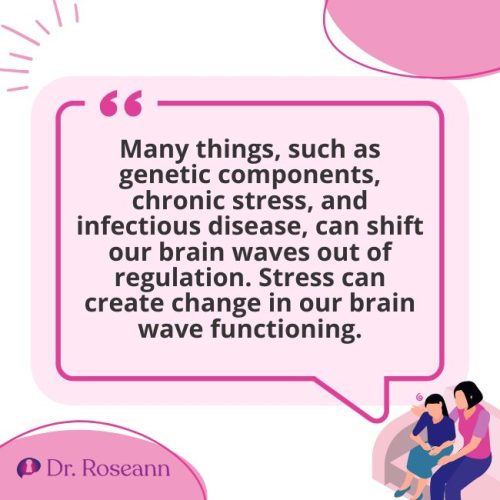
When brainwaves fall out of sync, kids can struggle with mood, focus, and behavior. While often blamed on chemical imbalances, research shows chronic stress and nervous system dysregulation are key—and neurofeedback helps restore that balance.
What are the Benefits of Neurofeedback Therapy for Children?
Neurofeedback helps regulate the central nervous system, improving symptoms of:✔️ ADHD & Executive Functioning Issues✔️ Anxiety& OCD✔️ PANS/PANDAS✔️ Learning Disabilities✔️ Behavioral & Emotional Dysregulation

Success Story: How Neurofeedback Treatment Helped Sasha’s ADHD
Sasha was a bright, straight-A student but her inner world told a different story. She constantly struggled with focus, executive functioning, and emotional tension at home.She began to feel “stupid” because she couldn’t manage her responsibilities without constant reminders. That self-doubt slowly chipped away at her confidence.By the time college applications came around, Sasha:
- Only applied to “safe schools” she didn’t really want
- Avoided talking about her future
- Showed clear signs of low self-esteem and anxiety
That’s when her parents enrolled her in my virtual BrainBehaviorReset™ Program and started neurofeedback training through our center. With consistent support, Sasha learned how to:
- Regulate her brain to reduce stress and improve focus
- Strengthen executive functioning so she could stay organized and meet deadlines
- Build new learning strategies to change her behavior and boost confidence
Once her brain calmed and focused, everything followed. Sasha felt more in control, her relationship with her mom healed, and she started believing in herself again.
Can Neurofeedback Be an Effective Therapy for Kids With ADHD?
Yes—research says it can, and quite powerfully. In fact, neurofeedback has been shown to reduce ADHD symptoms by over 90% in some studies.The American Academy of Pediatrics classifies it as a Level 1 “Best Support” treatment, putting it right alongside stimulant medications in terms of effectiveness (Lofthouse et al., 2011). That’s a big deal for parents looking for science-backed, drug-free options.Meta-analyses and long-term studies show that neurofeedback can significantly improve:
- Inattention
- Impulsivity
- Hyperactivity
- Emotional self-regulation
And it’s not just about managing symptoms—it’s about calming the brain. A study by Van Doren et al. (2018) found neurofeedback works just as well as meds for many kids, making it a powerful non-stimulant alternative.But here’s what so many overlook: You can’t teach a child to focus until their brain is calm.A dysregulated nervous system blocks learning, memory, and executive functioning. Neurofeedback helps restore that balance—so your child can finally absorb, apply, and thrive.Once Sasha began regulating her brain and using new executive functioning tools, everything changed. Her confidence soared, and suddenly, those “safe” schools no longer felt like her only option.
Neurofeedback Can Boost Cognitive Function in Kids
Absolutely—and here’s how.Neurofeedback helps identify and rebalance brainwave activity that may be affecting your child’s ability to focus, remember, and learn effectively.Two Common Signs of Brainwave Imbalance:
- Understimulated Brain – Your child forgets simple instructions because their brain isn’t fully alert or engaged.
- Overstimulated Brain – Your child forgets due to mental overload, constantly bouncing between tasks without completing them.
Key neurofeedback techniques we use to target those patterns:

1. Theta/Beta Ratio TrainingMany kids with attention challenges have too many theta waves (linked with daydreaming) and not enough beta waves (linked with focus).This protocol helps:
- Boost alertness and focus
- Reduce mental drifting and inattention
- Especially useful for ADHD and executive function struggles
2. Alpha-Theta Training for Learning & CreativityThis approach trains the brain to move smoothly between deep relaxation and focused attention.It helps kids:
- Develop cognitive flexibility
- Improve creative thinking
- Enhance problem-solving abilities
3. Sensory Motor Rhythm (SMR) TrainingSMR waves support coordination, calm alertness, and cognitive speed. Strengthening them can be especially helpful for:
- Slow processing speed
- Hyperactivity or impulsivity
- Improved motor control and task follow-through
4. Frontal Lobe Training for Executive FunctioningThis targets the prefrontal cortex—home base for planning, organization, and self-regulation.Training this area helps kids:
- Improve working memory
- Manage tasks independently
- Build better impulse control
When we calm the brain, we open the door for real learning. That’s why neurofeedback is such a powerful tool—because it doesn’t just mask symptoms. It retrains the brain from the inside out.
How Do You Start Neurofeedback Training?
Starting neurofeedback is simple and rooted in science. Here’s how we begin the process:
Step 1: Get a QEEG Brain Map (Quantitative EEG)
Before we start any training, we need to see how the brain is working. That’s where a QEEG brain map comes in.A QEEG shows us how your child’s brain is functioning and where it’s dysregulated. It provides answers to big questions like:
- Is this really ADHD or something else?
- Why is my child having such a hard time with learning or behavior?
The QEEG helps us assess:
- Frontal lobe activity (linked to attention, organization, and executive functioning)
- Limbic system activity (responsible for emotional regulation and stress response)
- Left-right brain communication (key for focus, learning, and behavioral control)
No more guessing. A QEEG gives us the data we need to make the right treatment plan from the start.
Step 2: Create a Personalized Neurofeedback Program
After we’ve mapped the brain, we use that data to design a custom neurofeedback plan. Here’s how it works:
- Real-time brain training – The computer tracks your child’s brainwave activity and delivers visual and auditory feedback.
- Positive reinforcement – When the brain produces healthy patterns, it gets rewarded (like with a sound or animation).
- Gradual rebalancing – Over time, this retrains the brain to self-regulate and shift into a more calm, focused, and stable state.
This approach is:
- Non-invasive
- Medication-free
- Deeply rooted in neuroscience
When we calm the brain, we open the door to learning, emotional growth, and lasting change.
What Happens During a Neurofeedback Session?
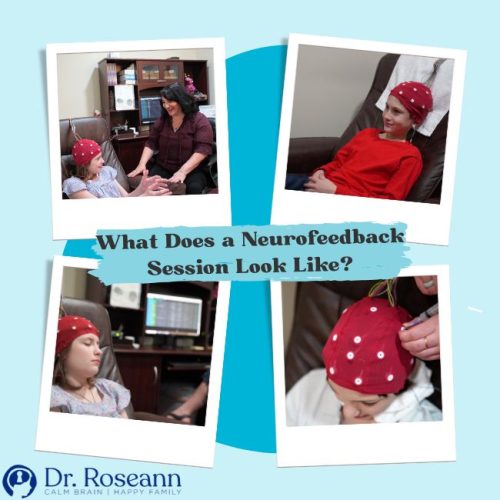
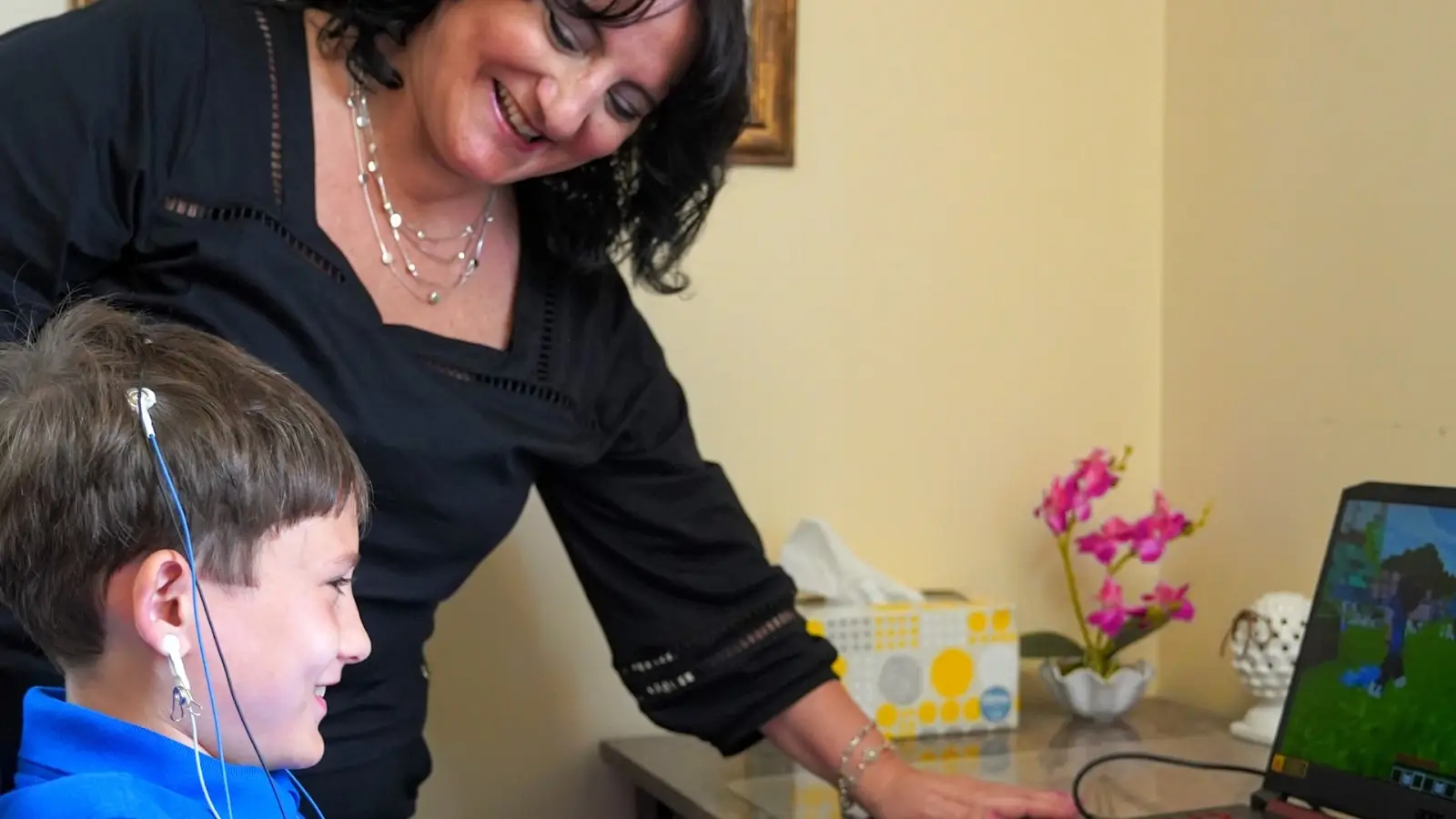
You may have heard of neurofeedback but still wonder what actually happens during a session—especially when you hear the words “sensors” and “brainwaves.” I get it! It can sound a little intimidating at first.But here’s the truth: Neurofeedback is 100% safe, non-invasive, and doesn’t put anything into the brain. There’s no radiation or electrical stimulation—just real-time monitoring and gentle feedback that helps the brain learn how to regulate itself.Here's what a session looks like:
- Sensors are gently placed on the scalp—just like stickers—to monitor brainwave activity (nothing goes into the brain).
- Your child watches a movie or plays a game on a screen.
- When their brain produces healthy patterns, the screen plays normally.
- When their brain becomes dysregulated, the screen dims or the sound fades—prompting the brain to self-correct, automatically.
- The brain starts seeking that feedback—within seconds! It’s the subconscious doing the learning, not effort or willpower.
And yes—it’s simple, painless, and even fun for kids! They just watch a screen, and the brain does the rest.That’s why neurofeedback is such a powerful tool: it trains the brain without your child even realizing they’re “working.” All while supporting better focus, emotional regulation, and behavior over time.
How does watching a movie or listening to music help?
It might sound surprising, but watching a movie or listening to music is actually how the brain learns during a neurofeedback session.Here’s how it works: To keep the movie playing or the music sounding clear, your child’s brain must stay in a healthy pattern of brainwave activity. If their brainwaves become dysregulated, the screen dims or the sound fades—gently signaling the brain to adjust.This is called operant conditioning—a form of learning through positive reinforcement. Over time, the brain starts to want that visual or auditory reward and learns how to stay in that regulated state.The result? Improved focus, better emotional control, and more consistent behavior—all by training the brain to work the way it was designed to.
Does My Child Need Neurofeedback?
If your child struggles with focus, big emotions, or learning challenges, you’ve probably asked yourself: “Is there something more I can do?” Neurofeedback might be that missing piece.Here’s the truth—every child can benefit from a more regulated brain. But for kids with attentional, emotional, or behavioral struggles? Neurofeedback can be a total game-changer.I use it daily in my practice for kids with:
- ADHD and executive functioning issues
- Anxiety, OCD, and mood challenges
- PANS/PANDAS and tick-borne illness
- Sensory processing and learning disorders
Why? Because when we regulate the nervous system, everything gets easier—thinking, learning, managing emotions, even relationships.Neurofeedback builds real, lasting self-regulation skills.

Not All Neurofeedback Is the Same—Why Quality Matters
Let’s be real—just because it’s called neurofeedback doesn’t mean it’s done well.I can’t tell you how many families walk through our doors feeling defeated after trying neurofeedback elsewhere with little to no results. And in most cases, it’s not the therapy itself—it’s how it was delivered.Here’s the truth: The success of neurofeedback depends on who’s guiding the process. Without proper training, accurate brain mapping, and a customized protocol, it just doesn’t work the way it’s supposed to.That’s why in our BrainBehaviorReset™ Program, we only use a board-certified, science-backed approach to give your child the best chance at real, lasting change.What makes our method different:✔️ Accurate QEEG Brain Mapping: We don’t guess—we measure. A detailed brain map shows us exactly where dysregulation is happening.✔️ Custom Neurofeedback Plans: No cookie-cutter protocols here. Every training plan is based on your child’s unique brain and symptoms.✔️ Science-Backed Techniques: We use the most current and proven neurofeedback methods designed to calm the nervous system and promote real progress.Bottom line? Neurofeedback works—but only when it’s done right. When the brain is supported properly, kids start to focus better, feel calmer, and handle life with more confidence.
How Long Do Neurofeedback Results Last?
“Will this actually last—or will we be back at square one?” It’s a question I hear often, and the good news is: yes, neurofeedback creates real, lasting change.Research (Ghaziri et al., 2013; Van Doren et al., 2018)shows it rewires the brain—not just behavior—and when combined with lifestyle shifts like better nutrition, stress management, and positive thinking (as we do in our BrainBehaviorReset™ Program), it helps kids stay calm, focused, and in control long after sessions end.In my 30+ years of clinical work (and in my book It’s Gonna Be OK!), I talk about how neurofeedback becomes even more powerful when it’s combined with small lifestyle shifts:
- Better nutrition
- Learning how to manage stress
- Replacing negative thought patterns with healthier ones
And yes, parents are right to be cautious—because mental health challenges are on the rise, and you need real solutions.That’s what we offer:
- A well-researched, science-backed approach to mental wellness
- A drug-free option that actually helps the nervous system calm down
- Long-term improvements in focus, anxiety, learning, and behavior
So if you're searching for a safe, natural, and effective way to help your child feel confident, calm, and in control—neurofeedback may be exactly what you’ve been looking for.
Parent Action Steps
Learn more about neurofeedback training and its potential benefits.Seek qualified, board-certified neurofeedback practitioners and discuss treatment.Have realistic expectations and be consistent with sessions.Ask questions and get a QEEG brain map for insights.Monitor your child's progress during and after neurofeedback sessions.Support healthy lifestyle changes alongside neurofeedback.Take our Solution Matcher to get personalized treatment for your child.FAQs
How Many Neurofeedback Sessions Does a Child Need?
Neurofeedback is like strength training for your child’s brain—it takes consistent sessions over time to retrain a dysregulated nervous system. With regular practice, the brain learns to self-regulate, leading to fewer meltdowns, better focus, and lasting emotional balance.Most kids benefit from:
- 2 to 3 sessions each week to keep their brain in learning mode
- 20 sessions to notice those first real shifts—like better mood or fewer meltdowns
- 40 or more sessions for real, lasting change that sticks
What is the difference between neurofeedback and biofeedback?
Both help you gain better control over how your body functions, but they target different systems. Neurofeedback trains the brain by measuring brainwave activity, while biofeedback focuses on other physical responses like heart rate, breathing, or muscle tension.
Can I do neurofeedback therapy at home?
Yes, you can—but it’s important to do it right. Home neurofeedback systems can be safe and effective when guided by a qualified professional.Always start with a QEEG brain map and work with a trained provider to get the best results.
Are there any side effects of neurofeedback?
Neurofeedback is non-invasive and generally very well tolerated. Some people may feel a little tired or get a mild headache after a session, especially in the beginning, but that usually fades quickly. Most kids actually find it calming and enjoyable.
How much does neurofeedback therapy cost?
Prices vary based on your provider, how many sessions are needed, and whether you’re doing in-office or at-home training. The best way to find out? Reach out to a qualified neurofeedback specialist near you for a personalized quote.
Does neurofeedback work for everyone?
It’s highly effective for many people, especially kids with ADHD, anxiety, OCD, or mood and learning issues. That said, every brain is different. A QEEG brain map gives clear insight into whether this approach is a good fit for your child.
Citations
Ghaziri, J., Tucholka, A., Larue, V., Blanchette-Sylvestre, M., Reyburn, G., Gilbert, G., Lévesque, J., & Beauregard, M. (2013). Neurofeedback Training Induces Changes in White and Gray Matter. Clinical EEG and Neuroscience, 44(4), 265–272. https://doi.org/10.1177/1550059413476031Lofthouse, N., Arnold, L. E., Hersch, S., Hurt, E., & DeBeus, R. (2011). A Review of Neurofeedback Treatment for Pediatric ADHD. Journal of Attention Disorders, 16(5), 351–372. https://doi.org/10.1177/1087054711427530Van Doren, J., Arns, M., Heinrich, H., Vollebregt, M. A., Strehl, U., & K. Loo, S. (2018). Sustained effects of neurofeedback in ADHD: a systematic review and meta-analysis. European Child & Adolescent Psychiatry, 28(3), 293–305. https://doi.org/10.1007/s00787-018-1121-4Dr. Roseann is a mental health expert in neurofeedback who frequently is in the media:
- The Holistic Counseling Podcast Therapist’s Integrative Tools: Neurofeedback and Biofeedback
- Life's Essential Ingredients Connecting at the Root
- Helping Children Thrive Podcast Benefits of Neurofeedback for children with ADHD
- It's Gonna Be OK! With Dr. Roseann Podcast: Neurofeedback Series
- Mel Robbins Show: Neurofeedback
- Clearly Clinical Podcast: Neurofeedback
- Creative Clinician's Corner: Neurofeedback
Always remember… “Calm Brain, Happy Family™”
Disclaimer: This article is not intended to give health advice and it is recommended to consult with a physician before beginning any new wellness regime. *The effectiveness of diagnosis and treatment vary by patient and condition. Dr. Roseann Capanna-Hodge, LLC does not guarantee certain results.
Are you looking for SOLUTIONS for your struggling child or teen?
Dr. Roseann and her team are all about science-backed solutions, so you are in the right place!
Grab your complimentary copy of