%20.png)


Estimated reading time: 9 minutes
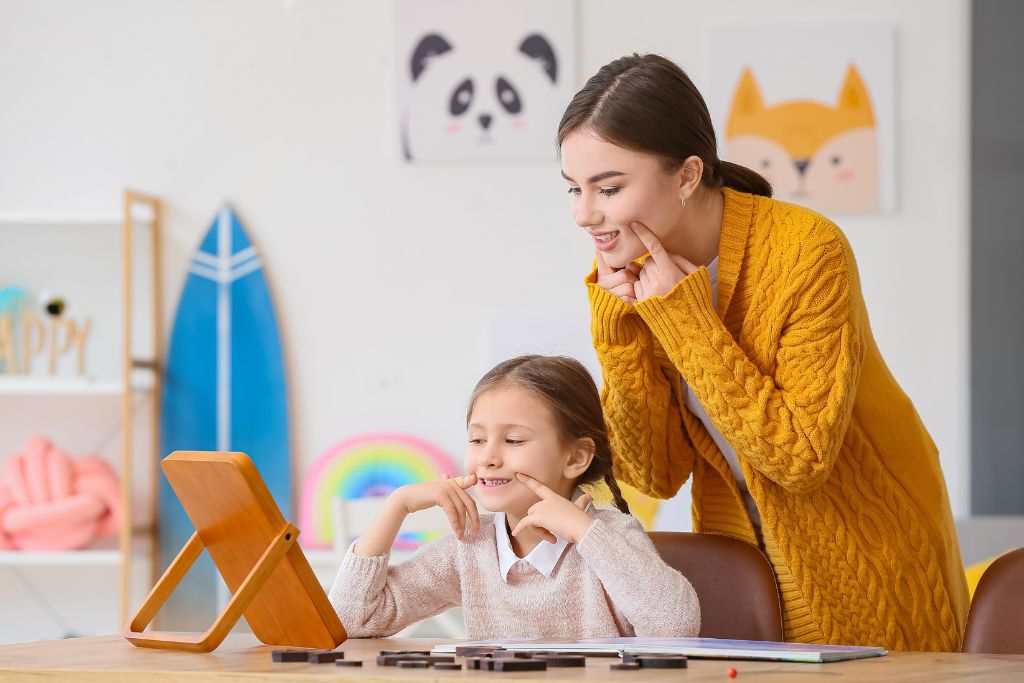
Emotional regulation tips work best when they give your child something simple and doable in the exact moment they’re overwhelmed. Think: slow breathing together, a quick movement break, or helping them name what they’re feeling out loud. Kids don’t automatically know how to calm themselves—especially when big emotions like frustration, anxiety, or anger take over—so they need real, in-the-moment tools to help control their feelings and settle their nervous system.
Without clear tools, those emotions spill over into daily life, affecting schoolwork, friendships, and family routines. Parents often find themselves reacting instead of guiding. The shift happens when you teach simple, repeatable strategies your child can actually use. Building self-regulation skills for children equips them with real-time tools to pause, reset, and regain control.
What You'll Learn:
- Quick, effective emotional regulation tips for daily situations.
- How to teach children to use strategies independently.
- Ways to prevent escalation before it starts.
Why Emotional Regulation Matters for Your Child’s Long-Term Well-Being
Emotional regulation is one of the essential life skills we can nurture in our kids. When children learn to manage feelings like frustration, sadness, and anger, they’re better equipped to handle life's ups and downs, whether they’re navigating a rough day at school or working through friendships. Without these skills, children can feel overwhelmed by their emotions, which can lead to meltdowns or withdrawal in challenging situations.
Helping kids master emotional regulation can lead to lasting improvements in their mental health and overall well-being, impacting several key areas:
Handling Stress and Anxiety
Emotionally regulated children learn that stress doesn’t have to control them. Whether it’s an upcoming test or a disagreement with a friend, self-regulation empowers children to manage anxious feelings without getting overwhelmed.
Boosting Focus and Success at School
Kids who can control their emotional responses can better focus on tasks, helping them succeed academically even when things get tough. This resilience supports them in developing a positive attitude toward learning and challenges.
Building Stronger Relationships
Emotional regulation isn’t just about keeping calm; it’s also the foundation for healthy, positive connections. Kids who can communicate and empathize can work through conflicts, leading to deeper, more meaningful friendships.
Creating a Peaceful Home Life
When children learn to regulate their emotions, family dynamics often improve, with fewer meltdowns and smoother communication. This balance fosters a calmer, more supportive home environment, which benefits everyone.
What is Emotional Regulation?
https://www.youtube.com/watch?v=TxzT3LD2fUQ
Common Challenges Children Deal With in Managing Their Emotions
It’s one thing to know how important emotional regulation is, but helping a child develop these skills is where the challenge truly lies. In the course of my career in the helping profession, I’ve encountered countless parents who expressed an overwhelming feeling of helplessness whenever their children have frequent outbursts or struggle to calm down, especially in situations that might seem minor to us as adults or that place them in a very difficult social situation.
Imagine your child becoming so frustrated over a minor disappointment—like not getting the toy they wanted—that they spiral into a full-blown meltdown. In these moments, it’s natural to feel a bit lost or frustrated yourself, unsure of how to help them regain control and manage those big feelings.
Understanding children's specific emotional challenges as they grow can offer a valuable perspective. Here are some common hurdles kids encounter in managing their emotions and how you can help them navigate these tricky moments.
Emotional Outbursts
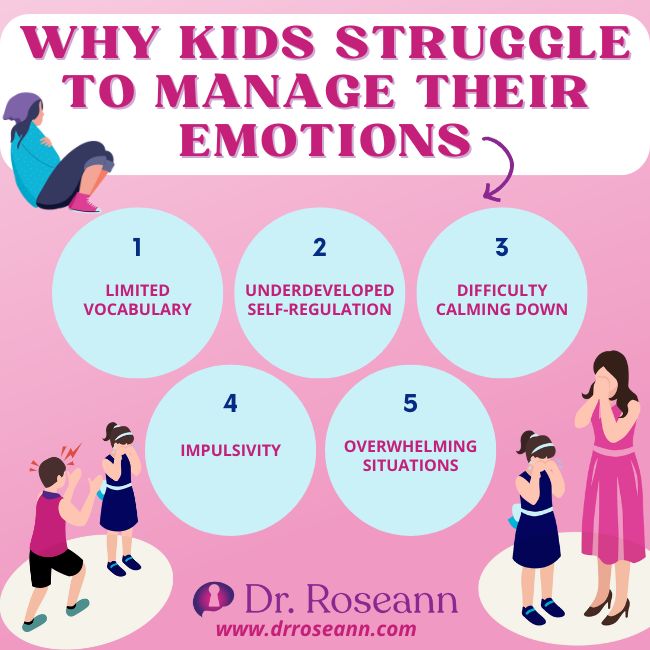
Younger kids often struggle with outbursts simply because they lack the words to describe how they feel. Tantrums and meltdowns are a normal part of early emotional development, but they can be exhausting for parents trying to guide their child through the storm.
Difficulty Calming Down
Some children find it tough to calm down even after the initial emotional trigger has passed. This prolonged emotional reaction can make it hard for them to move on, leaving them upset and unfocused.
Impulsivity
Kids who have trouble regulating emotions often act before they think, reacting impulsively in ways that might lead to further distress. Teaching self-control skills can help curb these reactions and promote more thoughtful responses.
8 Emotional Regulation Tips for Parents to Help Kids Stay Calm and in Control
It’s natural to feel at a loss when your child struggles to manage big emotions, like frustration, anger, or sadness. Many parents that I talked to wonder, “How can I help my child handle these feelings without resorting to outbursts?”
The good news is, with a few simple strategies, you can help your child learn emotional regulation—an essential skill for their overall resilience and happiness. Whether it’s creating a calm-down corner or modeling patience during stressful moments, each small step you take can make a big impact.
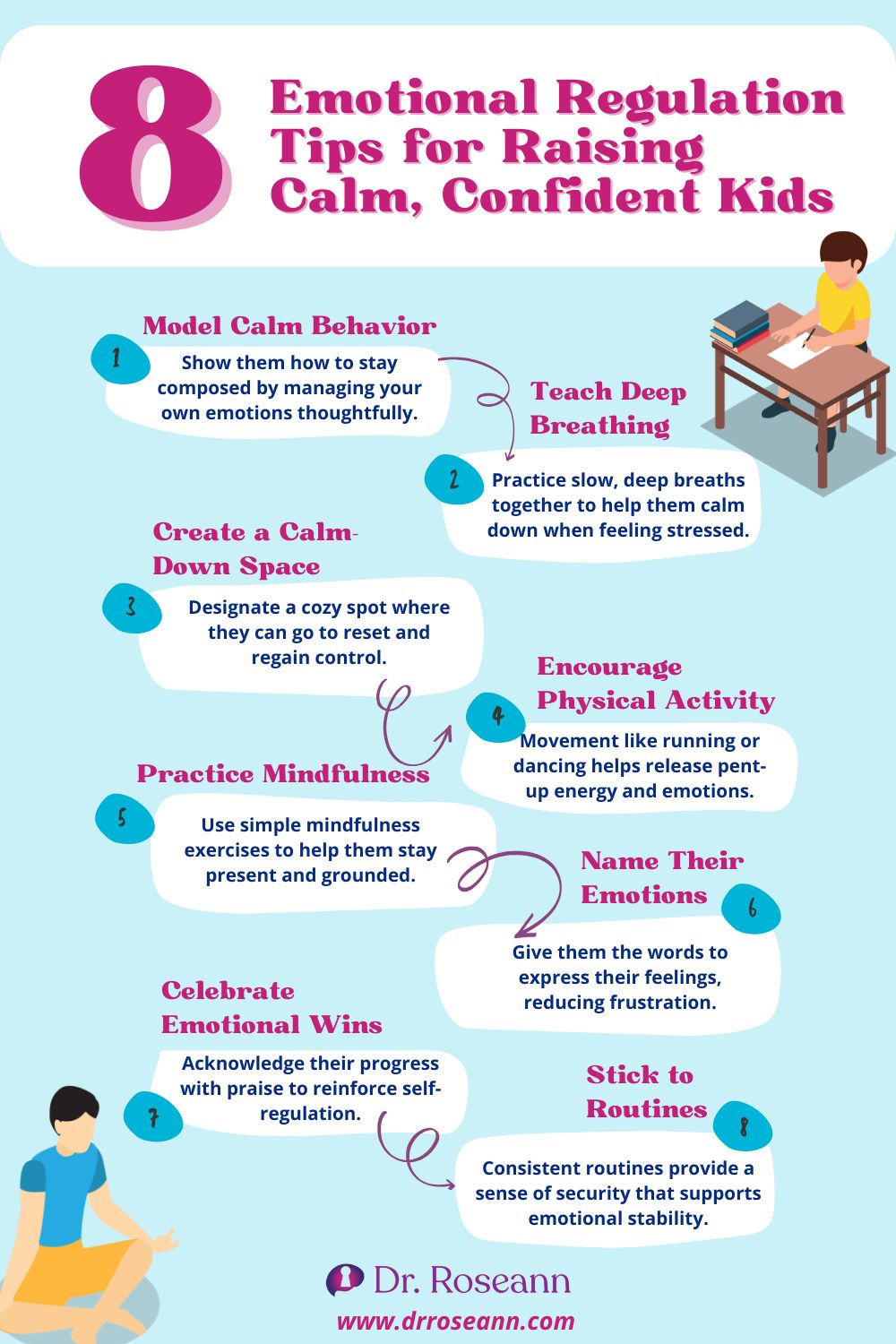
1. Model Healthy Emotional Responses
Children learn most of their emotional behaviors by watching their parents. To teach emotional regulation, you need to model it yourself. When you’re feeling frustrated, resist the urge to react impulsively. Instead, take a deep breath and calmly explain your emotions: “I’m feeling upset, so I’m going to take a moment to breathe.” This shows your child how to handle emotions constructively and reinforces the importance of staying calm under pressure.
2. Teach Breathing Techniques for Emotional Control
Breathing exercises are one of the most effective tools for emotional regulation. Teach your child a simple technique like deep breathing to help calm their nervous system during overwhelming moments. For example, guide them to inhale slowly through their nose, hold their breath for a few seconds, and exhale through their mouth. Practicing this regularly equips them with a go-to strategy for managing emotions when they feel out of control.
3. Create a Calm-Down Space
A designated space where your child can cool off lets them process their emotions peacefully. This “calm-down corner” can include cozy items like pillows, soft blankets, or essential oils that help soothe them. By encouraging your child to use this space when they’re upset, you give them a healthy way to take responsibility for their emotions and learn how to self-soothe.
4. Encourage Physical Activity
Physical movement is a great outlet for releasing pent-up emotions. Encourage your child to engage in activities like running, jumping, or dancing, which can help alleviate stress and frustration. Regular physical play keeps their body healthy and reduces emotional tension, making it easier for them to regain control when emotions run high.
5. Practice Mindfulness Together
Mindfulness helps children stay grounded when their emotions feel overwhelming. Practicing mindfulness together as a family, coupled with EFT tapping exercises, can build emotional awareness and control over time. Try simple exercises, like focusing on deep breathing or doing a sensory check (e.g., “What can you hear, smell, or feel right now?”). These small moments of mindfulness help your child become more present and less reactive to emotional triggers.
6. Help Your Child Name Their Emotions
Children often struggle to regulate their feelings because they don’t fully understand them. Helping your child name their emotions gives them the vocabulary they need to express their feelings. For example, if they’re acting out, you might say, “It seems like you’re feeling frustrated. Is that right?” Labeling emotions makes it easier for your child to understand and communicate what they’re experiencing, reducing the chances of emotional outbursts.
7. Use Positive Reinforcement for Emotional Wins
When your child successfully manages their emotions, celebrate it! Emotional regulation activities that use positive reinforcement, for example, encourage them to continue using healthy emotional regulation strategies. You could say, “I’m really proud of how you calmed down after feeling angry.” These moments of praise reinforce the idea that they can control their emotions and make better choices, which builds their emotional resilience.
8. Set Consistent Routines for Stability
Children thrive on consistency, and predictable routines help them feel more in control of their environment. Establishing regular schedules for meals, playtime, and bedtime provides a sense of stability that can reduce anxiety and emotional instability. Children who know what to expect feel more secure, making it easier to regulate their emotions throughout the day. In contrast, toxic parenting, characterized by inconsistency, harshness, or lack of emotional support, can leave children feeling anxious and unsure of their place in the family or world.
Long-Term Benefits of Emotional Regulation
As you guide your child in learning to manage their emotions, remember that the benefits extend far beyond the present moment. Close your eyes and envision your child handling a difficult situation, like missing out on a sports team or navigating a disagreement with a friend. But this time, you see them rebound, managing this momentary disappointment and moving forward without losing confidence. I’m sure every loving parent yearns to see this in their children.
This kind of emotional regulation, having resilience and the ability to bounce back, is a true gift that we can impart to our kids —it empowers them to face life’s challenges with a balanced mindset. When I think of all those regulated kids and teens that I have encountered throughout my career, I think about how much more successful they were socially, academically, and emotionally than their peers. Regulated kids know how to handle challenges in life because they have successfully faced them before. Remember, it isn’t about bubble wrapping them; rather, it is about gaining problem-solving skills.
Greater Emotional Resilience
Children who learn emotional regulation become more resilient, returning quickly from setbacks and adapting to changes. For example, if your child faces disappointment after not making the sports team, they can acknowledge their feelings, process them, and move forward positively. This resilience helps them navigate future challenges more confidently, whether coping with a tough exam or handling changes at home.
Improved Academic Success
Children who manage their emotions are better equipped to handle academic pressure. For instance, a child who feels anxious before a test can use deep breathing or positive self-talk to calm themselves, allowing them to focus on the material instead of their stress. This emotional control directly impacts their ability to concentrate, stay organized, and perform well academically, setting them up for long-term success in school.
Stronger Social Skills and Relationships
Emotionally regulated children are more likely to build healthy relationships with their peers. If they happen to encounter a disagreement during a group activity, they can express their feelings calmly and work toward a solution without escalating the situation. This ability to communicate effectively and handle social conflicts helps them form deeper, more positive connections, leading to more fulfilling friendships and social interactions.
Final Emotional Regulation Tips for Parents
Helping your child learn emotional regulation is one of the most powerful steps you can take to set them up for a balanced, fulfilling future. These skills don’t just benefit them now; they create a foundation of resilience, focus, and social confidence that they’ll carry into adulthood. Each effort you put in—modeling calm responses, celebrating their emotional wins, or creating a safe space for open expression—helps your child feel understood, valued, and capable of handling life’s challenges.
If you’re ready to make this vision a reality for your child, then I invite you to explore Dysregulation Solution—a program I designed specifically for parents who want to guide their kids in mastering self-regulation skills. With over 30 years of experience and science-backed strategies, this program equips you and your child with practical tools to manage emotions, reduce stress, and foster long-term success.

You’ll also be able to connect with me live for personalized support. By investing on your child’s emotional growth, you’re not just empowering them to face the world with strength, compassion, and self-assurance, but you’re also building a foundation for lifelong mental wellness and balanced relationships.
FAQs
Why is learning to manage emotions important for children?
Learning to manage emotions is important for children because it helps them handle big feelings like frustration, sadness, and anger without getting overwhelmed. When kids can manage emotions, they can focus better, connect more easily with others, and feel more in control of themselves.
What are some effective techniques for emotional regulation in children?
Effective techniques for emotional regulation in children include deep breathing, movement, and simple mindfulness practices. These emotional regulation techniques help calm the nervous system so kids can think more clearly and respond instead of react.
How can parents use emotional regulation tips at home?
Parents can use emotional regulation tips at home by modeling calm behavior, helping kids name their feelings, and practicing simple calming strategies together. When you use emotional regulation tips consistently at home, kids start to feel safer and learn how to regulate over time.
How does managing emotions impact a child’s social skills?
Managing emotions has a big impact on a child’s social skills because it helps them stay calm, communicate clearly, and handle conflict without things escalating. Kids who can manage emotions tend to build stronger, more positive relationships.
At what age should kids learn emotional regulation skills?
Kids start learning emotional regulation skills from infancy through co-regulation with you. Emotional regulation skills build over time, and even older kids and teens still need support and practice.
Can emotional regulation tips help kids with ADHD or anxiety?
Yes, emotional regulation tips can really help kids with ADHD or anxiety, especially since these kids often have a more sensitive stress response. Using emotional regulation tips regularly helps calm their nervous system and build resilience over time.
What are the 4 R’s of emotion regulation?
The 4 R’s of emotion regulation are Recognize, Reflect, Regulate, and Respond. These 4 R’s of emotion regulation help kids slow things down, understand what they’re feeling, and choose a calmer, more thoughtful response.
What are the 5 steps of emotional regulation?
The 5 steps of emotional regulation are notice the feeling, name it, pause, use a calming strategy, and then problem-solve. These 5 steps of emotional regulation walk kids through calming their body first so they can get back to a more regulated, in-control state.
Citations:
Bariola, E., Gullone, E., & Hughes, E. K. (2011). Child and adolescent emotion regulation: The role of parental emotion regulation and expression. Clinical child and family psychology review, 14, 198-212. https://link.springer.com/article/10.1007/s10567-011-0092-5
Cibralic, S., Kohlhoff, J., Wallace, N., McMahon, C., & Eapen, V. (2019). A systematic review of emotion regulation in children with Autism Spectrum Disorder. Research in Autism Spectrum Disorders, 68, 101422. https://www.sciencedirect.com/science/article/abs/pii/S1750946719301102
Fujiki, M., Brinton, B., & Clarke, D. (2002). Emotion regulation in children with specific language impairment. https://journals.lww.com/jrnldbp/abstract/2006/04000/emotion_regulation_in_children_and_adolescents.14.aspx
Dr. Roseann is a mental health expert in Self-Regulation who frequently is in the media:
- Healthline Understanding Self-Regulation Skills
- WhatToExpect.com The Different Parenting Styles
- Ladders Parents who raise highly resilient kids do these 4 things differently
Always remember... “Calm Brain, Happy Family™”
Disclaimer: This article is not intended to give health advice and it is recommended to consult with a physician before beginning any new wellness regime. *The effectiveness of diagnosis and treatment vary by patient and condition. Dr. Roseann Capanna-Hodge, LLC does not guarantee certain results.
Are you looking for SOLUTIONS for your struggling child or teen?
Dr. Roseann and her team are all about science-backed solutions, so you are in the right place!
Grab your complimentary copy of
Dr. Roseann is a Children’s Mental Health Expert and Licensed Therapist who has been featured in/on hundreds of media outlets including The Mel Robbins Show, CBS, NBC, PIX11 NYC, Today, FORBES, CNN, The New York Times, The Washington Post, Business Insider, Women’s Day, Healthline, CNET, Parade Magazine and PARENTS. FORBES called her, “A thought leader in children’s mental health.”
© Roseann-Capanna-Hodge, LLC 2024