%20.png)



How to Calm Emotional Dysregulation: 5 Proven Ways
Estimated reading time: 10 minutesHow to calm emotional dysregulation starts with seeing a nervous system in overdrive, not a child being difficult.When eight-year-old Sienna threw her backpack and screamed after school, her parents thought she was “being dramatic” – but what I saw was a taxed brain stuck in survival mode. When emotions feel too big, you both need quick, brain-based strategies to help the nervous system step out of fight-or-flight and back into calm.Quick Ways to Calm Emotional Dysregulation:
- Stop and Co-Regulate - Stay calm yourself and offer your regulated presence.
- Use the STOP Skill - Stop, Take a breath, Observe, Proceed mindfully.
- Try 5-4-3-2-1 Grounding - Name 5 things you see, 4 you touch, 3 you hear, 2 you smell, 1 you taste.
- Practice Paced Breathing - Make the exhale longer than the inhale (breathe in for 4, out for 6).
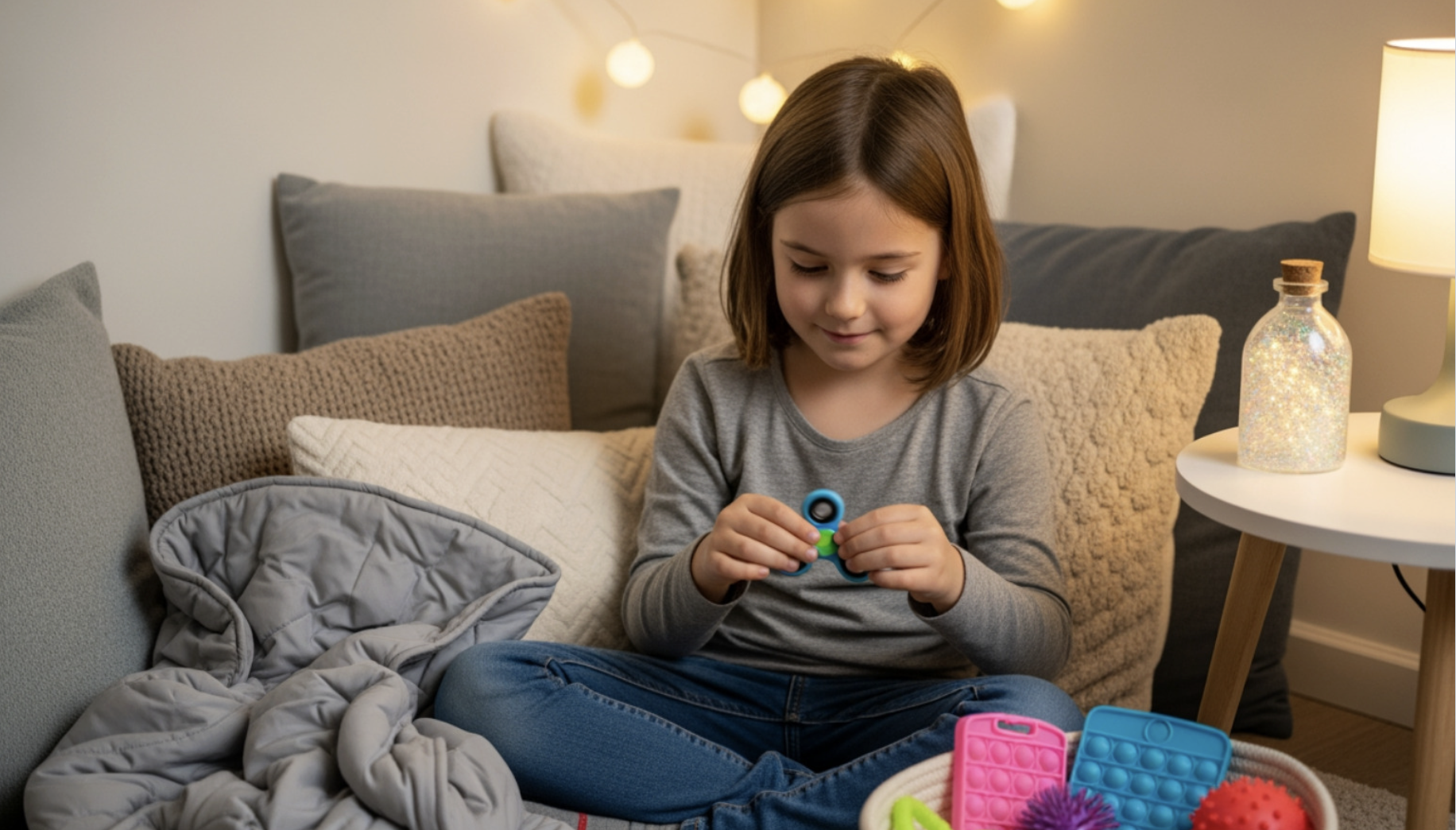
- Create a Safe Space - Guide your child to a calm-down area with sensory tools.
- Validate First - Acknowledge the emotion without judgment ("I see you're really upset").
Have you watched your child melt down over nothing, or go from zero to sixty in seconds? You're not alone. Emotional dysregulation is a difficulty managing emotions, and it's a common challenge when raising a child with ADHD, anxiety, or other neurodevelopmental differences.The good news? Behavior is communication. A dysregulated child's brain is signaling that it needs help calming down. By understanding what's happening in the nervous system, we can use science-backed strategies that work.I'm Dr. Roseann Capanna-Hodge, and for over 30 years, I've helped families steer emotional dysregulation with my Regulation First Parenting™ approach. I teach parents how to calm emotional dysregulation using natural, evidence-based methods that address the root cause.

Understanding the Storm: What is Emotional Dysregulation?
Emotional dysregulation is difficulty managing your emotions and reactions. Think of it as a volume knob for feelings that's stuck on high, making small triggers feel overwhelming. While all children have tantrums as a normal part of development, emotional dysregulation involves intense, frequent responses that interfere with daily life.When we see these reactions, behavior is communication. Your child isn't being difficult; their nervous system is signaling that it needs support.Signs of emotional dysregulation in children include:
- Outward outbursts: Shouting, intense crying, or aggressive behavior. They may get frustrated easily or say things they later regret.
- Inward responses: Shutting down, going numb, or dissociating (feeling detached from their body or emotions) when overwhelmed. Frequent dissociation warrants professional help.
The impact of emotional dysregulation can ripple through a child's life, straining friendships (Qashmer, 2023), contributing to anxiety and depression, and compromising school performance (Wong et al., 2023) by affecting executive functions like memory and self-control. If you see these signs, you’re not alone, and there are effective ways to learn how to calm emotional dysregulation.
What is Emotional Dysregulation and How Does it Affect My Child?
Emotional dysregulation is marked by rapid mood swings, heightened emotional intensity, and impulsive behavior. Unlike a typical childhood tantrum, which is often goal-oriented and brief ((Carlson et al., 2023).), a dysregulated episode is an overwhelming emotional storm that is disproportionate to the trigger and takes much longer to recover from.The underlying causes are complex and can include:
- Genetic factors: Some children are born with a more sensitive nervous system.
- Environmental influences: Trauma, chronic stress, or an invalidating environment where feelings are dismissed can hinder the development of regulation skills.
- Biological factors: Brain-based factors, including how the amygdala (emotion center) and prefrontal cortex (decision-making center) communicate, play a role.
- Psychological factors: A lack of early emotional skills training can lead to later difficulties.
Emotional dysregulation is a key feature of several conditions:
- ADHD: Often presents as difficulty managing frustration and impatience. Rejection Sensitive Dysphoria (RSD) is also common.
- Anxiety and Depression: Involves struggles with managing feelings of fear, sadness, or irritability.
- Autism Spectrum Disorder (ASD): Many individuals with ASD experience challenges with emotional regulation.
- Bipolar Disorder: Characterized by significant mood swings.
- PTSD: Heightened emotional responses are linked to past trauma.
Understanding these factors is the first step in learning how to calm emotional dysregulation and support your child.
Practical In-the-Moment Strategies for How to Calm Emotional Dysregulation
When your child is in an emotional storm, the primary goal is to help them find calm. Let’s calm the brain first.Co-regulation is one of the most powerful tools. As the parent, you remain calm to help your child's nervous system settle. Your calm presence is an anchor.Breathing exercises are simple and effective. Paced breathing, where the exhale is longer than the inhale (e.g., inhale for 4, exhale for 6), activates the body's calming response. Practice this together.

Grounding techniques redirect focus away from distressing emotions. A favorite is the 5-4-3-2-1 technique:
- 5-4-3-2-1 Grounding Steps:
- Name 5 things you can see.
- Name 4 things you can touch.
- Name 3 things you can hear.
- Name 2 things you can smell.
- Name 1 thing you can taste.
Another helpful tool is the STOP skill:
- Stop: Freeze. Don't react immediately.
- Take a step back: Create physical or mental distance.
- Observe: Notice what's happening inside and around you.
- Proceed mindfully: Choose your next action thoughtfully.
Creating a calm-down space provides a safe haven. Fill a comfortable corner with sensory tools like soft pillows, weighted blankets, or fidget toys. Guiding your child there when they're overwhelmed helps them regain control.
These strategies offer immediate relief and teach valuable skills for how to calm emotional dysregulation.
Building Resilience: Long-Term Solutions and Support
While in-the-moment strategies are crucial, long-term solutions that address the root cause are key to building resilience.

Dr. Roseann’s Science-Backed Approaches and Foundational Lifestyle Changes
At our center, we offer "game-changing solutions" that strengthen the brain's ability to regulate itself.
- Neurofeedback: This non-invasive technology trains the brain to self-regulate. Through real-time feedback, children learn to create calmer, more focused brainwave patterns, directly improving emotional control.
- Parent Coaching: Our Regulation First Parenting™ approach empowers you with tools to understand your child’s nervous system and create a supportive home environment.
- Mindfulness practices: Guided meditation and other mindfulness exercises teach children to observe their feelings without judgment, reducing impulsive reactions. The Calm app is a great resource for this.
- Somatic calming techniques: These body-based exercises, like deep breathing or stretching, release physical tension and shift the nervous system out of a fight-or-flight state.
Here's a quick comparison of these powerful tools:ApproachHow it Helps KidsBest ForNeurofeedbackDirectly trains brainwaves for better self-regulation, focus, and emotional control.Children with ADHD, anxiety, or chronic dysregulation where brain patterns need re-training.MindfulnessTeaches awareness of emotions without judgment and reduces reactivity.All children, especially those who feel overwhelmed or react impulsively.Somatic CalmingUses body-based exercises to quickly shift the nervous system from stress to calm.Children needing immediate de-escalation from intense emotional outbursts.Foundational lifestyle changes also play a critical role:
- Sleep: Quality sleep is non-negotiable for emotional stability. It helps the brain reset and process emotions.
- Nutrition: A balanced diet supports brain health and stable moods. Avoid excessive sugar and processed foods.
- Exercise: Regular physical activity is a powerful mood booster and provides a healthy outlet for tension.
We have much more information about our approach for an emotionally dysregulated child.

By integrating these approaches with healthy habits, we can help our children learn how to calm emotional dysregulation and thrive.
The Power of Connection: How to Build a Supportive Environment
Creating a supportive environment is essential for children learning how to calm emotional dysregulation.
- Identify emotional triggers: Help your child notice what situations provoke strong reactions. A journal can help track patterns so you can develop coping strategies.
- Develop coping plans: Create a personalized "crisis plan" with your child. Include warning signs, calming strategies, a safe space, and trusted contacts.
- Practice self-compassion (for parents): Supporting a child with dysregulation is exhausting. Treat yourself with kindness and recognize you're doing your best. You’re not alone.
- Validate your child’s feelings: Validation means acknowledging their feeling without judgment ("I see you're frustrated"). This helps your child feel understood and reduces emotional intensity. As Dan Siegel says, "if you can't name it, you can't tame it."
- Model healthy emotional expression: Our children learn by watching us. When we manage our own emotions in healthy ways, we teach them invaluable skills.
- Lean on your support system: Educate friends and family about emotional dysregulation so they can better understand and support you and your child.
Learning how to be a calmer parent is a journey. You can find more resources on how to be a calmer parent. By fostering connection and understanding, we create an environment where children can build lasting emotional resilience.Frequently Asked Questions
When should I seek professional help for my child?
Seek professional help if your child’s emotional dysregulation consistently impacts school, friendships, or home life. It’s especially important if you observe self-harming behaviors or if you, as a parent, feel overwhelmed. At Dr. Roseann, our solutions are designed to help families steer these challenges.
What is the difference between a tantrum and emotional dysregulation?
Tantrums are typically a brief, goal-oriented part of normal development. Emotional dysregulation involves intense, frequent, and prolonged emotional episodes that are disproportionate to the trigger and interfere with daily life. The key differences are intensity, frequency, and recovery time.
How can I best support my child through an emotional meltdown?
During a meltdown, stay calm to help your child co-regulate. Ensure their safety, use minimal words, and validate their feeling (“I see you’re very angry”). Offer comfort and guide them in deep breathing. After the storm passes, reconnect with warmth and reassurance.
What are some simple ways to help my child calm down in the moment?
In the moment, try the 5-4-3-2-1 grounding technique or paced breathing with long exhales. Offer a sensory tool like a fidget toy or guide them to a calm-down space. Your own calm presence is the most powerful tool.
How can I take care of myself while supporting my dysregulated child?
Practice self-compassion; you’re doing your best. Lean on your support system and remember, you’re not alone. Take short breaks to recharge. Caring for yourself is essential to caring for your child. If you’re consistently overwhelmed, seek professional guidance.
Citations
Carlson, G., Singh, M., Amaya-Jackson, L., Benton, T., Althoff, R., Bellonci, C., Bostic, J., Chua, J., Findling, R., Galanter, C., Gerson, R., Sorter, M., Stringaris, A., Waxmonsky, J., McClellan, J. (2023). Narrative review: impairing emotional outbursts: what they are and what we should do about them. J Am Acad Child Adolsc Psychi, 62(2):135-150. https://doi.org/10.1016/j.jaac.2022.03.014.Wong, T., Colasante, T., and Malti, T. (2023). A longitudinal examination of school-related and mental health mediators linking emotion regulation to academic achievement. J School Pscyhol, 101:101253. https://doi.org/10.1016/j.jsp.2023.101253.Qashmer, A. (2023). Emotion regulation among 4-6 year-old children and its association with their peer relationships in Jordan. Front Psychol, 14. https://doi.org/10.3389/fpsyg.2023.1180223
Always remember… “Calm Brain, Happy Family™”
Disclaimer: This article is not intended to give health advice, and it is recommended to consult with a physician before beginning any new wellness regimen. *The effectiveness of diagnosis and treatment varies by patient and condition. Dr. Roseann Capanna-Hodge, LLC, does not guarantee specific results.
Are you looking for SOLUTIONS for your struggling child or teen?
Dr. Roseann and her team are all about science-backed solutions, so you are in the right place!