%20.png)



Estimated reading time: 9 minutes
What if one overlooked mineral could shift your child from scattered to steady?
When your child can’t sit through homework without tears or drifts off during class, it’s tempting to blame willpower—or even yourself. But often, the issue isn’t effort or parenting… it’s brain chemistry.
That’s where magnesium comes in. This quiet powerhouse mineral helps regulate mood, calm stress, and sharpen attention. The catch? Not all forms of magnesium actually reach the brain to make a difference.
In this guide, we’ll uncover the best form of magnesium for concentration, why it matters for kids with ADHD, anxiety, and dysregulation, and how food and supplements can give your child’s focus the boost it needs.
Why Do Kids Struggle With Concentration Today?
Children today face a perfect storm of stressors: overstimulation from screens, rising anxiety, poor sleep, and diets low in essential nutrients. When the nervous system is under pressure, the brain’s ability to regulate focus, mood, and attention takes a hit.
- High stress depletes magnesium levels faster.
- Poor diet often means fewer magnesium-rich whole foods.
- Screen time dysregulates the dopamine pathway, making focus harder.
Can Magnesium Help With Focus and Attention?
Yes. Magnesium plays a central role in over 300 enzymatic reactions in the body—including those that regulate neurotransmitters, sleep, and stress hormones.
- Calm overactive stress responses (reduces cortisol).
- Balance dopamine, essential for attention and motivation.
- Support GABA, the brain’s “calm down” neurotransmitter.
- Improve sleep quality, which directly impacts focus.
Recent research backs this up even amongst children with Type I Diabetes. In a 2024 study, those with low magnesium levels (hypomagnesemia) had significantly more attention disorders and headaches compared to peers with normal magnesium levels (Dobrovolska et al., 2024).
This tells us magnesium isn’t just important—it may be essential for concentration.
Different Forms of Magnesium — and Which One Matters for Concentration
Not every magnesium supplement acts the same. Here’s a quick breakdown:
- Magnesium Oxide: Poorly absorbed, mainly used for constipation.
- Magnesium Citrate: Better absorbed, but often works as a laxative.
- Magnesium Sulfate: Common in Epsom salts for relaxation, not a long-term oral solution.
- Magnesium Glycinate: Highly bioavailable, gentle on the stomach, great for calming anxiety and focus.
- Magnesium L-Threonate: Crosses the blood-brain barrier, shown to support memory, learning, and attention.
While many forms benefit the body, only certain ones truly impact concentration and brain function.
Best Form Of Magnesium for Concentration
For children struggling with focus, the two standouts are:
- Magnesium Glycinate
- Calms an overactive nervous system
- Helps kids who are anxious, irritable, or dysregulated
- Gentle on digestion—important for sensitive kids
- Magnesium L-Threonate
- Only form that reliably crosses the blood-brain barrier
- Shown to support working memory and learning
- Great for kids with ADHD or school-related focus issues
“Magnesium deficiency can manifest as irritability, poor attention, or anxiety in children. Supplementing with the right form can make a meaningful difference in day-to-day function.” — Dr. Andrea Rosanoff, magnesium researcher
Parent Story:
Cris, mom of an 11-year-old with ADHD, noticed homework battles were less explosive after starting magnesium glycinate. “He still gets frustrated, but he’s calmer and can come back to the task after a short break,” she shared.
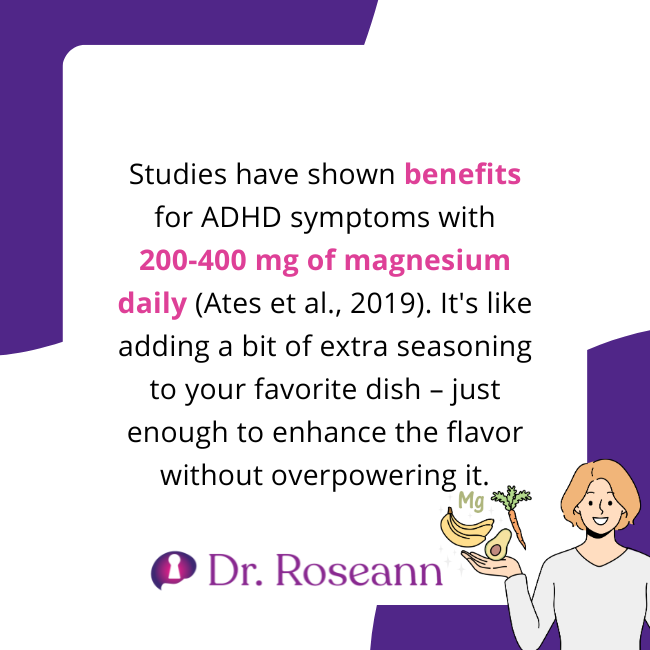
For kids already receiving ADHD treatment, magnesium may add another layer of support. In one double-blind clinical trial, children taking magnesium alongside their ADHD medication experienced reduced inattention and overall ADHD symptoms compared to those on medication alone (Noorazar et al., 2021).
This reinforces why parents should look closely at which form of magnesium they choose.
How Does Magnesium Support Kids With ADHD, Anxiety, or Dysregulation?
Magnesium isn’t a magic bullet, but it’s a foundation for a calmer, more regulated brain.
- ADHD: Helps balance dopamine pathways.
- Anxiety: Calms fight-or-flight responses.
- Dysregulation: Supports smoother transitions and reduces meltdowns.
- Sleep issues: Improves rest, which boosts attention during the day.
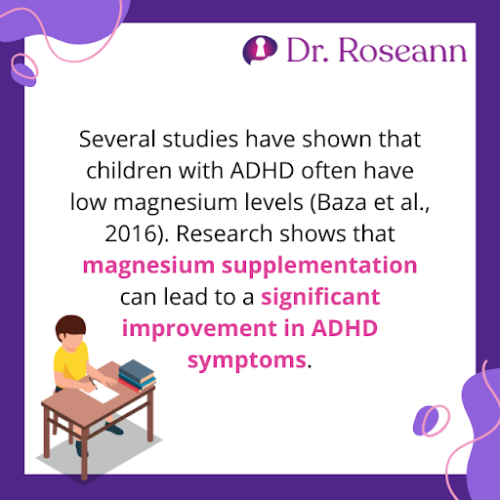
A 2024 review of ADHD research concluded that children with ADHD often have lower magnesium levels than their peers, and supplementation appears to help with symptom management—even if more rigorous studies are still needed (Smykiewicz, 2024).
While magnesium won’t replace therapy or medication, it can be a valuable foundation for calming the brain.
What Foods Are High In Magnesium for Better Focus?
While supplements help, food is always the best foundation. Some parent-friendly, kid-approved magnesium-rich foods include:
- Pumpkin seeds
- Almonds and cashews
- Dark chocolate (70% or higher)
- Leafy greens (spinach, kale)
- Bananas
- Beans and lentils
How To Choose The Right Magnesium Supplement?
When shopping for magnesium:
- Check the form: Look for glycinate or L-threonate for focus.
- Dosage matters: Kids need less than adults; follow pediatric guidance.
- Avoid fillers: Choose clean brands without dyes or artificial sweeteners.
- Pair with a healthy diet: Supplements should complement, not replace, food.
| Form of Magnesium | Absorption & Tolerance | Best For (Benefits) |
|---|---|---|
| Glycinate | High absorption, gentle on the stomach | Calming anxiety, improving focus, better sleep |
| L-Threonate | Crosses blood-brain barrier, moderate absorption | Boosting memory, learning, and concentration |
| Citrate | Good absorption but can cause loose stools | Occasional constipation, mild calming effect |
| Oxide | Poor absorption | Constipation only, not recommended for focus |
| Sulfate | Not for daily oral use, best in baths (Epsom salts) | Muscle relaxation, soothing stress through skin |
Are There Any Side Effects of Magnesium?
Magnesium is generally safe, but too much can cause:
- Loose stools or stomach upset
- Interactions with certain medications
Always start low, go slow, and talk with your child’s provider before starting new supplements.
Supporting your child’s focus doesn’t have to feel overwhelming. When you understand how nutrients like magnesium impact the brain, you gain powerful, natural tools to help them thrive.
For concentration, the best form of magnesium is usually glycinate or L-threonate—gentle, effective, and supportive of a calmer, more focused brain. Combine the right supplement with magnesium-rich foods, good sleep, and regulation strategies, and you’ll see your child’s capacity for attention grow.
Remember: It’s not bad parenting—it’s a dysregulated brain. With the right support, things can get better.
FAQs
Does magnesium work right away?
Some kids notice calmer moods within days; for others, it takes 2–4 weeks of consistent use.
Can magnesium replace ADHD medication?
No. Magnesium is supportive, not a substitute. It works best alongside therapies and strategies that calm the brain.
Is magnesium safe for daily use in kids?
Yes, when used at age-appropriate dosages. Always consult a provider before starting.
Terminology (Parent-Friendly Definitions)
- Bioavailability: How well a nutrient is absorbed and used by the body.
- Blood-brain barrier: Protective shield around the brain that only certain nutrients can cross.
- Neurotransmitters: Brain chemicals that control mood, focus, and behavior.
Citations:
Dobrovolska, L., and Boyarchuck, O. (2024). Magnesium intake and serum magnesium concentration in children with type 1 diabetes mellitus: association with glycemic control and clinical symptoms. Fron. Nutr., 11. https://doi.org/10.3389/fnut.2024.1477814
Smykiewicz, K., Michalczewska, A., Wierzejska, N., Pach, M., Nowak, A., Fugas, A., Chmielowiec, Z., Partyka, A., Dziedzic, M., and Dobrzanska, J. (2024). Magnesium as a potential complementary treatment for ADHD - a review of recent. J. Educ. Health and Sport. 68:50663. https://doi.org/10.12775/JEHS.2024.68.50663
Noorazar, S., Kalejahi, P., Setayesh, S., Amiri, S., and Yasamineh, N. (2021). The efficacy of magnesium supplementation in children with attention deficit hyperactivity disorder under treatment with methylphenidate: a randomized controlled trial. Cresc. J. Med. Biol. Sci., 8(1):73-76. Retrieved from https://www.cjmb.org/uploads/pdf/pdf_CJMB_480.pdf
Always remember… “Calm Brain, Happy Family™”
Disclaimer: This article is not intended to give health advice and it is recommended to consult with a physician before beginning any new wellness regime. The effectiveness of diagnosis and treatment vary by patient and condition. Dr. Roseann Capanna-Hodge, LLC does not guarantee certain results.
Are you looking for SOLUTIONS for your struggling child or teen?
Dr. Roseann and her team are all about science-backed solutions, so you are in the right place!

©Roseann Capanna-Hodge