
%20.png)



Estimated reading time: 8 minutes
There is a strong connection between highly sensitive children and anxiety, but being highly sensitive does not automatically mean a child will develop an anxiety disorder.
Highly sensitive children tend to process experiences deeply, notice subtle changes in their environment, and react more intensely to stress, criticism, transitions, or sensory input. Parents often find themselves wondering why their child seems emotionally overwhelmed by situations that appear manageable to others.
I’m Dr. Roseann Capanna-Hodge, and for over three decades I’ve helped families understand children who feel deeply and experience the world in a more intense way. I’ve worked with many highly sensitive kids who were described as overly emotional, clingy, perfectionistic, or easily overwhelmed when the real issue was a nervous system struggling to process stress effectively.
Sensitivity is not a weakness, but understanding how it affects emotional regulation can dramatically change how a child receives support.
What You’ll Learn:
- How to tell if your child is a highly sensitive child—and why that sensitivity often shows up as anxiety
- What’s really happening in your child’s nervous system when they feel overwhelmed, reactive, or stuck in fight-or-flight
- Simple, brain-based ways to support a highly sensitive child with anxiety and help them feel calmer and more in control
What Does It Mean to Be a Highly Sensitive Child?
Some kids are just wired differently. Not wrong—just different. Their nervous system picks up on things most of us miss.
That’s what we call high sensitivity—or what researchers call sensory processing sensitivity.
These kids feel more, think more, sense more. Their brain runs in high-definition—always on, always tuned in.
Dr. Elaine Aron, a pioneer in this field, found that highly sensitive people (HSPs) often share traits like:
- A rich inner world
- Sensitivity to lights, sounds, smells, textures, or temperature
- Intense emotional reactions
- Deep empathy for others
- Overwhelm in loud or unfamiliar places
- A strong need for downtime after stimulation
These aren’t flaws—they’re signs of a finely tuned brain.
Research using the HSP Scale found that sensitive individuals are more likely to experience:
- Ongoing stress
- Physical complaints like headaches or tummy aches
- Emotional overload in unpredictable or busy environments
Even when accounting for gender or baseline stress, sensitivity still predicted health challenges (Benham, 2006). That means this trait doesn’t just affect mood—it shapes how the body handles daily life.
Remember: A sensitive child’s brain isn’t “too much”—it just needs the right support. Without tools to regulate, that beautiful sensitivity can overwhelm their system and open the door to chronic anxiety and emotional dysregulation.
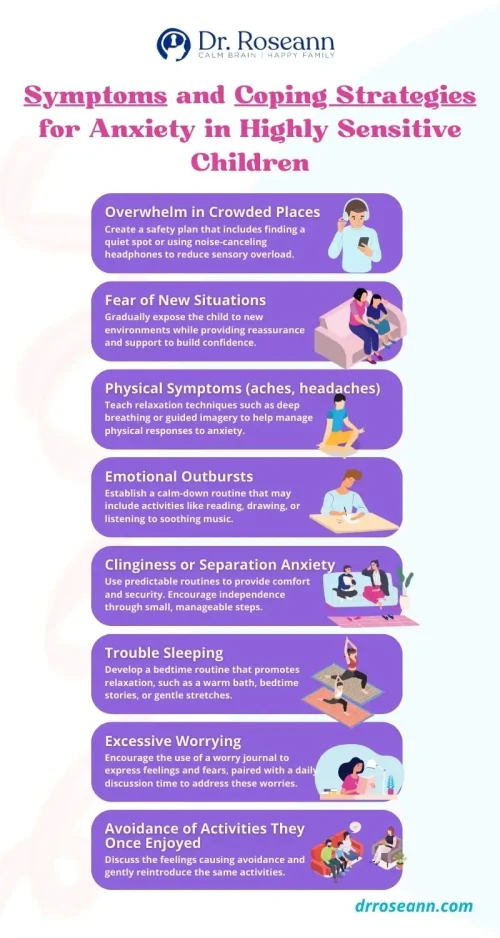
How Can You Tell If Your Child Is Highly Sensitive?
Wondering if your child might be highly sensitive? That first step—recognizing the signs—can make all the difference in how you support their emotional world.
Here are some common traits I often see in highly sensitive kids:
- They’re easily startled or seem on edge
- Emotional reactions feel big—sometimes out of nowhere
- They soak up other people’s feelings like a sponge
- Quiet spaces and predictable routines help them feel safe
- Changes, crowds, or new places can send them into shutdown or meltdown
- Worry pops up often—even when things seem fine
If this sounds familiar, you’re not alone. There are brain-based tools that help calm that internal chaos.
What you see as behavior is really brain dysregulation. And once we calm the brain, everything else starts to shift.

What’s Going On in a Highly Sensitive Child’s Nervous System?
When a sensitive child gets overwhelmed—by a loud noise, strong emotion, or even a bumpy sock—their brain flips into high alert. Their body acts like danger is near… even if everything looks “fine” from the outside.
That internal alarm? It’s not bad behavior. It’s nervous system dysregulation.
Here’s how it might show up:
- Intense meltdowns that seem to come out of nowhere
- Struggles with calming down after big feelings
- Avoiding or shutting down in noisy or unfamiliar places
- Sensory overload from bright lights, strong smells, or busy rooms
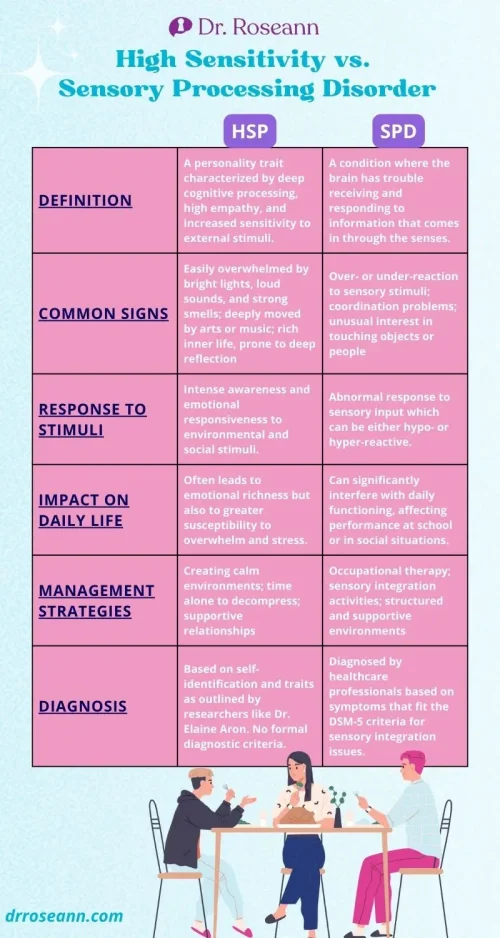
Many sensitive kids feel the world more deeply. For some, that intensity may turn into Sensory Processing Disorder (SPD)—where the brain struggles to sort and respond to all that incoming information. Even simple daily experiences can feel like too much.
That’s why occupational therapy can be life-changing. Sensory-trained therapists help kids:
- Tune into what overwhelm feels like in their body
- Use calming tools that actually work for their system
- Build tolerance gently, step by step, without forcing things
So why are some kids more sensitive than others? Experts believe it’s a blend of:
- Genetics – some kids are simply wired with a more reactive nervous system (Assary et al., 2021)
- Environment – early stress, trauma, or even illness can turn that sensitivity way up
Can Highly Sensitive Children Learn to Manage Anxiety?
Absolutely—highly sensitive kids can learn how to manage anxiety, emotional overwhelm, and even those day-to-day meltdowns. I’ve seen it again and again in my clinic working with children who feel everything more deeply.
These are the kids who seem “too much” to others. They notice every shift in tone, every flicker of emotion, and carry emotional radar like pros—though it can leave them exhausted and anxious.
But here’s the truth: that sensitivity isn’t a flaw. It’s a superpower—when their brain isn’t stuck in survival mode.
Once we stop reacting to surface-level behavior and start calming the nervous system underneath, everything begins to change.
Confidence grows. Anxiety fades. Emotional regulation improves. And yes, your own stress level comes down too.
Behavior is the symptom—brain regulation is the solution.
What Can Parents Do to Support a Highly Sensitive Child with Anxiety?
Parenting a highly sensitive child with anxiety can feel like walking a tightrope—but it’s also a gift.
These kids feel deeply, notice everything, and carry emotional radar most adults don’t even have (Kähkönen et al., 2024). With the right tools, they can learn to manage anxiety and thrive.
Here are six simple but powerful ways you can support your child’s sensitive brain:
1. Create a Safe Space
Home should feel like a nervous system recharging zone—calm, consistent, and predictable.
2. Validate Their Feelings
“Just calm down” doesn’t work—especially when their body feels like it’s on fire. Instead, you can say “I see you’re feeling overwhelmed” or “That must be really hard.”
It tells their brain: “You’re safe, you’re seen, you’re supported.” When we name the feeling, we tame the feeling.
3. Stick to Routines and Predictability
Routines help sensitive kids feel grounded. Give advance notice for changes—even small ones.
4. Teach Coping Skills That Stick
We’re not talking about just “taking deep breaths” and moving on. Kids need tools that work with their wiring.
Start with tiny shifts:
- Belly breathing through a straw
- Visualizing a calming color washing over them
- Five-sense grounding games
- Gentle movement or stretching
And here’s the secret: practice when they’re calm, not in the storm. That’s how these tools stick.
5. Get the Right Support When Needed
If anxiety starts affecting sleep, school, or relationships—it’s not “just a phase.” It’s a signal their brain needs more help.
Occupational therapy or a therapist trained in sensory or emotional regulation can help your child build real, lifelong skills that create calm from the inside out.
6. Celebrate Their Sensitivity as a Strength
They’re not “too much”—they’re beautifully wired. Empathy, creativity, deep thinking… all part of their magic. The more they see that, the more their confidence grows.
Helping Your Sensitive Child Starts with Calming the Brain
There is a strong link between highly sensitive children and anxiety. Once you stop chasing the behavior and start calming what’s underneath? Everything changes.
You’ll find more peace at home, and your child will begin to feel safer and more in control.
Want a gentle, brain-based place to start? Download the Natural Anxiety Relief Kit and give your child tools that work with—not against—their sensitive wiring.
Let’s unlock their potential one regulated step at a time.
Parent Action Steps
☐ Take our Solution Matcher to get science-backed solutions to help your child today. Validate your child’s emotions without judgment. Teach your child simple, sensory-friendly coping tools. Focus on calming the nervous system first. Learn more about the Brain
☐ Behavior
☐ Reset™ Program.
FAQs
Why is my child so highly sensitive and anxious?
Some kids are just wired with a more sensitive nervous system—they feel things deeply and react quickly. When that system gets overwhelmed, that high sensitivity can easily show up as anxiety.
How does sensory processing affect anxiety in highly sensitive children?
When a highly sensitive child has trouble filtering sounds, lights, or textures, their brain can get overloaded fast. That sensory overload often fuels anxiety, which is why calming the body helps so much.
How can I help my highly sensitive child feel less anxious in social situations?
The best way to help your highly sensitive child with anxiety in social situations is to prep them ahead of time and keep things small and predictable. A little structure and a safe exit plan can go a long way.
When should I worry about anxiety in my highly sensitive child?
It’s time to pay closer attention when your child’s anxiety starts getting in the way of daily life—like school, sleep, or friendships. If it feels like they’re stuck in it, they probably need more support.
Is anxiety more common in highly sensitive children?
Yes, anxiety is more common in highly sensitive children because their nervous system reacts more quickly and intensely. They notice everything—which can make the world feel like a lot.
What are the signs of anxiety in a highly sensitive child?
Signs of anxiety in a highly sensitive child can look like avoiding new things, big emotional reactions, frequent “tummy aches,” or needing lots of reassurance. Their anxiety usually shows up in both behavior and the body.
Can a highly sensitive child outgrow anxiety?
Highly sensitive kids don’t outgrow their sensitivity—but they can learn to handle anxiety really well. With the right tools and support, they become incredibly resilient.
Citations
Assary, E., Zavos, H. M. S., Krapohl, E., Keers, R., & Pluess, M. (2021). Genetic architecture of Environmental Sensitivity reflects multiple heritable components: a twin study with adolescents. Molecular psychiatry, 26(9), 4896–4904. https://doi.org/10.1038/s41380-020-0783-8
Benham, G. (2006). The Highly Sensitive Person: Stress and physical symptom reports. Personality and Individual Differences, 40(7), 1433–1440. https://doi.org/10.1016/j.paid.2005.11.021
Kähkönen, J. E., Lionetti, F., Castelli, L., & Pluess, M. (2024). Development and validation of the highly sensitive child interview for the assessment of environmental sensitivity in primary school children. Personality and Individual Differences, 222, 112592. https://doi.org/10.1016/j.paid.2024.112592
Dr. Roseann is a mental health expert in anxiety who frequently is in the media:
- CBS2 New York (Article) Experts Offer Tips On How To Help Children Deal With Anxiety.
- Reconditioned with Laurie Vaknine (Podcast) Managing Anxiety & Mental Health in Children.
- Sparking Wholeness (Audio) Parenting Anxious Kids.
- The Happy Student (Podcast) Stress and Anxiety 101.
Always remember... “Calm Brain, Happy Family™”
Disclaimer: This article is not intended to give health advice and it is recommended to consult with a physician before beginning any new wellness regime. *The effectiveness of diagnosis and treatment vary by patient and condition. Dr. Roseann Capanna-Hodge, LLC does not guarantee certain results.
Are you looking for SOLUTIONS for your struggling child or teen?
Dr. Roseann and her team are all about science-backed solutions, so you are in the right place!

© Roseann-Capanna-Hodge, LLC 2024