%20.png)



Estimated reading time: 9 minutes
If you're a parent watching your child struggle daily—overwhelmed by simple tasks, melting down over minor setbacks, or unable to "just calm down"—you're not alone. What you're witnessing isn't defiance; it's likely dysregulated nervous system ADHD. This is a state where the brain and body are stuck in survival mode, affecting focus, behavior, and emotions.
Key points about a dysregulated nervous system in ADHD:
- The nervous system gets stuck in fight, flight, or freeze mode.
- ADHD brains are wired for interest, not importance, making routine tasks feel impossible.
- Dopamine imbalances impact motivation, impulse control, and emotional regulation.
- The brain's emotion center (amygdala) overreacts, flooding your child with unmanageable feelings.
- Symptoms include restlessness, meltdowns, task paralysis, fatigue, and hypersensitivity.
- Regulation is possible through targeted strategies that calm the brain and body.
Many children with ADHD live in a state of chronic dysregulation, experiencing lifelong overwhelm, anxiety, and emotional hypersensitivity. Their behavior is communication, signaling that their nervous system is stuck in survival mode. Understanding the "why" behind these struggles is transformative. When you see that ADHD brain wiring affects the entire nervous system, you can shift from ineffective strategies to solutions that truly help.
I'm Dr. Roseann Capanna-Hodge, and for over 30 years, I've helped families steer dysregulated nervous system ADHD with science-backed, natural approaches. My work focuses on calming the brain first, so kids can focus, learn, and thrive. I've seen how understanding nervous system dysregulation can change not just a child's behavior, but the entire family dynamic.

The ADHD Brain on High Alert: Understanding the Dysregulated Nervous System in ADHD
I remember Leo, 8: after school he explodes, and rewards or reminders don’t help. It isn’t willpower - it’s his ADHD nervous system running hot. Here, we’ll contrast neurotypical and ADHD wiring to show why old advice falls short - and what practical steps actually calm, focus, and support.
The Science Behind the Struggle: Dopamine, the Frontal Lobe, and ADHD
At the heart of dysregulated nervous system ADHD is a unique brain wiring. It's not broken, just different.
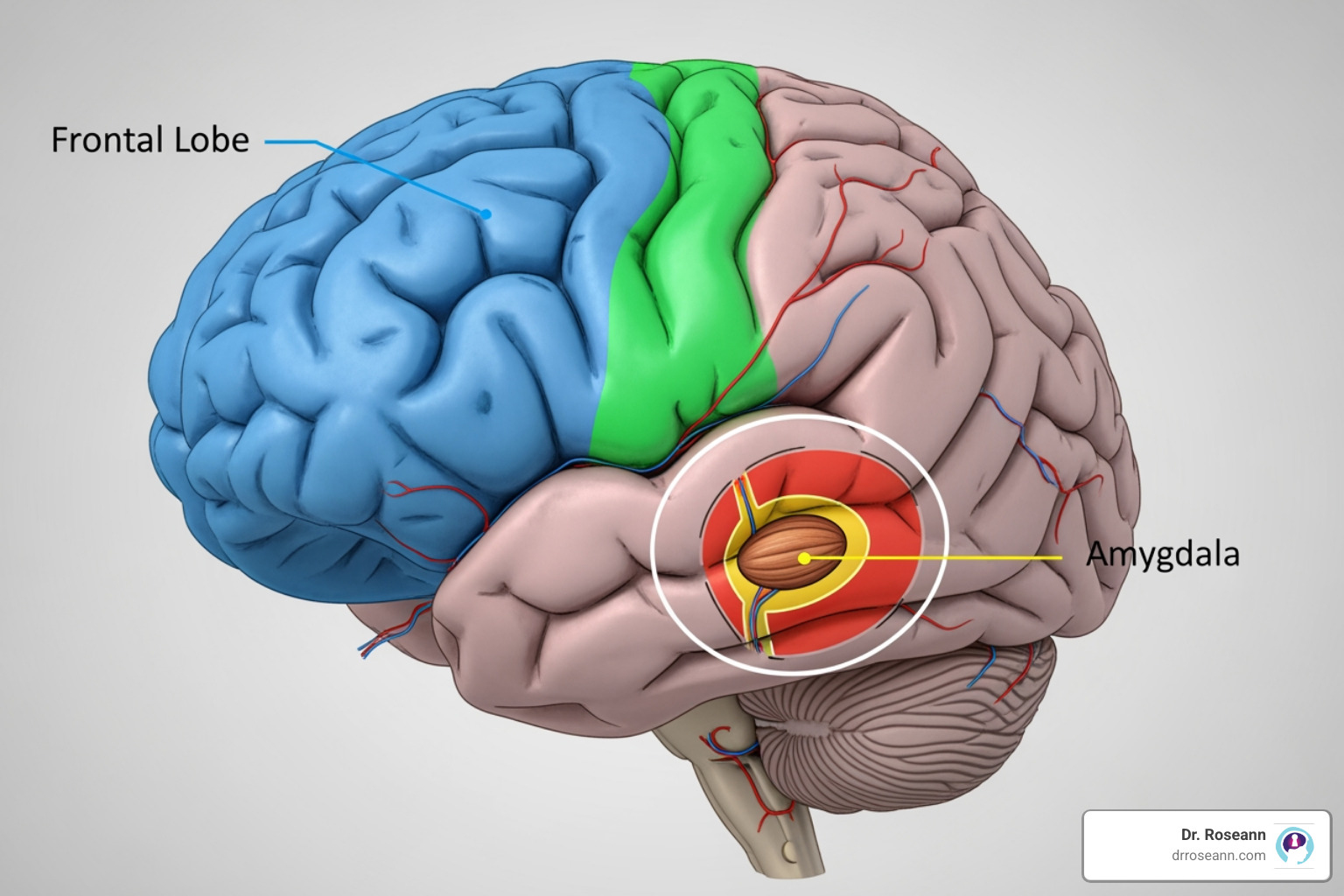
- Dopamine and Norepinephrine Imbalances: In ADHD, imbalances in these key neurotransmitters affect motivation, attention, and impulse control. The brain constantly seeks stimulation to feel regulated, leading to struggles with focus and energy management.
- The Frontal Lobe and Executive Function: The brain's command center for planning, organizing, and decision-making may function less efficiently in ADHD. When these executive functions are weak, the nervous system can easily become overwhelmed by daily demands.
- The Amygdala and Emotional Intensity: The amygdala, the brain's emotion center, can be overactive in ADHD. This leads to intense, rapid emotional shifts (emotional lability) and a heightened fight-or-flight response. Minor stressors can trigger major emotional floods, pushing the nervous system into hyperarousal.
Scientific research on the cognitive neuroscience of ADHD (Rubia, 2018) confirms these interconnected neurological differences. Genetics, environment, and common co-occurring issues like sensory processing sensitivities also contribute to nervous system dysregulation. Understanding this helps us see that our children aren't being difficult; their brains are struggling to cope.
Fight, Flight, or Freeze: How the ADHD Brain Gets Stuck
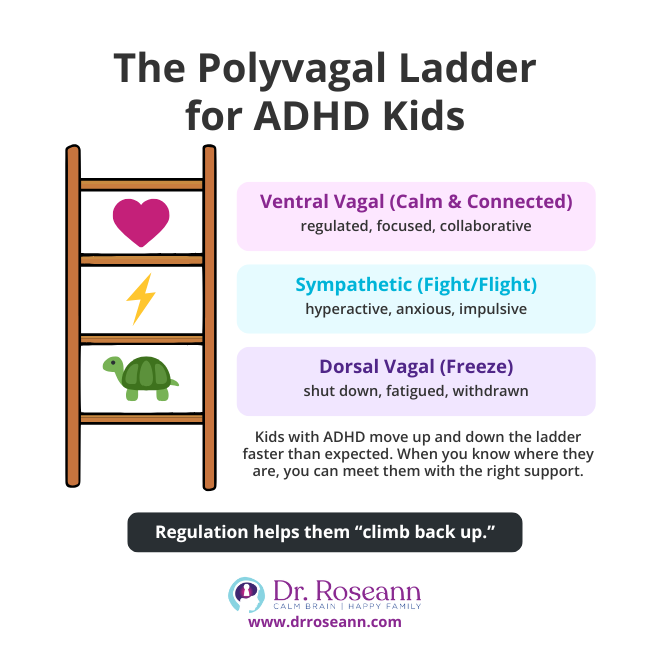
A dysregulated nervous system in ADHD is often stuck in a survival loop (Bellato et al., 2023). Polyvagal Theory helps explain this through three states of our nervous system:
- Ventral Vagal (Safe & Social): The ideal state. We feel calm, connected, and ready to learn and engage.
- Sympathetic (Fight or Flight): Activated by perceived threats. This leads to anxiety, irritability, and restlessness. For many with ADHD, this is a default setting, causing chronic hyper-alertness.
- Dorsal Vagal (Freeze or Shutdown): A primitive defense when fight/flight is overwhelming. It results in numbness, withdrawal, and task paralysis—a "functional freeze."
Children with ADHD often get stuck in the fight/flight or freeze states due to their brain wiring, past negative experiences, and the constant stress of navigating a world not built for them. This makes it hard to return to a calm, regulated state. Recognizing these states helps us see that lashing out (fight), avoiding a task (flight), or shutting down (freeze) isn't a choice—it's a nervous system trying to protect itself.
Here’s how ADHD symptoms can overlap with nervous system dysregulation:
Symptom CategoryADHD Symptoms (Primary)Nervous System Dysregulation Symptoms (Often Secondary/Exacerbated)AttentionDifficulty sustaining focus, easily distractedDifficulty maintaining focus (due to hyperarousal or shutdown)ImpulsivityActs without thinking, interrupts othersDifficulty regulating impulses (due to heightened arousal)HyperactivityFidgeting, restlessness, excessive talkingRestlessness, inability to sit still (sympathetic overdrive)Emotional Reg.Emotional lability, quick temper, frustration intoleranceIntense emotional fluctuations, hypersensitivity, chronic anxietyEnergy LevelsFluctuating energy, often hyperactiveChronic fatigue, exhaustion, inability to switch offPhysical SymptomsMinor physical complaints (e.g., headaches from tension)Chronic pain, sleep problems, digestive issues, heightened sensitivity to stimuliSocial InteractionDifficulty with social cues, interruptingWithdrawal, detachment (dorsal vagal), irritability (sympathetic)Executive FunctionTask initiation, organization, planningTask paralysis, overwhelm, difficulty with decision-making
Interest vs. Importance: The Unique Wiring of the ADHD Nervous System
Advice like, "Just prioritize," often fails for kids with ADHD because their nervous system runs on a different motivational fuel. ADHD expert William Dodson describes this as an interest-based nervous system, contrasting with the more common "importance-based" system.
- Importance-Based System (Neurotypical): Motivation is driven by a task's perceived importance, rewards, or consequences.
- Interest-Based System (ADHD): Motivation is sparked by interest, novelty, challenge, or urgency. Without this engagement, the brain struggles to produce the dopamine needed to start or finish a task, no matter how "important" it is. This isn't a lack of willpower; it's a neurological reality.
This explains why a child can hyperfocus on a passion project but can't start a 10-minute chore. Their brain can't access the motivation for something uninteresting, which is often misinterpreted as laziness.
Practical Ways to Calm a Dysregulated Nervous System with ADHD
The good news is we can help our children learn to regulate their nervous systems. It starts with tools that work with their brain, not against it. As I always say, “Let’s calm the brain first.”

1. Identify 'Triggers' and 'Glimmers'
Become a detective of your child's nervous system. Triggers are things that push them into a stress state (e.g., sensory overload, hunger). Glimmers are small things that make them feel safe and calm (e.g., a warm hug, a favorite song). Identifying these is the first step toward self-regulation.
2. Use Somatic (Body-Based) Tools
Engage the body to send safety signals to the brain. Try these simple but powerful practices:
- Deep Breathing: Techniques like the 4-7-8 breathing exercise activate the calming part of the nervous system.
- Movement: Any form of exercise—running, jumping, stretching—releases stored tension and regulates the system.
- Cold Exposure: Splashing cold water on the face or a quick cold rinse in the shower can calm the stress response.
- Sound and Touch: Humming, singing, or laughing stimulates the vagus nerve. Mindful touch, like a gentle arm rub (Havening), can boost serotonin and create a sense of safety.
3. Reduce Tech Overload
Constant digital stimulation can overexcite a sensitive nervous system (Satani et al., 2025). Help by turning off notifications, creating screen-free times (especially morning and night), and encouraging mindful tech use.
4. Use 'Brain Hacks' for the Interest-Based Brain
Make tasks more appealing to the ADHD brain:
- Make it Interesting: Connect tasks to a passion or use fun supplies.
- Gamify it: Turn chores into a challenge or a game against the clock.
- Add Novelty: Change the environment or listen to music while working.
- Body-Double: Simply working alongside your child can provide the motivation they need to get started and stay on task.
Finding Calm in the Chaos: Your Path to Supporting Your Child
Parenting a child with dysregulated nervous system ADHD is challenging, but there is always hope and a clear path forward. Understanding that your child's struggles stem from a nervous system on high alert is the first step toward empowerment. It shifts the narrative from "what's wrong with my child?" to "how can I support their unique nervous system?" You're not alone; their system is simply doing its best to cope.
Consistent, gentle practices can help reset the nervous system, gradually expanding your child's ability to handle stress. Professional support can also be a game-changer. Therapies like neurofeedback, a non-invasive approach that trains the brain to self-regulate, directly address the brain dysregulation in ADHD. Our practice, Dr. Roseann, offers specialized programs that deliver rapid results where other treatments have failed, helping children in Ridgefield CT, Connecticut, and worldwide. We focus on natural treatments that calm the brain first.
This journey is about building resilience, fostering connection, and helping your child open up their potential by creating a calmer internal world.
Frequently Asked Questions
Can you “fix” a dysregulated nervous system in ADHD?
No, you can’t “fix” it, but you can teach the brain and body to become more regulated. Through consistent calming strategies, lifestyle changes, and therapies like Neurofeedback for ADHD, your child can learn to move out of survival mode and into a calm, focused state. It’s about building resilience, not finding a cure.
Is nervous system dysregulation the same as a sensory processing disorder?
They are closely related but not identical. Sensory Processing Disorder (SPD) involves the brain struggling to process sensory information and can be a major trigger for nervous system dysregulation. However, you can have a dysregulated system without having SPD.
How can I tell if my child’s behavior is ADHD or just a bad mood?
Look for patterns. A bad mood is often temporary and tied to a specific event. Dysregulation in ADHD is a more chronic state, showing up as consistent over-reactions, an inability to calm down, or zoning out. Behavior is communication—it’s telling you their nervous system is overwhelmed.
What is the first step to help my dysregulated child?
The first step is co-regulation. Your calm presence is your most powerful tool. Get on their level, use a soft voice, and validate their feelings (“I see you’re having a hard time”). Don’t try to reason with them in the moment. Your job is to be a safe anchor until the storm passes.
Citations
Bellato, A., Wiersema, J., and Groom, M. (2023). Autonomic nervous system functioning in ADHD. In, Matson, J (ed.) Clinical Handbook of ADHD Assessment and Treatment Across the Lifespan. Springer Cham, 37-75. https://doi.org/10.1007/978-3-031-41709-2_3.
Rubia, K. (2018). Cognitive neuroscience of Attentions Decifict Hyperactivity Disorder (ADHD) and it's clinical translation. Front Hum Neurosci, 12(100). https://doi.org/10.3389/fnhuman.2018.00100.
Satani, A., Satani, KK., Barodia, P., and Joshi, H. (2025). Modern day high: the neurocognitive impact of social media usage. Cureus, 17(7):e87496. https://doi.org/10.7759/cureus.87496.
Always remember… “Calm Brain, Happy Family™”
Disclaimer: This article is not intended to give health advice and it is recommended to consult with a physician before beginning any new wellness regime. *The effectiveness of diagnosis and treatment vary by patient and condition. Dr. Roseann Capanna-Hodge, LLC does not guarantee certain results.
Are you looking for SOLUTIONS for your struggling child or teen?
Dr. Roseann and her team are all about science-backed solutions, so you are in the right place!
Meet the Expert
Licensed Therapist | Certified School Psychologist
Board Certified in Neurofeedback (BCN) | 30+ Years Clinical Experience
Expert in Emotional Dysregulation in Children and Nervous System Regulation
Host, Dysregulated Kids Podcast | Author, The Dysregulated Kid
Dr. Roseann Capanna-Hodge is a licensed therapist, certified school psychologist, and leading expert in emotional dysregulation in children and nervous system regulation. With over 30 years of clinical experience and having analyzed more than 10,000 brain maps, she helps families understand what behavior is really signaling—and how to calm the nervous system first so real change can happen.
She is the creator of Regulation First Parenting™ and the CALMS Protocol™, host of the top 1% podcast Dysregulated Kids, and author of The Dysregulated Kid.