%20.png)



Estimated reading time: 19 minutes
Some mornings start with slammed doors, tears over small frustrations, or a child who simply can’t seem to calm down no matter what you try. When dysregulated behavior in kids shows up day after day—whether it looks like meltdowns, impulsivity, anxiety, explosive reactions, or emotional shutdowns—it can leave even the most patient parent feeling overwhelmed and unsure of what to do next.
What many families don’t realize is that these reactions are rarely a sign of bad behavior or poor parenting. Instead, they are often signals of a dysregulated nervous system—a brain and body that are struggling to manage stress, emotions, and sensory input.
When children are dysregulated, they aren’t giving you a hard time—they’re having a hard time.
The encouraging news is that emotional regulation can be supported and strengthened.
I’m Dr. Roseann Capanna-Hodge, and for more than three decades I’ve worked with families to uncover the root causes of dysregulated behavior in kids and apply science-backed strategies that truly help. In this guide, we’ll look at what’s really happening beneath the behavior, walk through the signs your child’s nervous system is dysregulated, what causes dysregulation in kids, and practical ways you can help your child develop stronger self-regulation skills.
Key Takeaways
- Dysregulated behavior in kids often reflects a dysregulated nervous system, not intentional misbehavior.
- Regulation must come before correction—children learn best when their brain feels calm and safe.
- Emotional dysregulation can look different from child to child.
- Children learn regulation first through co-regulation with a trusted adult.
- Dysregulation may be linked to ADHD, anxiety, sensory issues, trauma, sleep disruption, or stress.
With the right support and strategies, children can strengthen their emotional regulation skills over time.
What Is a Dysregulated Nervous System?
Many parents hear the phrase “dysregulated nervous system” but are not always sure what it actually means.
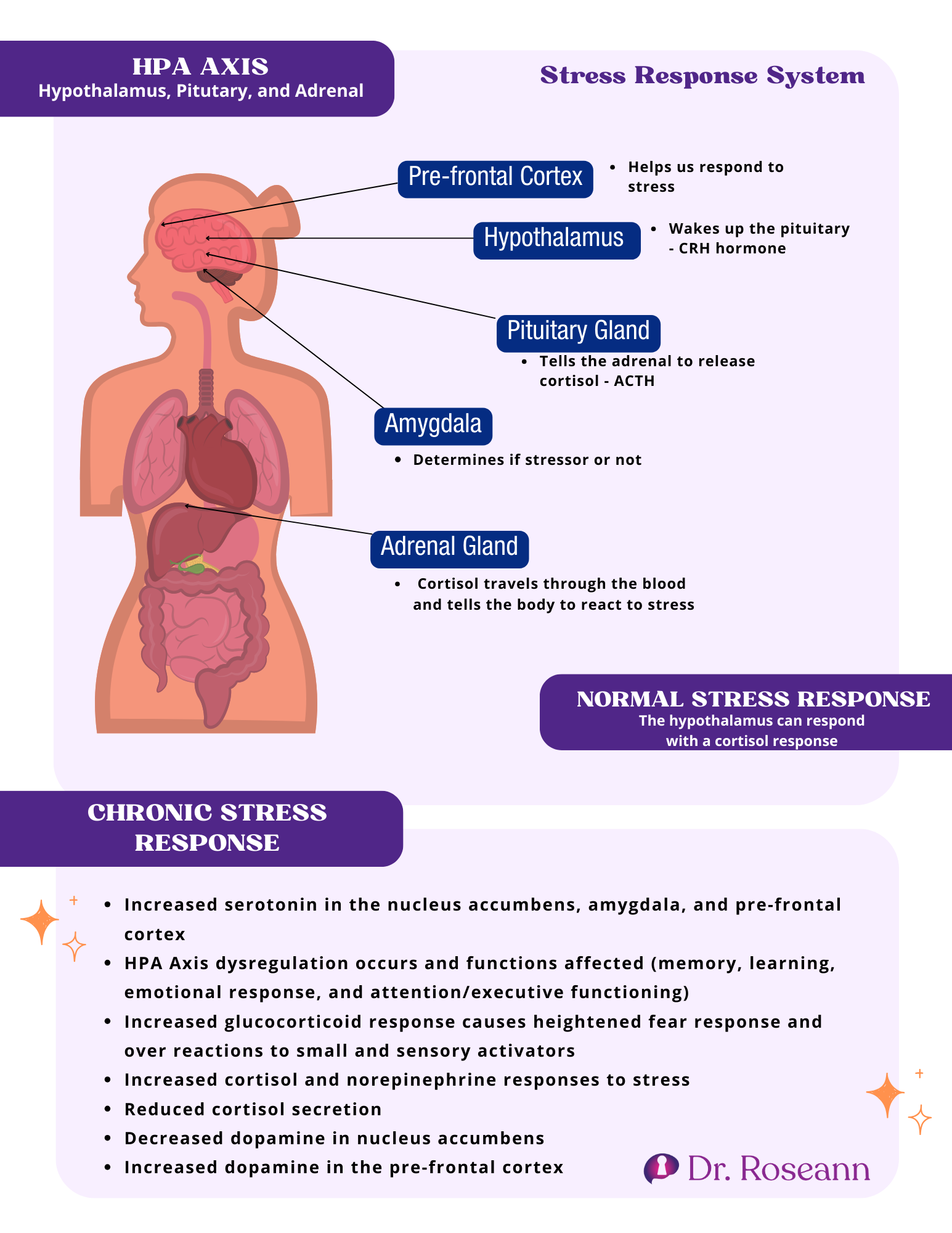
A dysregulated nervous system occurs when the brain’s stress response system becomes stuck in a state of activation or shutdown. Instead of smoothly shifting between calm, alert, and recovery states, the body remains on high alert or struggles to return to balance after stress.
In children, this can look like:
- intense emotional reactions
- difficulty calming down
- impulsive behavior
- anxiety or shutdown
- sensory overwhelm
When the nervous system is dysregulated, the brain interprets everyday experiences as threats. This causes the body to activate survival responses such as fight, flight, or freeze—even when no real danger is present.
Understanding this biological process helps parents shift their mindset. Instead of asking “Why is my child acting this way?” the better question becomes:
“What is my child’s nervous system trying to communicate?”
What Dysregulated Behavior in Kids Really Means
To understand dysregulated behavior, we first need to understand self-regulation.
Self-regulation is the ability to manage emotions, thoughts, and behaviors in response to internal and external experiences. It helps children pause before reacting, tolerate frustration, adapt to change, and recover after stress.
Children who struggle with self-regulation may experience what feels like overwhelming emotions or body sensations. Instead of pausing or problem-solving, their brain quickly shifts into a fight-or-flight response.
This happens because the child’s nervous system becomes overwhelmed and shifts into survival mode.
When that happens:
- emotional reactions become stronger
- impulse control decreases
- reasoning becomes harder
- recovery takes longer
A child with a dysregulated nervous system is not choosing chaos—their brain is struggling to manage stress signals.
Signs of a Dysregulated Nervous System in Kids
Many parents wonder how to know if your nervous system is dysregulated, especially in children who cannot always explain what they feel.
Understanding the signs of a dysregulated nervous system helps parents recognize when behavior is really a signal from the brain.
Common Dysregulated Nervous System Symptoms
Some of the most common dysregulated nervous system symptoms include:
- Frequent mood swings or intense emotional outbursts or reactions to minor events
- Emotionally volatile or has emotional outbursts
- Poor emotional control
- Difficulty managing anger and frustration, leading to verbal or physical outbursts
- Poor impulse control, leading to impulsive and reckless behaviors
- Difficulty with transitions and changes in routine, leading to resistance or oppositional behavior
- Difficulty with self-regulation, such as calming down or self-soothing when upset
- Difficulty paying attention and staying focused, leading to academic difficulties and poor performance
- Difficulty with social skills, such as making and maintaining friendships
- Always saying, “No” before saying “yes” to something
- Non-compliant behaviors
- Poor sleep habits or disrupted sleep patterns
- Sensory processing issues or sensory reactivity
- Cognitive dysregulation, poor mental control and problems with attention
- Physical symptoms such as stomachaches, headaches, or muscle tension in response to stress.
- difficulty focusing or transitioning
These are often described as emotionally dysregulated symptoms, because the child’s emotional system is struggling to stay balanced.
When these patterns happen regularly, they may represent symptoms of dysregulated nervous system functioning, rather than typical childhood frustration.
What Dysregulation Looks Like in Children
Dysregulation can show up in different ways depending on the child.
Some children externalize their distress. Others internalize it.
Both patterns can reflect the same underlying issue: a nervous system struggling to regulate.
What Causes a Dysregulated Nervous System in Children?
Parents often ask what causes a dysregulated nervous system. Usually, there isn’t just one cause. Instead, dysregulation develops from a combination of biological sensitivity, environmental stress, and developmental factors.
Common contributors include:
- ADHD
- anxiety disorders
- autism
- sensory processing challenges
- trauma
- chronic stress
- sleep disruption
- learning differences
- nutritional imbalances
- environmental factors
Some children are also considered a highly sensitive child, meaning they process sensory and emotional input more deeply than others.
For these children, everyday stressors—noise, transitions, emotional tension—can easily overwhelm the brain.
Over time, this can lead to an overactive nervous system, where the brain remains on high alert even when no real threat exists.
Common Triggers That Dysregulate a Child’s Nervous System
Understanding triggers helps parents recognize what causes a dysregulated nervous system in everyday life.
Common triggers include:
Physical Triggers
- hunger
- sleep deprivation
- illness
- sensory overload
- dehydration
- lack of movement
Emotional Triggers
- frustration
- embarrassment
- criticism
- social rejection
- performance pressure
Environmental Triggers
- loud classrooms
- chaotic homes
- schedule changes
- transitions
- overstimulation
Cognitive Triggers
- difficult schoolwork
- executive functioning demands
- unclear expectations
Screen Time and Device Dysregulationᵀᴹ
Another main trigger many parents notice today is screen exposure.
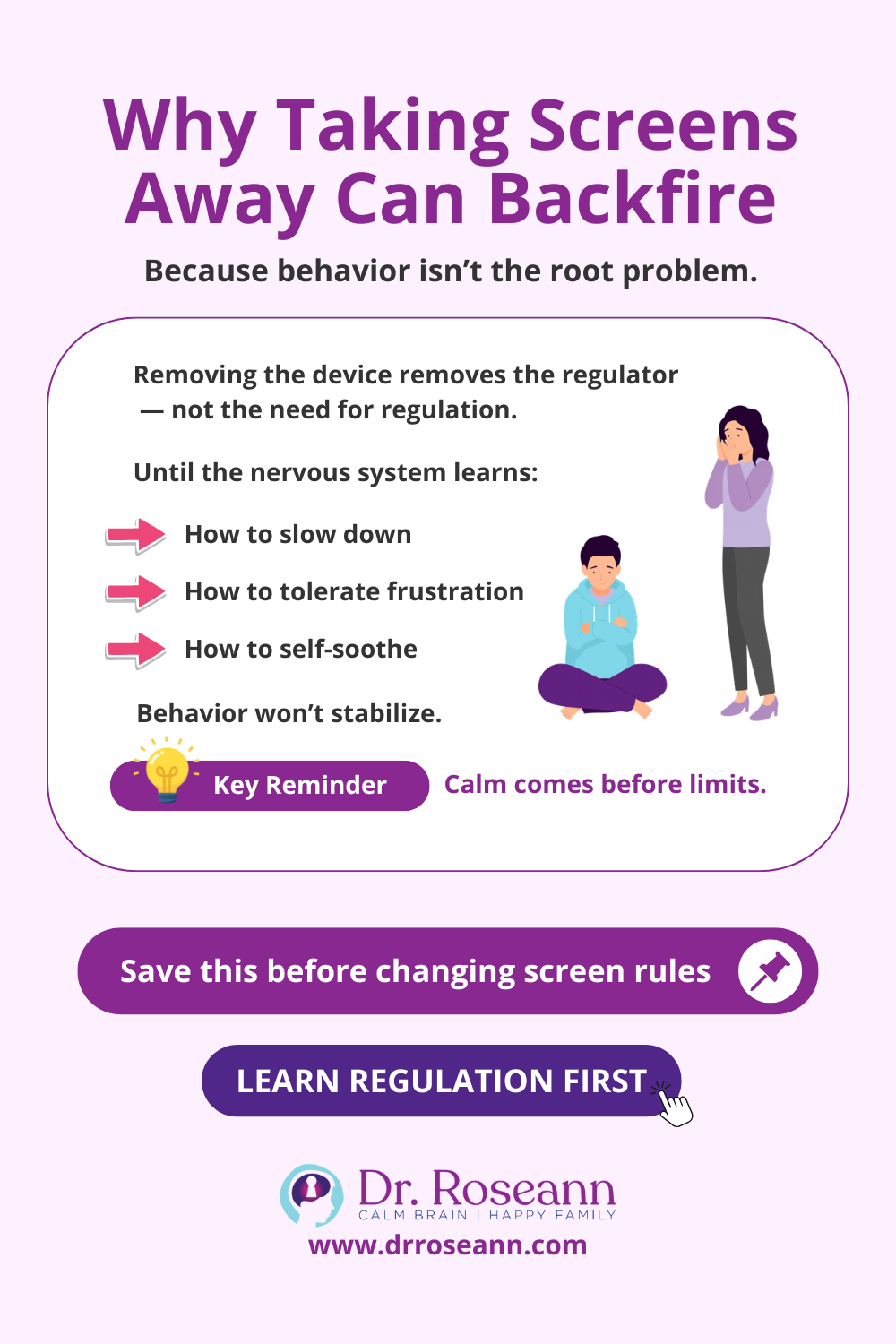
Device Dysregulationᵀᴹ happens when fast-paced digital content overstimulates a child’s brain and nervous system. Highly stimulating games, videos, and constant notifications can keep the brain in a heightened alert state, making it harder for children to transition away from screens or calm down afterward.
For some kids, especially those with sensitive or already stressed nervous systems, too much screen time stimulation can lead to irritability, emotional outbursts, difficulty transitioning, and sleep disruption.
When parents identify patterns, they can intervene earlier—before the child reaches full dysregulation.
.png)
To understand why these triggers affect children so strongly, it helps to look at how the brain processes stress and emotions.
The Brain and Emotional Regulation
Emotional regulation depends on several parts of the brain working together.
Key brain regions include:
- Amygdala – processes fear and emotional reactions
- Prefrontal cortex – manages impulse control and reasoning
- Hippocampus – processes memory and emotional meaning
When a child is regulated, the prefrontal cortex helps calm emotional responses.
But when stress overwhelms the brain, the amygdala takes over and the nervous system shifts into survival mode.
This is why dysregulated children may:
- react quickly
- struggle to think clearly
- have difficulty calming down
Supporting regulation means helping the nervous system move out of survival mode.
The Three Nervous System States in Children
To understand how to calm a dysregulated nervous system, it helps to understand the three states the nervous system moves between.
Both states represent a dysregulated nervous system, but they show up differently.
How Self-Regulation Develops in Children
Self-regulation is not something children are born knowing how to do. Rather, it develops gradually. As children grow and develop, their emotional regulation skills begin to mature and become more refined.
Early Childhood
In the early years, infants and toddlers rely on their caregivers to help them regulate their emotions (known as co-regulation). They have not yet developed the cognitive and emotional tools necessary to manage their own emotions.
Preschool Years
As children enter the preschool years, they begin to develop some basic emotional regulation skills. Children begin learning early coping skills such as:
- labeling emotions
- asking for help
- self-soothing behaviors (i.e. thumb-sucking, holding their favorite toy)
School-Age Years
As children move into the school-age years, their emotional regulation skills become more complex.
Children develop more advanced skills:
- problem solving
- emotional awareness
- frustration tolerance
Adolescence
Throughout adolescence, emotional regulation skills continue to develop as the prefrontal cortex matures.
Adolescents may learn or exhibit:
- Cognitive reappraisal
- Positive self-talk
- Better self-awareness
It’s important to note that emotional regulation skills continue to develop into early adulthood, with the prefrontal cortex (the part of the brain responsible for executive functioning and emotional control) continuing to develop well into the mid-20s. Those with emotional regulation issues have poor impulse control and typically poor executive functioning.
This means that young adults may still be developing and refining their emotional regulation skills, which highlights the importance of ongoing support and education around emotional regulation throughout childhood and adolescence.
.png)
What Does the Research Say About Self-Regulation and Mental Health?
A growing body of research shows that self-regulation plays a major role in children’s emotional development, academic success, and long-term mental health. When children struggle with regulation—often due to a dysregulated nervous system—they may have more difficulty managing stress, emotions, and behavior.
Recent studies highlight several important findings:
- Self-regulation predicts long-term mental health outcomes.
- Research shows that children who develop stronger emotional regulation skills are less likely to experience anxiety, depression, and behavioral challenges later in adolescence. Emotional regulation acts as a protective factor for mental well-being (McRae & Gross, 2022).
- Emotional dysregulation is linked to anxiety and depression. Studies indicate that children who frequently experience emotional overwhelm or emotionally dysregulated symptoms are more likely to develop internalizing disorders such as anxiety and mood disorders (Sanchis-Sanchis et al., 2023).
- Executive functioning and emotional regulation are closely connected. Research on ADHD and neurodevelopmental differences shows that difficulties with executive function—such as impulse control, planning, and attention—can contribute to challenges regulating emotions (Shaw et al., 2021).
- Chronic stress can dysregulate the nervous system. Neuroscience research shows that repeated stress can strengthen threat responses in the brain while weakening the systems responsible for calming emotional reactions (Callaghan et al., 2016), which can leave the nervous system stuck in a state of high alert.
Together, these findings reinforce an important message: emotional dysregulation is not simply a behavior issue. It reflects how the brain and nervous system respond to stress. When parents support their child’s nervous system through co-regulation, structure, and emotional skill-building, they help strengthen the brain systems responsible for resilience and self-control.

How Dysregulation Affects Daily Life
Dysregulated behavior can impact many areas of a child’s life.
School
Children may struggle with:
- focus
- organization
- completing tasks
- frustration tolerance
Friendships
Dysregulation may lead to:
- social misunderstandings
- emotional overreactions
- difficulty maintaining friendships
Family Life
At home, dysregulation may show up as:
- bedtime struggles
- conflict over routines
- sibling fights
- emotional outbursts
Many children also experience shame after meltdowns, which can worsen the cycle.
When dysregulation affects school, friendships, and family life, it’s easy for parents to focus only on the behavior they see on the surface. But behavior is often just the signal—not the root cause. If we want real change, we need to support the nervous system that is driving those reactions in the first place. That’s where the Regulation First Parenting™ approach comes in.
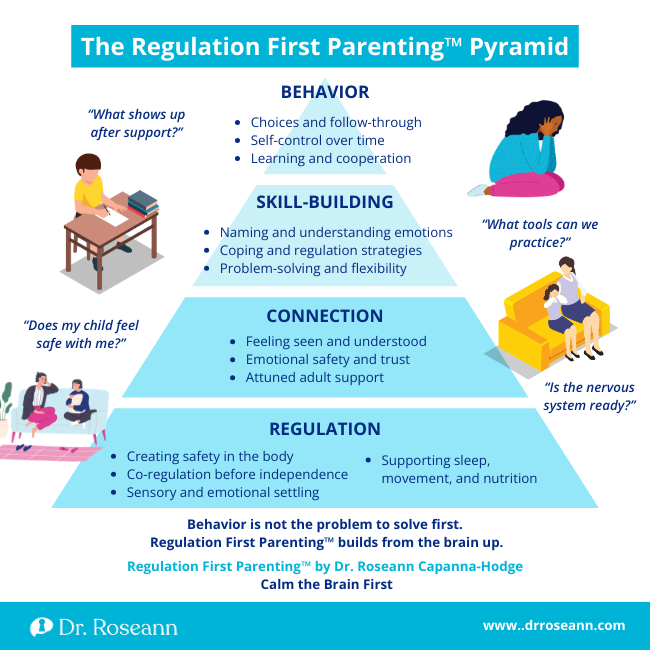
Regulation First Parenting™
When children are overwhelmed, the thinking brain goes offline.
In these moments, discipline alone does not work because the nervous system is in survival mode.
My Regulation First Parentingᵀᴹ approach focuses on calming the brain before correcting behavior, recognizing that children need to feel safe and regulated before they can access skills like listening, problem-solving, and self-control.
Instead of reacting to the behavior alone, Regulation First Parentingᵀᴹ encourages parents to look at what the child’s nervous system needs in the moment.
When children feel safe and regulated, they can:
- listen
- reflect
- learn coping skills
- solve problems
The good news is that children don’t have to figure out regulation on their own. They learn these skills through supportive relationships with the adults who care for them. One of the most powerful ways parents can help a dysregulated child return to calm is through a process called co-regulation.
.png)
Co-Regulation: Sharing Your Calm
Coregulation refers to the process of regulating emotions together with another person. Children learn self-regulation by borrowing calm from adults.
Tips for co-regulating with children:
- It’s essential to remain calm when co-regulating with children, so you can be an A-game parent in dealing with your dysregulated child.
- Offer comfort to the child, such as a hug or a soothing voice when there is emotional lability.
- Model self-regulation skills to help the child learn self-regulation.
- Practice calming techniques, such as deep breathing and positive self-talk.
- Use calm spaces together in your home or neighborhood
Parents’ emotional state plays a powerful role in helping the child’s nervous system settle.
Why Your Nervous System Matters Too
One of the most overlooked factors in helping a child regulate is the parent’s nervous system.
Children’s brains constantly scan adults for cues of safety or danger. If a parent becomes overwhelmed, frustrated, or reactive, the child’s nervous system may escalate further.
Parents who learn how to calm their own nervous system can dramatically improve co-regulation.
Helpful strategies include:
- slowing your breathing
- lowering your voice
- pausing before reacting
- stepping away briefly if needed
- modeling calm problem solving
Your calm does not mean ignoring behavior—it means creating the conditions where learning becomes possible.
How to Calm a Dysregulated Child
Many parents ask how to calm a dysregulated child during emotional overwhelm.
The goal is not forcing calm—it is helping the nervous system settle.
Helpful self-regulation strategies for kids include:
- lowering noise and stimulation
- speaking calmly
- offering reassurance
- guiding breathing exercises
- providing a quiet calming space
These steps help the brain move out of survival mode.
While these calming strategies can help a child’s nervous system settle, it’s just as important to understand what can accidentally make dysregulation worse. Even well-meaning responses from adults can escalate a child who is already overwhelmed.
What NOT to Do When a Child Is Dysregulated
Even loving parents sometimes make mistakes when trying to help their child calm down.
When a child’s nervous system is overwhelmed, avoid:
1. Long Lectures
Reasoning rarely works when the brain is in survival mode.
2. Yelling Back
This escalates the nervous system further.
3. Immediate Consequences
Consequences are most effective after regulation, not during emotional flooding.
4. Shaming Statements
Statements like “What’s wrong with you?” increase emotional distress.
5. Demanding Instant Calm
Children cannot simply “turn off” a dysregulated nervous system.
Instead, focus on co-regulation first.
Once we understand what can unintentionally escalate a dysregulated moment, the next step is learning the tools that help the nervous system return to balance. These strategies support both the brain and body so children can gradually build stronger regulation skills over time.

How to Calm a Dysregulated Nervous System
Parents often want to know how to regulate a dysregulated nervous system and support their child during stress.
Learning how to calm nervous system responses involves supporting both the brain and body.
Helpful emotional regulation activities for kids include:
- Deep breathing
Slow, controlled breathing helps calm the body’s stress response and signals the nervous system that it is safe to relax.
- Movement or exercise
Physical activity helps release built-up tension and supports brain regulation by activating systems that reduce stress and improve focus.
- Sensory tools and activities
Sensory supports—like stress balls, weighted items, or tactile play—help children regulate their nervous system by providing calming sensory input.
- Predictable routines
Consistent routines help children feel safe and reduce nervous system stress by creating structure and predictability in daily life.
- Positive self-talk
Positive self-talk teaches children to replace negative thoughts with supportive internal messages that help them stay calm and confident during challenges.
- Adequate sleep
Getting enough quality sleep supports brain development and emotional regulation, helping children manage stress and recover from daily challenges.
.png)
- Mindfulness practices
Mindfulness helps children focus on the present moment, improving emotional awareness and helping the brain respond to stress more calmly.
- 5-4-3-2-1 method
The 5-4-3-2-1 grounding method helps calm anxiety by guiding children to notice five things they see, four they feel, three they hear, two they smell, and one they taste.
- The Love Pauseᵀᴹ
The Love Pause is a parenting strategy where caregivers intentionally pause before reacting so they can respond calmly and support their child’s nervous system instead of escalating the situation.
These tools help shift the body away from an overactive nervous system state.
Over time, children can learn how to fix a dysregulated nervous system response before emotions escalate.
.png)
What to Do When Your Child Feels Dysregulated
Parents often wonder what to do when their child starts feeling dysregulated at the moment. The first step is helping children recognize the early signals their body gives when stress is building.
Some common signs your child may be becoming dysregulated include:
- tight or tense muscles
- a racing mind or trouble focusing
- irritability or frustration
- feeling overwhelmed or “too big” emotions
When parents notice these early signals, they can guide their child to use calming strategies before emotions escalate. Simple tools like slow breathing, movement breaks, sensory activities, or stepping into a quieter space can help the nervous system settle and return to balance.
What Mental Health Conditions Cause Emotional Dysregulation?
Emotional regulation is a complex process that involves various regions of the brain, including the prefrontal cortex, amygdala, and hippocampus. The autonomic nervous system is responsible for managing the stress response and when nervous system dysregulation happens.
The limbic system is responsible for interpreting emotional information and it includes the amygdala and hippocampus. The amygdala is responsible for processing emotions, including fear, anger, and pleasure. The hippocampus plays a role in memory and emotional regulation. These regions interpret potential “threats” but in a dysregulated, overactive brain, it misinterprets everything as a threat.
Dysregulation can occur when the prefrontal cortex is not adequately regulating the amygdala’s emotional responses. The braking system of the brain, the prefrontal cortex, which is responsible for executive function, such as planning and decision-making, struggles to do its job. When this happens, emotional responses can become exaggerated, leading to emotional dysregulation and one to react emotionally.
Emotional dysregulation can appear in many different mental health and neurodevelopmental conditions. When the brain struggles to manage stress, emotions can escalate quickly, making it harder for children or teens to calm themselves, shift attention, or recover from frustration.
Some of the most common conditions associated with emotional dysregulation include:
- ADHD – Children with ADHD often experience intense emotions and may struggle with impulse control and frustration tolerance.
- Anxiety disorders – Chronic worry and heightened threat sensitivity can cause emotions to escalate quickly.
- Autism spectrum disorder (ASD) – Sensory overload and social processing challenges can lead to emotional overwhelm.
- Obsessive-compulsive disorder (OCD) – Intrusive thoughts and compulsions can trigger strong emotional reactions.
- Mood disorders, such as depression or disruptive mood dysregulation disorder (DMDD).
- Trauma-related conditions – When the nervous system has experienced chronic stress or trauma, it may react quickly to perceived threats.
- PANS/PANDAS – Inflammatory changes affecting the brain can cause sudden shifts in mood, anxiety, and emotional regulation.
While these conditions may look different on the surface, they often share a common thread: nervous system dysregulation. When the brain’s stress response system is overloaded, a child’s regulation capacity shrinks. With lower capacity, even small frustrations can feel overwhelming, leading to big emotional reactions.
This is why emotional dysregulation can appear across many diagnoses. When parents focus on supporting the nervous system and expanding a child’s capacity to handle stress, emotional regulation becomes much more possible.
It is important to note that “dysregulated emotions disorder” is not a formal diagnosis, but the term is sometimes used to describe chronic emotional dysregulation seen in several conditions.
Dysregulated Nervous System Treatment and Support
When dysregulation becomes severe or persistent, professional help may be needed.
Effective dysregulated nervous system treatment focuses on helping the brain and body return to balance while teaching coping skills.
Support may include:
- Psychotherapy
Psychotherapy gives children a safe place to talk about their feelings, understand what’s happening inside their brain and body, and learn healthier ways to cope with big emotions.
- Parent coaching
Parent coaching helps caregivers learn practical tools for responding to dysregulation with calm, connection, and strategies that actually work in everyday family life.
- Occupational therapy
Occupational therapy supports children who struggle with sensory input or body regulation, helping them feel more comfortable in their environment and better able to manage stress.
- School support plans
School support plans, such as 504 plans or IEPs, provide accommodations that help children become self-regulated learners. These help manage learning, behavior, and emotional regulation so they can succeed in the classroom.
- Executive functioning coaching
Executive functioning coaching helps children strengthen important life skills like staying organized, managing impulses, planning tasks, and following through.
- Neurofeedback
Neurofeedback is a type of brain training that helps the brain learn healthier patterns of activity so children can improve focus, emotional regulation, and resilience to stress.
- Movement-based therapies
Movement-based therapies use physical activity, rhythm, and body awareness to help children release tension and support their nervous system in returning to a calmer state.
- PEMF Therapy
Uses gentle electromagnetic pulses to support cellular function and nervous system balance, which may help reduce stress and promote emotional regulation.
.png)
Treatment aims to strengthen regulation rather than simply suppress behavior.
Can a Dysregulated Nervous System Be Repaired?
I often encounter parents who worry that their child will always struggle with emotional regulation.
Fortunately, the nervous system is highly adaptable. Through a process called neuroplasticity, the brain can strengthen new patterns of regulation over time.
Children can learn:
- how to recognize early stress signals
- how to calm their bodies
- how to process emotions safely
- how to recover more quickly after distress
With consistent support, a dysregulated nervous system can become more flexible and resilient.
.png)
How Long Does It Take to Regulate a Nervous System?
Parents often ask me, “how long does it take to learn how to fix a dysregulated nervous system?”
The answer varies depending on:
- the child’s age
- underlying conditions
- environment and stress level
- consistency of support
Some children begin improving within weeks when the right strategies are introduced. Others may need longer periods of structured support.
The most important factor is consistency.
When children repeatedly experience calm environments, supportive relationships, and skill-building opportunities, their nervous system gradually learns to return to balance more easily.
Final Thoughts
Dysregulated behavior in kids can be exhausting for families, but it is not a sign of failure.
When we understand the signs your nervous system is dysregulated, we begin to see behavior differently.
Instead of asking “What’s wrong with my child?”, we start asking “What does my child’s nervous system need right now?”
Children learn regulation through safety, connection, practice, and support.
With patience, guidance, and the right strategies, children can learn to calm their bodies, manage emotions, and grow into resilient, emotionally capable adults.
Need More Support?
If your child struggles with persistent dysregulation, additional support may help uncover underlying causes and build stronger emotional regulation skills.
TAKE OUR FREE SOLUTION MATCHER! CLICK ON THE LINK BELOW.

Frequently Asked Questions
What Does Dysregulated Mean?
"Dysregulated" refers to the inability to properly regulate or manage emotional or behavioral responses. It often involves excessive or unpredictable emotional reactions, difficulty calming down, or impulsive behavior. This term is commonly associated with various mental health conditions and emotional challenges.
How do I know if my child is highly sensitive or emotionally dysregulated?
A highly sensitive child may react strongly to sensory input or emotions, while chronic dysregulation usually includes ongoing difficulty calming down, controlling impulses, or recovering from stress.
Is Emotional Dysregulation a Disability?
Emotional dysregulation is not considered a disability on its own, but it often appears as part of conditions like ADHD, anxiety, or mood disorders that can significantly impact daily functioning.
Is There Medication for Emotional Dysregulation?
Yes, medication for emotional dysregulation may sometimes be used to help manage symptoms, especially when conditions like ADHD, anxiety, or mood disorders are involved, but medication usually works best alongside skill-building and supportive therapies.
Why Do We Lose Control of Our Emotions?
We often lose control of our emotions when the brain’s stress response becomes overwhelmed by triggers like stress, fatigue, sensory overload, or strong feelings that the nervous system struggles to regulate.
What Is Emotional Dysregulation Treatment?
Emotional dysregulation treatment usually includes therapies that teach regulation skills, along with approaches that support brain and nervous system health such as neurofeedback, lifestyle changes, and parent coaching.
Is Neurofeedback Effective for Emotional Dysregulation?
Yes, neurofeedback can help improve emotional regulation by training the brain to develop healthier patterns of activity. Many children with ADHD, anxiety, and other regulation challenges benefit most when neurofeedback is combined with supportive therapies and healthy lifestyle habits.
Can Diet and Supplements Improve Emotional Regulation?
Yes, diet and supplements can support emotional regulation because the brain needs the right nutrients to function well. Nutrients like omega-3s, magnesium, zinc, and B vitamins may help support mood and brain health when used as part of a broader plan that includes healthy habits and supportive therapies.
How do I help my 5 year old self-regulate?
Young children learn self-regulation through co-regulation, so model calm behavior, use simple coping tools like deep breathing or movement, and create predictable routines that help their nervous system feel safe.
When should I seek professional help for my child’s dysregulation?
If your child’s emotional reactions are severe, frequent, affecting school or relationships, or causing distress in your family, a qualified professional can help identify root causes and guide treatment.
Citations
Callaghan, B., Tottenham, N. The Neuro-Environmental Loop of Plasticity: A Cross-Species Analysis of Parental Effects on Emotion Circuitry Development Following Typical and Adverse Caregiving. Neuropsychopharmacol 41, 163–176 (2016). https://doi.org/10.1038/npp.2015.204
McRae, K., & Gross, J. J. (2020). Emotion regulation. Emotion, 20(1), 1–9. https://doi.org/10.1037/emo0000703
Sanchis-Sanchis, A., Grau, M. D., Moliner, A.-R., & Morales-Murillo, C. P. (2020). Effects of age and gender in emotion regulation of children and adolescents. Frontiers in Psychology, 11, 946. https://doi.org/10.3389/fpsyg.2020.00946
Shaw, P., Stringaris, A., Nigg, J., & Leibenluft, E. (2014). Emotion dysregulation in attention deficit hyperactivity disorder. American Journal of Psychiatry, 171(3), 276–293. https://doi.org/10.1176/appi.ajp.2013.13070966
Always remember… “Calm Brain, Happy Family™”
Disclaimer: This article is not intended to give health advice and it is recommended to consult with a physician before beginning any new wellness regime. *The effectiveness of diagnosis and treatment vary by patient and condition. Dr. Roseann Capanna-Hodge, LLC does not guarantee certain results.
Are you looking for SOLUTIONS for your struggling child or teen?
Dr. Roseann and her team are all about science-backed solutions, so you are in the right place!