%20.png)



Estimated reading time: 8 minutes
The best time to take magnesium for sleep is typically 1–2 hours before bedtime, allowing the body to absorb it and begin calming the nervous system.
If your child tosses and turns at night and you’re both running on empty, you’re not alone. Many parents of kids with ADHD, anxiety, autism, OCD, or PANS/PANDAS struggle to calm an overstimulated brain at bedtime—and start asking: When should I give magnesium? Does magnesium make you sleepy?
The truth is, sleep struggles are often rooted in nervous system dysregulation—and sometimes low levels of magnesium or even magnesium deficiency can make it harder for the brain to power down.
The right magnesium supplement, taken at the best time to take magnesium for sleep, can help the body relax, support melatonin production, and improve sleep quality.
I’m Dr. Roseann Capanna-Hodge, and for more than three decades, I’ve helped families understand how brain chemistry and nervous system dysregulation impact sleep—and how to use simple, science-backed tools to help kids fall asleep faster and stay asleep longer.
In this guide, you’ll learn:
✅ How magnesium supports sleep and relaxation
✅ Which types work best for kids
✅ Exactly when to take magnesium for better sleep
✅ Safe dosage tips and what to avoid
Why Is Magnesium Important for Sleep?
Magnesium is one of the body’s quiet powerhouses, helping regulate the nervous system, balance stress hormones, and support the brain’s ability to relax before sleep. That’s why it’s often recommended as one of the most effective natural sleep supplements for kids and adults alike.
Think of it as nature’s gentle “off switch.”
A 2024 double-blind, placebo-controlled trial found that magnesium supplementation significantly improved sleep quality and duration while reducing stress in healthy adults (Briskey et al., 2024). These findings echo what we parents often see firsthand, that when the brain finally has what it needs to calm, kids fall asleep faster and stay asleep longer.
- It regulates neurotransmitters that calm the nervous system
- Helps control cortisol, the stress hormone that keeps kids wired at night
- Supports melatonin production, signaling the brain it’s time to rest
- Activates GABA, which quiets mental chatter and muscle tension
Parent example:
Billy, a bright 10-year-old with PANDAS, struggled with restless nights. After starting magnesium (alongside his BrainBehaviorReset™ Program), he began falling asleep faster and staying asleep longer. His mom noticed calmer mornings, better focus, and fewer meltdowns.
What Happens When the Body Lacks Magnesium?
Magnesium deficiency is surprisingly common—especially among kids who eat processed foods or have gut issues that affect absorption and overall levels of magnesium in the body.
When magnesium runs low, sleep problems often follow:
- Trouble falling or staying asleep
- Nighttime anxiety or restlessness
- Increased irritability, fatigue, or morning sluggishness
Low magnesium also interferes with melatonin balance, blood-sugar regulation, and stress tolerance, keeping the brain on high alert instead of shifting into rest mode.
Which Type of Magnesium Is Best for Sleep?
Magnesium supplements aren’t all created equal. If you’re trying to figure out what magnesium helps you sleep, two forms consistently stand out for better sleep quality:
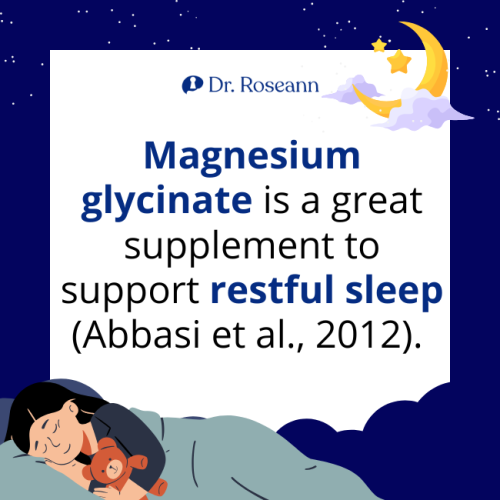
Magnesium Glycinate
- Highly absorbable and gentle on the stomach
- Contains glycine, an amino acid that promotes relaxation
- Ideal for kids with sensitive digestion or anxiety
(Less likely to cause loose stools than other types)
Other forms like magnesium citrate are widely used as a magnesium supplement, but they may have a mild laxative effect, making them less ideal for nighttime use in some children.
Magnesium L-Threonate
A 2024 randomized controlled trial found that magnesium L-threonate supplementation improved both deep/REM sleep and next-day alertness in adults with self-reported sleep problems (Hausenblas et al., 2024).
This makes it a valuable option for kids or teens who wake often or can’t seem to reach that deep, restorative sleep stage their brains crave.
Read more: Magnesium Threonate vs. Glycinate: Which Magnesium is Best for Your Child?
Some families also prefer magnesium powder for sleep, which can be mixed into water or drinks for easier absorption—especially for kids who have trouble swallowing capsules.

Once you’ve chosen the right type of magnesium, the next step is just as important: understanding the best time to take magnesium for sleep so it works with your child’s natural rhythm—not against it.
When Is the Best Time to Take Magnesium for Sleep?
This is the question every tired parent asks—and the answer can be life-changing.
The best time to take magnesium for sleep is about 1–2 hours before bed, ideally after dinner or with a light snack to improve absorption.
Magnesium at night allows the body to absorb the mineral, lower cortisol, and boost melatonin production as part of its natural circadian rhythm.
- Take it after dinner or with a light snack for best absorption
- If your child’s stomach is sensitive, start with smaller doses earlier in the evening
- Pair magnesium with a consistent bedtime routine—dim lights, soft music, and calm activities help reinforce the body’s sleep signals
Parent example:
When Billy’s mom began giving his magnesium at 8 p.m. (about 90 minutes before bed), she saw calmer transitions and fewer “second winds.” Within two weeks, bedtime stopped feeling like a battle.

Are There Any Side Effects or Precautions?
Magnesium is generally safe when taken at appropriate doses, but too much can backfire.
Watch for:
- Loose stools or mild nausea (common if doses are high or form is poorly absorbed)
- Interaction with medications such as antibiotics or diuretics
- Caution in kids with kidney disorders, since the body clears magnesium through the kidneys
Another 2024 double-blind crossover trial found magnesium not only improved sleep but also boosted mood and daytime functioning—highlighting how powerful this mineral can be for regulation when used safely (Breus et al., 2024).
Magnesium isn’t a magic bullet—but it’s a gentle, evidence-backed tool to help your child’s body relax, sleep deeper, and wake more refreshed. When paired with consistent routines and nervous-system calming practices, magnesium can be part of your child’s healing journey.
You’re doing your best—and your effort matters. Calming the brain always starts with small, steady steps.
Parent Action Steps
- Add sources of magnesium like spinach, pumpkin seeds, almonds, and dark chocolate to support healthy levels naturally.
- Use magnesium glycinate or L-threonate for gentle nighttime support
- Take it 1–2 hours before bed to align with melatonin production
- Build a relaxing bedtime routine with no screens and soft light
- Take my FREE Solution Matcher to find the right help for your child
- Explore my Dysregulation Solution Kit to help you regulate your child wherever, whenever!
FAQs
Does magnesium really help kids sleep?
Magnesium does help kids sleep by supporting melatonin production and activating GABA, which calms the nervous system. This makes it easier to fall asleep and stay asleep, and many parents notice calmer evenings within a few weeks (Briskey et al., 2024; Hausenblas et al., 2024).
Which magnesium is best for sleep?
The magnesium best for sleep is typically magnesium glycinate or magnesium L-threonate. These forms are well-absorbed, support relaxation, and promote better sleep without common digestive side effects.
Can magnesium be taken with other supplements like melatonin or zinc?
Magnesium can be taken with other sleep supplements like melatonin or zinc in many cases, but combining supplements should be done carefully. A healthcare provider can help ensure the right balance and safe use.
Does magnesium make you drowsy?
Magnesium can make you feel drowsy in some cases, but its primary effect is helping the body relax rather than acting as a sedative. This calming effect supports natural sleep without forcing drowsiness.
How long before magnesium improves sleep?
Magnesium improves sleep gradually, with most families seeing noticeable changes within two to four weeks of consistent use alongside good sleep habits.
Can I get enough magnesium from food alone?
Getting enough magnesium from food alone is possible, but many diets fall short. Natural sources of magnesium include leafy greens, nuts, seeds, beans, and whole grains, which help support healthy magnesium levels.
Citations
Briskey, D., Erickson, J., Smith, C., & Rao, A. (2024). Wild Nutrition’s Food-Grown® Magnesium Supplementation Increases Sleep Quality and Sleep Duration and Reduces Stress in a Healthy Adult Population: A Double-Blind, Randomised, Placebo-Controlled Study. Food & Nutrition Sciences, 15, 509–523. https://doi.org/10.4236/fns.2024.157034
Breus, M. J., Lynch, T., Hooper, S., & others. (2024). Effectiveness of Magnesium Supplementation on Sleep Quality and Mood for Adults with Poor Sleep Quality: A Randomised Double-Blind Placebo-Controlled Crossover Trial. Medical Research Archives, 12(7). https://doi.org/10.18103/mra.v12i7.5410
Hausenblas, H. A., Lynch, T., Hooper, S., Shrestha, A., Rosendale, D., & Gu, J. (2024). Magnesium-L-threonate Improves Sleep Quality and Daytime Functioning in Adults with Self-Reported Sleep Problems: A Randomized Controlled Trial. Sleep Medicine: X, 8, 100121. https://doi.org/10.1016/j.sleepx.2024.100121
Always remember… “Calm Brain, Happy Family™”
Disclaimer: This article is not intended to give health advice, and it is recommended to consult with a physician before beginning any new wellness regimen. The effectiveness of diagnosis and treatment varies by patient and condition. Dr. Roseann Capanna-Hodge, LLC, does not guarantee specific results.
Are you looking for SOLUTIONS for your struggling child or teen?
Dr. Roseann and her team are all about science-backed solutions, so you are in the right place!
©Roseann Capanna-Hodge