%20.png)


Estimated reading time: 7 minutes
Does your child seem sharp yet school feels like a daily uphill climb? That’s not laziness—it’s often a sign of a Specific Learning Disability (SLD), which can make reading, writing, or math feel like wading through quicksand.
Parents ask me all the time, “Why does my smart kid freeze on a worksheet?” I tell them, behavior is communication: let’s tune in to what the brain is saying.
In this guide you’ll find plain answers, stories from real families, and strategies you can actually try at home or school.
What is a Specific Learning Disability?
A specific learning disability doesn’t mean your child lacks smarts—it simply means their brain runs on a different rhythm, like a radio slipping off station. And if homework feels like a daily battle, you’re not alone—it isn’t laziness, it’s a brain asking for support.
Here’s what that might look like:
Research reminds us these struggles stay specific rather than sweeping. A child may wrestle with reading or math yet blow you away with creativity, logic, or problem-solving brilliance (McDowell, 2018).
When we calm the brain first, those hidden sparks can truly shine.
What Are the Signs of a Specific Learning Disability in Children?
If you’ve ever wondered why your child avoids books or melts down during homework, you’re not alone.
These early signs often show up in schoolwork, but they can also be seen at home.
- Slow, effortful reading or frequent letter reversals
- Trouble remembering instructions or sequences
- Avoiding homework, books, or anything that feels too hard
- Struggles with spelling or putting thoughts on paper
- Difficulty understanding math concepts like time, money, or multiplication
Parent Story:
Rachel, mom of a 9-year-old with dyslexia, shared: “Every night was a meltdown over reading. I thought she was being stubborn until testing showed dyslexia. Once I understood it wasn’t her fault, we could finally focus on tools that worked.”
Behavior is communication. Avoidance often signals frustration, not defiance.
What Causes Specific Learning Disabilities?
No single road leads to a specific learning disability. Scientists see patterns in how brains process information, though the picture can feel layered and, yes, a little messy.
What we do know is that these struggles don’t come from laziness or lack of intelligence—they come from how the brain is wired.
Possible contributors include:
- Genetics: Learning differences often run in families
- Brain wiring: Functional brain scans show different activity in language and processing regions
- Environmental factors: Prenatal stress, toxins, or early developmental delays
Takeaway: A learning disability isn’t your child’s fault—or yours. It’s how their nervous system processes information, and when we calm the brain first, learning becomes possible.
How Is a Specific Learning Disability Diagnosed?
Diagnosis usually begins with psychoeducational testing, which highlights both struggles and strengths. It may include:
- Cognitive assessments (memory, processing speed, attention)
- Academic achievement tests in reading, writing, and math
- Classroom observations of how your child learns and engages
Schools usually identify SLDs under IDEA, which can open doors to support services. Private evaluations, while sometimes pricey, often peel back more layers and reveal a clearer map of your child’s wiring.
And remember—when we calm the brain first, those insights can actually lead to strategies that work.
Is a Specific Learning Disability the Same as Low Intelligence?
Absolutely not.
Kids with SLDs often think in surprising ways—brilliant in some areas yet struggling with reading or writing.
A meltdown over reading isn’t defiance, it’s an overwhelmed brain. That same child may build Lego towers, solve puzzles, or spin captivating stories.
Behavior is communication.
How Does a Specific Learning Disability Affect Daily Life?
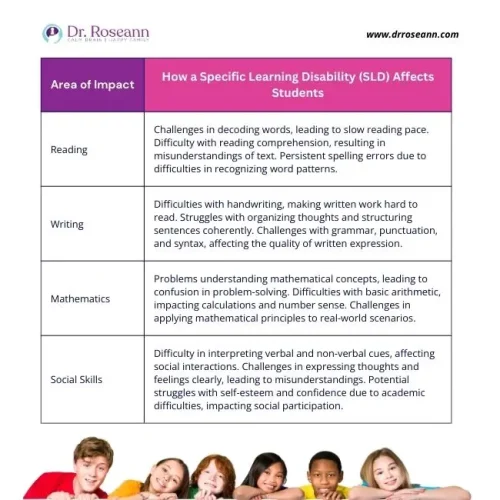
SLDs impact more than grades—they affect confidence, relationships, and family life.
Challenges may include:
- Daily homework battles that strain family dynamics
- Kids calling themselves “stupid” or feeling embarrassed in class
- Struggles keeping up with peers, leading to anxiety or low self-esteem
- Avoiding subjects that trigger stress
Parent Story:
Mark, dad of a 12-year-old with dysgraphia, said: “My son knew the answers in science but froze when asked to write them down. Teachers thought he wasn’t paying attention. Once we got accommodations, his confidence soared.”
When we calm the brain first and give kids the right tools, confidence returns and learning finally feels possible.
How Can Parents Help a Child With a Specific Learning Disability?
Helping your child starts with understanding and calm. When brains feel safe, learning sneaks in almost effortlessly.
Here are some parent strategies you can try:
- Co-regulation. Stay calm during homework battles—your calm nervous system helps your child’s settle.
- Structure and routine. Consistent schedules reduce anxiety.
- Use strengths. If your child loves art, let them draw to show comprehension.
- Collaborate with teachers. Ask about supports like extended time or audiobooks.
Helping your child starts with understanding and calm. When we calm the brain first, learning and confidence follow.
What Interventions Work Best for Specific Learning Disabilities?
Helping a child with an SLD isn’t about pushing them harder through meltdowns—it’s about clearing brain pathways so knowledge and creativity shine.
Behavior is communication. Calm the brain first, and learning often flows naturally.
Here are evidence-based strategies:
- Structured literacy (Orton-Gillingham, Wilson) for dyslexia
- Occupational therapy for handwriting and motor challenges
- Visual/multisensory math tools for dyscalculia
- Neurofeedback & regulation supports (like CALM PEMF™)
- Lifestyle foundations: sleep, nutrition, movement
Check out these school supports:
- Early intervention prevents frustration from building
- Individualized Education Plans (IEPs) set tailored goals, accommodations, and strategies (Hoover et al., 2018). They evolve with each child’s strengths and needs

Extra tools:
- Multisensory learning—engage multiple senses
- Assistive tech—text-to-speech, speech recognition, and more
- Strength-focused reinforcement—highlight abilities while guiding struggles
Every child’s wiring is unique. With understanding, patience, and supports that honor their brain, hidden strengths emerge and pathways to success open wide (Hoover et al., 2018).
When Should You Seek Professional Help?
If your child struggles with reading, writing, or math even after extra support at home or school, it might be time for a closer look—you’re not alone. Think of it like checking a map when you keep hitting a dead-end road.
Signs to watch:
- Homework meltdowns that happen night after night, leaving everyone drained
- Falling behind classmates despite effort and encouragement
- Anxiety, avoidance, or a running soundtrack of “I can’t do this”
- Teacher reports of consistent struggles that don’t improve with standard interventions
Seeking an evaluation doesn’t label a child—it unlocks understanding and tools that calm the brain first so potential can flow naturally. Early insight can turn frustration into growth, and hidden strengths often emerge once pathways are cleared.
Read more about: The Neurodivergent Umbrella: A Guide to Understanding and Supporting Neurodiverse Kids
Parent Action Steps
Observe patterns in homework and learning struggles. Keep a record of teacher feedback and school reports. Schedule a psychoeducational evaluation if struggles persist. Implement brain-calming strategies at home (sleep, nutrition, movement). Explore multisensory learning and assistive technology supports. Take our Solution Matcher to get science-backed solutions to help your child today. Download the Ultimate Guide to School Accommodations.
FAQs
How common are specific learning disabilities?
About 1 in 5 children in the U.S. has a learning difference like dyslexia, dysgraphia, or dyscalculia. You’re not alone, and early recognition can make a big difference in their confidence and success.
Can kids outgrow a specific learning disability?
No, SLDs are lifelong. With tailored strategies, supports, and brain-aware interventions, children can learn to manage challenges and thrive academically and emotionally.
Do kids with SLDs need special schools?
Not necessarily. Many children flourish in public or private schools when given the right accommodations, structured support, and understanding from educators and caregivers.
Are SLDs linked to ADHD or anxiety?
Yes, these often co-occur. Struggling repeatedly in school can overwhelm the nervous system, making attention difficulties or anxiety more likely. Recognizing both challenges allows for more effective support.
What’s the most important thing parents can do?
Stay calm, collaborate with teachers, and highlight your child’s strengths. Remember: behavior is communication, not defiance. Your patience and understanding set the stage for growth
Citations
Hoover, J. J., Erickson, J. R., Patton, J. R., Sacco, D. M., & Tran, L. M. (2018). Examining IEPs of English Learners with Learning Disabilities for Cultural and Linguistic Responsiveness. Learning Disabilities Research & Practice, 34(1), 14–22. https://doi.org/10.1111/ldrp.12183
McDowell, M. (2018). Specific learning disability. Journal of Paediatrics and Child Health, 54(10), 1077–1083. https://doi.org/10.1111/jpc.14168
Dr. Roseann is a mental health expert in Learning Disabilities who frequently is in the media:
- Business Insider Your kids could get the coronavirus when they go back to school. These are the risks and benefits to weigh before sending them.
- CBS (Video) Learning From Home During Quarantine
- CBS (Video) Student Learning Resources Quarantine
- CT FOX61 (Video) Homeschooling Tips During Quarantine
Always remember… “Calm Brain, Happy Family™”
Disclaimer: This article is not intended to give health advice and it is recommended to consult with a physician before beginning any new wellness regime. *The effectiveness of diagnosis and treatment varies by patient and condition. Dr. Roseann Capanna-Hodge, LLC does not guarantee certain results.
Are you looking for SOLUTIONS for your struggling child or teen?
Dr. Roseann and her team are all about science-backed solutions, so you are in the right place!
Meet the Expert
Licensed Therapist | Certified School Psychologist
Board Certified in Neurofeedback (BCN) | 30+ Years Clinical Experience
Expert in Emotional Dysregulation in Children and Nervous System Regulation
Host, Dysregulated Kids Podcast | Author, The Dysregulated Kid
Dr. Roseann Capanna-Hodge is a licensed therapist, certified school psychologist, and leading expert in emotional dysregulation in children and nervous system regulation. With over 30 years of clinical experience and having analyzed more than 10,000 brain maps, she helps families understand what behavior is really signaling—and how to calm the nervous system first so real change can happen.
She is the creator of Regulation First Parenting™ and the CALMS Protocol™, host of the top 1% podcast Dysregulated Kids, and author of The Dysregulated Kid.