%20.png)


Contents

Understanding and addressing the unique behaviors of a child with Attention Deficit Hyperactivity Disorder (ADHD) or Autism Spectrum Disorder (ASD) can be a complex journey for any parent. Among these behaviors, demand avoidance often stands out due to its challenging nature and the difficulties it presents in everyday interactions.Demand avoidance isn't simply about refusing tasks; it's a multifaceted behavior often driven by anxiety, sensory issues, or a need for autonomy. This can make routine activities feel like significant hurdles, leaving parents searching for effective ways to respond.Exploring how demand avoidance manifests in both ADHD and autism reveals important insights. Pathological Demand Avoidance (PDA), a proposed subtype of autism, exemplifies a particular pattern of extreme demand avoidance.By understanding these patterns, parents can better tailor their approaches to meet their child's specific needs, fostering a more harmonious and supportive environment.
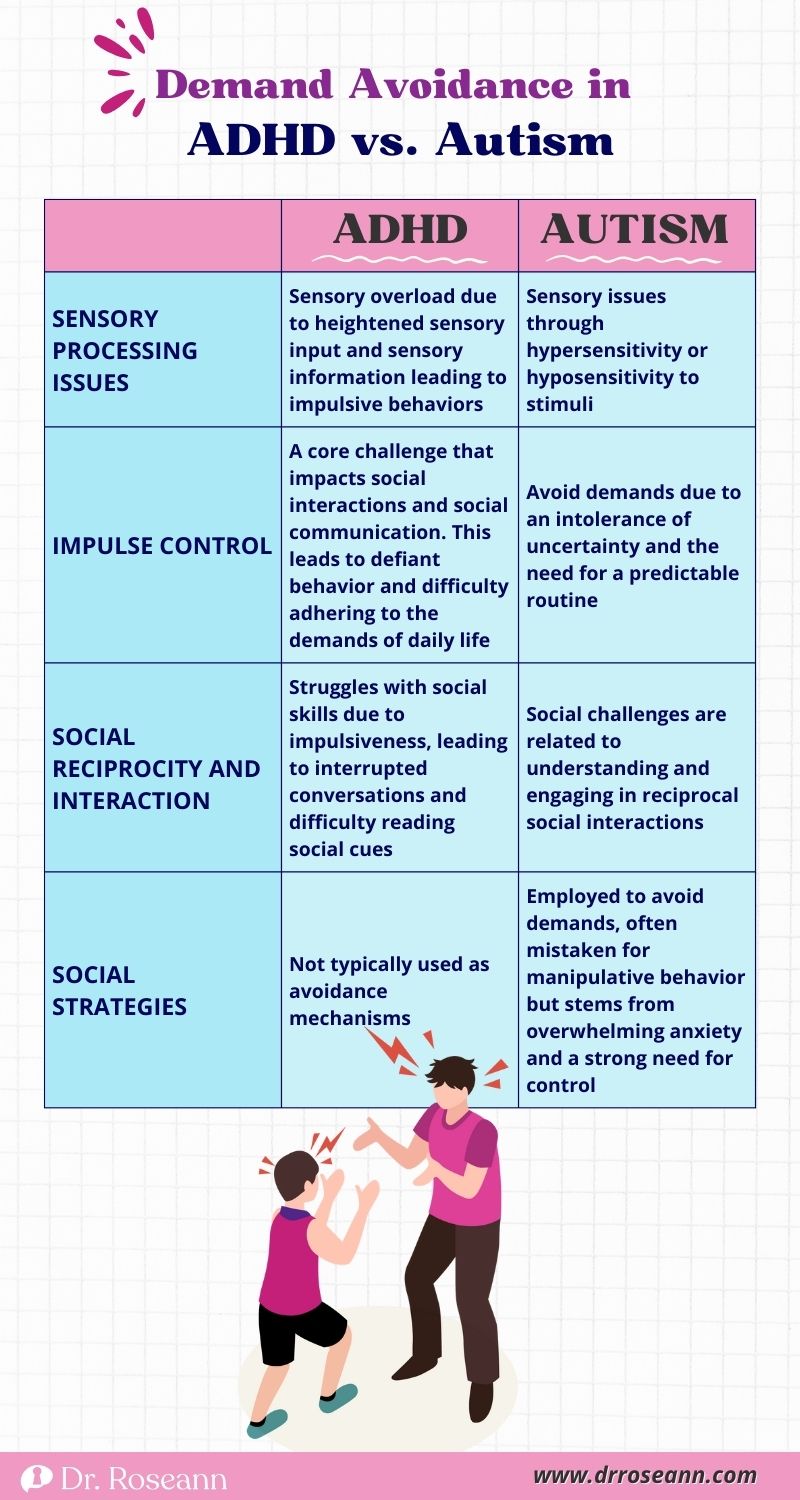
Demand Avoidance in ADHD vs. Autism
Pathological Demand Avoidance Syndrome (PDA), initially described by Elizabeth Newson, is characterized by an extreme avoidance of everyday demands and a persistent need for control. While PDA is primarily associated with autism, certain PDA traits can also manifest in children with ADHD. Understanding these differences is crucial for effective support.
Sensory Processing Issues
Both ADHD and autism involve sensory processing issues, but they manifest differently. Children with ADHD often experience sensory overload due to heightened sensory input and sensory information, which can lead to impulsive behaviors. On the other hand, autistic children may exhibit sensory issues through hypersensitivity or hyposensitivity to stimuli.
Impulse Control
Impulse control is a core challenge in ADHD, significantly impacting a child's ability to engage in social interactions and social communication. This lack of impulse control often leads to defiant behavior and difficulty adhering to the demands of daily life. In contrast, autistic people with PDA might avoid demands due to an intolerance of uncertainty and a need for a predictable routine.
Social Reciprocity and Interaction
One of the key differences between ADHD and autism lies in social reciprocity. Children with ADHD may struggle with social skills due to impulsiveness, leading to interrupted conversations and difficulties in reading social cues. In contrast, the social challenges in autism are more related to understanding and engaging in reciprocal social interactions.For children with PDA, social strategies are often employed to avoid demands, which can be mistaken for manipulative behavior. However, this behavior stems from overwhelming anxiety and a strong need to maintain a sense of control.
Supporting Children with Demand Avoidant Profile
Understanding the key features of demand avoidance in ADHD is the first step in providing effective support. Here are some helpful approaches for parents:
1. Create a Safe Space and Predictable Routine
Establishing a safe space at home where your child feels in control can significantly reduce anxiety. A predictable routine helps in managing the demands of everyday life and provides a sense of control that is crucial for both ADHD and autism.
2. Teach Tailored Coping Mechanisms
Each child is unique, and individual differences should be acknowledged. For instance, role-playing can be a beneficial tool for children with PDA, helping them navigate social situations and direct demands in a controlled environment. For ADHD, breaking tasks into smaller, manageable steps can help the child complete tasks without feeling overwhelmed.
3. Practice Understanding and Patience
Parents should strive to understand the root causes of their child's behavior. Recognizing that avoidance of tasks is often a response to overwhelming anxiety rather than willful defiance can foster a more supportive and empathetic approach.
4. Seek Professional Help
Consulting with the professionals from our center can provide additional strategies and interventions. A formal diagnosis can offer clarity and access to resources tailored to your child's needs.
5. Join Community and Support Groups
Connecting with other parents through social media, Facebook groups, or organizations can provide valuable insights and support. Sharing experiences and strategies can make a significant impact.Demand avoidance, whether in ADHD or autism, poses unique challenges. Understanding the underlying causes and implementing tailored strategies allows parents to support their children in managing the demands of daily life more effectively. Recognizing individual differences and seeking professional guidance are crucial steps in this journey. Remember, patience and empathy go a long way in helping your child thrive.To get a clear path to understanding and managing children's dysregulated behaviors and emotions, get the Self-Regulation Mastery Blueprint and automatically join our Calm Brain Community.

What is PDA?
PDA stands for Pathological Demand Avoidance Syndrome, a proposed subtype of autism. It involves extreme avoidance of everyday demands and a persistent need for control.
What triggers panic attacks in PDA?
Panic attacks in PDA are often triggered by overwhelming anxiety. This anxiety stems from the individual’s need for a sense of control and intolerance of uncertainty.
Are PDA individuals always defiant?
PDA individuals are not always defiant but often appear so due to their extreme demand avoidance. Their behavior is usually a response to high levels of anxiety and the need to avoid demands.
How does sensory overload manifest in autism?
In autism, sensory overload manifests as hypersensitivity or hyposensitivity to sensory input. Autistic individuals may become overwhelmed by certain sounds, lights, or textures.
What is the role of the PDA Society?
The PDA Society provides support and resources for individuals with PDA and their families. They offer information on coping mechanisms and connect people with similar experiences.
Is social media helpful?
Social media can be helpful by connecting parents and caregivers to support groups. These groups share strategies and provide emotional support for managing PDA.
Can mood disorders affect PDA?
Mood disorders can significantly impact individuals with PDA. They can exacerbate anxiety levels, making demand avoidance behaviors more pronounced.
What’s the first step to supporting demand avoidance?
The first step to supporting a child with PDA is creating a safe space. This environment should offer predictability and reduce overwhelming demands.
Where to find formal diagnosis guidelines?
Formal diagnosis guidelines for PDA can be found in scientific literature. They provide criteria and methodologies for accurately identifying PDA traits.Dr. Roseann is a mental health expert in Pathlogical Demand Avoidance who frequently is in the media:
- Helping Children Thrive Podcast Benefits of Neurofeedback for children with ADHD
- Very Well Mind New Research Highlights Key Differences Among Autistic Boys and Girls
- Healthline Understanding Self-Regulation Skills
Always remember... “Calm Brain, Happy Family™”
Disclaimer: This article is not intended to give health advice and it is recommended to consult with a physician before beginning any new wellness regime. *The effectiveness of diagnosis and treatment vary by patient and condition. Dr. Roseann Capanna-Hodge, LLC does not guarantee certain results.
Are you looking for SOLUTIONS for your struggling child or teen?
Dr. Roseann and her team are all about science-backed solutions, so you are in the right place!
Grab your complimentary copy ofPDA Checklist
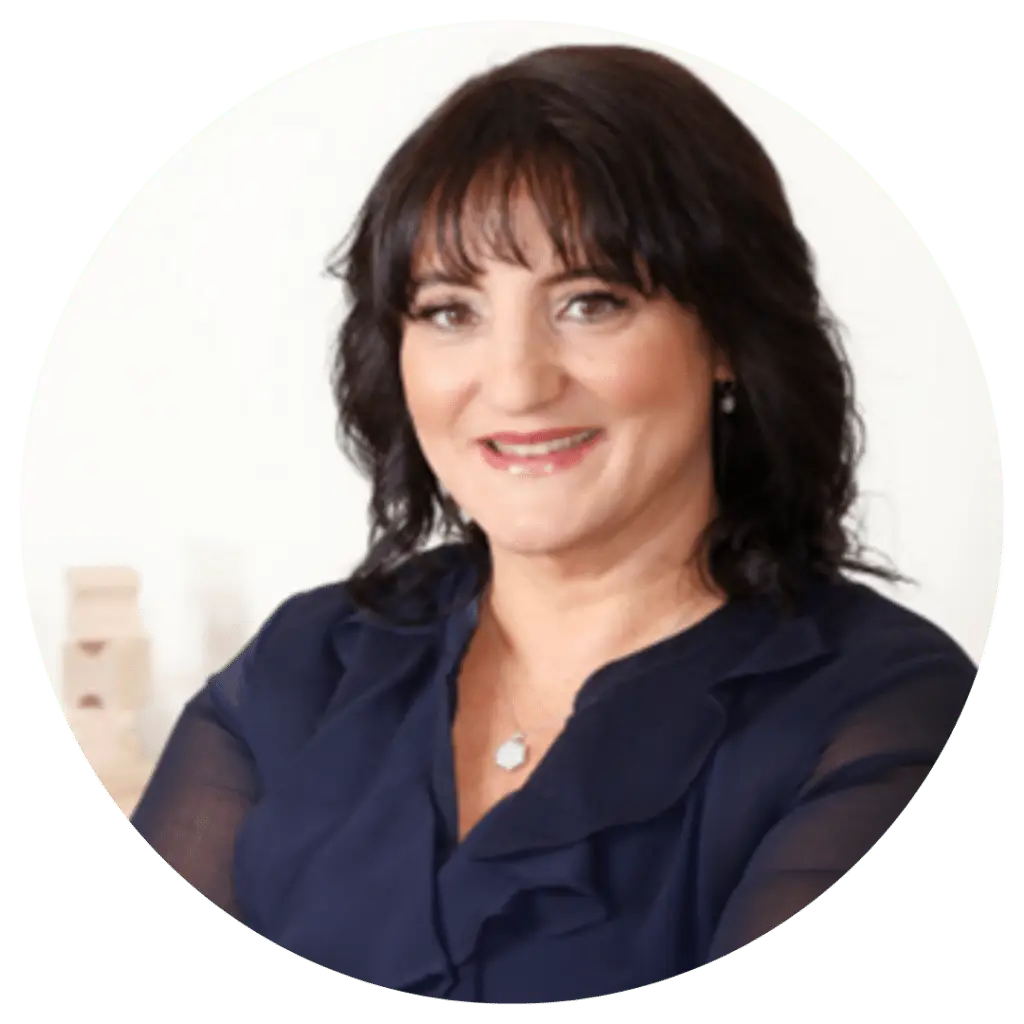
Dr. Roseann is a Children’s Mental Health Expert and Licensed Therapist who has been featured in/on hundreds of media outlets including The Mel Robbins Show, CBS, NBC, PIX11 NYC, Today, FORBES, CNN, The New York Times, The Washington Post, Business Insider,Women’s Day, Healthline, CNET,Parade Magazine and PARENTS. FORBES called her, “A thought leader in children’s mental health.”
She coined the terms, “Re-entry panic syndrome” and “eco-anxiety” and is a frequent contributor to media on mental health.Dr. Roseann Capanna-Hodge has three decades of experience in working with children, teens and their families with attention-deficit hyperactivity disorder (ADHD), autism, concussion, dyslexia and learning disability, anxiety, Obsessive Compulsive Disorder (OCD), depression and mood disorder, Lyme Disease, and PANS/PANDAS using science-backed natural mental health solutions such as supplements, magnesium, nutrition, QEEG Brain maps, neurofeedback, PEMF, psychotherapy and other non-medication approaches.She is the author of three bestselling books, It’s Gonna Be OK!: Proven Ways to Improve Your Child's Mental Health, The Teletherapy Toolkit, and Brain Under Attack. Dr. Roseann is known for offering a message of hope through science-endorsed methods that promote a calm brain.Her trademarked BrainBehaviorResetⓇ Program and It’s Gonna be OK!Ⓡ Podcast has been a cornerstone for thousands of parents facing mental health, behavioral or neurodevelopmental challenges.She is the founder and director of The Global Institute of Children’s Mental Health, Neurotastic™Brain Formulas and Dr. Roseann Capanna-Hodge, LLC. Dr. Roseann is a Board Certified Neurofeedback (BCN) Practitioner, a Board Member of the Northeast Region Biofeedback Society (NRBS), Certified Integrative Mental Health Professional (CIMHP) and an Amen Clinic Certified Brain Health Coach. She is also a member of The International Lyme Disease and Associated Disease Society (ILADS), The American Psychological Association (APA), Anxiety and Depression Association of America (ADAA) National Association of School Psychologists (NASP), International OCD Foundation (IOCDF).© Roseann-Capanna-Hodge, LLC 2024