%20.png)


With the rise of behavioral and mental health conditions among children and teens, it’s crucial to explore effective treatments that are also safe and natural. Neurofeedback is a well researched method for self-regulation and improving mental well-being.
But what is neurofeedback training, and how can it help children and teens struggling with mental health and behavioral self-regulation? And the question that all the parents I work with ask, “Why haven’t I heard about neurofeedback before?”
Very simply, neurofeedback is a type of technology that provides the brain reinforcement for producing a healthy combination of brain waves. Neurofeedback is a technique that uses real-time monitoring of brain activity to teach self-regulation of brain function. It tells the brain, “Good job! Produce more of those good brain waves.”
From this simple training the brain will learn to stay in a healthy state. And for my clients that means, more focus, calm and better grades. And of course less friction at home.
Through neurofeedback training, parents can make informed decisions about their children’s mental health without relying on medications that come with dangerous side effects.
How Does Neurofeedback Training Work?
Neurofeedback training involves placing sensors on the scalp to measure electrical activity in the brain. This data is then displayed to the individual through visual or auditory feedback, often through a computer interface. The brain learns to regulate its activity through this continuous feedback, much like learning to ride a bike with the help of training wheels.
Research has shown that neurofeedback can help normalize brain wave patterns associated with various mental health conditions, including post-traumatic stress disorders (Reiter et al., 2016). Targeting specific brain waves, such as beta, alpha, theta, and delta, neurofeedback can enhance cognitive function, reduce symptoms of anxiety and ADHD, and improve overall mental health.
Neurofeedback is increasingly used to treat ADHD by helping individuals regulate their brain activity. ADHD is associated with excess slow-wave activity and reduced fast-wave activity in the brain. Neurofeedback uses biofeedback techniques, like video games, to provide immediate feedback on brain wave activity.
During sessions, individuals learn to reduce slow waves and increase fast waves. Over time, this can lead to a reduction in ADHD symptoms. Research suggests that the outcomes of neurofeedback are comparable to those of stimulant medications (Butnik, 2005).
Download the Ultimate Guide to Neurofeedback
Neurofeedback offers numerous benefits, particularly for children with mental health issues. For starters, neurofeedback helps children control their emotional and cognitive responses better. This can lead to improved focus, reduced impulsivity, and enhanced emotional regulation, which are crucial for managing conditions like ADHD and anxiety.
Unlike some traditional treatments, neurofeedback is non-invasive and does not involve medication. This makes it a safe alternative for children sensitive to pharmaceutical interventions.
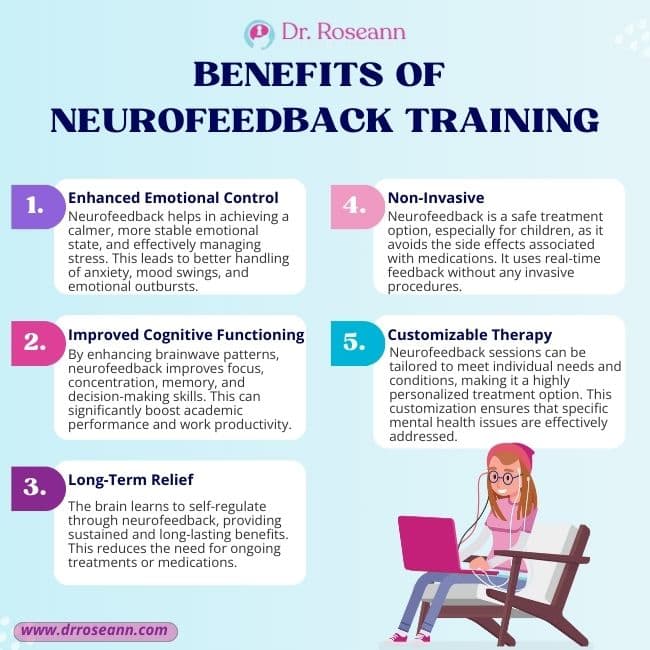
Neurofeedback training offers many advantages for those looking to improve their self-regulation skills. Neurofeedback helps individuals learn to control their brain function by providing real-time feedback on brainwave activity. This newfound ability translates into better managing emotional states, stress, and attention. Other benefits include:
1. Enhanced Emotional Control
Better self-regulation through neurofeedback can lead to better emotional regulation. This translates into a calmer and more stable emotional state, allowing individuals to handle stress, anxiety, and mood swings effectively.
2. Improved Cognitive Functioning
Along with emotional regulation, neurofeedback can enhance cognitive abilities like focus, concentration, memory, and decision-making. This can benefit academic performance, work productivity, and problem-solving skills.
3. Long-Term Relief
Unlike some therapeutic techniques, the improvements gained through neurofeedback training can be long-lasting. The brain strengthens its ability to regulate over time, leading to sustained benefits.
Neurofeedback offers a unique approach to self-regulation by training the brain to function more optimally. This can significantly improve mental health, cognitive performance, and overall well-being.
Neurofeedback at Home
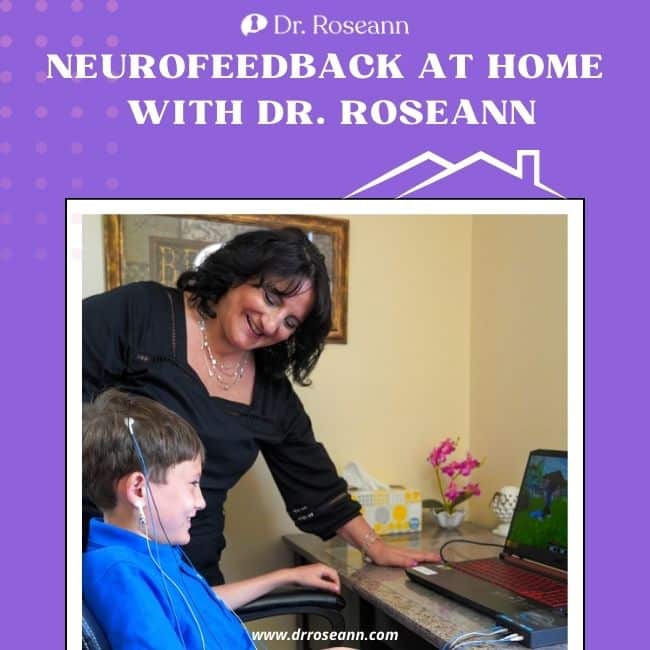
For those who prefer a more convenient option, neurofeedback therapy at home is becoming increasingly popular. Home neurofeedback devices are available, allowing for consistent and comfortable therapy sessions.
When considering home devices, choosing reliable and effective options is essential. Some of the best home neurofeedback device options include systems with user-friendly interfaces and robust customer support. When used correctly, neurofeedback is safe. Following professional guidance is crucial to avoid potential risks.
Neurofeedback training is a powerful tool for helping children with mental health conditions achieve better self-regulation. Understanding neurofeedback therapy and its various forms allows parents to make informed decisions about their child’s treatment. Whether through traditional sessions with our certified therapists or convenient home devices, neurofeedback offers a non-invasive, drug-free solution to improving mental well-being.
For more information on neurofeedback training, check out our and explore how this innovative therapy can help your child. Remember, early intervention and consistent treatment can make a significant difference in your child's mental health journey.
What is the difference between neurofeedback and biofeedback?
Both provide real-time feedback on physiological processes. However, neurofeedback focuses on brainwave activity, while biofeedback can target functions like heart rate or muscle tension.
Can I do neurofeedback therapy at home?
Home neurofeedback devices are available, but it’s essential to consult with a healthcare professional before starting any treatment.
Are there any side effects of neurofeedback?
Neurofeedback is generally considered safe, but some people may experience mild headaches or fatigue.
How much does neurofeedback therapy cost?
Costs can vary depending on location and treatment plan. Try to search for a neurofeedback specialist near you for an inquiry on pricing.
Does neurofeedback work for everyone?
Research suggests neurofeedback can be helpful for many conditions, but it may only be effective for some. It’s important to discuss this with a healthcare professional.
What are brain waves, and how are they placed in order?
Brain waves are electrical signals measured by EEG. They range from fastest (gamma) to slowest (delta) and reflect different brain states like focus or sleep.
What is LENS neurofeedback?
LENS (Low Energy Neurofeedback System) is a specific type of neurofeedback that aims to increase brainwave activity in certain areas.
Can apps help with neurofeedback?
There are some neurofeedback apps available, but their effectiveness is debated. It’s best to consult a professional for proper training.
Are there any risks of neurofeedback damaging the brain?
Studies suggest neurofeedback is safe. However, discussing any concerns with a healthcare professional before starting is always wise.
What kind of machines are used in neurofeedback?
Neurofeedback uses EEG equipment to measure brainwaves. The actual training interface can vary depending on the specific treatment protocol.
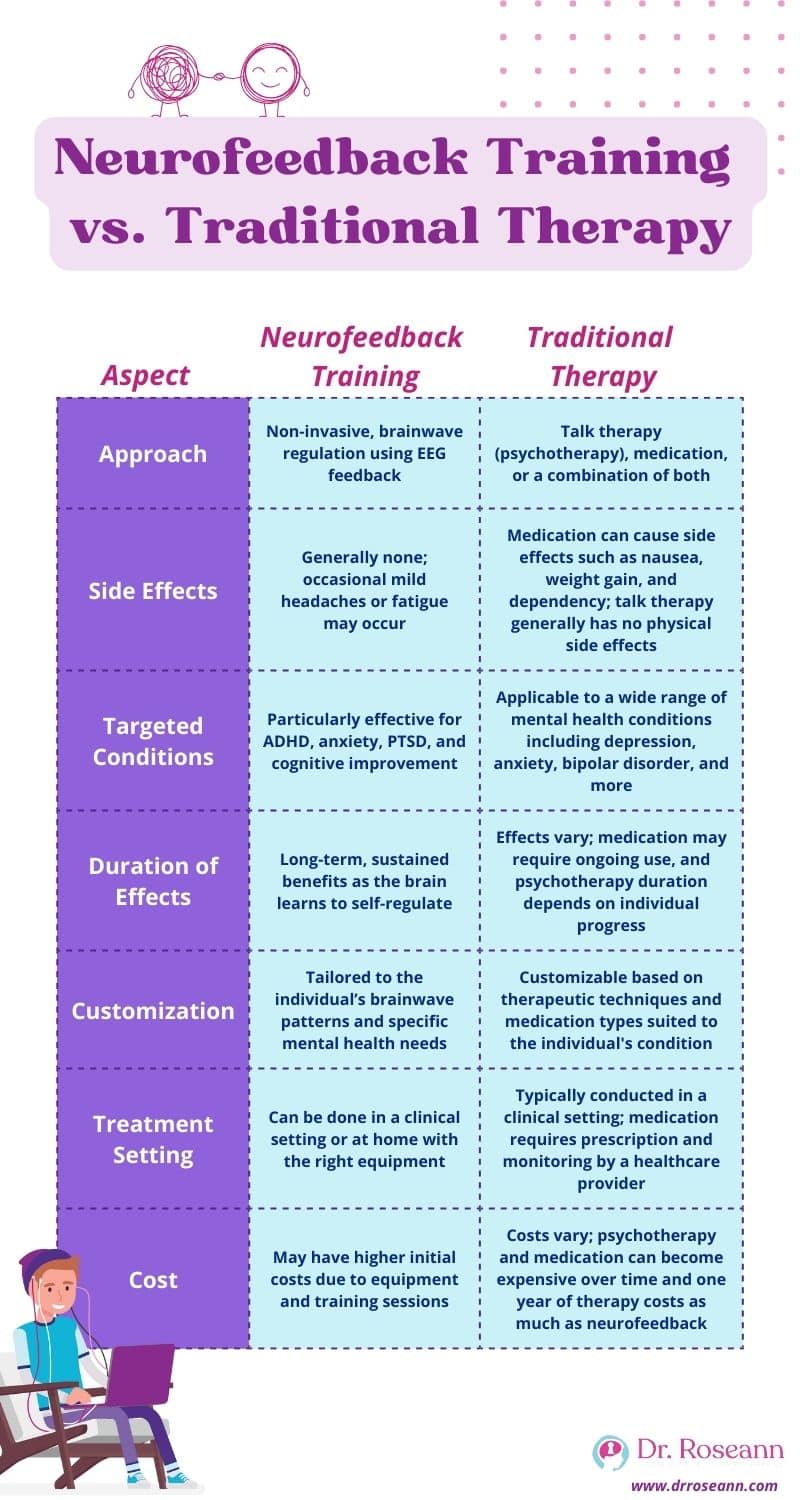
How does neurofeedback compare to traditional therapy?
Neurofeedback offers a non-invasive approach to training brain function, while traditional therapy may involve talk therapy or medication.
Citations
Butnik, S. M. (2005). Neurofeedback in adolescents and adults with attention deficit hyperactivity disorder. Journal of Clinical Psychology, 61(5), 621–625. https://doi.org/10.1002/jclp.20124
Reiter, K., Andersen, S. B., & Carlsson, J. (2016). Neurofeedback Treatment and Posttraumatic Stress Disorder. The Journal of Nervous and Mental Disease, 204(2), 69–77. https://doi.org/10.1097/nmd.0000000000000418
Dr. Roseann is a mental health expert in Neurofeedback who is frequently in the media:
- Biofeedback Certification International Alliance (BCIA) Webinar :Neurofeedback & Lyme
- Living with Lyme (Podcast) : Neurofeedback and biofeedback for PANS/PANDA
- Helping Children Thrive Podcast Benefits of Neurofeedback for children with ADHD
Always remember... “Calm Brain, Happy Family™”
Disclaimer: This article is not intended to give health advice and it is recommended to consult with a physician before beginning any new wellness regime. *The effectiveness of diagnosis and treatment vary by patient and condition. Dr. Roseann Capanna-Hodge, LLC does not guarantee certain results.
Are you looking for SOLUTIONS for your struggling child or teen?
Dr. Roseann and her team are all about science-backed solutions, so you are in the right place!
Grab your complimentary copy of
© Roseann-Capanna-Hodge, LLC 2024