%20.png)


Estimated reading time: 7 minutes
A learning disability doesn’t mean your child lacks effort or ability—it means their brain dances to a different rhythm. And when that rhythm gets thrown off by stress or dysregulation, learning feels like pedaling uphill on a rusty bike—every push takes more energy than it should.
Calm always comes before learning. When your child’s brain settles, new skills stick faster, focus improves, and frustration loosens its grip. I’ve seen it again and again—when we calm the brain first, everything else follows.
This guide will help you decode what your child’s behavior is really saying and use simple, science-backed tools that work. Because behavior is communication, not defiance. What looks like resistance is often dysregulation.
When we regulate the brain, we restore the calm—and that’s where healing begins.

1. Understand What’s Really Going On
Even bright kids struggle when their nervous system runs in overdrive. Stress or anxiety flips the brain into fight-or-flight, blocking focus and learning (McEwen & Morrison, 2013; Arnsten & Pliszka, 2011).
When a child doesn’t feel safe—emotionally or neurologically—learning stops. That’s why testing and observation are key to uncovering what’s beneath the surface.
Here’s what helps:
- Request a full cognitive and academic evaluation
- Identify both strengths and areas of struggle
- Start targeted support early
Testing isn’t a label—it’s a guide. Calm the brain, and learning begins to flow.
2. Regulate Before You Educate
A dysregulated brain can’t learn—it’s like trying to drive through fog without headlights. When stress runs high, the prefrontal cortex (responsible for focus and problem-solving) shuts down (Arnsten & Pliszka, 2011).
Your calm becomes your child’s anchor. Co-regulation—where a parent’s calm helps a child’s nervous system stabilize—creates safety (Porges, 2011).
Try this at home:
- Keep routines steady so your child knows what’s coming next
- Celebrate effort, not perfection
- Add sensory or movement breaks every 20–30 minutes (wiggles welcome!)
- Break tasks into smaller steps that build confidence
Parent Story:
Lily, mom of a 9-year-old with dyslexia, shared: “Every reading session used to end in tears. When I started taking deep breaths and adding breaks, everything changed. She began reading willingly.”
3. Use Multisensory Learning Techniques
Children with learning disabilities thrive when information is presented through multiple senses—seeing, hearing, touching, and moving.
Effective examples include:
- Orton-Gillingham or Wilson methods for reading
- Hands-on math tools (counters, visuals)
- Movement-based learning for memory retention
Multisensory teaching turns abstract information into experiences the brain can actually hold onto.
4. Build a Supportive Professional Team
Once you know what your child needs, build a team that lifts both learning and regulation.
Helpful supports:
- Occupational therapy: improves sensory processing, handwriting, and coordination
- Speech and language therapy: enhances comprehension and communication
- Neurofeedback and brain mapping (QEEG): retrains dysregulated brainwave patterns for calm focus (Arns et al., 2013)
- Counseling or parent coaching: strengthens emotional resilience and co-regulation at home.
For children with non-verbal learning disability (NVLD), the challenges often lie in reading social cues, organizing information, and interpreting visual details rather than reading or spelling. Occupational therapy, visual-spatial supports, and social skills coaching can make a powerful difference.
Calm the brain first, and everything else begins to click.
5. Foster Emotional Safety at Home
Kids learn best when they feel safe, not scared. Emotional safety fuels confidence, curiosity, and risk-taking in learning.
How to create it:
- Listen before correcting
- Validate feelings (“That was hard for you, huh?”)
- Avoid pressure; focus on progress
- Model self-regulation with your own calm tone and body language
6. Leverage Tools and Accommodations
Assistive technology and simple adjustments can dramatically ease frustration.
At home and in school, try:
- Speech-to-text or audiobooks for reading and writing tasks
- Visual schedules or checklists for transitions
- Noise-canceling headphones or fidget tools for focus
- Short, structured work intervals with movement breaks
Small accommodations can create big breakthroughs in confidence.
7. Support the Brain Naturally
Think of your child’s brain like a radio—sometimes you just need to fine-tune the signal.
Simple ways to boost learning naturally:
- Move often. Even short bursts of activity improve focus (Hillman et al., 2008).
- Feed the brain. Omega-3s and magnesium enhance brain communication (Gómez-Pinilla, 2008).
- Breathe and pause. Mindfulness builds control (Zelazo & Lyons, 2012).
- Protect sleep. Routines restore balance and memory.
- Connect socially. Supportive peers nurture confidence (Griffin et al., 2016).
8. Partner Effectively With the School
Schools can be powerful allies when collaboration feels genuine and steady.
Start by:
- Sharing testing results with teachers
- Requesting supports that reduce stress (extra time, audiobooks, sensory breaks)
- Maintaining consistent communication (weekly updates or shared logs)
Parent Story:
Marcus, dad of a 10-year-old with dysgraphia, said: “Once we added short movement breaks and a stress ball at school, his handwriting improved and meltdowns disappeared.”
Research shows that regular parent–teacher communication leads to more effective strategies and greater student success (Woods et al., 2023).
9. Advocate With Knowledge and Confidence
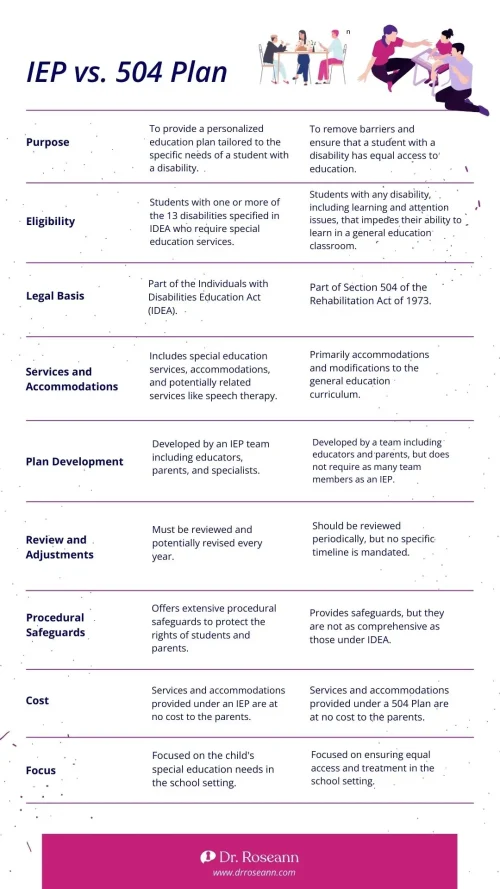
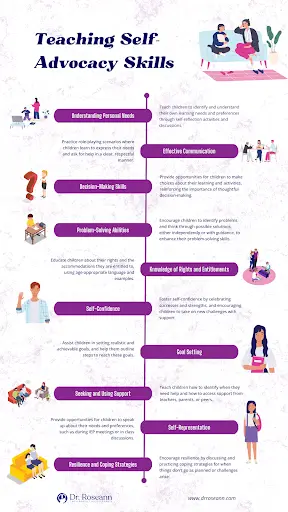
If your child has an IEP or 504 Plan, treat it as a living guide—not a fixed document.
Stay proactive:
- Partner closely with teachers and specialists
- Review goals each semester and adjust as your child grows
- Know your rights under IDEA and Section 504
- Keep asking, “What helps my child stay regulated and ready to learn?”
Advocacy isn’t about confrontation—it’s about consistency and clarity.
10. Know When to Seek Extra Help
You don’t have to do this alone. Seek professional guidance when:
- Meltdowns or avoidance happen daily
- Grades drop despite effort
- Anxiety, irritability, or low self-esteem increase
- You feel stuck or burned out
An expert can help you create a brain-based plan that gets to the root, not just the symptoms.
My BrainBehaviorReset™ Program integrates QEEG brain mapping, neurofeedback, and parent coaching to calm the nervous system—so learning, focus, and emotional growth can finally flourish.
Read more about: The Neurodivergent Umbrella: A Guide to Understanding and Supporting Neurodiverse Kids
Parent Action Steps
Establish regular communication with your child and your child’s teachers Reinforce school strategies at home Join parent-training workshops Adjust IEP goals as your child evolves Keep dialogue open between school, therapists, and home Take our Solution Matcher to get science-backed solutions to help your child today Learn more about the BrainBehaviorReset™ Program Download the Ultimate Guide to School Accommodations to become your child’s best advocate
FAQs
Can a child with a learning disability succeed in school?
Yes. With proper support, early intervention, and nervous system regulation, most children thrive academically and emotionally.
Do children outgrow learning disabilities?
Learning disabilities don’t disappear, but with brain-based interventions and coping strategies, children develop skills to compensate and succeed.
How can I stay calm when helping my struggling child?
Pause, breathe, and remind yourself: “It’s not bad parenting—it’s a dysregulated brain.” Your calm nervous system helps theirs settle.
Citations
Arnsten, A. F., & Pliszka, S. R. (2011). Catecholamine influences on prefrontal cortical function: relevance to treatment of attention deficit/hyperactivity disorder and related disorders. Pharmacology, biochemistry, and behavior, 99(2), 211–216. https://doi.org/10.1016/j.pbb.2011.01.020
Gómez-Pinilla F. (2008). Brain foods: the effects of nutrients on brain function. Nature reviews. Neuroscience, 9(7), 568–578. https://doi.org/10.1038/nrn2421
Griffin, M. M., Wendel, K. F., Day, T. L., & McMillan, E. D. (2016). Developing Peer Supports for College Students with Intellectual and Developmental Disabilities. Journal of Postsecondary Education and Disability, 29(3), 263–269. https://eric.ed.gov/?id=EJ1123801
Hillman, C. H., Erickson, K. I., & Kramer, A. F. (2008). Be smart, exercise your heart: exercise effects on brain and cognition. Nature reviews. Neuroscience, 9(1), 58–65. https://doi.org/10.1038/nrn2298
McEwen, B. S., & Morrison, J. H. (2013). The brain on stress: vulnerability and plasticity of the prefrontal cortex over the life course. Neuron, 79(1), 16–29. https://doi.org/10.1016/j.neuron.2013.06.028
Porges, S. W. (2011). The polyvagal theory: Neurophysiological foundations of emotions, attachment, communication, and self-regulation. W. W. Norton & Company.
Woods, A. D., Morgan, P. L., Wang, Y., Farkas, G., & Hillemeier, M. M. (2023). Effects of Having an IEP on the Reading Achievement of Students With Learning Disabilities and Speech or Language Impairments. Learning Disability Quarterly, 073194872311542. https://doi.org/10.1177/07319487231154235
Zelazo, P. D., & Lyons, K. E. (2012). The potential benefits of mindfulness training in early childhood: A developmental social cognitive neuroscience perspective. Child Development Perspectives, 6(2), 154–160. https://doi.org/10.1111/j.1750-8606.2012.00241.x
Dr. Roseann is a mental health expert in Learning Disability who frequently is in the media:
- Brentwood Home Dos & Don’ts for Creating a Child’s Workstation at Home
- Business Insider Your kids could get the coronavirus when they go back to school. These are the risks and benefits to weigh before sending them.
- CBS (Video) Learning From Home During Quarantine
- CBS (Video) Student Learning Resources Quarantine
- CT FOX61 (Video) Homeschooling Tips During Quarantine
Always remember… “Calm Brain, Happy Family™”
Disclaimer: This article is not intended to give health advice, and it is recommended to consult with a physician before beginning any new wellness regimen. The effectiveness of diagnosis and treatment varies by patient and condition. Dr. Roseann Capanna-Hodge, LLC, does not guarantee specific results.
Are you looking for SOLUTIONS for your struggling child or teen?
Dr. Roseann and her team are all about science-backed solutions, so you are in the right place!