Find Your Solution
In 3 minutes, you’ll know where to start ➤
%20.png)
Those with ADHD have difficulty with self-regulation, which can impact their ability to focus, concentrate and control impulses. It isn’t that they can’t ever focus, rather they hyper-focus on areas of interest but are unable to focus in non-preferred or “boring” areas.
Other symptoms can include distractibility, difficulty controlling emotions and managing frustration, hyperactivity, friendship and relationship difficulties, and problems with working memory, time management, organization, and executive functioning.* ADHD starts in childhood and persists throughout life.
ADHD is a commonly misunderstood or misdiagnosed mental health condition. People often think that children or teens with attention difficulties always have the brain-based disorder ADHD. But there are many things that can interfere with our focus and attention.
Other mental health conditions, such as anxiety and obsessive-compulsive thinking and even bad sleeping habits, can make it difficult for children and teens to focus or pay attention. So, just because your child can’t focus, doesn’t mean that they have ADHD. It’s important to look at the actual cause of the problem to find the right solutions to make your child or teen successful in school, at home, and in social situations.
clinical guide

Just because your child can’t focus, doesn’t mean that they have ADHD.
Attention-Deficit Hyperactivity Disorder (ADHD) is a mental health condition affecting millions of teens and children all over the world.
CASE STUDY:

11-year old boy diagnosed with ADHD and executive functioning deficits
Ethan is a 11 yr-old boy with a history of difficulties with attention, alertness, distractibility, task completion, listening, sensory processing, and restrictive eating.

When determining ADHD in children, physicians or psychologists have to determine if the DSM criteria are met. ADHD symptoms should be present in the child before age 12 and should present in a persistent pattern.
To determine if the child (16 and under) is of the inattentive ADHD type, at least six of the symptoms below have occurred. For teens 17 years old and above, including adults, five or more symptoms should appear. These symptoms should persist for at least 6 months, and they are inappropriate for developmental level:
Six or more symptoms of hyperactivity-impulsivity occurring for children up to age 16, or five or more for adolescents 17 and older or adults; symptoms of hyperactivity-impulsivity have been present for at least 6 months, to the extent that is disruptive and inappropriate for the person’s developmental level:
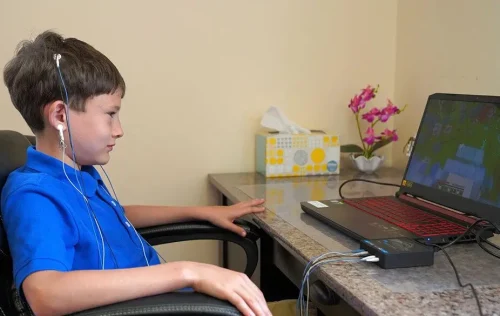
Neurofeedback teaches the brain self-regulation, something people with ADHD lack, in a pleasant yet highly effective way. They typically have too many unfocused brain waves and not enough focused brain waves. Neurofeedback can alter the amount of and ratios of these waves to help retrain the brain and therefore reduce symptoms.
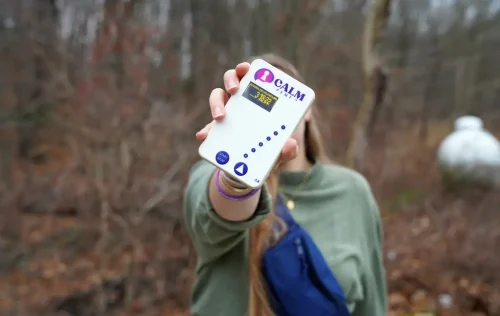
CALM PEMF™ Mobile Device for Attention and Learning boosts focus, learning and executive functioning by stimulating the brain with low-level frequencies. It supports memory, learning, and cognitive functions. Whether you or your child is struggling with distractibility and task completion, CALM PEMF™ can help you get back on track.
Get your device here.
Behavioral therapy, parent coaching, and executive functioning training gives you the tools to learn new, more productive ways to deal with behaviors. We combine psychoeducation with research-based tools that empower parents and children for change.
Dr. Roseann is a Psychologist who works with children, teens and young adults from all over the US supporting them with research based and holistic therapies that are bridged with neuroscience.
Dr. Roseann is a Board Certified Neurofeedback (BCN) Practitioner and is a Board Member of the Northeast Region Biofeedback Society (NRBS) and Epidemic Answers.
She is also a member of the International Society for Neurofeedback and Research (ISNR) and The Association of Applied Psychophysiology and Biofeedback (AAPB).


We’ve helped over 10,000+ children, teens, and young adults find relief, calm the brain, and lead healthy lives. If you’re worried that your current path is not getting to the bottom of the issues…all you need to do is fill out our solution matcher. We’ll let you know which of our solutions is right for your child and family.