%20.png)



Estimated reading time: 7 minutes
If your child’s anxiety is getting in the way of school success, there’s hope—and real support available through a 504 Plan.
What Is a 504 Plan for Anxiety and How Does It Help Students?
A 504 Plan for anxiety is a formal school accommodation plan under Section 504 of the Rehabilitation Act of 1973. But what it really means is that your child gets the support they need to learn and thrive, even when anxiety shows up.
When a child has a mental health condition like anxiety, OCD, or panic disorder, it can affect their ability to concentrate, think clearly, or participate in class.
According to the U.S. Department of Education (2024), students qualify for a 504 when their condition substantially limits a major life activity, and that includes learning.
Schools are required to put reasonable supports in place so your child isn’t left behind because of something they can’t control.
And just to be clear, these plans aren’t about giving your child an “easy pass.” They’re about giving them the tools, structure, and flexibility their nervous system needs to stay calm and show what they’re truly capable of.
When we help regulate the brain first, learning naturally follows.
Examples of what a 504 Plan can help with:
- Managing test anxiety through extended time or breaks
- Accessing quiet spaces during stressful times
- Adjusting participation expectations to reduce pressure
- Creating predictability to lower stress triggers
How to Know if Your Child Qualifies for a 504 Plan for Anxiety
A child may qualify for a 504 Plan if their anxiety significantly interferes with one or more major life activities—such as concentrating, learning, or interacting with others.
Qualification usually requires:
- A diagnosis or documentation from a healthcare provider
- Evidence that anxiety impacts school participation or performance
- Collaboration between parents, teachers, and the school’s 504 team
Parents often think their child’s anxiety has to be ‘severe’ to qualify—but that’s not true. If your child’s anxiety is creating real barriers at school, they deserve accommodations.
Common Signs of Anxiety in Children and Teens at School
Every child’s anxiety looks a little different—but many parents notice patterns long before schools do.
Common signs in children:
- Frequent stomachaches or headaches before school
- Clinginess, tearfulness, or refusal to attend
- Perfectionism or meltdown over mistakes
- Difficulty concentrating or finishing work
Common signs in teens:
- Avoiding social interactions or group projects
- Trouble sleeping or racing thoughts before big tests
- Irritability or emotional shutdown
- Falling grades despite effort
Parent story:
Elba’s 11-year-old daughter, Ella, began crying every Sunday night and refusing to go to school. Once her anxiety was identified and supported through a 504 Plan, Ella began attending consistently—and her confidence slowly returned.
How Can Anxiety Affect a Child’s Learning and School Performance?
When anxiety takes over, your child’s thinking brain (the prefrontal cortex) goes offline, and their fear brain (the amygdala) takes charge. In that moment, logic and reasoning simply aren’t available—no matter how much we want them to “just calm down.”
It’s not about willpower or attitude; it’s about a dysregulated nervous system that needs support to feel safe again before it can learn.
Research also shows that how adults respond really matters. When teachers (or parents) unintentionally allow anxious kids to avoid stressful tasks, it can actually make anxiety stronger over time.
In a 2023 study, Ginsburg and colleagues found that students whose teachers regularly accommodated avoidance—like skipping presentations or difficult assignments—had higher anxiety later on.
It’s a powerful reminder that our goal isn’t to help children escape discomfort, but to help them face it with the right tools and calm support.
Here’s how anxiety impacts learning:
- Trouble focusing or remembering lessons
- Avoidance of tasks or perfectionism leading to burnout
- Test anxiety that lowers performance
- Strained peer and teacher relationships
Anxiety can make even the most capable child feel like they’re “failing.” But when schools understand how the anxious brain works, they can make small changes that have a big impact.

How to Request a 504 Plan for Your Child With Anxiety
Getting a 504 for anxiety starts with open communication. Schools can’t help if they don’t know your child is struggling.
5 Steps to Request a 504 Plan
- Contact your child’s teacher or counselor. Share your concerns and ask about next steps.
- Submit a written request to the school’s 504 coordinator or principal.
- Provide documentation from your child’s healthcare provider or therapist.
- Attend the 504 meeting and share what works (and doesn’t work) for your child.
- Review and revisit the plan at least once a year to ensure it’s still effective.
Parent story:
When Grey, a 12-year-old with panic attacks, finally received a 504 Plan that allowed for breaks and extended time, his grades went up—and his self-esteem followed.
Examples of Effective 504 Accommodations for Anxiety
Each 504 Plan is unique to the student—but here are some of the most common and effective accommodations for anxiety:

How to Talk to Your Child About Their 504 Accommodations
Discussing accommodations openly helps your child feel empowered rather than “different.”
Try saying:
“This plan is to help bring you some relief in school. Everyone needs support in different ways—and this helps you feel calm and confident.”
Involve your child in the process by asking:
- “What parts of school feel hardest?”
- “What could help you feel calmer in those moments?”
Teachers play a huge role in how well a child’s anxiety is supported at school too. When educators truly understand what anxiety looks like in kids—the worries beneath the behavior—they can respond in ways that calm the nervous system instead of adding more stress.
In fact, a 2024 study by Byrne and Clark found that teachers who were trained to recognize and respond to anxiety (what researchers call “anxiety literacy”) were far less likely to use approaches that unintentionally heightened it.
This is why partnership is everything.
The more open and collaborative you are with your child’s teachers and support staff, the stronger and more effective their 504 Plan will be.
What Parents Can Do at Home to Support an Anxious Student
You are your child’s greatest co-regulator. What you model emotionally teaches your child how to calm their own nervous system.
Practical ways to support your anxious child:
- Share your calm: Keep your tone steady even when your child spirals.
- Keep routines predictable: Structure builds safety.
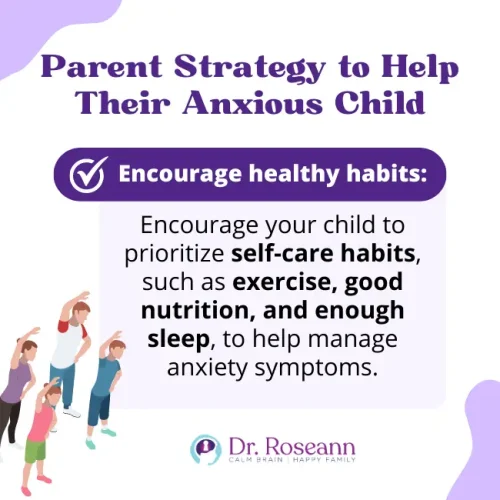
- Encourage healthy habits: Sleep, movement, and nutrition all calm the brain.
- Collaborate with teachers: Stay connected with school staff about progress.
- Seek outside help: Therapies like neurofeedback, PEMF, or CBT can help retrain the anxious brain.
Parent story:
Liam’s parents were hesitant to involve the school, but once his 504 Plan was in place—and he learned breathing and relaxation techniques at home—his daily panic attacks disappeared.
Anxiety doesn’t have to derail your child’s school experience. When you calm the brain first—and advocate with compassion—you open the door to both learning and healing.
Through consistent collaboration, understanding, and the right 504 Plan, your child can succeed academically and emotionally.
If you’re ready for deeper support, explore our BrainBehaviorReset™ Program—a science-backed system to help anxious, dysregulated kids regain focus, confidence, and calm.
FAQs
What’s the difference between an IEP and a 504 Plan for anxiety?
An IEP (Individualized Education Plan) provides special education services, while a 504 Plan provides accommodations to help a student access general education.
Can a child have both anxiety and ADHD accommodations in one plan?
Yes. Schools can create a single 504 Plan addressing multiple conditions, such as anxiety and ADHD, to meet overlapping needs.
Do I need a formal diagnosis to get a 504 Plan?
While a diagnosis helps, schools can sometimes use teacher and parent documentation if anxiety clearly impacts learning.
How long does it take to get a 504 Plan?
The process typically takes a few weeks after documentation and meeting requests, depending on the school’s responsiveness.
Can 504 accommodations change over time?
Absolutely. Plans should evolve as your child grows and their anxiety patterns shift.
Citations
Byrne, J. A., & Clark, L. H. (2024). The impact of educator anxiety and anxiety literacy on primary educators’ responses to anxious children. Child & Youth Care Forum, 53(5), 757–777. https://doi.org/10.1007/s10566-023-09771-8
Ginsburg, G. S., Pella, J. E., DeVito, A., & Chan, G. (2023). Child avoidance of anxiety-provoking situations in the classroom and teacher accommodation. Journal of Psychologists & Counsellors in Schools, 33(1), 51–61. https://doi.org/10.1017/jgc.2021.30
Håland, Å. T., & Bertelsen, T. B. (2025). School anxiety accommodation in youth: Prevalence and patterns among teachers. Child Psychiatry & Human Development. Advance online publication. https://doi.org/10.1007/s10578-025-01853-z
U.S. Department of Education, Office for Civil Rights. (2024, September). Section 504 protections for students with anxiety disorders [Fact sheet]. https://www.ed.gov/sites/ed/files/about/offices/list/ocr/docs/ocr-factsheet-anxiety-disorders-202409.pdf
Always remember… “Calm Brain, Happy Family™”
Disclaimer: This article is not intended to provide health advice. It is recommended to consult with a physician before beginning any new wellness program. The effectiveness of diagnosis and treatment varies by patient and condition. Dr. Roseann Capanna-Hodge, LLC does not guarantee specific results.
Are you looking for SOLUTIONS for your struggling child or teen?
Dr. Roseann and her team are all about science-backed solutions—so you are in the right place!
© Roseann Capanna-Hodge
Meet the Expert
Licensed Therapist | Certified School Psychologist
Board Certified in Neurofeedback (BCN) | 30+ Years Clinical Experience
Expert in Emotional Dysregulation in Children and Nervous System Regulation
Host, Dysregulated Kids Podcast | Author, The Dysregulated Kid
Dr. Roseann Capanna-Hodge is a licensed therapist, certified school psychologist, and leading expert in emotional dysregulation in children and nervous system regulation. With over 30 years of clinical experience and having analyzed more than 10,000 brain maps, she helps families understand what behavior is really signaling—and how to calm the nervous system first so real change can happen.
She is the creator of Regulation First Parenting™ and the CALMS Protocol™, host of the top 1% podcast Dysregulated Kids, and author of The Dysregulated Kid.