%20.png)


Contents

There are lots of things that are better when they fall right in the middle: a balanced diet, the firmness of your mattress and a not-too-hot, not-too-cold day. But when it comes to sibling birth order? Well, as it turns out, it’s a pretty great thing to be in the middle—even though stereotypes often say otherwise. And these common middle child traits prove it.Many think of the middle child as the one who’s “forgotten” or “left behind,” as Dr. Roseann Capanna-Hodge, Ed.D., LPC, an integrative mental health expert and school psychologist says—but she adds that that couldn’t be further from the truth.“Sandwiched between siblings, they develop unique strengths that make them adaptable, independent and incredibly resourceful,” she explains. “Whether it’s navigating family dynamics, standing out in their own way or becoming the go-to peacemaker, middle children bring something special to the table.”But, with anything, even definitive traits are subject to change, based upon each individual personality. In fact, Pamela Orren, PhD, a clinical psychologist and behavioral health manager at Kaiser Permanente in Northern California, says that she prefers to not to call anything “definitive characteristics.”“There are many factors at play when assessing one’s personality structure including family dynamics, culture and environmental influences,” Dr. Orren points out. “Children can and do have a multitude of personality traits regardless of birth order and there is often wide variability even amongst different families in specific characteristics correlated with birth order.”So, taking these factors into account, these are generally the traits that psychologists can spot in middle children.
6 Definitive Middle Child Traits, According to Psychologists
1. They mediate.
Dr. Capanna-Hodge refers to the middle child as “the family’s bridge” and “has a natural gift for bringing people together, smoothing over conflicts and making sure everyone feels heard.”“Growing up between siblings teaches middle children how to navigate relationships, making them expert problem-solvers and negotiators as adults,” she says.Dr. Orren adds that being the “peace maker” is an attempt to appease all of the family members and create solutions that benefit everyone.
2. They think independently.
“Middle children are often independent thinkers who don’t just go along with the crowd and they find their own way because they aren’t the ‘first’ or the ‘baby’ of the family,” Dr. Capanna-Hodge says. “From an early age, middle children learn that if they want to stand out (or really get any attention), they have to do things differently—so they become independent, creative and adaptable.”
3. They’re easygoing.
Dr. Orren notes that middle children are thought to be more easygoing, social and, as mentioned, adaptable—meaning that they can conform to a variety of situations.
4. They roll with the punches.
Middle children learn to roll with the punches, as Dr. Capanna-Hodge says, since they “don’t always get the first pick, but that teaches them to be flexible, resilient and adapt by having plan A, B and C.”“As adults, middle children can thrive in fast-changing environments, making them great problem-solvers, team players and leaders,” she adds.
5. They’re determined.
Some middle children can feel overlooked at times, but this only fuels their determination to stand out, according to Dr. Capanna-Hodge.“They can be a real underdog because they work hard to prove themselves in ways their first or last born siblings don’t have to,” she says. “So, it’s no surprise that so many successful entrepreneurs and leaders are middle children, because they’ve been pushing for recognition their whole lives.”
6. They’re loyal.
“Middle children know what it’s like to feel left out, so they become fiercely loyal to their friends,” Dr. Capanna-Hodge explains. “They build deep, lasting relationships because they value connection in a way others might take for granted. Middle children also are loyal employees who appreciate the security of a healthy workplace.”
Why It’s Good To Be in the Middle
Whether these are traits you see in your own child, or if you recognize them in yourself, you should know that it’s a positive thing to be born in the middle. In fact, the idea that middle children are completely “forgotten” is more about perception than reality, Dr. Capanna-Hodge says.“They may not always be in the spotlight, but that actually helps them develop independence, adaptability and resilience,” she explains.It’s a viewpoint shared by Dr. Orren, who says, “As adults, the same general characteristics of adaptability and independence often lead to success both socially and professionally.”Over time, middle children quietly develop their strengths in a different way than their "bossy" first-born and "free-spirited" younger siblings, according to Dr. Capanna-Hodge, explaining that each middle child finds “their own way in the world and develop into independent humans."She goes on to say that if you’re a parent to a middle child, you don’t need to worry about them, explaining, “They’re gaining skills that will serve them for life."Citations
- Dr. Roseann Capanna-Hodge, Ed.D., LPC, an integrative mental health expert and school psychologist
- Pamela Orren, PhD, a clinical psychologist and behavioral health manager at Kaiser Permanente
Always remember… “Calm Brain, Happy Family™”
Disclaimer: This article is not intended to give health advice and it is recommended to consult with a physician before beginning any new wellness regime. *The effectiveness of diagnosis and treatment vary by patient and condition. Dr. Roseann Capanna-Hodge, LLC does not guarantee certain results.
Are you looking for SOLUTIONS for your struggling child or teen?
Dr. Roseann and her team are all about science-backed solutions, so you are in the right place!
Grab your complimentary copy of

Dr. Roseann is a Children’s Mental Health Expert and Licensed Therapist who has been featured in/on hundreds of media outlets including The Mel Robbins Show, CBS, NBC, PIX11 NYC, Today, FORBES, CNN, The New York Times, The Washington Post, Business Insider,Women’s Day, Healthline, CNET,Parade Magazine and PARENTS. FORBES called her, “A thought leader in children’s mental health.”
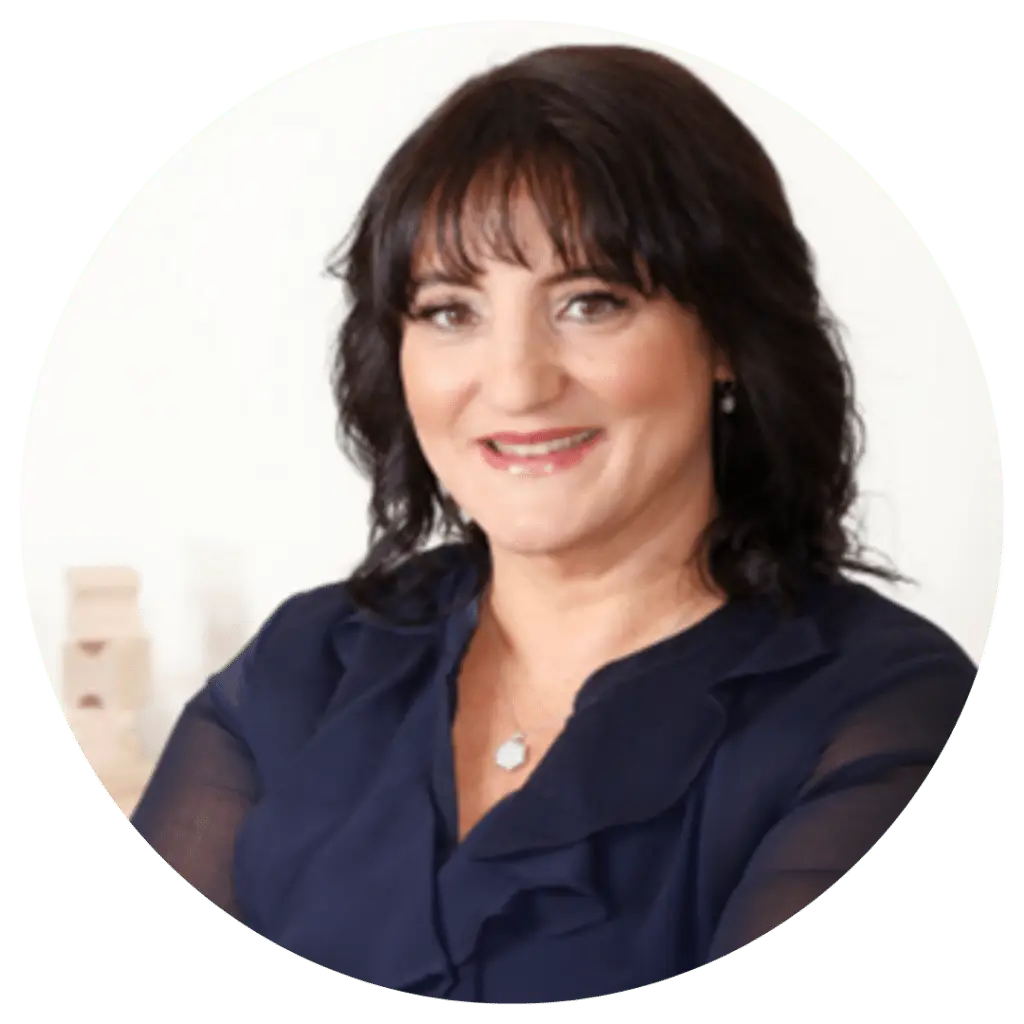
She coined the terms, “Re-entry panic syndrome” and “eco-anxiety” and is a frequent contributor to media on mental health.Dr. Roseann Capanna-Hodge has three decades of experience in working with children, teens and their families with attention-deficit hyperactivity disorder (ADHD), autism, concussion, dyslexia and learning disability, anxiety, Obsessive Compulsive Disorder (OCD), depression and mood disorder, Lyme Disease, and PANS/PANDAS using science-backed natural mental health solutions such as supplements, magnesium, nutrition, QEEG Brain maps, neurofeedback, PEMF, psychotherapy and other non-medication approaches.She is the author of three bestselling books, It’s Gonna Be OK!: Proven Ways to Improve Your Child's Mental Health, The Teletherapy Toolkit, and Brain Under Attack. Dr. Roseann is known for offering a message of hope through science-endorsed methods that promote a calm brain.Her trademarked BrainBehaviorResetⓇ Program and It’s Gonna be OK!Ⓡ Podcast has been a cornerstone for thousands of parents facing mental health, behavioral or neurodevelopmental challenges.She is the founder and director of The Global Institute of Children’s Mental Health, Neurotastic™Brain Formulas and Dr. Roseann Capanna-Hodge, LLC. Dr. Roseann is a Board Certified Neurofeedback (BCN) Practitioner, a Board Member of the Northeast Region Biofeedback Society (NRBS), Certified Integrative Mental Health Professional (CIMHP) and an Amen Clinic Certified Brain Health Coach. She is also a member of The International Lyme Disease and Associated Disease Society (ILADS), The American Psychological Association (APA), Anxiety and Depression Association of America (ADAA) National Association of School Psychologists (NASP), International OCD Foundation (IOCDF).© Roseann-Capanna-Hodge, LLC 2024


%20Are%20Melting%20Down%20and%20How%20to%20Build%20a%20Bigger%20Cup.png)