%20.png)



Estimated reading time: 8 minutesWhen your child’s personality changes overnight—suddenly anxious, angry, obsessive, or even regressing—it’s not just behavior. It’s a sign something deeper is going on.For many parents, that “aha” moment leads to a diagnosis of PANS or PANDAS.Let’s walk through what that really means—and how a holistic approach can help your child heal.
Understanding PANS and PANDAS
Sometimes a child can go from totally fine to suddenly anxious, moody, or having odd behaviors, almost overnight. This can be scary and confusing for parents. That’s where you need to start digging deeper to know what’s happening with your child.Let’s break it down:
- PANDAS happens when a strep infection (like strep throat) triggers the immune system to attack the brain by mistake.
- PANS can be triggered by other infections like Lyme disease—or even by toxins or stress.
- These conditions cause a sudden change in behavior, not something that slowly builds up over time.
Common symptoms you might see:
- Obsessive or repetitive behaviors (like hand-washing or checking things)
- Major mood swings or anxiety
- Trouble sleeping or eating
- Tics (sudden movements or sounds)
- Acting much younger than their age
Parents often say, “My child was totally fine yesterday… and today seems like a different person.”This is more than a mental health issue. It’s neuroinflammation, driven by an immune system gone rogue. That’s why early help is key.

Dr. Scott Antoine’s PANS Journey
Dr. Scott Antoine’s path into understanding PANS and PANDAS began when his 12-year-old daughter, Emma, suddenly developed severe OCD behaviors and anxiety. Even as a doctor, he felt lost and overwhelmed trying to find the right help.His daughter’s condition was misdiagnosed a lot of times, that’s when he finally discovered PANDAS through his own research. This turning point not only led to the right treatment for PANS/PANDAS for Emma, but also sparked his passion to help other families.His experience shows how important it is for parents to keep asking questions and trust their instincts because the right answers can really take you in the right direction.
PANS Diagnosis: Why It’s Often Missed
Getting a proper diagnosis for PANS or PANDAS can take years. Many kids are first labeled with anxiety, OCD, or even ADHD before anyone realizes an infection might be the root cause. This happens because most doctors fail to connect it to infections like strep or Lyme.Even when a child shows clear signs like obsessive handwashing or panic attacks, PANS isn't always on the radar.It can take 2 to 5 years for families to get a correct diagnosis.That’s years of frustration, confusion, and treatments that don’t help.Kids are often given medication or therapy for symptoms, but the real trigger “an immune system” gone rogue—gets missed.What can you do as a parent?Don’t wait. If your gut says something’s off, ask for testing. That means strep tests, Lyme panels, immune function, and more.https://youtu.be/ax3LxcepVZw
Why Aren’t More Doctors Aware?
The truth is, many medical professionals aren’t trained to recognize the signs of PANS or PANDAS. That lack of training leads to:
- Misdiagnosis as anxiety, OCD, or ADHD
- Delayed treatment while symptoms get worse
- Parents feeling dismissed or alone
- Children keep suffering
Dr. Antoine’s own experience as both a physician and a parent shows how even doctors can miss the signs—until they see it up close.
Common Infections Associated with PANS/PANDAS
While streptococcal infections are the most well-known trigger for PANDAS, several other infections can contribute to the development of PANS and PANDAS. These include:
- Triggers of PANS/PANDAS
- Certain infections and environmental factors can set off PANS/PANDAS symptoms.
- Strep Throat
- Lyme Disease
- Mycoplasma
- Viruses
- Mold Exposure
- Stress
- Allergies
Understanding the range of infections associated with these disorders can help parents and healthcare providers identify potential triggers. It’s essential to consider a child’s medical history, including recent infections, when evaluating neuropsychiatric symptoms.By recognizing the various infections that can lead to PANS and PANDAS, we can better support affected children and their families in finding effective treatment options.
What’s the Best Treatment for PANS/PANDAS?
If you're searching for the right treatment for PANS/PANDAS, here's what every parent needs to know:No single treatment works for every child.And because each child’s symptoms, triggers, and responses are different, so your approach should be. That’s where integrative PANS/PANDAS treatment comes in.
What is Integrative Treatment?
It means combining:
- Conventional medicine (like antibiotics or anti-inflammatories)
- Natural and holistic supports (like nutrition, therapy, or supplements)
This balanced approach helps tackle the root cause and the symptoms—both physical and emotional.
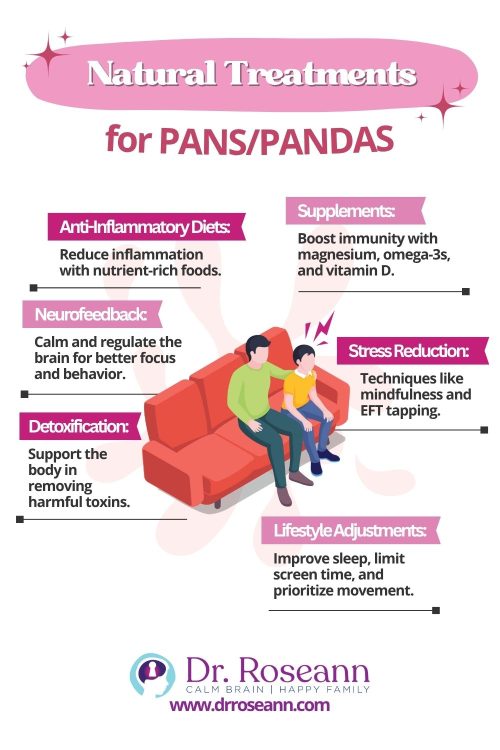
Common Treatment Tools:
- Antibiotics – to treat underlying infections
- Cognitive Behavioral Therapy (CBT) – for OCD, anxiety, and mood
- Dietary changes – anti-inflammatory foods to calm the body
- Supplements – magnesium, omega-3s, and vitamin D to support the brain
- Neurofeedback – helps regulate focus, mood, and behavior
- Detox support – gentle ways to help the body clear toxins
- Lifestyle tweaks – better sleep, more movement, less screen time
- Stress reduction – mindfulness, breathwork, EFT tapping
The goal: Treat the body AND support the brain.Work with a provider who understands PANS/PANDAS and is open to building a plan that fits your child.
Immune System Support in PANS/PANDAS Treatment
Bringing your child’s immune system back into balance will help your child heal since PANS and PANDAS are rooted in an immune system gone rogue.
What Can Help Regulate the Immune Response?
- IVIG (Intravenous Immunoglobulin): This treatment gives the immune system a “reset.” It’s often used for children with severe symptoms and has shown powerful results in calming inflammation and restoring function.
- Low-Dose Naltrexone (LDN): A gentler and more natural option that helps modulate immune activity without harsh side effects. Many parents are now exploring this as part of a holistic treatment for PANS/PANDAS.
- Other immune-modulating medications: Used under a doctor’s care to calm the autoimmune reaction and reduce neuropsychiatric symptoms.
The right treatment depends on your child’s specific symptoms and health history.That’s why working with a provider who truly understands PANS/PANDAS is so important.
Neurological Symptoms: Why Behavioral Therapy Matters

How Therapy Helps with PANS/PANDAS Brain Symptoms
Kids with PANS or PANDAS often show sudden shifts in behavior—like intense anxiety, OCD, or mood swings. These aren't “just behavioral.” They’re neurological, and therapy plays a big role in healing.
Why Cognitive Behavioral Therapy (CBT) Works:
- Teaches coping tools for managing anxiety and obsessive thoughts
- Helps reframe scary or repetitive thinking patterns
- Builds emotional awareness and confidence
But it doesn’t stop in the therapist’s office.Parents play a HUGE role at home using the same tools, keeping communication open, and offering calm, consistent support.Additionally, combining behavioral therapy with other modalities, such as neurofeedback or mindfulness practices, can enhance the overall effectiveness of treatment.Lastly, You know your child best. Keep asking questions. Keep seeking answers. And surround yourself with providers and communities that truly get it.Progress may not always be a straight line, but every small win matters. Hold onto hope—it’s not just possible; it’s essential.Ready to take a natural step toward calm and clarity?Use our free Brain & Behavior Solutions Matcher to get custom recommendations tailored to your child’s needs.

Parent Action Steps
Track behaviors, mood changes, infections, and environmental exposures. This helps identify patterns and speeds up diagnosisSeek out professionals familiar with PANS/PANDASStart small: improve sleep, reduce inflammation with food, limit toxins, and explore therapies like neurofeedback or CBTNot sure where to start? Use our free Brain & Behavior Solutions Matcher to get custom recommendations tailored to your child’s needsFAQs
Is it just a mental health issue?
No. PANS and PANDAS are not just behavioral or emotional disorders. They’re medical conditions where the immune system attacks the brain after infections or inflammation
How should I find a good provider?
Look for a practitioner who knows about PANS/PANDAS, not just general pediatric or psychiatric care. Functional medicine doctors, integrative pediatricians, and providers trained in neuroimmune disorders often have the experience needed.
How do I know what’s going on in my child’s brain?
A clinical evaluation is important, but tools like QEEG brain mapping can give you real insights. It shows how your child’s brain is functioning and where dysregulation is happening.
Can it be treated?
Yes. Treatment often includes antibiotics, immune support (like IVIG or LDN), detox, natural therapies (diet, neurofeedback, supplements), and behavioral therapy.Dr. Roseann is a mental health expert in Self-Regulation who frequently is in the media:
- Healthline Understanding Self-Regulation Skills
- Scary Mommy What Is Self-Regulation In Children, And How Can You Help Improve It?
- The Warrior Parent Podcast It's Gonna Be OK! Changing Behaviors and Responses (And The Magic of Magnesium)In Your Family with Dr. Roseann Capanna-Hodge
Always remember… “Calm Brain, Happy Family™”
Disclaimer: This article is not intended to give health advice and it is recommended to consult with a physician before beginning any new wellness regime. *The effectiveness of diagnosis and treatment vary by patient and condition. Dr. Roseann Capanna-Hodge, LLC does not guarantee certain results.
Are you looking for SOLUTIONS for your struggling child or teen?
Dr. Roseann and her team are all about science-backed solutions, so you are in the right place!