%20.png)


Estimated reading time: 9 minutes
Can neurofeedback therapy help memory?
We once had 10-year-old Lily who kept forgetting homework and piano notes—after neurofeedback, she focused better and remembered more.
Research echoes this trend in both healthy people and those with cognitive challenges. Studies show:
- Memory performance improved and was maintained at 30-day follow-up in individuals with mild cognitive impairment.
- Patients with Alzheimer's Disease who received neurofeedback had stable or improved cognitive performance.
- Neurofeedback improves memory, recall of information, and recognition across different age groups.
- Both episodic memory (personal experiences) and working memory (day-to-day thinking) showed measurable improvements after neurofeedback training.
Why Memory Struggles Are More Common Than You Think
Frustrating memory lapses happen to everyone, but when they affect daily life, school, or work, it’s time to find a solution that addresses the root cause. Memory is a complex system, and when the brain's electrical activity becomes dysregulated, it can falter. While traditional strategies like note-taking can help, they don't train your brain to regulate itself more effectively.
This is where neurofeedback therapy comes in. It’s a non-invasive, drug-free method that teaches your brain to optimize its own activity patterns through real-time feedback. Backed by decades of research, it can reshape how the brain processes and stores information.
I'm Dr. Roseann Capanna-Hodge and I've spent over 30 years helping families see that can neurofeedback therapy help memory is a pathway to real change for those struggling with focus and learning. My clinical work has shown that when we calm and regulate the brain, memory and learning naturally improve.

What is Neurofeedback and How Does It Work?
Imagine teaching your brain to work better by showing it what it's doing in real time. That's the heart of neurofeedback therapy. It's biofeedback for the brain, a way to help your brain learn to regulate itself more effectively.
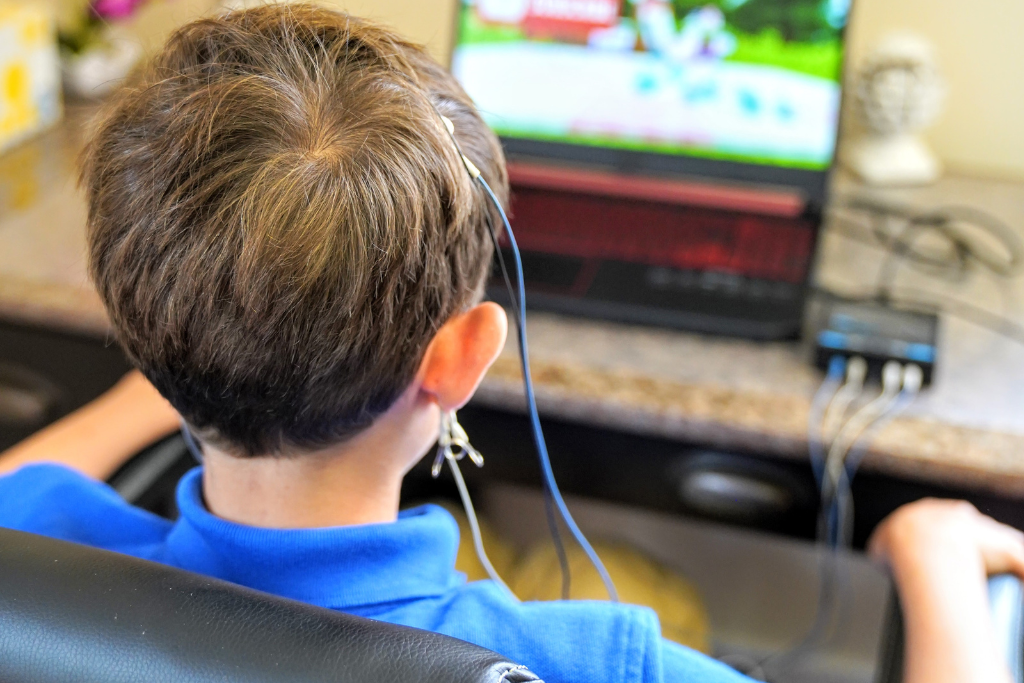
The process uses electroencephalography (EEG). Small, painless sensors on your scalp measure your brain's electrical activity—your brainwaves. Specialized software then translates this information into real-time feedback, often through a movie, game, or music. The feedback responds instantly to your brain activity. For example, if you're watching a movie, it will play clearly when your brain produces patterns associated with focus and memory. If your brain slips into patterns of distraction, the screen might dim. Your brain naturally wants to keep the movie playing, so it learns to maintain the helpful brainwave patterns.
This learning process is called operant conditioning. Your brain doesn't have to consciously figure out how to change its brainwaves; it does the work on its own through neuroplasticity, creating and strengthening neural pathways. Over time, your brain gets better at self-regulation, maintaining these healthier patterns even outside of sessions. This is how can neurofeedback therapy help memory—by training your brain to produce the patterns that support memory encoding, consolidation, and retrieval.
The Neurofeedback Process Explained
Our approach is personalized and data-driven, with no guesswork involved.
- Initial Assessment (QEEG): Your journey begins with a quantitative electroencephalogram, or QEEG, a painless brain mapping session that takes about 45 minutes. We place sensors on your scalp to record your brain's electrical activity in different states (e.g., eyes open, eyes closed).
- Personalized Protocols: We compare your brain map to a database of healthy brain patterns to identify areas of dysregulation. This reveals why memory struggles might be happening. Based on this data, we create a personalized training protocol custom to your brain's unique needs.
- Training Sessions: Sessions typically last 30 to 60 minutes and occur one to three times a week. You'll engage with a game, movie, or music while the software provides real-time feedback based on your brainwave activity. Most people, especially children, find the sessions relaxing and enjoyable.
- Tracking Progress: We regularly track your progress through check-ins and re-assessments to measure objective changes in brain activity and cognitive performance. This allows us to fine-tune your protocols. Most people complete 20 to 40 sessions for lasting results, though some notice improvements much sooner.
The Brainwave-Memory Connection
Your brain's electrical activity, or brainwaves, are the language it uses to encode, consolidate, and retrieve memories. When these brainwave rhythms are in sync, memory flows naturally. When they're out of tune, you experience frustrating memory lapses.
Key Brainwaves and Their Role in Memory
Different brainwave frequencies have specific roles in memory processing:
- Delta waves (0.5-3.5 Hz): Dominant during deep sleep, they are crucial for moving information into long-term memory. Imbalanced delta activity can mean new information doesn't stick.
- Theta waves (4-8 Hz): Active during relaxed, dreamy states, these are critical for encoding and storing episodic memories (your life's events). Theta efficiency can decline with age.
- Alpha waves (8-12 Hz): Representing calm alertness, they help filter out distractions so you can focus. Peak alpha frequency is important for working memory and cognitive performance.
- Beta waves (13-35 Hz): Your brain's "get things done" frequency, active during concentration and problem-solving. They power your working memory, but imbalance leads to attention and memory issues.
- Gamma waves (30-80 Hz): The fastest brainwaves, involved in high-level processing and binding different pieces of information together, like a name and a face.
How Neurofeedback Targets Specific Brainwaves for Memory
Neurofeedback actively trains your brain to produce more helpful patterns and fewer unhelpful ones to improve memory (Tseng et al., 2021). We focus on optimizing the rhythms that matter most for encoding, storing, and retrieving information.
For example, peak alpha frequency training has been shown to significantly improve memory performance. One study found that after this training, memory performance improved and maintained at 30-day follow-up in people with mild cognitive impairment. The benefits persisted even after the brainwave frequency returned to baseline, suggesting the brain learned more efficient processing strategies.
Other common protocols include:
- Theta/Beta ratio training: This helps improve focus and working memory by normalizing the balance between relaxed (theta) and focused (beta) states.
- Sensorimotor Rhythm (SMR) training: Targeting a low beta frequency (12-15 Hz), this training improves attention and reduces impulsivity, creating a better mental state for learning and recall.
By precisely targeting these brainwave patterns, can neurofeedback therapy help memory by creating a more efficient and resilient brain. It's not about forcing your brain to work harder—it's about teaching it to work smarter.

Can Neurofeedback Therapy Help Memory? The Scientific Evidence
Can neurofeedback therapy help memory? The question is increasingly answered with a "yes" from scientific research. A comprehensive review confirms a positive trend: neurofeedback training works to improve memory and cognition in most studies. We're seeing benefits in both clinical populations and healthy individuals who want to optimize their brain training effectiveness.
Research on Different Populations and Conditions
Neurofeedback can be custom to the individual brain, making it applicable to a wide range of people.
- Mild Cognitive Impairment (MCI): Research is particularly promising for MCI, the stage where memory lapses are noticeable but not yet debilitating. Studies show neurofeedback can improve memory performance, with benefits often lasting after training ends. One study found improvements were maintained at a 30-day follow-up (Lavy et al., 2019).
- Dementia and Alzheimer's Disease (AD): While not a cure, neurofeedback can be a powerful tool for symptom management. Research shows that patients with AD who received neurofeedback had stable or improved cognitive performance (Tazaki, 2024) — a remarkable finding for a progressive disease. Early intervention is key.
- Traumatic Brain Injury (TBI): Research is mixed, but some studies report meaningful improvements in learning and memory. Since TBI disrupts the brain's electrical patterns, neurofeedback's ability to improve brain plasticity makes it a logical intervention to explore.
- Healthy Aging and Younger Individuals: Studies show successful brain training with neurofeedback in people over sixty (Trambaiolli et al., 2021). For children and teens, it has proven effective in enhancing cognitive abilities and supporting academic success.

Beyond Recall: How can neurofeedback therapy help memory and overall cognition?
Memory doesn't work in isolation. Improving it with neurofeedback often creates ripple effects across other cognitive functions.
- Working and Episodic Memory: Studies show that neurofeedback improves memory, recall of information, and recognition. This applies to both working memory (your mental sticky note) and episodic memory (personal experiences). Parents often report their child can now follow multi-step directions.
- Attention and Executive Function: You can't remember what you don't pay attention to. Neurofeedback's proven ability to improve attentional control is foundational. This leads to better executive functions like planning, organization, and problem-solving. A more organized brain uses memory more efficiently.
- Cognitive Flexibility and Processing Speed: A brain that can switch tasks and process information faster is better at learning and retrieving memories. Neurofeedback helps make the whole system run more smoothly.
My clinical experience aligns with this research: when we regulate the brain, memory and overall cognition naturally improve. The brain becomes more efficient, resilient, and capable.
Your Guide to Neurofeedback for Memory Improvement
Starting neurofeedback is a structured journey where you actively participate in training your brain. It's a collaborative, personalized process designed to create lasting change.
What to Expect: Protocols, Sessions, and Duration
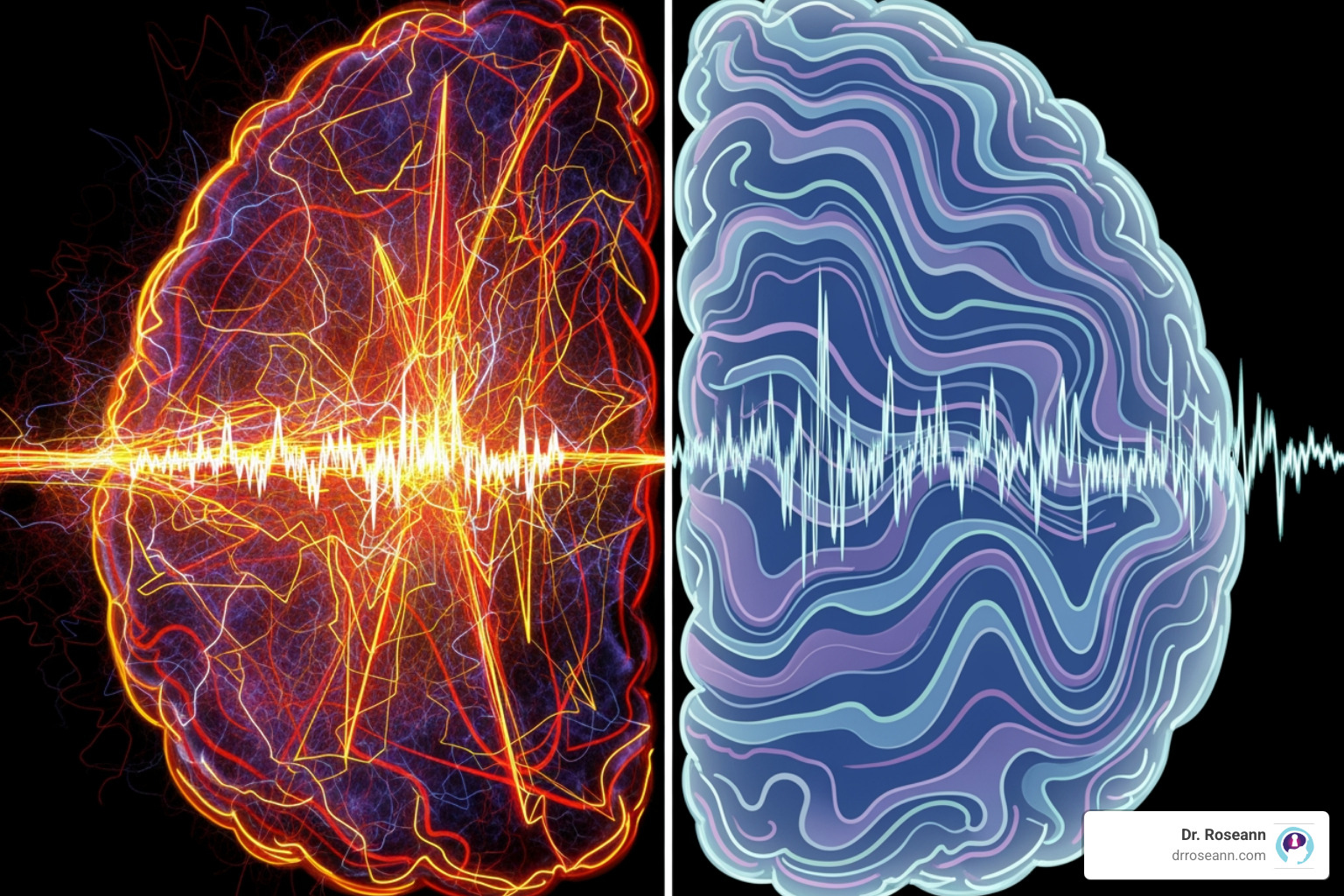
After your initial brain map, we develop a customized treatment plan to target specific brainwave frequencies. We might use frequency band training to increase alpha waves for calm focus or Z-score neurofeedback to train multiple frequencies at once with high precision.
Consistency is key. You'll typically have sessions 1-3 times per week, each lasting 30 to 60 minutes. A full course is usually 20 to 40 sessions, though many clients feel calmer and more focused within the first 10. The most significant memory improvements often appear after 20 sessions. The best part? The benefits stick. Your brain retains these new, healthier patterns long after training ends.
What are the limitations and can neurofeedback therapy help memory in everyone?
While neurofeedback is a powerful tool, it's important to have realistic expectations. Not everyone responds at the same pace, and a small percentage of people may not achieve their performance goals. This is known as "neural modulation sensitivity" and highlights that individual brains respond differently.
The cost and time commitment are also real factors. Neurofeedback requires a financial investment and dedication to consistent sessions. To make it more accessible, we offer options like remote neurofeedback for those who can't travel to our Ridgefield, CT office.
The importance of working with qualified practitioners cannot be overstated. The therapy's effectiveness depends on the provider's expertise in interpreting brain maps and designing protocols. Board certification and experience are crucial.
On the bright side, neurofeedback has an excellent safety profile. It's non-invasive and drug-free. Side effects are rare and mild, such as temporary fatigue, which often indicates the brain is actively learning.
_compressed.jpeg)
Neurofeedback and Other Approaches to Memory Improvement
While medications for memory exist, they often come with side effects and don't address the root cause of brain dysregulation. Likewise, healthy lifestyle habits like good sleep, nutrition, and exercise are foundational for brain health and are always encouraged.
What makes neurofeedback different is that it directly trains your brain to regulate its own electrical activity. It's not a passive treatment but an active learning process. Think of it this way: lifestyle habits create a good environment for your brain, while neurofeedback teaches your brain how to function optimally within that environment. It's a targeted, brain-based approach that complements other healthy practices.
Dr. Roseann's Therapist Quick Tip
In my 30+ years of clinical practice, I've learned that memory strengthens most when the brain is regulated—and that’s exactly what neurofeedback helps train.
What I tell parents:
When your child’s brain shifts out of overwhelm and into a calmer, more organized state, attention and working memory naturally improve. Neurofeedback supports this by teaching the brain how to stay in those healthier patterns.
Try this today:
Before homework or studying, build in a two-minute calm-reset—deep breathing, a sensory break, or quiet movement—to prime the brain for learning. These small regulation moments make neurofeedback progress even more effective.
Why it works:
A regulated nervous system activates the prefrontal cortex, the part of the brain responsible for focus, planning, and memory. Neurofeedback strengthens these pathways over time, helping your child learn and recall information more easily.
Remember:
A calmer brain is a smarter brain. Support regulation, use neurofeedback consistently, and you’ll see memory begin to shine.
Neurofeedback for Memory
So, can neurofeedback therapy help memory? The research and clinical evidence point to a clear conclusion: yes, it can.
Neurofeedback is a powerful, non-invasive, and drug-free approach that teaches your brain to regulate itself more effectively. By using the brain's natural neuroplasticity, it creates lasting improvements in working memory, attention, and overall cognitive function. It's not a temporary fix; it's about training your brain to function optimally from the inside out.
In my 30 years of clinical practice at Dr. Roseann, I've seen countless individuals transform their lives. Children thrive academically, and adults regain their mental sharpness and confidence. These are real people experiencing measurable change.
With its excellent safety profile and lasting benefits, neurofeedback is a tool for brain optimization, offering game-changing solutions when other approaches have fallen short. If you or someone you love is struggling with memory or focus, neurofeedback might be the answer.
Ready to explore how neurofeedback can help? Learn more about our comprehensive, drug-free solutions for focus and cognition and find what's possible when you give your brain the right tools to succeed.
Frequently Asked Questions
Is neurofeedback for memory painful or invasive?
No. Neurofeedback is completely non-invasive and painless. Small sensors are placed on the scalp to read your brain’s natural electrical activity. Nothing is sent into your brain. Most clients, especially children, find the sessions relaxing and enjoyable as they watch a movie or play a game.
How long does it take to see memory improvements from neurofeedback?
The timeline varies, but there are common patterns. Many people feel calmer and more focused within the first 10 sessions. Measurable improvements in memory and cognition typically become more apparent after 20 sessions. A full course of 20 to 40 sessions is usually recommended for lasting benefits. Research shows that memory improvements can be maintained long after training ends because the brain learns and retains these new, efficient patterns.
Is neurofeedback safe for kids who struggle with focus or emotional regulation?
Yes—neurofeedback is very safe and non-invasive. We’re not putting anything into the brain; we’re simply giving it information so it can learn healthier patterns. For kids who are easily overwhelmed or dysregulated, neurofeedback often helps them focus better, calm their bodies, and think more clearly. It’s a gentle, effective support without the heavy side effects parents often worry about.
Will neurofeedback help if my child’s memory issues come from stress or anxiety, not ADHD?
Absolutely. Many memory problems are really stress problems. When a child’s nervous system is in overdrive, the brain can’t store or retrieve information well. Neurofeedback helps quiet those stress circuits so the thinking part of the brain can come back online. As the brain becomes calmer and more regulated, memory naturally improves—without the child having to “try harder.”
Citations
Lavy, Y., Dwolatzky, T., Kaplan, Z., Guez, J., and Todder, D. (2019). Neurofeedback improves memory and peak alpha frequency in individuals with mild cognitive impairment. Appl Psychophysiol Biofeedback, 44(1):41-49. https://doi.org/10.1007/s10484-018-9418-0.
Tazaki, M. (2024) A review: effects of neurofeedback on patients with mild cognitive impairment (MCI), and Alzheimer’s disease (AD). Front. Hum. Neurosci. 17:1331436. https://doi.org/10.3389/fnhum.2023.1331436
Trambaiolli, LR., Cassani, R., Mehler, DMA., and Falk, TH. (2021). Neurofeedback and the aging brain: a systematic review of training protocols for dementia and mild cognitive impairment. Front Aging Neurosci, 13:682683. https://doi.org/10.3389/fnagi.2021.682683.
Tseng, YH., Tamura, K. and Okamoto, T. (2021). Neurofeedback training improves episodic and semantic long-term memory performance. Sci Rep, 11:17274. https://doi.org/10.1038/s41598-021-96726-5
Always remember… “Calm Brain, Happy Family™”
Disclaimer: This article is not intended to give health advice and it is recommended to consult with a physician before beginning any new wellness regime. *The effectiveness of diagnosis and treatment vary by patient and condition. Dr. Roseann Capanna-Hodge, LLC does not guarantee certain results.
Are you looking for SOLUTIONS for your struggling child or teen?
Dr. Roseann and her team are all about science-backed solutions, so you are in the right place!