%20.png)



Estimated reading time: 8 minutes
If bonding feels difficult and your child’s emotions are all over the place, it may be their nervous system— not your parenting—that’s getting in the way.
As both a clinician and a parent who has walked through the turbulence of dysregulated brains, I know how painful it is when emotional dysregulation blocks bonding. Understanding child attachment styles—secure, anxious, avoidant, disorganized, can help calm the brain first, nurture deeper connection, and shift the trajectory.
Here’s what you will learn in this blog:
- What child attachment styles are and why they matter in bonding and development
- How a dysregulated brain interrupts secure connection
- Practical strategies you can try today to support your child emotionally
What Child Attachment Styles Are and Why They Matter in Bonding and Development
Understanding child attachment styles is vital when raising a dysregulated child. These styles describe how a young child connects, or struggles to connect—with caregivers.
Rooted in the early work of John Bowlby and Mary Ainsworth, attachment theory shows how these patterns influence emotional health, behavior, and relationships throughout life.
The Four Attachment Styles
- Secure Attachment
When caregivers consistently respond to a child’s physical and emotional needs, children learn that adults are dependable. They explore their world confidently and return to seek comfort when needed
- Anxious (Ambivalent) Attachment
Forms when caregiving is inconsistent. The child may cling and feel unsettled—seeking comfort but resisting it simultaneously. There’s fear of abandonment and difficulty self-soothing
- Avoidant Attachment
Develops when emotional needs are regularly dismissed. The child avoids closeness, appears indifferent during reunions, and suppresses emotional expression—even while distress may persist internally
- Disorganized Attachment
The most severe insecure style. Often stems from frightening, unpredictable caregiving or trauma. The child displays conflicting behaviors—anxiety followed by avoidance, confusion, or detachment during reunion with caregivers

Why These Styles Matter: Impact on Development and Bonding
- Emotional Regulation Foundations
Secure attachment supports healthy brain development and emotional regulation. Children learn to trust their body, feelings, and relationships. In contrast, insecure or disorganized attachment increases risks of anxiety, impulsiveness, and behavioral dysregulation.
- Social and Peer Relationships
Children with insecure or disorganized attachment patterns often struggle with peer relationships. They may display social withdrawal, aggression, or poor social competence in early childhood and beyond.
- Mental Health Risks
Research shows that disorganized attachment significantly elevates risks for externalizing behaviors like conduct issues, while avoidant attachment is linked more closely to internalizing symptoms such as anxiety or depression.
- Internal Working Model
By toddlerhood, a mental model forms, this is how children expect relationships to work. If early caregiving felt unreliable or unsafe, that template may lead to mistrust or fear in future relationships. But importantly, these patterns are flexible and changeable over time
How Early Caregiving and Brain Dysregulation Shape Attachment in kids
From the moment children are born, they’re hardwired to form an emotional bond with their parents / primary caregivers.
Psychologist John Bowlby called this an "attachment"—it’s a lasting sense of safety a child forms when their world feels unpredictable and stress feels high.
Children instinctively cry, follow, and cling to keep their caregiver close for protection and comfort. This secure base helps them explore the world with confidence
Secure Attachment
- Grows from caregivers who consistently respond to a child's emotional and physical needs.
- When children know they are seen, soothed, and understood, they develop trust and feel safe to explore independently
Insecure or Disorganized Attachment
- Happens when caregiver responses are unpredictable, unavailable, or frightening.
- Children may become ambivalent (clingy but difficult to soothe), avoidant (shut down and independent), or disorganized (confused and inconsistent in behavior)
- This often happens after stress, trauma, neglect, or chaotic environments—especially common in complex neurodevelopmental or post‑infection conditions like PANS/PANDAS
Dysregulated Brains Amplify Attachment Struggles
- A child’s brain in chronic stress may struggle with emotional and behavioral control.
- When children cannot manage intense emotions, they may pull away, act out, or shut down—making bonding feel unreachable.
- This dysregulation often coexists with attachment patterns, deepening the challenge

How can I tell if my child has an insecure or disorganized attachment style?
Signs of insecure styles appear as emotional distance, clinginess, or confusion:
- Anxious: looks for your attention but rejects it once they get it
- Avoidant: seems independent and uninterested in closeness
- Disorganized: acts confused, fearful, or cycles between seeking and avoiding comfort
Diagnostic Tips:
- Watch responses to separation and reunion
- Observe consistency in emotional availability
- Note if they lack a clear strategy to get comfort
Could tantrums, lying or defiance actually be rooted in dysregulated attachment?
Absolutely. When a child feels unsafe internally, their brain can go into defensive mode. Tantrums, defiance, lying or withdrawal may stem from attachment trauma—not just testing limits.
- Insecure attachment can lead to heightened emotional reactivity
- Avoidant or disorganized children may act oppositional to push caregivers away before being abandoned
- Acting out is often a protective instinct, not willful disobedience
How does emotional dysregulation disrupt bonding and what helps regulate?
When a child's emotional system is flooded, bonding pathways shut down. Their limbic brain (fight/flight/freeze) overrides the capacity to connect.
Regulation strategies that support attachment:
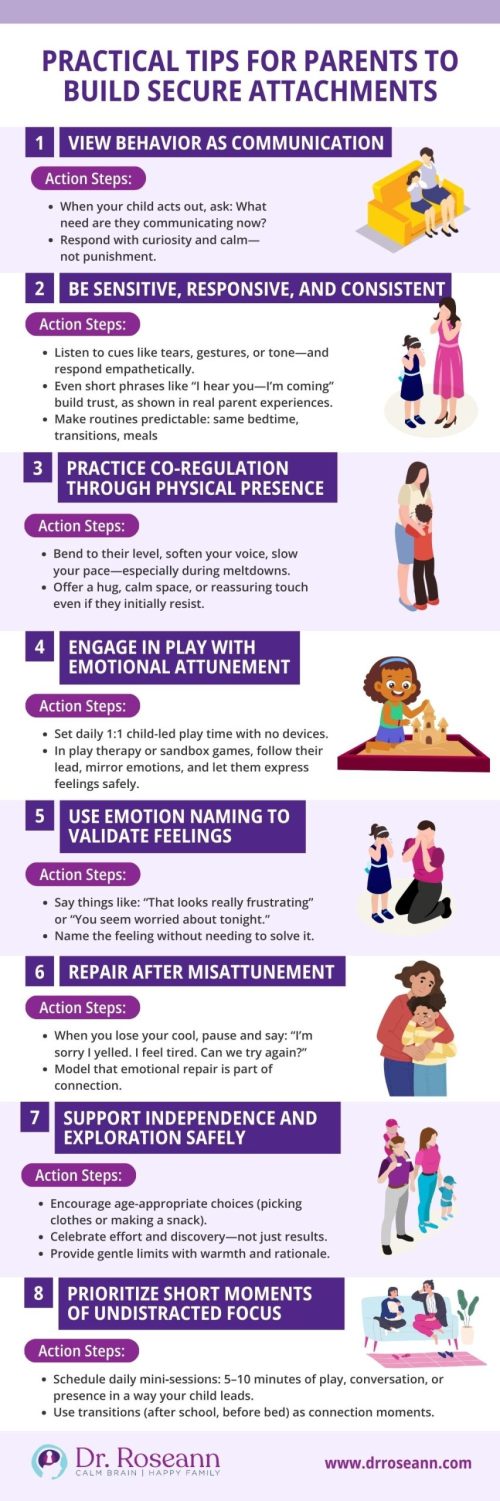
- Co‑regulation: model calm through slow breathing, sensory tools, soft tone
- Consistent routines & rituals: help your child feel predictable safety
- Attachment‑focused interventions like Mary Dozier’s ABC (Attachment & Biobehavioral Catch-up) teach caregivers to follow the child's lead and nurture responsiveness
Can attachment be repaired later if early bonding was disrupted?
Yes! Attachment styles are flexible, not fixed. Experts like Dr. Abrams emphasize that although early years matter, with intention and therapeutic support, you can repair relationships and children can shift toward more secure attachment patterns
- Consistent, responsive caregiving rebuilds trust
- Therapies such as dyadic play therapy, ABC model, or attachment-based parenting can transform connection
- Co‑regulation builds new neural pathways for safety
Does schooling or daycare impact child attachment and bonding?
Time away from caregivers doesn’t automatically cause insecure attachment.
- Quality of care is key: warm, responsive caregivers support attachment
- Inconsistent or harsh care environments can contribute to insecurity
- Children can have secure attachment even with long daycare hours if caregiving at home remains emotionally attuned
How does my own attachment style or stress affect my child’s attachment?
Your emotional availability shapes your child’s ability to feel safe and connect. Stress, personal insecurity, or unresolved attachment wounds can interfere with your sensitivity.
- Maternal sensitivity predicts attachment security more than any other factor
- If you're anxious, avoidant or overwhelmed, your child may mirror that dysregulation
Example:
An 8‑year‑old Sam pulls away even when her mom reaches out for a hug. His brain floods into fight/freeze. He’s stuck between wanting connection and feeling unsafe.
Takeaway: It’s not bad parenting—it’s a brain stuck in alarm. Understanding their attachment style helps guide regulatory support.
Understanding child attachment styles gives you a roadmap from chaos to connection. Brain dysregulation doesn’t mean you're failing—it means you need new strategies.
Recovery is possible. You can rebuild attachment through consistent attunement, regulation tools, and sometimes therapeutic support.
You’re not alone. Behavior is communication and your child is sending you a message. Let’s calm the brain first and let healing follow.
Want to go deeper?
Join our weekly Parenting Newsletter - The Dysregulation Insider for guided support, tools, and connection‑building strategies.
You're doing meaningful work, and it's gonna be OK.
Parent Action Steps
Make eye contact and get on your child’s level during conversations or play. Narrate your child’s feelings out loud to help them feel seen and understood. Stick to predictable routines to give your child a sense of safety and stability. Respond calmly and consistently when your child is upset, even if you feel triggered.
FAQs
What is child attachment disorder vs insecure attachment style of children?
Child attachment disorder (RAD/DSED) is a clinical diagnosis characterized by extreme attachment difficulties, whereas insecure attachment styles like anxious or avoidant are patterns of bonding that arise from inconsistent caregiving. Both can be improved with responsive care.
Why is attachment important in child development?
Attachment shapes emotional regulation, trust, resilience, and even brain wiring. Secure bonding gives a child a foundation to explore the world with confidence and feel safe returning home.
How do I know which attachment style my child has?
Observe responses to separation and reunion, emotional availability, clinginess or avoidance, and whether they show consistent patterns. If you’re unsure, consulting with a developmental psychologist can help clarify.
Can therapy really change attachment style later in childhood?
Absolutely. Studies and experts affirm that interventions like ABC therapy, dyadic play therapy, or co‑regulated parenting can shift insecure attachment toward security over time.
Citations
Pallini, S., Chirumbolo, A., Morelli, M., Baiocco, R., Laghi, F., & Eisenberg, N. (2018). The relation of attachment security status to effortful self‑regulation: A meta‑analysis. Psychological Bulletin, 144(5), 501–531. https://doi.org/10.1037/bul0000134
Cooke, J. E., Kochendorfer, L. B., Stuart‑Parrigon, K. L., Koehn, A. J., & Kerns, K. A. (2019). Parent‑child attachment and children’s experience and regulation of emotion: A meta‑analytic review. Emotion, 19(6), 1103–1126. https://doi.org/10.1037/emo0000504
Brumariu, L. E., & Kerns, K. A. (2015). Parent‑child attachment and emotion regulation: Unpacking two constructs. New Directions for Child and Adolescent Development, 2015(148), 31–45. https://doi.org/10.1002/cad.20098
Dr. Roseann Capanna-Hodge is a licensed mental health expert that is frequently cited in the media:
- Today How to keep your kids physically and mentally afloated
- Little Sleepies How to Practice Mindfulness with Your Kids
- Well + Good The Best Lego Sets for Adults To Unleash Creativity and Practice Mindfulness
Disclaimer: This article is not intended to give health advice and it is recommended to consult with a physician before beginning any new wellness regime. *The effectiveness of diagnosis and treatment vary by patient and condition. Dr. Roseann Capanna-Hodge, LLC does not guarantee certain results.
Are you looking for SOLUTIONS for your struggling child or teen?
Dr. Roseann and her team are all about science-backed solutions, so you are in the right place!
Manage Anxiety, reclaim joy and restore peace in your home
©Roseann Capanna-Hodge
Meet the Expert
Licensed Therapist | Certified School Psychologist
Board Certified in Neurofeedback (BCN) | 30+ Years Clinical Experience
Expert in Emotional Dysregulation in Children and Nervous System Regulation
Host, Dysregulated Kids Podcast | Author, The Dysregulated Kid
Dr. Roseann Capanna-Hodge is a licensed therapist, certified school psychologist, and leading expert in emotional dysregulation in children and nervous system regulation. With over 30 years of clinical experience and having analyzed more than 10,000 brain maps, she helps families understand what behavior is really signaling—and how to calm the nervous system first so real change can happen.
She is the creator of Regulation First Parenting™ and the CALMS Protocol™, host of the top 1% podcast Dysregulated Kids, and author of The Dysregulated Kid.