%20.png)


Estimate reading time: 9 minutes
Why Your Bright Child Struggles to Focus (And How You Can Help)
ADHD lack of focus is a primary challenge of Attention-Deficit/Hyperactivity Disorder. It means your child's brain struggles to sustain attention, is easily distracted, and finds it hard to organize tasks. This isn't a willpower issue; it stems from differences in brain development and how the brain manages attention.
Here's what ADHD lack of focus often looks like:
- Difficulty paying attention to details or making careless mistakes.
- Struggling to stay focused on long tasks like reading or homework.
- Not seeming to listen when spoken to directly.
- Trouble following through on instructions or finishing tasks.
- Poor organization and difficulty managing time.
- Losing things often, like school supplies or personal items.
- Easily distracted by unrelated sights or sounds.
- Forgetting routine tasks like chores or appointments.
You're not alone. More than 1 in 10 kids ages 4 to 17 have been diagnosed with ADHD. This is a common struggle, behavior is communication. Your child's difficulty focusing is their brain telling us something important. The good news is there's hope, and we can take action. Let's calm the brain first, so your child can learn and connect.
I'm Dr. Roseann Capanna-Hodge, and for over three decades, I've helped families steer challenges like ADHD lack of focus with science-backed, natural strategies. I’m passionate about empowering parents to help their children thrive.

Theodore's Story
Six-year-old Theodore loved dinosaurs, building forts, and asking big questions—but every morning before school, his brain felt like a TV stuck between channels.
He wanted to listen, he tried to sit still, but the sounds in the classroom blended together, his thoughts jumped tracks, and simple directions slipped away like bubbles he couldn’t catch. By the time circle time ended, he already felt behind, frustrated, and a little defeated.
At home, his mom saw the real struggle—not a child who didn’t care, but a child whose brain was working twice as hard just to keep up.
When she finally learned why focus was so hard for him, and how his ADHD brain was wired differently, everything shifted.
Instead of blaming herself or thinking Theodore needed to “try harder,” she realized his brain needed support, structure, and regulation—not pressure.
https://www.youtube.com/watch?v=BBOLc0utuWE
The "Why" and "How" of ADHD Lack of Focus
Your child isn't refusing to pay attention; their brain is struggling to regulate it. This isn't about willpower—it's about how their brain is wired. Understanding this shifts us from frustration to effective support. Knowing the "why" behind their focus challenges is the first step toward finding "how" we can help them thrive.
What Inattention Looks Like: From the Classroom to Home
The symptoms of ADHD lack of focus create real challenges at school and home. Inattentive ADHD, the most common type, impacts a child's ability to focus and stay organized, even without hyperactivity.
In the classroom, you may see:
- Careless mistakes: Rushing through work and overlooking details because the brain struggles to sustain close attention.
- Difficulty sustaining attention: Long lectures, reading, or multi-step projects feel monumental, causing them to "zone out."
- Not seeming to listen: The brain struggles to process auditory information if it isn't highly engaging.
- Trouble following instructions: Missing parts of what was said makes follow-through nearly impossible.
- Disorganization: Keeping track of materials, a desk, or a backpack are difficult executive function tasks for the ADHD brain.
- Losing things: Pencils, homework, and personal items are frequently lost due to organizational challenges.
At home, these struggles continue:
- Easily distracted: The smallest sight or sound can pull their attention away.
- Forgetfulness in daily activities: Chores, appointments, and routines are often forgotten.
This can lead to heartbreaking teacher feedback that misinterprets neurological differences as character flaws, social challenges from difficulty staying present in conversations, and deep emotional frustration for your child. These are not signs of low intelligence or effort; they are manifestations of how your child's brain is wired.

A Peek Inside the Brain: The Neurological Roots of Focus Issues
ADHD lack of focus is rooted in specific neurological differences, not character flaws. Research shows the ADHD brain has functional or structural differences in regions like the frontal cortex and basal ganglia, which are crucial for attention and executive functions.
A key factor is lower levels of neurotransmitters, particularly dopamine and norepinephrine. Dopamine is essential for motivation and attention. When it's low, focus wanes, especially for boring or repetitive tasks. This explains why your child can focus on video games but not homework—it’s about the brain’s reward system (Blum et al., 2008).
The issue isn't an attention deficit, but an attention regulation challenge. The brain is highly sensitive to distractions, and the frontal lobe, which should suppress them, has weaker connections. This makes it harder to ignore distractions and return to the task. Understanding this shifts our focus to strategies that support brain function rather than trying to force compliance.
Actionable Strategies to Calm the Brain and Improve Concentration
There are many effective strategies to manage ADHD lack of focus. These tools empower your child to work with their unique brain. Let's calm the brain first to build lasting focus skills.
- Task Breakdown: Break large projects into small, manageable steps (e.g., "do 5 math problems" instead of "do homework"). This provides a sense of accomplishment and builds momentum.
- Pomodoro Technique & Visual Timers: Work in focused bursts (e.g., 25 minutes) followed by short breaks. Visual timers make time concrete and reduce anxiety.
- Body Doubling: Having another person present—even if they're working on their own task—provides a subtle sense of accountability that helps maintain focus.
- Thought Dump Notepad: When a random thought pops up, your child can quickly write it down to clear their mental desktop and return to the task.
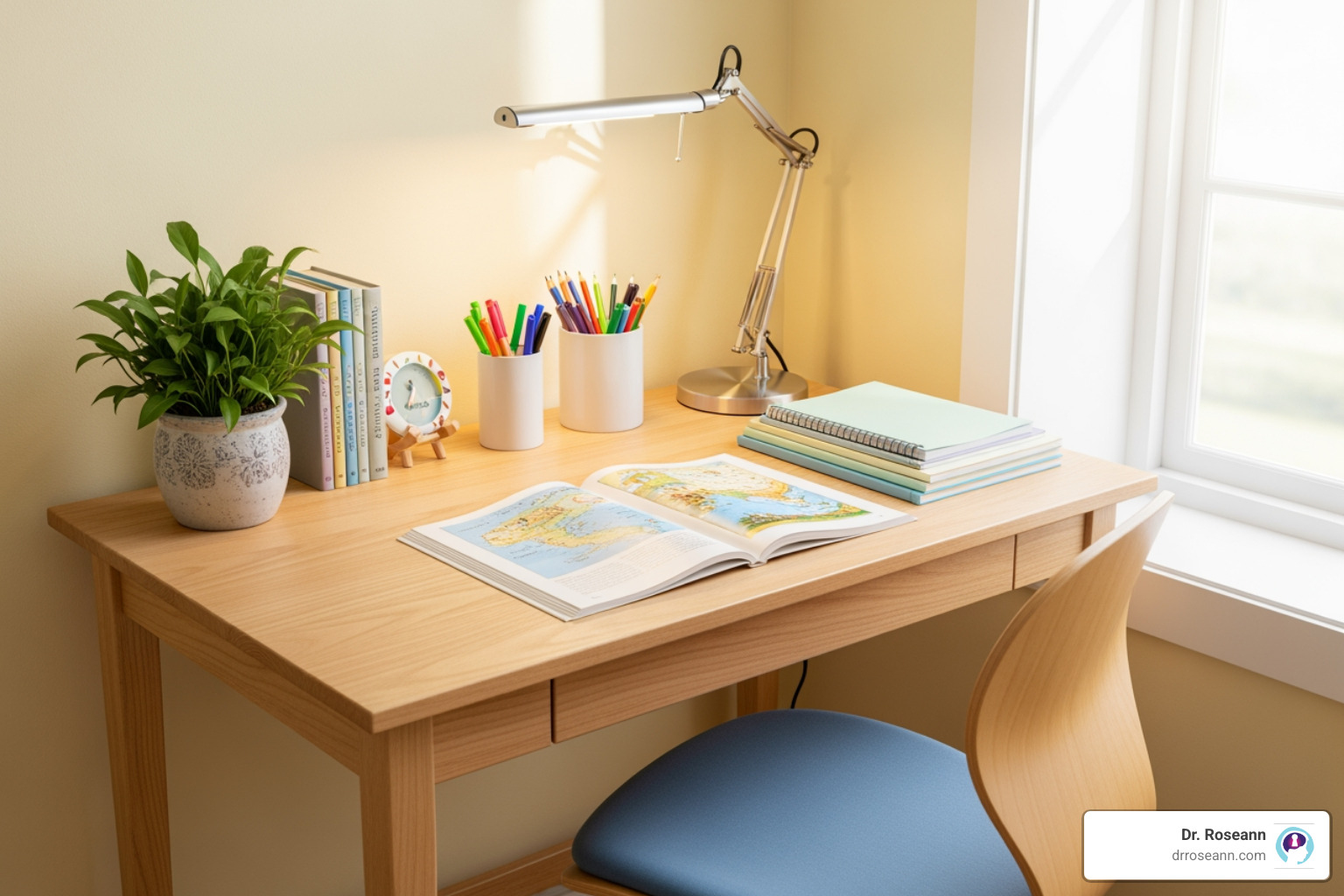
- Environmental Modifications: Create a quiet, clutter-free workspace. Noise-canceling headphones can be a game-changer. Keep phones and other digital distractions out of sight.
- Helpful Organizational Tools: Use smartphone reminders, whiteboards, calendars, and timers to make organization effortless.
- Prioritizing Self-Care: A well-rested, nourished brain is a better-focused brain. Prioritize sleep hygiene, regular exercise (Mehren et al., 2019), and balanced nutrition.
The Focus Spectrum: Hyperfocus, Age, and Other Factors
Attention isn't always absent in ADHD. Sometimes it's present, which brings us to hyperfocus.

Hyperfocus is an intense, unbreakable concentration on an engaging task. It's another side of the attention regulation challenge. The brain gets "locked in," making it hard to shift focus to other priorities. This is why your child can spend hours on LEGOs but struggles with homework.
The experience of ADHD lack of focus also evolves with age. In young children, hyperactivity is often prominent. As they grow, hyperactivity may decrease, but inattention and internal restlessness (racing thoughts) can persist or even intensify.
Gender differences are also significant. Girls and women with ADHD often show more inattentive or internalized symptoms, such as daydreaming, emotional dysregulation, and forgetfulness. This frequently leads to their struggles being overlooked and a later diagnosis. Behavior is communication, and we need to listen to what every child's struggles are telling us.
When to Seek Professional Help (and What Else It Could Be)
How do you know when it's time to seek professional help? I encourage you to seek a comprehensive evaluation if your child's ADHD lack of focus is:
- Interfering with daily life at school, with friends, or at home.
- Causing significant school or social struggles, like failing grades or social distress.
- Persistent despite consistent strategies you've tried at home.
- Leading to emotional distress like anxiety, low self-esteem, or sadness.
You're not alone. Our team in Ridgefield, CT, and across Connecticut serves families worldwide.
It's also important to know that a lack of focus isn't always ADHD. A professional evaluation can differentiate it from other conditions with similar symptoms, such as:
- Anxiety or Depression
- Sleep disorders
- Thyroid issues
- Learning disabilities
- Medication side effects
A comprehensive evaluation is essential to get the right diagnosis and the most effective support for your child. Let's calm the brain first, then address the specific challenges.
Dr. Roseann's Therapist Quick Tip
In my 30+ years of clinical practice, I've learned that kids with ADHD don’t just need to try harder—they need their nervous system to feel safe and organized before focus can follow.
What I tell parents:
Build consistent regulation routines before asking your child to concentrate. A calm brain learns, listens, and pays attention more easily than a stressed one.
Try this today:
Choose a 2-minute regulation warm-up before homework or any task requiring focus: slow belly breathing, 10 wall pushes, or a quick somatic reset like “butterfly taps.” Do it with your child to model regulation.
Why it works:
These simple techniques lower cortisol, activate the parasympathetic nervous system, and help the prefrontal cortex—the part of the brain responsible for attention—come back online. When the brain feels regulated, concentration isn't such an uphill battle.
Remember:
Your child isn’t being difficult—they’re dysregulated. A little co-regulation from you can transform focus, confidence, and peace at home.
Your Path Forward: Creating a Calm, Focused Future
If you've made it this far, take a deep breath. You're not alone, and there is so much hope for your child. Navigating ADHD lack of focus is challenging, but I've witnessed countless families move from overwhelm to breakthrough.
The beautiful truth is that small, consistent steps lead to big changes. You don't need to do everything at once. Start with one new strategy, like a visual timer, or by getting that comprehensive evaluation. Each action is a powerful investment in your child's future.
Empowering your child means helping them understand their brilliant, unique brain. When children learn their struggles aren't failures, they stop seeing themselves as "broken" and start seeing their potential.
At our center, we deliver game-changing solutions that create rapid, effective results, especially when other approaches haven't worked. Our team in Ridgefield, CT, serves families across Connecticut and worldwide with science-backed, compassionate care.
Let's calm the brain first—because a calm brain is a focused, happy brain. By addressing underlying neurological challenges with therapies like Neurofeedback, we help your child's brain learn to regulate itself more effectively. Our Neurofeedback program helps train the brain for better attention, often without medication.
You've already taken an important step by seeking to understand. Now let's take the next one together. Your child's story doesn't end with ADHD lack of focus—it's just the beginning of finding how extraordinary they are.
Frequently Asked Questions
Is a lack of focus always a sign of ADHD?
Not always. While it’s a hallmark symptom, other conditions like anxiety, depression, learning disabilities, or even poor sleep can cause focus issues. It’s important to get a comprehensive evaluation to understand the root cause. Behavior is communication, and difficulty focusing is telling us something important about your child’s brain.
Can my child outgrow their focus problems?
While some symptoms, like hyperactivity, can lessen with age, the underlying brain differences of ADHD often persist. Many adults continue to experience challenges with focus and organization. However, with the right strategies and support, your child can learn to manage their symptoms effectively and thrive throughout their life. Early intervention gives them the tools they need to succeed.
Does medication “cure” the lack of focus in ADHD?
Medication doesn’t “cure” ADHD, but it can be a very effective tool for managing symptoms, including a lack of focus. It works by helping to balance brain chemicals like dopamine. It’s most effective when combined with behavioral therapies and lifestyle strategies that teach your child skills for life. Think of it as one tool in a comprehensive toolbox.
What are some natural ways to help my child focus better?
Simple changes can make a big difference. Improving sleep hygiene ensures your child’s brain is well-rested and ready to focus. Regular exercise releases dopamine and strengthens executive functioning. Creating structured routines and using visual supports like timers and checklists reduce cognitive load. Neurofeedback and other brain-based therapies can also help calm the brain and improve focus without medication.
When should I seek professional help for my child’s focus issues?
If your child’s lack of focus is interfering with daily life, school, or relationships—and strategies at home aren’t enough—it’s time to seek a comprehensive evaluation. Early support leads to better outcomes, and you don’t have to do this alone. Trust your instincts as a parent. If something feels off or your child is struggling emotionally, reaching out for professional guidance is always the right choice.
Citations
Blum, K., Chen, AL., Braverman, ER., Comings, DE., Chen, TJ., Arcuri, V., Blum, SH., Downs, BW., Waite, RL., Notaro, A., Lubar, J., Williams, L., Prihoda, TJ., Palomo, T., Oscar-Berman, M. (2008). Attention-deficit-hyperactivity disorder and reward deficiency syndrome. Neuropsychiatr Dis Treat, 4(5):893-918. https://doi.org/10.2147/ndt.s2627
Mehren, A., Özyurt, J., Lam, AP., Brandes, M., Müller, HHO., Thiel, CM., Philipsen, A. (2019). Acute effects of aerobic exercise on executive function and attention in adult patients with ADHD. Front Psychiatry, 10:132. https://doi.org/10.3389/fpsyt.2019.00132.
Always remember… “Calm Brain, Happy Family™”
Disclaimer: This article is not intended to provide health advice. It is recommended to consult with a physician before beginning any new wellness program. The effectiveness of diagnosis and treatment varies by patient and condition. Dr. Roseann Capanna-Hodge, LLC does not guarantee specific results.
Are you looking for SOLUTIONS for your struggling child or teen?
Dr. Roseann and her team are all about science-backed solutions—so you are in the right place!