%20.png)



Estimated reading time: 7 minutes
Why ADHD Behavioral Interventions Matter
On Monday mornings, Mia zipped from room to room, homework half-finished, tears by the door. Her parents felt defeated. Then they tried ADHD behavioral interventions: simple, science-backed steps. Instead of masking symptoms, they reshaped routines and reinforced small wins, and Mia learned skills to manage attention, hyperactivity, and impulsivity daily.
These interventions target the real-world challenges of ADHD—from homework struggles to social difficulties—and are recommended as a first-line treatment by the American Academy of Pediatrics and the CDC. They empower you, the parent, to become your child's most effective coach.
Key interventions include:
- Behavioral Parent Training (BPT): Equips parents with tools to encourage positive behavior.
- Classroom Management: Uses goals and rewards to support focus at school.
- Organizational Skills Training: Teaches kids planning and time management.
- Social Skills Coaching: Helps children practice peer interaction and emotional regulation.
Here's the truth: You have more power than you think. These strategies calm the brain first, then build the skills your child needs to thrive. Unlike medication, which stops working when it's discontinued, the coping strategies learned through behavioral therapy last a lifetime.
I'm Dr. Roseann Capanna-Hodge, and for over 30 years, I've helped families use these natural, evidence-based tools to find hope and achieve real results. Let's explore how they can transform your family's life.

A Deep Dive into ADHD Behavioral Interventions
ADHD behavioral interventions are not about "fixing" your child; they're about equipping them with tools to thrive. Backed by over 40 years of research and endorsed by leading organizations like the AAP and CDC, these strategies focus on skill-building and environmental changes. The research is clear: when families use these strategies consistently, children improve in homework completion, social interactions, and self-confidence (Gavin et al., 2023). We're not just managing symptoms—we're building a foundation for lifelong independence.
What Are the Primary Types of ADHD Behavioral Interventions?
These interventions are a toolkit of structured strategies for home, school, and beyond.
- Behavioral Parent Training (BPT): This is the cornerstone, especially for younger children. BPT is a "well-established treatment" that teaches you, the parent, effective strategies to manage behavior, reduce conflict, and promote positivity at home (Hamed Abd Elaleem et al., 2023). It empowers you to become your child's best coach.
- School and Classroom Management: Since school is a major part of a child's life, classroom strategies are crucial. These include clear rules, consistent feedback, and tools like Daily Report Cards (DRC) to track goals. Strong collaboration between parents and teachers is key to success.
- Organizational and Executive Function Skill-Building: This directly addresses challenges with executive functions like planning, time management, and organization. Kids learn practical strategies like using checklists, planners, and breaking down large tasks into smaller steps.
- Social Skills Coaching: This can help with peer difficulties and emotional regulation, improving a child's relationships and self-esteem.
Emerging approaches like mindfulness and mindful meditation and regular exercise also show promise in improving attention and calming the brain.
For more information on how our personalized solutions can help your child, visit our ADHD solutions page.
Key Principles: How Behavior Therapy Reshapes ADHD Challenges
Successful interventions are built on a few core principles that help reshape ADHD challenges.
- Positive Reinforcement: This is our most powerful tool. Children with ADHD thrive on immediate and frequent praise, privileges, or small rewards for desired behaviors (Morsink et al., 2021). Aim for at least a 4:1 ratio of positive feedback to correction to keep your child motivated.
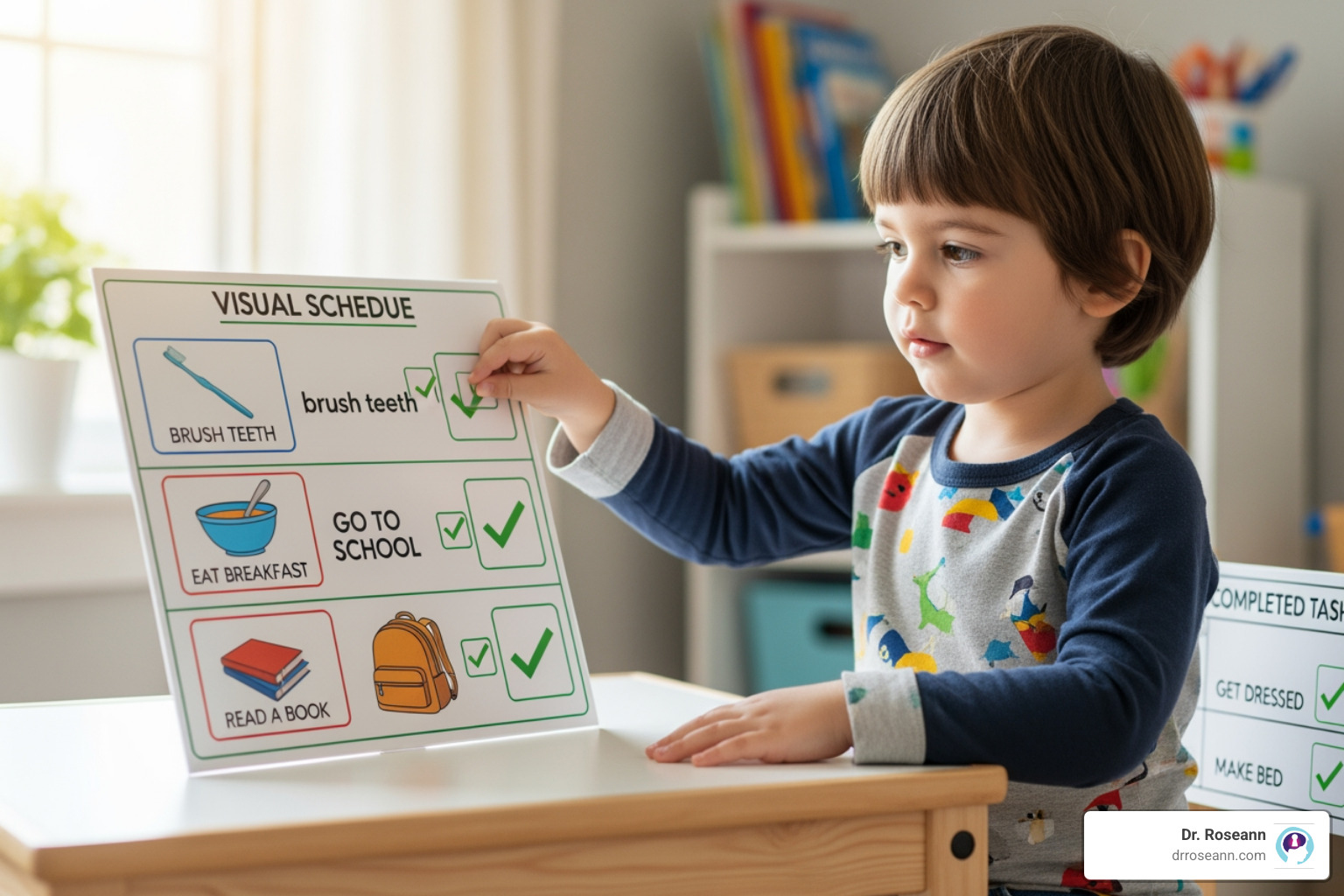
- Clear, Loving Communication: ADHD brains crave predictability. Use specific, concise commands, make eye contact, and establish predictable routines. Visual cues like charts and checklists help reinforce verbal instructions and reduce anxiety.
- Consistent, Predictable Consequences: While our focus is positive, clear and predictable consequences for misbehavior are also important. This isn't about harsh punishment, but about teaching boundaries. Techniques like "planned ignoring" or brief "time-outs" should be used consistently.
- Proactive, Brain-Calming Strategies: Engineer the environment for success. Reduce distractions during homework, create organized spaces, and provide regular opportunities for physical activity. By calming the brain first, we set the stage for focus and learning.
https://youtu.be/a0DdsOFoI1s
The Crucial Role of Parents and Teachers in ADHD Behavioral Interventions
You, as parents and teachers, are the most important catalysts for change. The success of ADHD behavioral interventions depends on a strong, collaborative partnership between home and school.
Through BPT, parents gain confidence and practical tools. In the classroom, teachers implement strategies that support academic and social goals. The Daily Report Card (DRC) is a powerful bridge, allowing teachers to provide feedback on specific goals that parents can then reward at home. This synergy creates the consistency that ADHD brains need to learn new skills.
Remember to set realistic, specific goals (e.g., "complete 15 minutes of homework" instead of "be good") to ensure your child experiences success and builds self-efficacy. This partnership is the foundation for lasting change.

Your Action Plan for ADHD Behavior Therapy
Now that you understand the what and why, let's create your action plan. Taking the first step can feel overwhelming, but you are not alone. With the right support, you can create the calm, connected home you've been dreaming of. Let's build your roadmap together.
Behavior Therapy and Medication: Understanding Your Options
One of the most common questions parents ask is about medication. It's a personal decision, and you deserve the facts. The American Academy of Pediatrics (AAP) provides clear guidance:
- For children younger than 6: Parent training in behavior management is the recommended first line of treatment, even before medication. Young children are more prone to side effects, and behavioral approaches are highly effective.
- For children 6 years of age and older: A combination of medication and behavior therapy is often recommended. Parent training and classroom interventions remain essential.
Medication can quickly reduce core symptoms, but it doesn't teach skills and its effects stop when the medication is discontinued. Behavioral interventions, on the other hand, teach compensatory skills. They build lifelong strategies for managing attention and emotional regulation. While symptom reduction may take longer, the skills become a permanent part of your child's toolkit.
Combined treatment can be powerful, but for many children, behavioral therapy alone can be sufficient. The decision to use medication should always be made carefully with your healthcare provider.
FeatureBehavior Therapy (e.g., BPT, OST)Medication (e.g., Stimulants, Non-stimulants)GoalsTeaches coping skills, improves self-regulation, reduces functional impairments (e.g., noncompliance, homework issues, social skills), builds positive habits.Reduces core ADHD symptoms (inattention, hyperactivity, impulsivity), improves focus.MethodsParent training, positive reinforcement, consistent consequences, environmental structuring, skill-building, coaching, routines.Pharmacological compounds that alter brain chemistry (neurotransmitters).Side EffectsRequires significant parental/teacher effort and consistency, may be slow to show results, effects are setting-specific.Potential for decreased appetite, sleep problems, mood changes, rebound effects.Long-Term SkillsBuilds lifelong strategies, transferable skills, improved family dynamics, increased self-efficacy.No direct skill-building; effects cease when medication is stopped.Dr. Roseann's ApproachOur primary focus, empowering parents and children with lasting tools to calm the brain and thrive naturally.May be considered as an adjunct in some cases, always secondary to skill-building.
Finding the Right Support and Ensuring Long-Term Success
Finding a qualified professional is key. Look for licensed psychologists, behavior analysts (BCBAs), or clinical social workers with specific training in pediatric ADHD. When interviewing providers, ask about their experience with ADHD, their approach to parent training, and how they involve schools.
Your active participation is essential. Research consistently shows that when parents are involved and practice the strategies, children's outcomes improve dramatically. The long-term benefits are life-changing, teaching your child resilience and independence that will serve them into adulthood. These interventions can also be adapted for co-occurring conditions like anxiety or OCD, as they address the root of dysregulation.
Hope, Empowerment, and Lifelong Skills
If you've made it this far, I hope you're feeling something you might not have felt in a while: hope. ADHD behavioral interventions build real-world skills for life. These aren't temporary fixes; they are lasting tools that become part of how your family functions and how your child steers the world.
You are your child's best advocate. The consistency and love you provide are what create lasting change. I've watched thousands of parents transform from feeling burned out to becoming confident coaches for their children. That change is available to you, too.
Your child's brain isn't broken—it just works differently. When we "calm the brain first" and teach the right skills, remarkable things happen. Focus improves, meltdowns decrease, and your child starts to believe in themselves. You don't have to do this alone.

Frequently Asked Questions
How long does behavior therapy take to show results?
Many families see positive changes in routines and a reduction in meltdowns within a few weeks of consistent practice. Building lasting skills is a journey, but the more consistently you apply the strategies, the faster you’ll see shifts.
Can behavior therapy work without medication?
Absolutely. For children under 6, behavior therapy is the recommended first-line treatment. For many older children and teens, it is highly effective on its own, building crucial life skills that medication cannot teach.
Can I use behavior therapy strategies at home?
Yes! That is the primary goal. Behavioral Parent Training (BPT) is designed to empower you to become your child’s best coach, using these strategies in your daily life to create positive, lasting change.
What if my child has anxiety or other challenges too?
Behavioral strategies are highly adaptable. By focusing on calming the brain and building foundational self-regulation skills, these interventions help with a wide range of co-occurring challenges like anxiety and mood disorders.
Is it too late for my teenager to benefit from behavior therapy?
It’s never too late. Teens can learn vital self-management, organizational, and emotional regulation skills that are crucial for success in high school, college, and beyond. These strategies will serve them for the rest of their lives.
Citations
Gavin, B., Twomey, C., Minihan, E., O’Reilly, G., & McNicholas, F. (2023). Parenting interventions, ADHD and homework: a systematic review. Irish Educational Studies, 43(4), 843–863. https://doi.org/10.1080/03323315.2023.2174572
Hamed Abd Elaleem, A.E.M., Halim Osman, Z.A. & El-Fatah, W.O.A. The effect of behavioral training program for parents on disruptive behavior among children with attention deficit hyperactivity disorder. Egypt J Neurol Psychiatry Neurosurg 59, 137 (2023). https://doi.org/10.1186/s41983-023-00738-z
Morsink, S., Van der Oord, S., Antrop, I., Danckaerts, M., & Scheres, A. (2021). Studying Motivation in ADHD: The Role of Internal Motives and the Relevance of Self Determination Theory. Journal of Attention Disorders, 26(8), 1139-1158. https://doi.org/10.1177/10870547211050948
Always remember… “Calm Brain, Happy Family™”
Disclaimer: This article is not intended to give health advice and it is recommended to consult with a physician before beginning any new wellness regime. *The effectiveness of diagnosis and treatment vary by patient and condition. Dr. Roseann Capanna-Hodge, LLC does not guarantee certain results.
Are you looking for SOLUTIONS for your struggling child or teen?
Dr. Roseann and her team are all about science-backed solutions, so you are in the right place!