


Estimated reading time: 8 minutes
One of the top questions I get from overwhelmed parents is, “What is the best PANS/PANDAS diet—especially when my child won’t eat anything I offer?”
The answer is this: a pans/pandas diet should focus on reducing inflammation, supporting the immune system, and helping the brain stay regulated—but it’s not a one-size-fits-all plan. While an anti-inflammatory approach is the foundation, each child’s needs can look a little different depending on their symptoms and sensitivities.
Kids with PANS and PANDAS often have complex medical and behavioral challenges that make nutrition incredibly difficult. OCD, sensory sensitivities, and eating issues like ARFID can limit what a child is willing or able to eat. And without proper nutrition, the brain and body don’t have what they need to heal—making a realistic, supportive pans/pandas diet a critical part of recovery.
I’m Dr. Roseann Capanna-Hodge, and for more than three decades I’ve helped families navigate complex conditions like PANS, PANDAS, and Lyme-related neuroinflammation. I specialize in identifying the root causes of sudden behavioral and emotional changes in kids and creating science-backed, holistic treatment plans that support both the brain and body.
In this guide, you’ll learn:
- how a pans/pandas diet fits into a comprehensive approach to healing
- what to prioritize (and what to avoid)
- how to support your child’s recovery in a way that’s practical, realistic, and effective.
How Nutrition Helps PANS and PANDAS
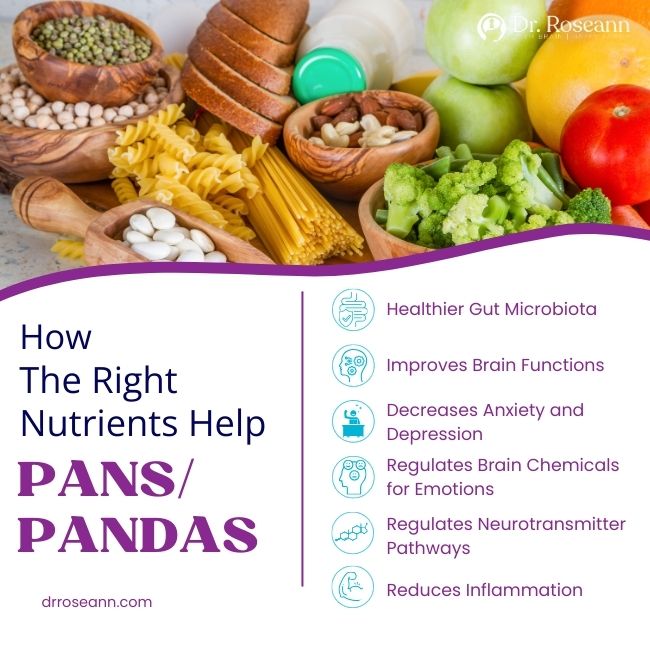
The treatment of PANDAS/PANS involves a holistic approach including following an appropriate dietary plan, as it is with other mental health and behavioral conditions. Navigating nutrition with PANS, PANDAS and AE is a challenge that must be done carefully.
Nutrition Improves the Microbiome
Diet is a known driver of the microbiome and eating a variety of nutrient dense foods helps to build a healthy gut. A healthy diet promotes microbiota in the gut, which stimulate the immune system, break down toxic food compounds, and synthesize certain vitamins and amino acids that the brain and nervous system need.
Just as a healthy microbiome has many health benefits, an unhealthy microbiome, or dysbiosis, is associated with increased health conditions. Research (Morita, 2015) shows us that gut dysbiosis has been found in a higher rate of those with anorexia, which is a common condition in PANS and PANDAS.
Nutrition Increases Cognitive Function
Studies show that a Mediterranean Diet and other anti-inflammatory diets that are high in antioxidants, omega-3 fatty acids and B vitamins, have been shown to improve brain functioning (Wang et al., 2024). Logically, what you eat impacts your attention, memory, and processing and the more nutrient dense food you eat, the better your brain functions.
Nutrition Improves Mental and Behavioral Health
Studies have shown that those with more severe mental health issues eat more pro-inflammatory foods.
While PANS/PANDAS-specific dietary trials are still emerging, recent research suggests adherence to a Mediterranean diet has been shown to reduce systemic inflammatory markers such as IL-6 and IL-17 (Houminer-Klepar and Dopelt, 2025), which correlates with a significant reduction in anxiety and depressive symptoms.
The Mediterranean diet also reduces the activation of microglia (the brain's immune cells) and lowers pro-inflammatory cytokines like IL-6 and TNF-$\alpha$ (van Zonneveld et al., 2024).
Nutrition Affects Neurotransmitter Function
It may be surprising to learn that one’s diet can affect neurotransmitter function in a world where every commercial seems to be pushing a pill for this or that. Diet can affect multiple brain processes by regulating neurotransmitter pathways, synaptic transmission, membrane fluidity, and signal-transduction pathways.
Nutrition Reduces Inflammation
Eating foods rich in polyphenols has been found to reduce brain inflammation naturally and reducing inflammation should be a part of all PANDAS/PAN Syndrome treatment plans. Polyphenols are a category of compounds that are in plant foods, such as fruits, vegetables, herbs, spices, tea, and dark chocolate.
Polyphenols exert their neuroprotective actions by protecting neurons against injury induced by neurotoxins, an ability to suppress neuroinflammation, and the potential to promote memory, learning, and cognitive function.
So, What Is The Best Diet for Children Exhibiting PANS/PANDAS?
The truth is, there isn’t a one-size-fits-all diet—but there is a clear starting point.
The most effective approach is a gentle, anti-inflammatory diet that supports the immune system, calms the nervous system, and reduces common food triggers.
Here’s how to think about it:
1. Start with an Anti-Inflammatory Foundation
Children with PANS/PANDAS often have underlying inflammation. Food can either fuel that fire—or help calm it.
Focus on:
- whole, unprocessed foods
- healthy fats (like olive oil, avocado, omega-3s)
- colorful fruits and vegetables
2. Remove Common Food Triggers
Many children are sensitive to certain foods that can worsen inflammation or behavior.
The most common ones to evaluate:
- gluten
- dairyConvince
- processed sugar
- artificial additives
You don’t have to remove everything overnight—but reducing these can make a noticeable difference.
3. Stabilize Blood Sugar
Blood sugar swings can trigger irritability, anxiety, and emotional outbursts.
Support stability by:
- including protein at every meal
- avoiding high-sugar snacks
- spacing meals consistently
A regulated body supports a regulated brain.
4. Support Gut Health
The gut and brain are deeply connected, especially in kids with immune and neuroinflammatory challenges.
Helpful supports include:
- fiber-rich foods
- fermented foods (if tolerated)
- reducing processed foods
When the gut is supported, we often see improvements in mood, focus, and behavior.
If this feels like a lot, take a breath—you don’t have to do everything at once.
Start with these simple steps:
- Remove processed sugar
- Add protein to every meal
- Focus on whole, real foods
- Increase hydration
- Consider magnesium support (with guidance)
Small, consistent changes are what move the needle—not perfection.
Foods to Avoid (or Reduce)
You don’t need a perfect diet—but reducing these can significantly help:
- processed sugar
- artificial dyes and additives
- ultra-processed foods
- excessive refined carbs
- potential sensitivities like gluten and dairy
These foods can increase inflammation and make it harder for your child’s brain and body to stay regulated.
Foods to Include More Of
Think of this as “crowding in” the foods that support healing. An Anti-Inflammatory PANS/PANDAS Diet Encompasses:
- omega-3 rich foods (salmon, sardines, chia seeds)
- leafy greens (spinach, kale)
- clean proteins (chicken, eggs, grass-fed beef, legumes if tolerated)
- healthy fats (avocado, olive oil, nuts)
- colorful fruits and vegetables
- Gluten free grains (Brown rice, quinoa, sweet potatoes, potato, cassava, almond, tapaco, etc.)
| Diet Approach | What It Focuses On | Best For |
|---|---|---|
| Anti-Inflammatory Diet | Whole foods, healthy fats, reducing sugar and processed foods | Most children with PANS/PANDAS (best starting point) |
| Gluten-Free / Dairy-Free Diet | Removing common inflammatory triggers like gluten and dairy | Kids with sensitivities or symptom flare-ups after eating these foods |
| Autoimmune-Style Diet (AIP) | Eliminates a wider range of potential triggers (grains, dairy, processed foods, etc.) | More severe or persistent symptoms, or when other diets haven’t helped |
| Whole Foods / Clean Eating | Minimizing processed foods and additives | Families just starting dietary changes |
Consistent protein and fat throughout the day helps stabilize blood sugar, which is important in mood and behavioral regulation. Often non-dairy protein shakes are the place to start to increase protein and nutrition while stabilizing blood sugar.
Reinforcing Pans/Pandas Diet with Proper Hydration and Low Stress Environments
To get the most out of a PANS/PANDAS diet plan, hydration is essential.
Drinking enough water throughout the day gives you these:
- supports detoxification
- helps reduce inflammation
- prevents added stress on the body that can worsen symptoms.
Proper hydration is a simple but powerful way to support a PANS/PANDAS diet and ease the overall burden on your child’s system.
Just as important, chronic stress can trigger inflammation and lead to symptom flare-ups. Supporting your child with a calm, predictable environment can make a meaningful difference.
What you can do:
- Establish routines
- Practice mindfulness
- Perform simple regulation strategies break break
When you combine a PANS/PANDAS diet plan with hydration and stress reduction, you’re giving your child’s brain and body the support they need to heal.
Strategies to Help Kids With PANS and PANDAS Get More Nutrition
There are many holistic remedies for PANS, PANDAS and AE that can help with healing.
But first, you have to calm the brain. No behavioral change is possible when a brain is in a stress activated or inflammatory state. The frontal lobes are designed to shut down so you can react to a “predator” without thinking. The problem with kids with pediatric acute onset neuropsychiatric syndrome, their brain is in a constant state of fight, flight or freeze. That is why calming the brain has to be the first priority in a PANDAS/PANS treatment plan.
In our , we use PEMF and neurofeedback for PANS and PANDAS to calm the brain so we can address behaviors such as compulsions, tics, rage, anxiety and other PANS and PANDAS symptoms.
For those with an eating disorder or OCD-related food restrictions and PANS or PANDAS, those underlying issues, along with treating infections and addressing inflammation must be prioritized. Making sure you run lab work to look at infections and nutrient deficiencies is an important part of the treatment plan.
Trying to force a child to “eat” when they have an eating disorder or an obsession or compulsion related to eating or food, will only worsen a very stressful situation. This is where working with a PANS/PANDAS specialist such as myself and my team will give you the guidance you need.
It’s easy to feel pressure to “get it right” when your child is struggling.
But healing doesn’t come from doing everything perfectly—it comes from supporting your child’s nervous system, one step at a time.
Food is one powerful piece of that puzzle. Not the only one—but an important one.
And when you combine nutrition with regulation strategies, you give your child the best chance to feel calm, connected, and in control again.
Frequently Asked Questions
What Kind of Diet is Best for PANS/PANDAS?
The best diet for PANS/PANDAS is anti-inflammatory at its core, with elements of:
- gluten- and dairy-reduction (when needed)
- whole-food, low-processed eating
- blood sugar stability
What is the best PANS PANDAS diet plan?
A PANS PANDAS diet plan should focus on an anti-inflammatory, whole-food approach that supports brain and immune health. This means prioritizing clean proteins, healthy fats, and reducing processed foods, sugar, gluten, and dairy when needed.
How does PANDAS nutrition support healing?
PANDAS nutrition supports healing by reducing inflammation and stabilizing blood sugar, which helps calm the nervous system. When the body is nourished with whole, nutrient-dense foods, kids are better able to regulate mood, behavior, and immune responses.
Can you cure PANDAS naturally?
There is no single way to cure PANDAS naturally, but natural supports can play a powerful role in recovery. Addressing inflammation, supporting gut health, improving nutrition, and calming the nervous system are key parts of a holistic approach.
What are the most effective natural remedies for PANDAS?
Natural remedies for PANDAS often include anti-inflammatory nutrition, magnesium support, essential oils, and therapies that regulate the nervous system. These approaches work best when combined with medical treatment that addresses infections and underlying triggers.
What foods should you avoid for PANS?
Foods to avoid PANS symptoms include processed sugar, artificial dyes, and ultra-processed foods that can increase inflammation. Many children also benefit from reducing gluten and dairy if they trigger behavioral or physical symptoms.
Is an anti-inflammatory diet for PANS really helpful?
An anti-inflammatory diet for PANS is one of the most effective ways to support the brain and immune system. By lowering inflammation, this approach can help reduce symptom severity and improve emotional regulation over time.
Citations:
Morita, C., Tsuji, H., Hata, T., Gondo, M., Takakura, S., Kawai, K., Yoshihara, K., Ogata, K., Nomoto, K., Miyazaki, K., & Sudo, N. (2015). Gut Dysbiosis in Patients with Anorexia Nervosa. Plo S one, 10(12), e0145274. https://doi.org/10.1371/journal.pone.0145274
.
Wang, L., Xian, X., Zhou, M., Xu, K., Cao, S., Cheng, J., Dai, W., Zhang, W., & Ye, M. (2024). Anti-Inflammatory Diet and Protein-Enriched Diet Can Reduce the Risk of Cognitive Impairment among Older Adults: A Nationwide Cross-Sectional Research. Nutrients, 16(9), 1333. https://doi.org/10.3390/nu16091333.
Houminer-Klepar, N., & Dopelt, K. (2025). Associations Between Mediterranean Diet, Processed Food Consumption, and Symptoms of Anxiety and Depression: Cross-Sectional Study Among Israeli Adults. Foods, 14(9), 1485. https://doi.org/10.3390/foods14091485.
van Zonneveld, S. M., van den Oever, E. J., Haarman, B. C. M., Grandjean, E. L., Nuninga, J. O., van de Rest, O., & Sommer, I. E. C. (2024). An Anti-Inflammatory Diet and Its Potential Benefit for Individuals with Mental Disorders and Neurodegenerative Diseases—A Narrative Review. Nutrients, 16(16), 2646. https://doi.org/10.3390/nu16162646/
Grab your copy of
Always remember… “Calm Brain, Happy Family™”
Disclaimer: This article is not intended to give health advice and it is recommended to consult with a physician before beginning any new wellness regime. The effectiveness of diagnosis and treatment vary by patient and condition. Dr. Roseann Capanna-Hodge, LLC does not guarantee certain results.
Are you looking for SOLUTIONS for your struggling child or teen?
Dr. Roseann and her team are all about science-backed solutions, so you are in the right place!
Meet the Expert
Licensed Therapist | Certified School Psychologist
Board Certified in Neurofeedback (BCN) | 30+ Years Clinical Experience
Expert in Emotional Dysregulation in Children and Nervous System Regulation
Host, Dysregulated Kids Podcast | Author, The Dysregulated Kid
Dr. Roseann Capanna-Hodge is a licensed therapist, certified school psychologist, and leading expert in emotional dysregulation in children and nervous system regulation. With over 30 years of clinical experience and having analyzed more than 10,000 brain maps, she helps families understand what behavior is really signaling—and how to calm the nervous system first so real change can happen.
She is the creator of Regulation First Parenting® and the CALMS Protocol™, host of the top 1% podcast Dysregulated Kids, and author of The Dysregulated Kid.