%20.png)



Estimated reading time: 7 minutes
Quick Answer: Yes, ODD is real, and it's a recognized, brain-based condition defined in the DSM-5. But it's also one of the most overdiagnosed and misunderstood labels in children's mental health, often masking ADHD, anxiety, trauma, or sensory dysregulation underneath.
As a psychologist with over 30 years of clinical experience helping dysregulated kids and their families, I've sat with thousands of parents asking this exact question. The truth is, Oppositional Defiant Disorder (ODD) is very real, but it's also often misunderstood and misdiagnosed.
When a child is defiant, what we see is behavior. But beneath that, there's usually dysregulation — a brain stuck in fight, flight, or freeze. Understanding whether it's truly ODD or something else entirely is key to finding real solutions that help your child and your family find calm.
What Is ODD and How Is It Diagnosed?
ODD, or Oppositional Defiant Disorder, is defined in the DSM-5 as a pattern of angry, irritable, argumentative, or defiant behavior lasting at least six months. Children with ODD often lose their temper, argue with adults, and deliberately refuse to comply.
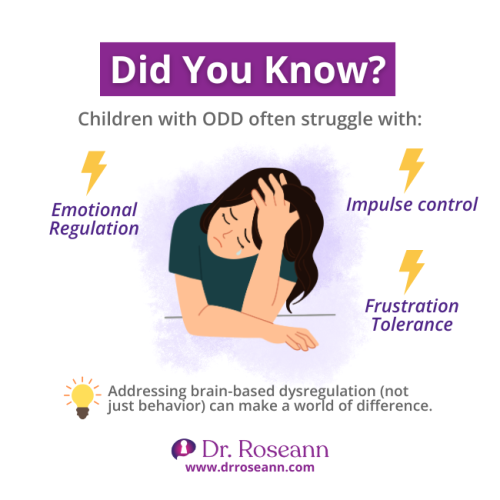
But ODD isn’t just about bad behavior—it’s about emotional control. Kids who meet ODD criteria are usually overwhelmed by frustration and lack the brain tools to self-regulate. In many cases, they’re also dealing with underlying anxiety, ADHD, trauma, or mood issues that intensify their reactions.
How Common Is ODD?
ODD is one of the most frequently diagnosed behavioral conditions in childhood. Research suggests it affects somewhere between 2% and 11% of kids, with some studies citing figures as high as 16% depending on the population studied. It tends to show up earliest at home, often by age 8, and is diagnosed more often in boys — though that gap may partly reflect how we interpret behavior differently in girls.
That wide range matters. It tells us ODD isn't rare — but it also tells us the diagnosis isn't always applied consistently, which is part of why so many parents end up asking, "Is this really ODD?"
Two Ways Researchers Explain Where ODD Comes From
There are two main ways experts think about why ODD develops, and in my experience, both are usually part of the picture:
- A developmental piece. Sometimes the struggles that show up as ODD started back in the toddler years — when a child was learning to separate from a parent or caregiver and build independence. When that process gets interrupted or delayed, behaviors that are normal for a two-year-old can persist much longer than they should.
- A learned piece. Behavior patterns get reinforced over time. If a child learns that arguing, stalling, or shutting down gets them out of a demand — even temporarily — that pattern gets wired in. This isn't about blaming parents; it's about understanding how brains and environments shape each other.
In my work, I rarely see ODD as "just" one or the other. It's almost always a brain that's wired toward big reactions, in an environment that's been struggling to help that brain feel safe.
Is ODD Real or Just a Label for Difficult Kids?
Yes, ODD is real—but not in the way most people think. It’s not a moral flaw or parenting failure. Studies show that children diagnosed with ODD have measurable differences in brain activity, especially in regions responsible for emotional regulation and impulse control.
Still, I understand why parents question the diagnosis. When your child is angry, disrespectful, or explosive, it can feel personal. But labeling a child as "bad" misses the real issue—a nervous system stuck in survival mode.
Is ODD Overdiagnosed?
Honestly? Often, yes — and I think parents are right to question it. ODD criteria describe symptoms (arguing, defiance, irritability), not causes. Those same symptoms show up in anxiety, ADHD, autism, trauma, PANS/PANDAS, and plain old developmental stages.
The problem isn't that ODD doesn't exist — it's that it's frequently the first label applied rather than the last one after a fuller picture emerges. I've seen kids carry an ODD diagnosis for years before anyone asked what was actually driving the behavior. That's why I never treat ODD as the end of the conversation. It's the start of one: what is this behavior protecting my child from, or telling me they can't yet do?
What Other Conditions Look Like ODD?
Many conditions can mimic ODD, which is why careful assessment is so important. What looks like defiance may actually be anxiety, ADHD, trauma, or even PANS/PANDAS.
Conditions Often Mistaken for ODD:
Parent example:
When I met Sara, her 8-year-old son Jake had been labeled "defiant." Once we uncovered his untreated anxiety and sensory issues, his outbursts drastically decreased. It wasn’t defiance—it was distress.

ODD vs. Conduct Disorder: What's the Difference?
ODD and Conduct Disorder (CD) get confused often, but they're not the same thing. ODD looks like anger, arguing, irritability, and defiance — mostly directed at the people closest to a child, like parents and teachers. CD is more serious: it involves repeated violations of others' rights, such as aggression toward people or animals, destruction of property, theft, or deceit.
Here's the part that matters most to parents: research shows that about 30% of children with ODD go on to develop CD if the underlying issues aren't addressed. That risk is higher when ODD is diagnosed very early, like preschool age. This is exactly why I don't just treat the surface behaviors — getting to the root cause early is how we change that trajectory.
How Severe Is It? Mild, Moderate, and Severe ODD
Not all ODD looks the same, and severity is usually measured by where the behavior shows up:
- Mild: Symptoms occur in only one setting — most often at home.
- Moderate: Symptoms occur in at least two settings, such as home and school.
- Severe: Symptoms occur across three or more settings, including social situations and extracurricular activities.
The more settings affected, the more it suggests this isn't "just a phase" or "just a parenting issue" — it's a regulation challenge that's showing up everywhere your child goes, which is a strong signal that professional support can help.
What’s Really Going On in a Defiant Brain
Recent research from the University of Cambridge found that children with ODD show heightened activation in the amygdala and reduced regulation from the prefrontal cortex—the brain’s emotional brakes. Dr. R. Blair, a lead researcher, explained that this imbalance makes it harder for kids to stop emotional impulses.
This explains why your child may go from calm to explosive in seconds. Their brain isn’t choosing conflict; it’s overwhelmed. When we calm the nervous system, behavior follows.
Why ODD Is Often Misdiagnosed in Children With ADHD or Anxiety
Many kids I see were originally diagnosed with ODD but later found to have ADHD, anxiety, or both. These conditions share symptoms like irritability and defiance, but the root causes differ. An anxious child may argue to avoid feared situations, while an impulsive child may defy because they act before thinking.
A parent I worked with, Mark, was heartbroken after years of being told his daughter was simply oppositional. After a proper neuropsychological assessment, we discovered severe anxiety. Once treated, her defiance faded into cooperation.
How Parents Can Tell If It’s ODD or Something Else
If you’re wondering whether it’s ODD, ask yourself:
- Does my child seem scared or anxious beneath the anger?
- Do they calm quickly once they feel safe?
- Are meltdowns linked to specific triggers (noise, transitions, fear)?
If so, you might be seeing dysregulation, not defiance. True ODD is chronic and defiance occurs across multiple settings, not just at home.

Dr. Roseann's Therapist Tip
In my 30+ years of clinical practice, I’ve learned that connection is the antidote to defiance. Try this today: When your child argues or melts down, lower your voice and say, “I see you’re upset. Let’s take a breath together.”
Why it works: Co-regulation. Your calm nervous system helps their brain mirror safety. The more your child experiences calm, the more their brain learns self-regulation.
Remember: A calm brain is a teachable brain.
What Actually Helps Kids With ODD-Like Behaviors
The good news? Children with ODD-like behaviors can and do improve with the right support. Here’s what helps:
- Parent coaching focused on calm consistency and connection.
- Cognitive Behavioral Therapy (CBT) to teach emotional flexibility.
- Neurofeedback and biofeedback to regulate brainwave activity.
- Stress reduction and nutrition support for overall brain health.
Parent example: After neurofeedback and parent coaching, 10-year-old Leo went from explosive mornings to calm routines. His mom told me, “For the first time, we enjoy breakfast together.”
Hope and Healing for Defiant Behavior
When parents ask, “Is ODD real?” my answer is yes—but we must look deeper. Defiance is rarely the full story. It’s often the language of an overwhelmed brain asking for help.
Your child isn’t broken. With understanding, regulation, and connection, even the most explosive kids can learn to calm and thrive.
FAQs
Can ODD go away with treatment?
Yes, ODD can improve with treatment. With consistent support and brain-based strategies, many kids outgrow oppositional behaviors as their nervous system learns to regulate.
Is ODD caused by parenting?
No, ODD is not caused by parenting alone. While parenting style can influence behavior, ODD comes from a mix of brain wiring, temperament, and environment.
What’s the difference between ODD and ADHD?
The difference between ODD and ADHD is in the root issue—ADHD affects attention and impulse control, while ODD shows up as emotional reactivity and defiance, and they often overlap.
Can trauma make a child look oppositional?
Yes, trauma can make a child look oppositional. Kids with trauma may act defiant, but that oppositional behavior is often a protective stress response.
How do I help my child calm down faster?
To help your child calm down faster, start with co-regulation—your calm helps their calm—and use simple, body-based tools to settle their nervous system.
How do I know if my child really has ODD or is just strong-willed?
It’s common to wonder if your child has ODD or is just strong-willed. The difference is that ODD involves ongoing emotional dysregulation and conflict that impacts daily life—not just a strong personality.
What are the signs of ODD in kids?
The signs of ODD in kids include frequent anger, arguing with adults, refusing to follow rules, and getting easily triggered—especially when their nervous system is overwhelmed.
Can ODD be misdiagnosed?
Yes, ODD can be misdiagnosed. Kids with ADHD, anxiety, autism, or trauma can look oppositional when they’re actually struggling with regulation, not defiance.
At what age does ODD usually start?
ODD usually starts in early childhood, often showing up by preschool or early elementary years when emotional regulation skills are still developing.
Citations:
Noordermeer, S. D. S., Luman, M., & Oosterlaan, J. (2016). A systematic review and meta-analysis of neuroimaging in oppositional defiant disorder (ODD) and conduct disorder (CD) taking attention-deficit hyperactivity disorder (ADHD) into account. Neuropsychology Review, 26(1), 44–72. https://doi.org/10.1007/s11065-015-9315-8
Raschle, N. M., et al. (2025). Losing control: Prefrontal Emotion Regulation Is Related to Symptom Severity and Predicts Treatment-Related Symptom Change in Adolescent Girls With Conduct Disorder. Biol Psych:Cogn Neurosci Neuroimaging, 10(1):80-93. https://doi.org/10.1016/j.bpsc.2024.08.005
Lee, K. H., et al. (2021). Neural correlates of emotional reactivity and regulation in traumatized individuals: associations with amygdala and prefrontal activation. Translational Psychiatry, 11(1), 579.https://doi.org/10.1038/s41398-021-01579-1
Dr. Roseann Capanna-Hodge is a licensed mental health expert that is frequently cited in the media:
- Single Care Controlling the uncontrollable: Living with OCD during a pandemic
- Holistic Counseling Podcast: Effective Treatments for OCD
- Epidemic Answers: Neurofeedback for ADHD, anxiety, OCD and mood
Always remember… “Calm Brain, Happy Family™”
Disclaimer: This article is not intended to give health advice and it is recommended to consult with a physician before beginning any new wellness regime. *The effectiveness of diagnosis and treatment vary by patient and condition. Dr. Roseann Capanna-Hodge, LLC does not guarantee certain results.
Are you looking for SOLUTIONS for your struggling child or teen?
Dr. Roseann and her team are all about science-backed solutions, so you are in the right place!
©Roseann Capanna-Hodge