%20.png)



Estimated reading time: 8 minutes
AuDHD burnout is a state of physical, mental, and emotional exhaustion caused by the chronic stress of living with both autism and ADHD. It often develops when a child spends years masking symptoms, pushing through sensory overload, struggling to meet daily demands, or functioning in environments that constantly overwhelm the nervous system.
One day, your kid is laughing and full of energy, and the next, they can barely handle simple tasks.
When kids with both Autism and ADHD face constant pressure, sensory overload, and social stress, their brains. And they eventually hit a breaking point. They run out of energy to keep masking or holding it all together.
This kind of burnout looks like withdrawal, irritability, or fatigue, but underneath is a brain stuck in survival mode.
The good news is that recovery is possible.
I’m Dr. Roseann Capanna-Hodge, a licensed therapist and certified school psychologist who has spent more than 30 years helping neurodivergent children and families understand how stress impacts brain and nervous system functioning.
Too often, burnout is mistaken for laziness, defiance, depression, or lack of motivation when it is actually a sign of chronic dysregulation and overwhelm.
In my Regulation First Parenting™ approach, we always calm the brain before we correct behavior. When a child feels safe and regulated, connection and learning naturally follow.
In this post, you"ll learn:
- what causes burnout
- early warning signs to look for
- gentle, proven ways to help your child recover their calm and confidence
What Is AuDHD Burnout?
When your child, who was once energetic and curious, suddenly becomes irritable. They're fatigued and withdrawn. This may be more than a bad week—it might be AuDHD burnout.
AuDHD refers to individuals who are both autistic and have ADHD. Their brains constantly balance sensory, emotional, and cognitive overload. So, they can reach a state of neurological exhaustion where everyday functioning feels impossible.
Autistic burnout occurs when the “chronic effort of masking and adapting beyond one’s capacity leads to loss of functioning and identity.” - Raymaker et al. (2022)
“AuDHD burnout isn’t a character flaw. It’s a physiological shutdown of a nervous system pushed beyond its limits.” - Dr. Dora Raymaker, Portland State University researcher.

Why Does AuDHD Burnout Happen?
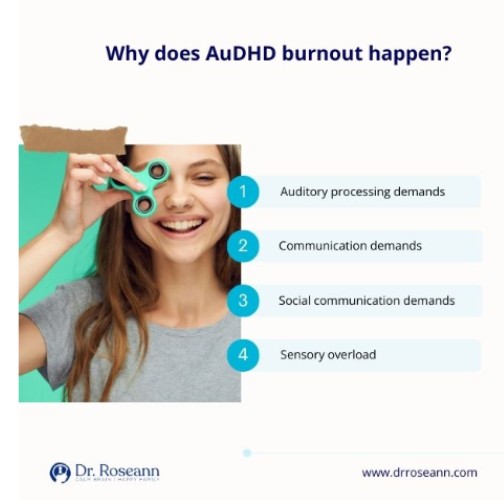
AuDHD burnout isn’t random—it’s the result of chronic nervous system dysregulation from cumulative stress.
Common Causes
- Masking: Hiding natural autistic or ADHD behaviors drains mental energy.
- Sensory overload: Bright lights, sounds, and textures bombard the senses.
- Constant performance pressure: Trying to “keep up” socially or academically.
- Lack of safe recovery time: Few chances to rest or self-regulate.
- Invalidation: Adults misread exhaustion as laziness or defiance.
Chronic sensory and social stress in autistic individuals leads to persistent hyperarousal. This leaves little capacity for emotional regulation (den Houting et al., 2023).
“When we ignore sensory overload, we push the nervous system into a chronic stress loop that looks like burnout.” - Dr. Jac den Houting, Macquarie University neurodiversity researcher.
What Are the Early Signs of AuDHD Burnout?
Burnout builds gradually—many parents mistake it for defiance or moodiness. Recognizing early clues can prevent deeper shutdowns.
Common Warning Signs
- Persistent fatigue and emotional flatness
- Heightened sensory sensitivity (sounds, lights, textures)
- Withdrawal from friends or family
- Regression in daily or academic skills
- Increased irritability or shutdowns
Parent story:
When Noah, age 10, started saying, “My brain feels too loud,” his parents initially thought he was avoiding homework. In truth, he was overloaded from constant school noise. Once they implemented structured sensory breaks, his focus returned.
How Is AuDHD Burnout Different from ADHD Burnout?
Though both involve fatigue, AuDHD burnout is more complex. It blends ADHD’s executive dysfunction with autism’s sensory and social challenges.
Comparison of AuDHD vs. ADHD Burnout
AspectAuDHD BurnoutADHD BurnoutPrimary StressorSensory + social + cognitive overloadMental fatigue from hyperfocus and overcommitmentEmotional StateShutdown, withdrawal, loss of interestIrritability, guilt, self-criticismMasking PressureVery high—constant self-monitoringModerate—linked to task overexertionRecovery NeedsSensory rest, co-regulation, routine predictabilityDowntime, boundary setting, and executive support
Recognizing this difference ensures families respond with compassion instead of correction.
What the Brain Science Reveals About AuDHD Burnout
AuDHD burnout stems from an autonomic nervous system imbalance. It’s where the brain’s stress response stays stuck in survival mode.
Whitehouse et al. (2024) found that individuals with both Autism and ADHD show elevated cortisol and lower heart rate variability. This means their bodies struggle to shift from stress back to calm. It explains the exhaustion, irritability, and shutdown parents often see.
“The AuDHD brain doesn’t rest like others. It keeps scanning for danger,” says Dr. Andrew Whitehouse, Monash University developmental neuroscientist. “Recovery requires retraining the nervous system to feel safe again.”
When stress is chronic, neuroinflammation and fatigue take hold. Calming the brain—through rest, sensory regulation, and co-regulation—helps restore equilibrium.
Steps to Help Your Child Recover from AuDHD Burnout
Recovery is not about pushing harder. It’s about restoring regulation and rebuilding safety.
Key Strategies
- Reduce demands: Cut back on non-essential activities.
- Create calm zones: Quiet, dimly lit areas for decompression.
- Encourage authentic expression: Let stimming and sensory play happen freely.
- Practice co-regulation: Stay calm and present—your nervous system teaches theirs.
- Focus on sleep and nutrition: The brain can’t recover without physical support.
- Use evidence-based tools: Neurofeedback, breathing exercises, and PEMF therapy calm the stress response.
Parent story:
When Ella, 12, came home daily with stomach aches, her parents realized it wasn’t physical—it was exhaustion from masking. After creating predictable routines and prioritizing rest, her energy and joy returned.
Dr. Roseann’s Therapist Tip
In my 30+ years of helping neurodivergent kids, one lesson stands out: you can’t correct what’s dysregulated.
Try this today:
Spend five minutes in quiet, nonverbal connection with your child. No demands, no fixing—just calm presence.
Why it works:
This co-regulation activates the parasympathetic nervous system, allowing your child’s brain to reset and recover.
Remember:
Regulate. Connect. Correct.™
How Parents Can Create Calm and Stability at Home
Parents play the biggest role in helping children recover from burnout. Here’s how to foster a calmer home:
- Validate emotions: “I know today was hard.”
- Build predictable routines: Consistency soothes anxious brains.
- Use sensory breaks: Stretching, soft lighting, or outdoor play.
- Collaborate with teachers: Advocate for sensory-friendly accommodations.
- Celebrate small wins: Recovery is gradual—every calm moment counts.
Parent example:
Jacob’s 8-year-old son began melting down nightly after school. By replacing homework time with outdoor sensory breaks and calm music, evening tension disappeared within two weeks.
Keep Hope: Calm Brains Recover Faster
AuDHD burnout isn’t a permanent state—it’s your child’s brain saying, “I need rest.”
When we calm the brain first, connection and healing naturally follow.
Start today by identifying stress patterns and restoring predictability. Download the free AuDHD Comprehensive Symptom Tracker and Analyzer. And begin rebuilding calm, confidence, and balance.
FAQs
What is AuDHD burnout?
AuDHD burnout is a state of deep mental, emotional, and physical exhaustion caused by chronic stress, masking, and nervous system overload.
What causes burnout in people with AuDHD?
AuDHD burnout is often caused by sensory overload, constant masking, emotional stress, executive functioning struggles, and lack of recovery time.
What are common signs of AuDHD burnout?
Signs of AuDHD burnout can include shutdowns, exhaustion, irritability, anxiety, low motivation, sensory sensitivity, and difficulty functioning.
How is AuDHD burnout different from regular stress?
AuDHD burnout goes beyond normal stress because the nervous system becomes overwhelmed for long periods without enough recovery or support.
How long does AuDHD burnout last?
AuDHD burnout can last weeks or months depending on stress levels, nervous system support, rest, and environmental demands.
What helps recovery from AuDHD burnout?
Recovery from AuDHD burnout often includes reducing demands, increasing rest, sensory regulation, therapy, sleep support, and nervous system calming tools.
Can masking lead to AuDHD burnout?
Yes, masking is one of the biggest contributors to AuDHD burnout because constantly hiding struggles drains emotional and mental energy.
How can parents support a child experiencing AuDHD burnout?
Parents can help by lowering pressure, validating feelings, simplifying routines, reducing sensory overload, and focusing on emotional safety.
Terminology
- AuDHD: When Autism and ADHD occur together, creating a mix of sensory, attention, and emotional challenges.
- Burnout: Deep exhaustion from long-term stress, masking, or sensory overload—common in AuDHD kids.
- Masking: Hiding natural traits to fit in or avoid judgment, often leading to burnout.
- Dysregulation: When the brain is stuck in “fight, flight, or freeze,” disrupting mood and focus.
- Co-Regulation: When a calm adult helps a child’s nervous system settle by modeling steadiness.
Citations
Raymaker, D. M., Teo, A. R., Steckler, N. A., & Nicolaidis, C. (2020). “Having all of your internal resources exhausted beyond measure and being left with no clean-up crew”: defining autistic burnout. Autism in Adulthood, 2(2), 1-12. https://doi.org/10.1089/aut.2019.0079
Arnold, S. R. C., Higgins, J. M., Weise, J., Desai, A., Pellicano, E., & Trollor, J. N. (2023). Confirming the nature of autistic burnout. Autism, 27(7), 1906–1918. https://doi.org/10.1177/13623613221147410
Stress System Activation in Children and Adolescents With Autism. (2021). Frontiers in Neuroscience, 15, 756628. https://doi.org/10.3389/fnins.2021.756628
Always remember... “Calm Brain, Happy Family™”
Disclaimer: This article is not intended to give health advice, and it is recommended to consult with a physician before beginning any new wellness regimen. The effectiveness of diagnosis and treatment varies from patient to patient and condition to condition. Dr. Roseann Capanna-Hodge, LLC, does not guarantee specific results.
Are you looking for SOLUTIONS for your struggling child or teen?
Dr. Roseann and her team are all about science-backed solutions, so you are in the right place!
©Roseann Capanna-Hodge